 Anacortes Siding
 Edison Sits Right Where Weather Meets Windows
Edison is a small, low-lying community on the flats between Anacortes and the rest of Skagit County, close enough to open water that salt-laden air is a daily fact of life, not an occasional event. Add in the driving, sideways rain that comes off Puget Sound in the fall and winter, plus a long, damp moss season that keeps north-facing surfaces wet for months at a time, and you have a climate that is genuinely hard on window frames, sills, and seals. Windows here don't fail because homeowners neglect them. They fail because standard products and standard installs weren't built for this combination of salt, wind-driven moisture, and prolonged dampness.
That's the backdrop for every custom window job we do in Edison. The right product and the right installation details aren't upgrades — they're what keeps a window doing its job for decades instead of five or ten years.
What "Custom" Actually Means Out Here
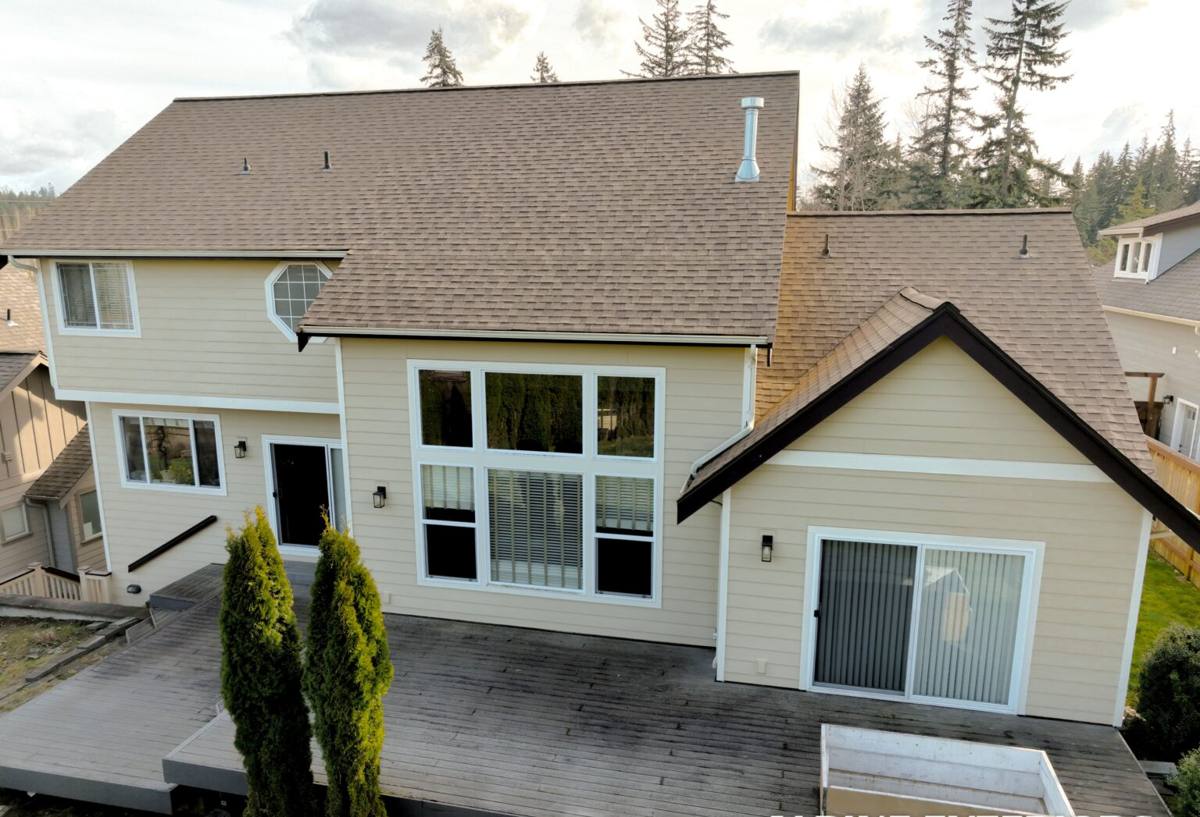
"Custom windows" doesn't mean fancy shapes or high-end trim packages, though we do those too. Out in Edison, it more often means windows built to fit openings that aren't standard sizes — something that's common in the mix of older farmhouses, remodeled outbuildings, and newer infill homes you find in this part of the county.
Older Farmhouses and Original Construction
A lot of homes in and around Edison were built decades ago, with window openings framed to whatever dimensions made sense at the time — not to a modern manufacturer's standard sizing chart. Forcing a stock-size window into one of these openings usually means either cutting into the framing (which invites moisture problems if not flashed correctly) or accepting a sloppy fit with extra trim to hide the gap. Neither is a good long-term answer. Custom-sized units solve this by matching the actual opening, so the weatherproofing details stay clean.
Additions and Mixed-Era Homes
We also see a lot of homes that have been added onto over the years, so one wall might have 1970s openings and another has something from a 1990s addition. Custom windows let us match sightlines and sill heights across those mismatched sections so the house reads as one home instead of a patchwork, without forcing every window into the same off-the-shelf size.
Frame and Glass Choices That Actually Hold Up Here
Not every window product on the market is a good fit for a property this close to saltwater and this exposed to wind-driven rain. We steer customers toward materials and glazing packages based on how they actually perform in this environment over time, not just how they look in a showroom.
| Frame Type | Moisture & Salt Air Behavior | Maintenance Load | Best Fit |
|---|---|---|---|
| Vinyl | Won't corrode or rot; performs well in salt air | Low — occasional cleaning | Most Edison homes, budget-to-mid projects |
| Fiberglass | Very stable in temperature swings and damp conditions | Low | Larger openings, higher-wind exposures |
| Aluminum-clad wood | Attractive but sensitive if cladding seams aren't sealed correctly | Moderate — needs correct install and periodic checks | Homeowners set on a wood interior look |
| Bare wood | Highest maintenance burden in salt air and constant damp | High — regular refinishing | Rarely our recommendation this close to the water |
We're honest about that last row: bare wood can be a beautiful window, but in a climate with this much salt air and moss-season dampness, it asks a homeowner to keep up with maintenance most people don't have time for. We'd rather steer you toward a frame that holds up with less upkeep than sell you something that looks good on day one and becomes a maintenance chore by year three.
Glass and Weatherstripping
For glazing, dual-pane units with a low-E coating are the baseline we work from — they cut down on condensation on cold, damp mornings, which is a real issue here given how much moisture sits in the air for weeks at a time. On walls that take the brunt of driving rain, we also pay close attention to weatherstripping quality and multi-point locking hardware, since a window that seals tightly under wind pressure is what actually keeps water out — more than any marketing claim about the glass itself.
What a Correct Installation Involves
The window unit is maybe half the job. The other half is the installation details that determine whether water stays out for the next twenty years or finds its way into your wall framing within a couple of wet winters.
Flashing and Moisture Management
Every opening gets flashed so that any water that gets past the exterior trim is directed back out, not down into the wall cavity. This matters everywhere, but it matters more in Edison, where driving rain regularly hits siding at an angle instead of falling straight down. We integrate flashing with the existing weather-resistive barrier and siding rather than just caulking around the edges and calling it done.
Sealing and Insulation
Gaps around the window frame get properly insulated and sealed — not stuffed with excess fiberglass, which can actually hold moisture against the frame, but filled with a product suited to the gap size. This is also where a lot of the draft and condensation complaints we hear about get solved.
Fit, Shim, and Level
A custom-sized window is only as good as the fit it goes into. We shim and level every unit so it operates smoothly and so the reveal around the frame is even — an uneven reveal is often the first visible sign that a window was rushed in.
Signs Your Current Windows Are Already Failing
A lot of window problems in this climate show up gradually, so homeowners get used to them before recognizing they're actual signs of failure. Worth checking your own windows against this list:
- Fogging or a hazy film between the panes of a double-pane window — the seal has failed and the insulating gas is gone
- Visible moss or green staining building up on the sill or lower frame
- Soft or discolored wood trim around the window, especially on north- or west-facing walls
- Drafts you can feel with your hand near the frame on a windy day
- Windows that are hard to open, close, or lock — frames can swell or warp with sustained moisture exposure
- Paint or finish that's peeling or blistering specifically around the window opening, not the wall in general
Any one of these on its own might just mean a window needs attention. Several of them together, especially on the same wall, usually points to a moisture problem behind the trim that's worth having looked at before it spreads.
How Our Process Works
- On-site assessment. We look at each opening, measure it as-is, and check the condition of the surrounding trim, siding, and framing — not just the glass.
- Product selection. We walk through frame and glass options based on that specific wall's exposure — a south wall catching direct rain gets a different conversation than a sheltered side yard window.
- Custom ordering. Units are built to the actual opening dimensions rather than forced to fit a stock size.
- Removal and prep. Old windows come out carefully, and we inspect the opening for any hidden moisture damage before anything new goes in — this is often where we find problems the homeowner didn't know existed.
- Installation. Flashing, insulation, shimming, and sealing are done to the standard described above, not shortcut to save time.
- Final check and cleanup. Every window gets operated, checked for a square, even reveal, and the site is cleaned up before we leave.
What Drives the Cost of a Window Project
We don't publish flat prices because every Edison home is different, but these are the factors that actually move the number up or down on a real estimate:
| Factor | Why It Matters |
|---|---|
| Opening size and custom sizing | Non-standard dimensions require a built-to-order unit rather than a stock size |
| Frame material | Vinyl is typically the most budget-friendly; fiberglass and clad-wood run higher |
| Number of windows and access | Whole-house projects have better per-unit pricing than a single hard-to-reach window |
| Condition behind the old window | Hidden rot or moisture damage found during removal adds repair work before the new unit goes in |
| Glass and hardware upgrades | Higher-performance low-E glass and heavier-duty locking hardware add cost but reduce long-term maintenance |
Why It Matters That We Already Work in Edison
A crew that already works this part of Skagit County knows what to expect before we even pull up. We know which wall orientations tend to take the worst of the driving rain, we know what moss buildup on a sill usually means once we pull the trim, and we're not learning the local climate on your project. That local familiarity shows up in small decisions throughout the job — where we pay extra attention to flashing, which frame materials we steer you away from, and how we sequence the work around whatever the weather is doing that week, which around here can change fast.
It also matters for the simple stuff: being reachable if a question comes up after the install, and not disappearing to the next region over the moment the job is done.
Get a Straightforward, No-Pressure Estimate
If you're dealing with foggy panes, drafty frames, or windows that just aren't holding up to Edison's salt air and rain the way they should, we're happy to take a look and give you an honest read on what your home actually needs. Fill out the form below for a free estimate — no pressure, no sales script, just a straight answer.