 Anacortes Siding
 Siding Replacement Built for Bow's Climate
Bow sits in a stretch of Skagit County where the weather doesn't split neatly into seasons the way a siding warranty chart pretends it does. Homes here sit close enough to Samish Bay and the open water of the Salish Sea to pick up salt-laden air, and close enough to the foothills and tree cover to stay damp and shaded for long stretches of the year. That combination is harder on exterior siding than either factor alone. Salt air accelerates corrosion on fasteners and trim metal. Driving rain, pushed sideways by wind off the water, finds every gap in flashing and caulk that a calmer climate would never test. And the shaded, moisture-holding conditions common on wooded and low-lying lots around Bow give moss and algae a long growing season — sometimes nearly year-round — on north-facing walls and anything near tree cover.
None of that means siding fails fast in Bow. It means siding fails differently here than it does in a dry inland climate, and a replacement job that doesn't account for that will look fine for a year or two and then start showing problems a generic install wouldn't have. This page covers what a correct siding replacement looks like for a home in Bow specifically — what to watch for, what the job should include, and why local experience matters more than a lot of homeowners expect.
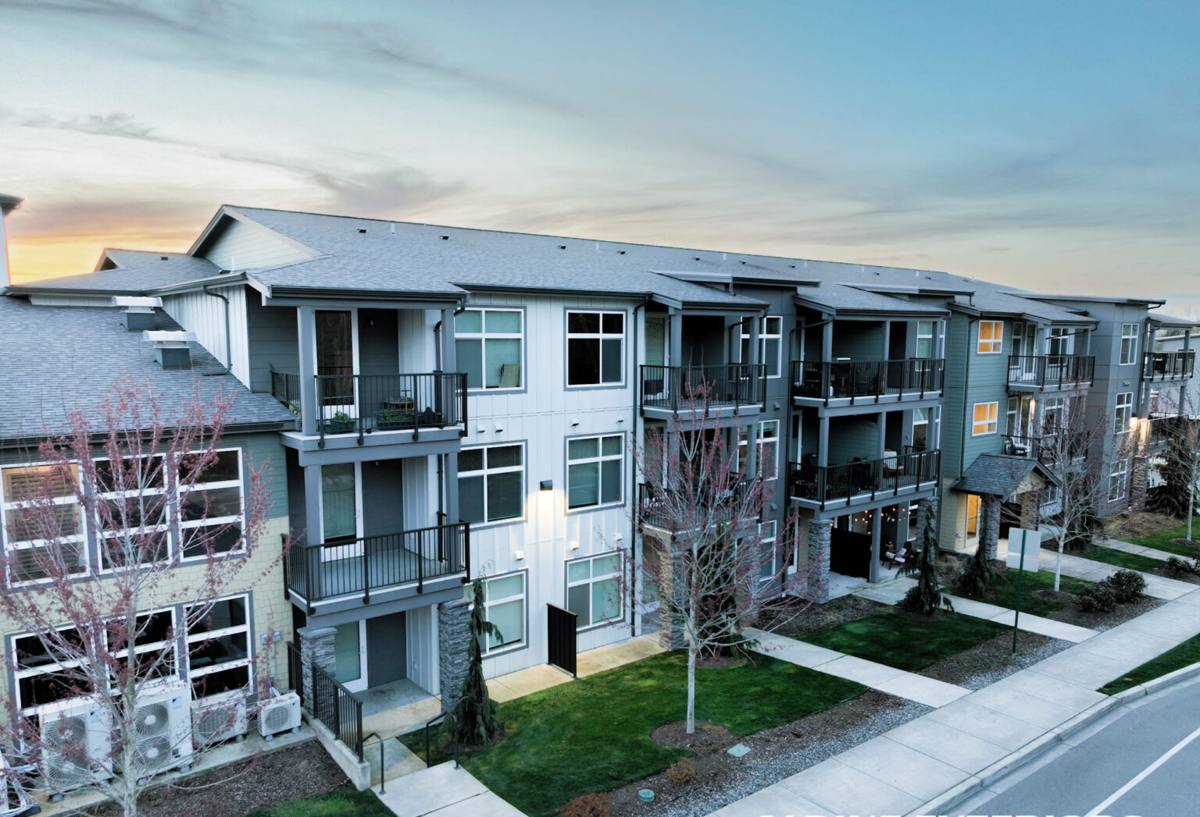
How Skagit County Weather Shows Up on Siding
Salt Air and Metal Fatigue
Homes closer to Samish Bay and other tidal water see more airborne salt than homes further inland. Salt doesn't just sit on the surface — it works into fastener heads, trim seams, and any exposed metal flashing, speeding up corrosion well before the siding material itself would otherwise need attention. Fastener corrosion is one of the more common reasons we find otherwise sound-looking siding pulling away from a wall.
Driving Rain and Wind-Driven Moisture
Rain that falls straight down is a different problem than rain pushed horizontally by wind off open water. Wind-driven rain finds its way behind poorly lapped siding, under-flashed windows, and gaps at trim joints that would stay dry in calmer weather. Once moisture gets behind the siding, the sheathing and framing underneath are what actually pay the price — often invisibly, for years.
A Long Moss and Algae Season
Shaded lots, tree cover, and consistent moisture give moss, lichen, and algae a long window to establish themselves on siding, especially on north- and west-facing walls. Beyond the cosmetic issue, moss holds moisture against the siding surface, which is exactly the kind of sustained dampness that shortens the life of moisture-sensitive materials.
Signs a Bow Home Needs Siding Replacement
Some of these are easy to spot from the ground. Others take a closer look, which is part of why a proper inspection matters more than a quick drive-by estimate.
- Soft or spongy spots when you press on the siding, especially near the bottom courses or around window and door trim
- Visible cracking, buckling, or separation at panel seams and corners
- Paint that keeps failing in the same spots no matter how often it's redone
- Persistent moss or algae growth that returns within a season of cleaning
- Rust streaking below fasteners or trim metal
- Bubbling, peeling, or discoloration on interior walls that back up to exterior siding
- A musty smell in rooms along exterior walls, which can point to trapped moisture behind the siding
- Gaps or daylight visible at trim joints and corner boards
Any one of these on its own might just need a repair. Several at once, or damage that keeps recurring after repairs, usually means the siding system as a whole — not just the visible surface — has reached the point where replacement is the more honest recommendation.
Why We Install Only James Hardie Fiber Cement
We don't install vinyl, LP SmartSide, or other fiber cement brands, and that's a deliberate standard, not a lack of options. In a climate like Bow's — salt air, sustained moisture, heavy moss pressure — the material matters as much as the installation. Vinyl expands and contracts significantly with temperature swings and can warp or crack over time, and it doesn't hold paint if you ever want to change the color. Engineered wood products like LP SmartSide perform well when installation and maintenance stay perfect, but they're wood-based, which means they're more sensitive to sustained moisture exposure than a fiber cement product — a real consideration in a climate that doesn't give siding much of a dry season. Other fiber cement brands exist, but James Hardie is the one we've found delivers consistent quality control, a factory-applied finish that holds color and resists moisture intrusion at the surface, and a warranty structure we're comfortable standing behind.
James Hardie's HardieZone system is engineered specifically around regional climate exposure — the products used in the Pacific Northwest are formulated for a wetter, more moisture-cycling climate than what you'd install in the desert Southwest. That's the kind of climate-specific engineering that matters for a property near Samish Bay dealing with salt air and long wet stretches, and it's a big part of why we standardized on this one product line instead of offering several.
What Fiber Cement Gets Right for This Climate
| Condition in Bow | How James Hardie Fiber Cement Responds |
|---|---|
| Salt air near Samish Bay | Non-combustible, moisture-resistant core with a factory ColorPlus finish that resists salt-driven fading and chalking better than field-applied paint |
| Driving, wind-pushed rain | Engineered for correct lap and clearance, so properly installed panels shed water instead of trapping it against the wall |
| Long moss and algae season | Factory finish resists moisture absorption at the surface, which slows the conditions moss needs to take hold, versus untreated wood or worn paint |
| Temperature and humidity swings | Dimensionally stable — doesn't expand, contract, or warp the way vinyl and some engineered wood products can over repeated cycles |
What a Correct Siding Replacement Actually Involves
The material is only half the equation. Most siding failures we see in this climate trace back to installation details, not the product itself. A correct replacement includes:
- Full removal of old siding and inspection of the sheathing underneath for hidden rot or moisture damage before anything new goes up
- A properly lapped water-resistive barrier (housewrap) installed shingle-style so water sheds down and out, not into seams
- Correct flashing at every window, door, and roof-to-wall intersection — the spots wind-driven rain finds first
- Fastening to Hardie's published specifications, including corrosion-resistant fasteners appropriate for a coastal-influenced climate
- Proper clearance between siding and grade, decks, and roof lines, so standing water and splash-back don't sit against the bottom courses
- Factory-mitered or properly caulked and sealed joints at corners and trim, using sealants rated for exterior movement
Skip any one of these and the siding can still look right on install day. The problems show up eighteen months to five years later, usually in the form of the same soft spots, staining, and paint failure that trigger a replacement call in the first place.
Our Process for Bow Homeowners
- On-site inspection: We walk the exterior, check for soft spots and moisture damage, and look at how the home is oriented relative to prevailing wind and rain exposure.
- Written estimate: A clear scope of work and cost breakdown — no vague allowances, no pressure to sign on the spot.
- Sheathing and moisture check: Once old siding comes off, we inspect what's underneath before installing anything new, and flag any repairs needed to the wall assembly itself.
- Weather barrier and flashing: Installed to shed water correctly at every penetration and joint, which matters more here than in a drier climate.
- Hardie installation to spec: Fastening, clearances, and joint treatment done to manufacturer requirements, which is also what keeps the transferable warranty intact.
- Final walkthrough: We go over the finished work with you before calling the job done.
What Siding Replacement Costs Depend On
We don't publish flat prices because the honest answer is always "it depends," but the factors that actually move the number are consistent from job to job:
| Factor | Why It Matters |
|---|---|
| Home size and wall complexity | More corners, gables, and trim detail mean more labor and material cuts |
| Condition of existing sheathing | Hidden rot or moisture damage found during removal adds repair scope before new siding can go up |
| Siding profile and finish selected | Lap width, texture, and ColorPlus finish options carry different material costs |
| Site access | Steep lots, limited driveway access, or dense tree cover common on wooded Bow properties can affect setup and labor time |
| Trim and detail work | Corner boards, window trim, and fascia detail add both material and labor beyond the flat wall area |
The only way to get a real number is a look at the actual home — anything quoted over the phone without an inspection is a guess, not an estimate.
Why a Crew That Already Works Bow Matters
Bow isn't a dense subdivision with identical homes on identical lots — it's a mix of rural properties, wooded lots, and homes with real water exposure, and that variety means the right approach for one house isn't automatically right for the one next door. A crew that's already worked this area knows to check fastener corrosion on homes closer to the water, knows which lots hold moisture and moss longer because of tree cover and shade, and doesn't have to relearn Skagit County's weather patterns on your project. That local pattern-recognition is part of what keeps a siding replacement from becoming a callback a few years later.
Caring for Your Siding After Replacement
Even the right product installed correctly benefits from basic upkeep in this climate:
- Rinse siding annually to clear salt residue and prevent moss and algae from establishing, especially on shaded or north-facing walls
- Keep gutters clear so overflow doesn't run down the wall face repeatedly
- Trim back vegetation and tree limbs that keep siding shaded and damp longer than necessary
- Recaulk trim joints if you notice separation — small gaps are far cheaper to address early than after water gets behind the wall
- Watch for any soft spots or recurring staining and have them checked before they spread
If your Bow home is showing signs of wear, or you just want an honest read on where your siding stands, we're glad to take a look. The estimate is free, there's no pressure to move forward, and you'll get a straight answer about what your home actually needs.