 Anacortes Siding
 Why Cap Sante Homes Need a Different Approach to Window Installation
Cap Sante sits close enough to the water that homes here take a different kind of weathering than houses further inland in Skagit County. Salt-laden air accelerates corrosion on hardware and fasteners, wind-driven rain gets pushed sideways into gaps that would stay dry elsewhere, and the long, damp moss season keeps trim and sills wet for weeks at a stretch. None of that is dramatic on its own, but it adds up. A window that's installed correctly shrugs it off for decades. A window that's installed even slightly wrong — a missing flashing lap, a bead of sealant where a drainage gap should be — starts failing quietly behind the wall, and by the time you see it on drywall or trim, the damage has been building for a while.
We treat window installation in Cap Sante as a waterproofing job first and a carpentry job second. The window itself is usually the easy part. Getting the water management right around it is where a job holds up or doesn't.
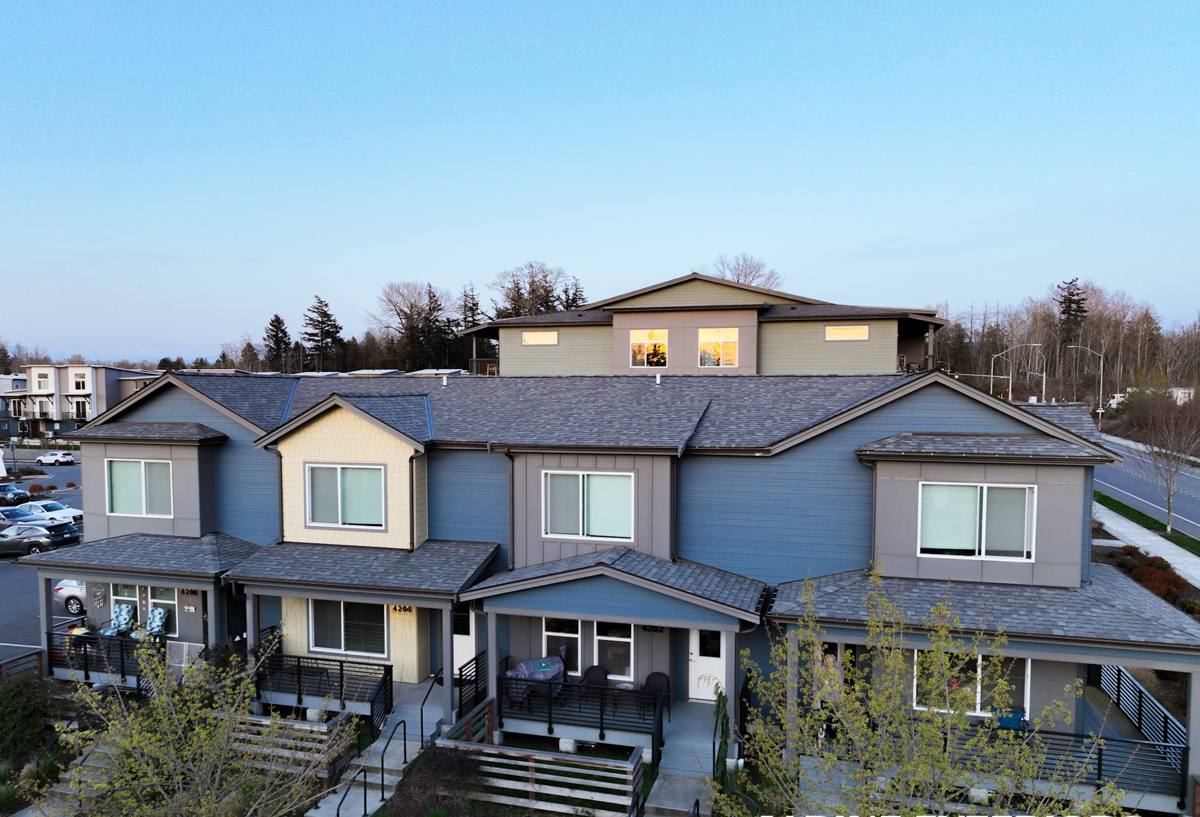
What the Local Climate Actually Does to a Window Opening
Salt Air and Hardware
Proximity to Fidalgo Bay means a steady low dose of salt in the air, even on calm days. Over time this attacks unprotected steel fasteners, cheap aluminum trim, and lower-grade hinges and locks faster than it would a few miles inland. It's rarely a reason to avoid a product outright, but it is a reason to be deliberate about fastener coatings and hardware finish when we spec a job this close to the water.
Driving Rain
Anacortes gets wind off the water that pushes rain horizontally into wall assemblies, not just straight down. A window opening built for a purely vertical rain load — meaning minimal flashing, sealant as the primary water barrier — will eventually leak here. The opening needs to be built to shed water that's arriving sideways and to drain back out anything that gets past the first line of defense.
The Moss Season
For a good stretch of the year, north- and shade-facing exteriors in this area stay damp enough to grow moss on sills, trim, and siding. That moisture doesn't just sit on the surface — it holds against wood and painted trim far longer than a sunny climate would allow. Window sills and trim that aren't detailed to shed water quickly become the first place rot shows up.
What a Correct Installation Actually Involves
A proper window installation isn't just setting the unit in the hole and running a bead of caulk around the outside. Here's what has to happen in sequence for the assembly to actually keep water out over the long run:
- Inspect and prep the rough opening — check for existing rot, soft wood, or prior water damage before anything new goes in
- Install a sloped sill pan so any water that gets past the window has somewhere to go besides your wall framing
- Apply flashing tape or membrane at the sill and jambs in the correct shingle-lap order, so upper layers always overlap lower ones
- Set the window level, plumb, and square, then fasten per the manufacturer's schedule
- Flash the head with a drip cap or head flashing that directs water out and away from the top of the opening
- Air-seal the interior gap with low-expansion foam or backer rod, keeping the exterior gap open for drainage rather than sealed solid
- Finish with exterior trim and sealant only where sealant belongs — not as a substitute for flashing
Skip or rush any one of those steps and the window can still look fine from the curb for a year or two while a problem builds behind the wall. This is why we don't treat window installation as a one-afternoon swap-and-go job, even on a straightforward replacement.
Choosing Windows for a Marine Climate
Product choice matters less than installation quality, but it's not irrelevant. For homes in Cap Sante we generally steer toward frame materials and finishes that handle sustained moisture and salt exposure well, and we're upfront about the trade-offs of each option rather than pushing one product line as a cure-all.
| Frame Material | How It Handles This Climate | Maintenance Consideration |
|---|---|---|
| Vinyl | Doesn't corrode or rot; handles salt air and moisture well | Low maintenance; quality varies significantly by manufacturer |
| Fiberglass | Very stable in temperature swings and moisture; strong long-term performer near the water | Higher upfront cost, minimal upkeep |
| Wood-clad | Good insulating properties, but the cladding's seams are a point to watch in wind-driven rain | Requires attentive caulking and inspection over time |
| Bare aluminum | Prone to corrosion and condensation in a salt-air, high-moisture setting | We generally advise against it for waterfront-adjacent homes for this reason |
We're happy to walk through specific manufacturers and lines during an estimate — the right call often depends on your home's exposure, existing trim style, and budget, not just a blanket recommendation.
Our Process for a Cap Sante Window Job
1. On-Site Assessment
We look at each opening individually — sun and wind exposure, existing trim condition, any signs of past water intrusion — rather than quoting a flat per-window price without seeing the house.
2. Removal and Inspection
When we pull the old window, we check the framing underneath. This is often the first real look anyone's had at that opening in years, and it's where hidden rot or old flashing mistakes turn up.
3. Rebuild the Opening Correctly
Any damaged framing gets replaced before the new window goes in. We install sill pans and flashing in the proper sequence regardless of whether the old opening had them — this is not an area to cut corners to save an hour.
4. Set, Seal, and Trim
The new window is set, air-sealed on the interior, and trimmed out to match the rest of the home. Exterior sealant is applied only where it belongs in the assembly, not as a blanket fix.
5. Walkthrough
We check operation, look at the finished exterior work with you, and explain what was found and fixed, especially if we uncovered hidden damage.
Why Local Experience in Cap Sante Matters
A crew that mostly works drier, inland parts of Skagit County can do fine carpentry and still under-build the water management, because the climate they're used to is more forgiving. Cap Sante's proximity to the water changes the math. We've worked enough homes in this specific area to know which exposures take the worst of the wind-driven rain, where moss buildup tends to cause the most trouble, and which flashing details actually hold up here versus which ones just meet minimum code. That's not a marketing point — it's the difference between a window that's still tight in fifteen years and one that needs attention in five.
Signs Your Current Windows Are Already Behind the Curve
- Fogging or condensation between panes on double- or triple-glazed units
- Visible staining, soft spots, or discoloration on interior sills or trim below the window
- Drafts you can feel around the frame on windy days
- Paint or finish failure on exterior trim that keeps recurring in the same spot
- Difficulty opening, closing, or locking that's gotten worse over time
- Moss or persistent green staining building up on the sill or surrounding trim
- Noticeably higher heating bills compared to similar-sized homes nearby
Any one of these on its own isn't necessarily an emergency, but a few together are usually a sign the current windows or their installation are past their useful life.
What Affects the Cost of a Window Replacement Project
| Factor | Why It Matters |
|---|---|
| Number and size of openings | More or larger windows means more material and labor |
| Frame material chosen | Vinyl, fiberglass, and wood-clad options carry different price points |
| Condition of existing framing | Rot or old water damage found during removal adds repair scope |
| Access and site conditions | Second-story or hard-to-access windows take more time and equipment |
| Trim and finish work | Matching existing trim profiles or repainting adds to the scope |
Costs vary enough by project that we don't publish flat per-window pricing — it depends too much on what we find once we're actually looking at your specific openings and framing.
If you're noticing drafts, moisture, or wear on your windows and want a straight answer on what's actually going on, we'd be glad to take a look. Reach out for a free, no-pressure estimate using the form below.