 Anacortes Siding
 West Anacortes Siding Faces a Tougher Job Than Most
Anacortes sits on Fidalgo Island, and the homes closest to the water on the west side of the city catch the full effect of that location. Salt-laden marine air moves through this area constantly, driving rain comes in sideways during winter storms, and the tree cover that makes West Anacortes so livable also means shade, damp air, and a moss season that runs longer than most homeowners expect. None of that is a problem for siding by itself. It becomes a problem when siding wasn't built or installed with that combination in mind.
We install siding across Skagit County, but West Anacortes properties get evaluated a little differently than a job five miles inland. Wind exposure, how close the home sits to open water, tree canopy, and north-facing walls that never fully dry out all change what a correct installation looks like on a given house. This page covers what that means in practice.
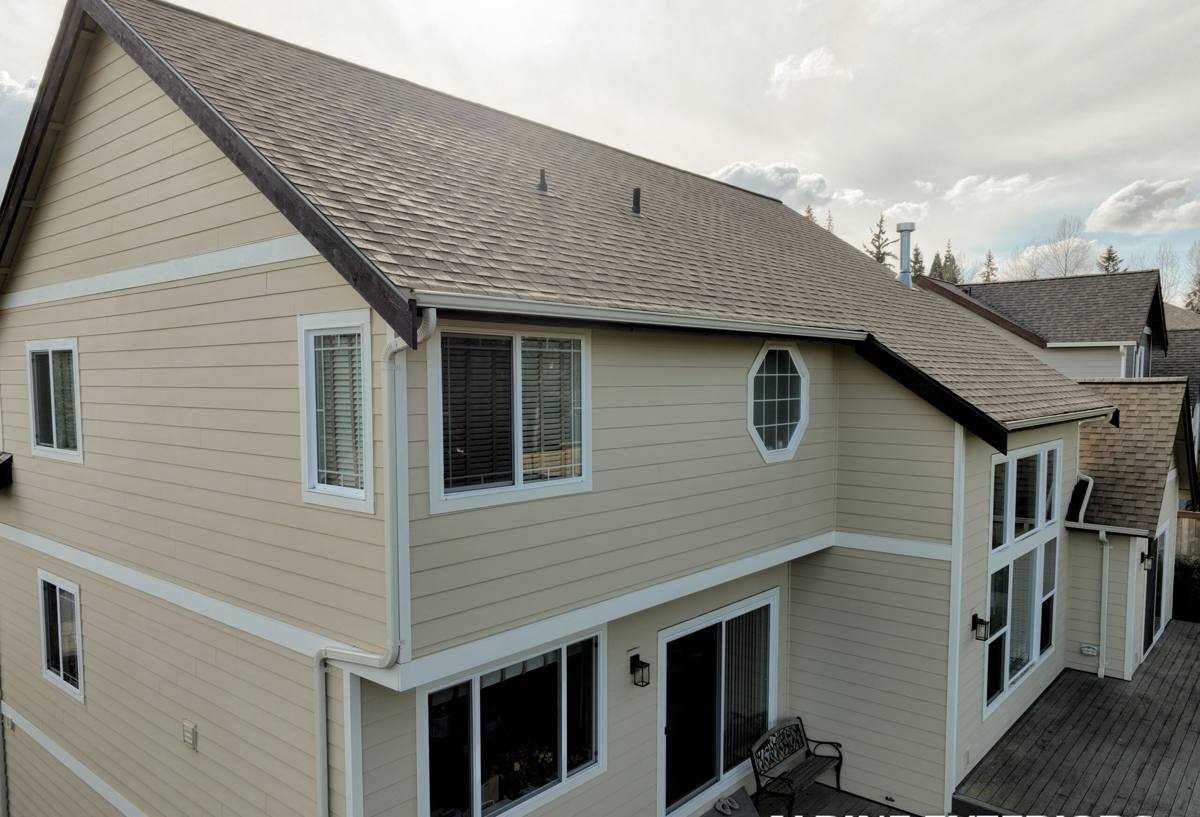
What Salt Air, Rain, and Moss Actually Do to Siding
Each of these factors attacks siding differently, and understanding the mechanism matters more than the sound-bite version.
Salt Air
Airborne salt is corrosive to exposed metal fasteners, trim flashing, and any hardware that isn't properly coated or protected. On siding materials themselves, salt exposure accelerates finish breakdown on anything that isn't engineered to resist it, leading to chalking, fading, and in some cases premature failure of the surface coating.
Driving Rain
West-facing and water-facing walls in this part of Anacortes take rain at an angle, not just straight down. That means water gets pushed into laps, seams, and butt joints that would stay dry on a more sheltered elevation. If the water-resistive barrier behind the siding, the flashing details, or the caulking at penetrations aren't done correctly, this is where moisture finds its way into the wall assembly.
Moss and Prolonged Dampness
Shaded, tree-covered lots hold moisture longer after a storm. Moss and mildew growth on siding is mostly cosmetic on a properly installed, moisture-resistant product, but on materials that absorb water or swell at the edges, prolonged dampness is what starts rot, delamination, or paint failure at seams.
Why This Climate Points Toward Fiber Cement — and Why We Install Only James Hardie
We stopped installing vinyl, engineered wood products like LP SmartSide, and untreated wood siding on Skagit County homes because we kept seeing the same climate-related issues come back: seam failure, moisture intrusion at cut edges, warping, and finish breakdown on the sides of homes that face weather the hardest. James Hardie fiber cement addresses those specific failure points, which is why it's the only siding system we put on a house.
What Makes It Different for This Climate
- Non-combustible, dimensionally stable material — fiber cement doesn't swell, warp, or expand and contract with moisture the way wood-based products can.
- ColorPlus factory finish — baked-on, climate-formulated coating that resists fading and holds up to UV and salt exposure far better than field-applied paint.
- HZ5 product engineering — Hardie manufactures siding in different formulations for different climate zones. The HZ5 line is engineered for wetter, more moisture-exposed regions, which is the right call for property that sits close to open water.
- Strong transferable warranty — backed by the manufacturer, not dependent on us staying in business, and transferable if the home is sold.
We're not going to tell you fiber cement is maintenance-free — no siding is. What it doesn't do is rot, delaminate at the seams, or need repainting every few years to keep moisture out. In a climate that's actively working to get water behind your siding, that difference compounds over decades.
Comparing Siding Materials for West Anacortes Conditions
Every material has a place somewhere. Here's how the common options actually perform against the specific conditions West Anacortes homes deal with.
| Material | Salt Air Resistance | Moisture/Moss Behavior | Maintenance | Typical Finish Life |
|---|---|---|---|---|
| Vinyl | Can chalk and fade faster in coastal exposure | Doesn't absorb water, but seams and panels can warp with heat and settle unevenly over time | Low, but limited repair options if damaged | Color is baked in but not repairable if faded/cracked |
| Engineered wood (e.g. LP SmartSide) | Coating can wear at exposed edges | Vulnerable at cut ends and seams if moisture gets in; needs consistent caulking and paint upkeep | Moderate to high — repainting and seam maintenance over time | Field finish, depends on upkeep |
| Cedar | Natural but needs ongoing sealing in salt air | Absorbs moisture; prone to rot and moss staining without regular treatment | High — refinishing on a recurring cycle | Field finish, short cycle |
| James Hardie fiber cement | ColorPlus finish engineered to resist fading and salt exposure | Non-combustible, moisture-resistant; HZ5 formulated for wetter regions | Low — occasional wash-down, no repainting cycle with ColorPlus | Factory finish, long-cycle, warrantied |
What a Correct Installation Actually Involves
The siding product is only part of the equation. Most of the failures we get called out to look at trace back to installation shortcuts, not the material itself. On a West Anacortes home, these details matter more than average because there's less margin for error.
The Water-Resistive Barrier and Flashing
A correctly detailed weather barrier behind the siding, with properly lapped and sealed flashing at every window, door, and penetration, is what actually keeps a driving-rain event from becoming a wall problem. This layer does the real work — the siding sheds the bulk of the water, but the barrier behind it handles what gets past.
Fastening and Clearances
Fiber cement has specific fastener spacing, nailing patterns, and gap requirements at butt joints, corners, and the bottom of the wall. Manufacturer clearance specs from grade, roofing, and decking exist for a reason — closing those gaps traps moisture against the material and defeats the point of using a moisture-resistant product in the first place.
Caulking and Sealant Choices
Not every sealant holds up to UV and salt exposure the same way. Using the right product at trim joints and penetrations, and knowing which joints should be caulked versus left as a designed weep path, is a detail that gets skipped on rushed jobs.
Our Process for West Anacortes Homes
- Site walk and exposure assessment — we look at which elevations take the most wind-driven rain and salt exposure, tree cover, and existing moisture damage before we quote anything.
- Tear-off versus overlay decision — on a home showing signs of trapped moisture, we recommend full tear-off so we can inspect and repair the sheathing underneath, not just cover a problem.
- Water-resistive barrier and flashing install — done to manufacturer and code specification before a single piece of siding goes up.
- HZ5 James Hardie installation — fastened, gapped, and sealed to spec, with attention to the elevations facing the water and prevailing weather.
- Final walkthrough — we go over clearances, trim details, and finish with you before we consider the job done.
Moss, Mildew, and Realistic Maintenance Expectations
Even the right siding, installed correctly, will develop surface moss or mildew in shaded, damp spots over a long enough Skagit County winter — that's a fact of this climate, not a defect. The difference with a properly installed fiber cement system is that this stays a cosmetic, surface-level issue you can rinse off, rather than something that's found its way into a seam or a cut edge and started causing damage underneath. We can walk you through simple seasonal upkeep during your estimate so moss season doesn't turn into a bigger job down the line.
Why It Matters That We Already Work in West Anacortes
A crew that's done siding work throughout Anacortes and Skagit County already knows which elevations in this neighborhood take the worst of the weather, how local permitting works with the city, and what existing construction in this area tends to look like once the old siding comes off. That's not a small thing — it means fewer surprises mid-project and a quote that reflects the real condition of your home, not a generic estimate. It also means we're a known, findable local business if you ever need warranty support or have a question years after the job is done.
What to Look For in a Correctly Installed Job
- Weather-resistive barrier fully lapped and sealed before siding installation, with no shortcuts at windows or penetrations
- Proper clearance maintained between siding and grade, roofing, and decking surfaces
- Manufacturer-specified fastener pattern and spacing, not "close enough"
- Gaps at butt joints and corners sized per the manufacturer's climate zone requirements
- Sealant used only where specified — not caulked shut in spots designed to drain
- ColorPlus finish free of field touch-up paint, which shouldn't be necessary if the finish wasn't damaged during install
- A clear explanation of the product line (HZ5) and why it was chosen for your home's exposure
Get a Straight Answer About Your Home
If you're dealing with siding that's showing its age on the water-facing side of your West Anacortes home, or you're just planning ahead, we're glad to take a look and give you an honest read on what's going on and what it would take to fix it right. There's no pressure and no obligation — use the form below to request a free estimate.