 Anacortes Siding
 Windows Built for West Anacortes Weather, Not Just West Anacortes Style
West Anacortes sits close enough to the water that homes here take a different kind of beating than houses a few miles inland in Skagit County. Salt-laden air off Rosario Strait and Guemes Channel works on metal hardware and fastener heads year-round. Driving rain off winter storms hits window walls sideways, not straight down, which means water finds gaps that a calmer climate would never expose. And the long stretch of gray, wet months every fall through spring keeps north- and west-facing walls damp long enough for moss and mildew to get a foothold on anything with a ledge, sill, or trim detail to cling to. Windows in this neighborhood aren't just a comfort upgrade — they're one of the first lines of defense for the wall assembly behind them.
When we talk about "energy-efficient windows" for a West Anacortes home, we mean two things at once: glass and framing that actually cut your heating bill in a marine climate that's mild but relentlessly damp, and an installation that keeps that improvement from becoming a moisture problem five years down the road. Get the product right and the install wrong, and you've built a leak with good glass in front of it.
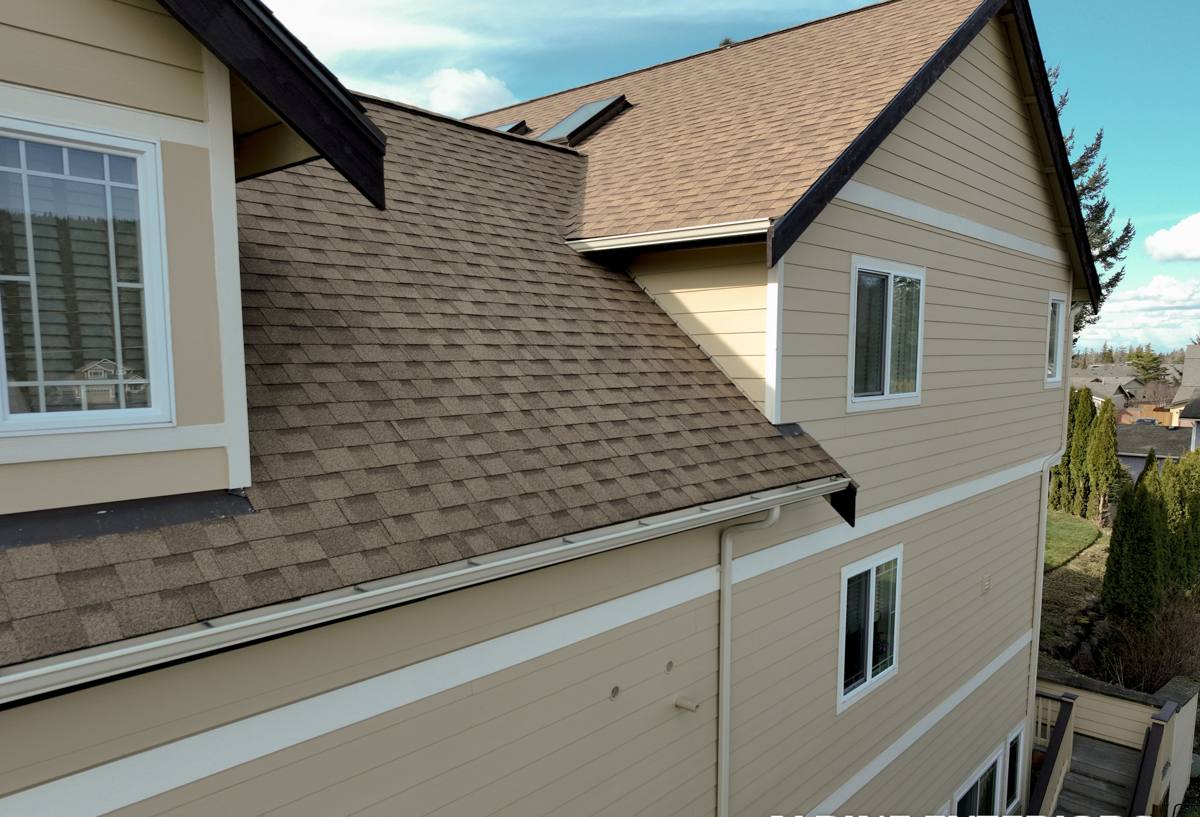
What This Climate Actually Demands From a Window
Salt Air and Hardware Life
Cheap window hardware — hinges, cranks, locks, balance mechanisms — corrodes faster this close to the water. We look for windows with hardware rated for coastal or marine exposure, not just a generic residential spec sheet. It costs a little more up front and saves you from windows that stop locking or operating smoothly within a few winters.
Driving Rain and Wind-Driven Water
Anacortes gets weather off the Strait that pushes rain sideways into west- and south-facing elevations. A window can have excellent glass and still leak if the flashing detail around it isn't built to shed water that's moving horizontally, not just falling vertically. This is as much an installation issue as a product issue — we'll cover flashing in detail below because it matters more here than in a lot of inland Skagit County towns.
Moss, Mildew, and Standing Moisture
Shaded elevations and anything with a horizontal ledge — sills, mulled window stacks, decorative trim — collect moisture that doesn't dry out quickly in our fall-to-spring stretch. Moss and mildew aren't just cosmetic; sustained dampness against wood trim or a poorly sealed frame edge accelerates rot. Window and trim material choices that resist this, plus sills detailed to shed water instead of pooling it, matter more here than in a drier climate.
Mild Temperatures, Real Heating Costs
Anacortes doesn't see the temperature swings of the Cascades or eastern Washington, but the marine layer keeps things damp and the heating season long. Efficient windows here are less about surviving extreme cold and more about stopping the slow, steady heat loss (and cold, clammy drafts) that come from old single-pane glass or worn-out weatherstripping over a long wet winter.
What "Correct" Actually Looks Like
A proper energy-efficient window install for a West Anacortes home has a few non-negotiables. Skip any of these and you're trading a long-term fix for a short-term one.
- Full removal of the old window and inspection of the rough opening — you can't flash or insulate around what you can't see. If there's already rot or old water staining, we deal with it before the new window goes in, not after.
- Correct flashing sequence — sill pan flashing first, then side flashing, then head flashing lapped over the sides, so water is always directed out and down, never trapped behind the window.
- Proper air-sealing and insulation of the gap — low-expansion foam or backer rod and sealant around the frame, not stuffed fiberglass batting that does nothing to stop air infiltration.
- Weather-resistant barrier integration — the window's flashing needs to tie into the house wrap or building paper correctly, shingle-style, so water sheds over every layer below it.
- Glass package matched to orientation — west and south exposures on the water side benefit from different glass coatings than a shaded north wall; we don't spec every window on a house identically without a reason.
- Exterior trim and caulking sized for wet-climate movement — materials and joints that won't crack open after a few wet-dry cycles.
Comparing Frame Materials for This Neighborhood
| Frame Material | Coastal/Salt-Air Behavior | Maintenance | Where It Fits Best |
|---|---|---|---|
| Vinyl | Doesn't corrode; UV and moisture stable | Low — occasional cleaning | Most West Anacortes homes; best value-to-durability balance |
| Fiberglass | Excellent — very stable in temperature and moisture swings | Low | Larger openings or homes wanting minimal long-term movement |
| Aluminum | Prone to corrosion and condensation near salt air unless thermally broken | Moderate to high near water | We use it selectively and only with the right thermal break and coating |
| Wood / wood-clad | Handsome, but exposed wood needs real upkeep in this moisture load | High — regular painting/sealing | Homeowners committed to the maintenance schedule, often with clad exteriors |
We don't push one material on every job. A shaded, moss-prone north wall and a wide-open west wall facing the water can reasonably call for different choices on the same house. What we won't do is install a frame material we know will fight this climate just because it's cheaper up front — that's a maintenance bill we'd rather you not inherit.
Glass Packages: What Actually Matters Here
Most modern residential windows use double-pane insulated glass with a low-E coating, and that's the right baseline for Anacortes. Beyond that baseline, a few choices are worth understanding rather than just taking a salesperson's word for:
- Low-E coating type — matters more for west/south sun exposure and glare off the water than it does on a shaded elevation.
- Gas fill (argon) — a modest, real improvement in insulating value; not a gimmick, but not a dramatic one either.
- Warm-edge spacer systems — reduce condensation risk at the glass edge, which matters in our damp climate where interior humidity plus cold glass can lead to sweating windows in winter.
- Triple-pane — worth discussing for a west-facing wall exposed to weather off the Strait, but it's a real cost jump and not always the right call for every elevation of every home. We'll tell you honestly where it pays off and where double-pane with a good low-E coating does the job.
Our Process for a West Anacortes Job
- On-site walk-through — we look at each elevation separately. A window facing the water needs different attention than one tucked under an eave on the lee side of the house.
- Opening inspection — before quoting final scope, we check for existing water damage, soft framing, or old flashing failures that need to be part of the plan, not a surprise mid-install.
- Product selection — frame material and glass package matched to each elevation's exposure, your budget, and how the house is built, not a one-size spec.
- Removal and prep — old units come out clean, and any rot or compromised sheathing gets addressed before anything new goes in.
- Flashing and install — sill pan, side flashing, head flashing, integrated with the weather-resistant barrier, in that order, every time.
- Air-sealing, trim, and finish — insulated, sealed, and trimmed with materials sized for our wet-dry cycle, not just whatever's fastest to install.
- Final walkthrough — we check operation, seals, and finish work with you before we call it done.
Why a Crew That Already Works West Anacortes Matters
Window installation isn't uniform across Skagit County. A crew that mostly works drier, more inland areas can do fine work and still underestimate what a water-facing wall in West Anacortes needs — the flashing detail, the hardware spec, the trim material. We work this neighborhood regularly enough to know which elevations of which house styles tend to take the worst of the weather, and we build the install around that reality instead of a generic checklist. That's not a marketing line — it's the difference between a window that's still performing in ten years and one that's showing water staining or soft trim in three.
We also know this climate doesn't forgive shortcuts the way a drier one might. A gap in the flashing that would just be a minor draft somewhere with less driving rain can turn into a real water intrusion issue here after enough winters. We'd rather take the extra time on the flashing sequence than get called back for a leak.
Signs Your West Anacortes Windows Need Attention
- Visible moisture, fogging, or condensation between the panes of double-pane glass — a sign the seal has failed.
- Drafts you can feel near the frame even with the window fully closed and locked.
- Wood trim or sills that feel soft, look discolored, or show moss/mildew growth that keeps coming back.
- Windows that are hard to open, close, or lock — often a sign of corroded or worn hardware.
- Noticeably higher heating bills without a clear other explanation.
- Visible gaps, cracked caulking, or daylight around the frame from outside.
What This Typically Costs
Window replacement pricing depends heavily on frame material, glass package, window size and count, and how much repair work the opening needs once the old unit comes out. Vinyl windows with a solid double-pane low-E package are usually the most budget-friendly starting point; fiberglass and triple-pane upgrades cost more but can make sense on exposed elevations. Rather than throw out a number that won't reflect your actual house, we'll give you a clear, itemized estimate after we've actually looked at your windows and openings — that's the only honest way to price this work.
If your West Anacortes home has drafty, foggy, or hard-to-operate windows — or you're planning ahead for a wall that takes the brunt of winter storms off the water — we're happy to come take a look. The estimate is free, there's no pressure, and you'll get a straight answer about what your home actually needs. Use the form below to get started.