 Anacortes Siding
 Building a Deck That Actually Holds Up in West Anacortes
A deck in West Anacortes lives a harder life than a deck built the same way fifty miles inland. Between the salt-laden air coming off the surrounding waters, the driving rain that blows in sideways during winter storms, and a moss and algae season that can stretch for most of the year on shaded or north-facing lots, a deck here is under constant low-grade attack. Most deck failures we get called out to inspect aren't dramatic structural collapses — they're slow problems that started with the wrong fastener, a missed flashing detail, or decking that traps water instead of shedding it. Building correctly the first time costs less than fixing rot, corrosion, or a sagging frame a few years in.
This page covers what we've learned building and repairing decks specifically in West Anacortes and the surrounding Fidalgo Island area — what the climate actually does to a deck, what a correctly built one requires, and how we run the job from first look to final walkthrough.
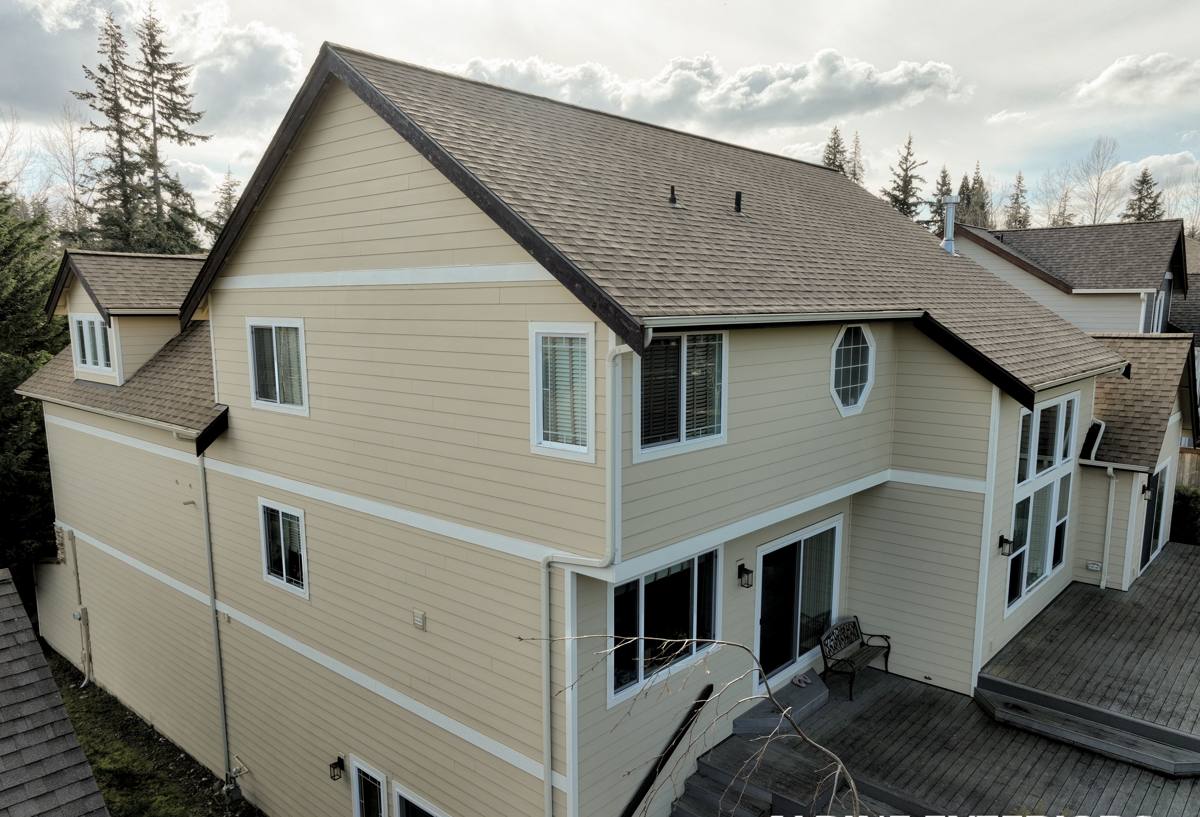
What West Anacortes' Climate Demands From a Deck
Salt Air and Corrosion
Homes closer to the water deal with airborne salt that settles on metal surfaces and accelerates corrosion — this is true for fasteners, connectors, and railing hardware just as much as it is for cars and bikes left outside. Standard electro-galvanized screws and nails, the kind sold in most hardware store multi-packs, are not built for this environment. They'll show rust bleed within a year or two, and once a fastener starts corroding, it loses holding strength long before it looks obviously bad. We spec stainless steel or heavy hot-dip galvanized fasteners and structural connectors for every deck we build here, not just the ones closest to the water — salt drift travels further than people expect on Fidalgo Island.
Driving Rain and Drainage
Skagit County storms don't always fall straight down. Wind-driven rain gets pushed under flashing, into ledger connections, and between decking boards that are spaced too tight. A deck that isn't detailed to shed water at the house connection, the framing, and the surface will eventually rot from the inside — often invisibly, since the damage starts under the decking or behind the ledger board where you can't see it during a casual look.
A Long Moss and Algae Season
Shaded decks, north- or east-facing decks, and anything under overhanging trees will grow moss and algae here for most of the year, not just a few damp winter months. Moss holds moisture against the wood surface and makes boards slick and dangerous underfoot. Material choice, board spacing, and even how much sun exposure a deck gets factor into how much upkeep an owner is signing up for.
Choosing a Decking Material for This Climate
There's no single "best" decking material — it depends on how much maintenance you want to do, your budget, and how exposed the deck is. Here's how the common options actually perform in a marine, high-moisture climate like ours:
| Material | Moisture & Rot Resistance | Maintenance | Typical Lifespan Here |
|---|---|---|---|
| Cedar | Naturally rot- and insect-resistant when properly finished; needs the finish maintained | Re-stain or re-seal every 2-3 years; more often on sun/rain-exposed sides | 15-20+ years with upkeep |
| Pressure-Treated Pine | Good if fasteners and hardware match the treatment chemicals; can still cup or check | Sealing recommended after initial drying; periodic re-sealing | 15-20 years |
| Composite Decking | Excellent — doesn't rot, but can trap moisture underneath if airflow is poor | Occasional washing to control surface algae/moss; no staining or sealing | 25-30 years, per manufacturer warranty |
| Tropical Hardwood (e.g., ipe) | Very high natural density and rot resistance | Periodic oiling to maintain color; otherwise low | 25+ years |
We're honest with clients about trade-offs rather than pushing one product line. Composite costs more up front but removes the staining cycle entirely, which matters if you don't want a recurring maintenance task. Cedar looks the most natural and is often the right call for a covered or partially shaded deck where UV exposure — and therefore fading — is less of an issue. Whatever material you choose, board spacing and airflow underneath the deck matter as much as the board itself for how well it sheds water and resists moss.
What a Correctly Built Deck Actually Involves
Footings and Framing
Footings need to be sized and set below the local frost depth and bear on undisturbed or properly compacted soil — this is a code requirement, not a suggestion, and it's inspected. Undersized or shallow footings are one of the more common problems we find on older decks we're asked to repair or replace. Framing lumber should be rated for ground contact where it's close to grade, and every structural connection — joist hangers, post bases, beam-to-post connections — should use hardware rated for the fastener and treatment chemicals involved.
The Ledger Board Connection
Where a deck attaches to the house is the single most important waterproofing detail on the whole project. A poorly flashed ledger board lets water track behind the siding and into the house's wall framing — a problem that can go unnoticed for years and turn into a much larger repair than the deck itself. Correct practice means proper flashing integrated with the house's water-resistive barrier, a gap or flashing detail that lets water drain rather than pool, and lag bolts or structural screws rated for the load and the moisture exposure, not just deck screws.
Fasteners and Hardware
As covered above, this is where cutting corners shows up fastest in a marine climate. We match fastener material to the decking material and to the treatment chemicals in the lumber, since some combinations actively accelerate corrosion. Hidden fastener systems are an option on composite and some hardwood decking for a cleaner look, but they still need to be rated for exterior, coastal-adjacent use.
Board Spacing and Drainage
Gaps between boards need to be wide enough to let water drain and air circulate underneath, but not so wide that they become a hazard or trap debris. This detail directly affects how much moss and algae build up over time — a deck that drains well and gets airflow underneath stays drier and grows far less moss than one that doesn't.
Railings, Guardrails, and Local Code
Any deck more than 30 inches above grade needs a code-compliant guardrail — generally 36 inches high for residential decks, with baluster spacing that won't allow a 4-inch sphere to pass through. Anacortes and Skagit County permitting follows the adopted state building code, and inspections check these details along with footing depth, ledger attachment, and structural connections. We pull permits and coordinate inspections as part of the job rather than leaving that step to the homeowner — it's not extra paperwork, it's what keeps the deck insurable and sellable down the road.
Our Process for a West Anacortes Deck Project
- On-site assessment. We look at sun exposure, drainage on the lot, proximity to water/wind exposure, and the condition of the house wall where the deck will attach.
- Design and material selection. We walk through decking, railing, and structural options with honest cost and maintenance trade-offs for your specific site.
- Permitting. We handle the permit submission and schedule required inspections with the local building department.
- Footings and framing. Footings are set to code depth, framing goes up with corrosion-appropriate hardware throughout.
- Ledger flashing and structural connection. This step gets the same attention as roof flashing — it's the part that fails silently if rushed.
- Decking, railing, and finish work. Boards, railings, and any stairs go in with spacing and fastening details matched to the material.
- Final walkthrough and inspection. We confirm the deck passes inspection and walk the homeowner through basic care specific to the material chosen.
Maintaining a Deck in a Salt Air, High-Moisture Climate
Every deck needs some upkeep here — the material just determines how much. A simple seasonal routine keeps most decks looking good and structurally sound for decades:
- Sweep debris off the deck surface regularly, especially in fall, so leaves and needles don't hold moisture against the boards
- Wash the surface at least once a year to remove early moss and algae growth before it gets established
- Check and re-tighten or replace any fasteners showing rust bleed or corrosion, particularly on railings and stair connections
- Re-seal or re-stain wood decking on the manufacturer's or installer's recommended schedule, not just when it looks faded
- Inspect the ledger board area and flashing yearly for any signs of water staining or soft wood on the adjacent siding
- Keep gutters and downspouts near the deck clear so roof runoff isn't dumping extra water onto or under the deck
Why Hire a Crew That Already Works in West Anacortes
A deck built to a generic national code minimum will often survive fine in a dry inland climate and still fail early here. Contractors who work regularly in West Anacortes and across Skagit County already know which fastener grades hold up against the salt air, how deep footings need to go for the local frost line, and which spots on a given lot get the worst wind-driven rain or the heaviest moss growth. That local pattern recognition is what separates a deck that needs attention again in five years from one that's still solid in twenty-five.
We also already have a working relationship with the local permitting process, which keeps the project moving instead of stalling on paperwork or inspection scheduling.
If you're planning a new deck or replacing one that's showing its age, we're happy to take a look and give you an honest read on what it needs. Use the form below to request a free, no-pressure estimate.