 Anacortes Siding
 Storm Damage Roof Repair for Edison Homes
Edison sits out on the open farmland between Anacortes and Bow, in a stretch of Skagit County where the wind has nothing to slow it down before it hits a roofline. Between the flat exposure of the fields and the salt-laden air coming off Samish and Padilla Bay, roofs out here take a different kind of beating than roofs tucked into town lots with windbreaks on every side. When a storm rolls through and knocks loose shingles, lifts flashing, or drives rain sideways under a ridge cap, the damage is rarely as simple as it looks from the ground. We repair storm-damaged roofs for homes and outbuildings around Edison, and we build every repair around what this particular stretch of Skagit County actually does to a roof over time.
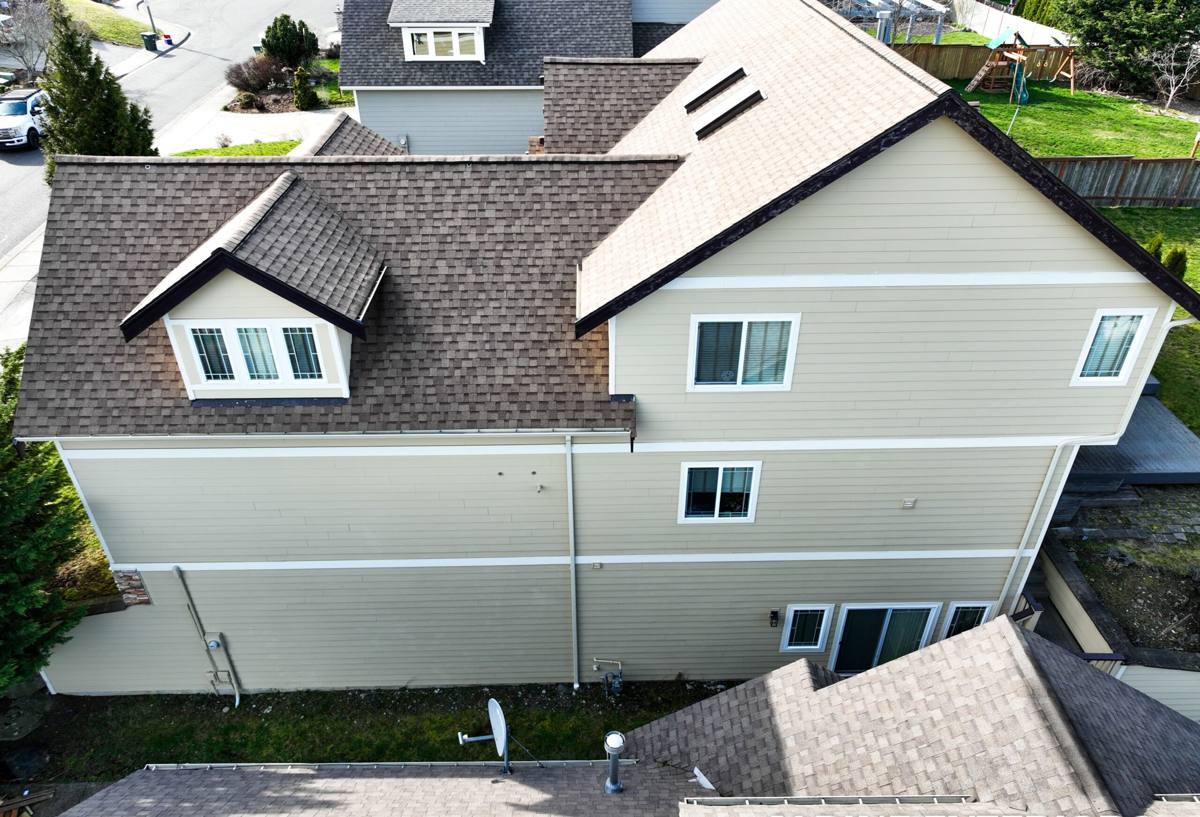
Why Edison Roofs Take Storm Damage Differently
A lot of general "storm damage" advice assumes a suburban roof with some tree cover and moderate wind exposure. Edison isn't that. It's open, low-lying farm country close to tidal water, and that combination shows up in a few specific ways.
Wind Exposure With Nothing to Break It
Without hills or dense tree lines to slow it down, wind coming across the flats hits roof edges, ridges, and any loose or aging shingle tab at close to full force. Uplift damage tends to start at the edges and eaves first, then work inward — which is why a storm that only "looks" like it lifted a few shingles near the gutter line often has more going on underneath once we get up there.
Salt Air and Metal Fatigue
Proximity to Samish and Padilla Bay means a steady low-level exposure to salt in the air, even on days with no obvious storm activity. Salt accelerates corrosion on exposed fasteners, flashing, and any galvanized metal that isn't fully protected. After a storm, a nail or flashing edge that would hold fine on a drier inland roof can already be weakened enough to fail. This is one reason we check fastener and flashing condition on every storm repair here, not just the shingles themselves.
A Long, Wet Moss Season
Skagit County's marine climate gives moss a long growing window, and Edison's damp, low-lying setting is about as favorable to moss as it gets. Moss holds moisture against the roof surface, works its way under shingle tabs, and — critically for storm repair — hides existing damage. A roof that looks intact under a layer of moss can already have soft decking or lifted tabs underneath, so storm inspections here always include pulling back moss growth to see what's actually happening at the deck.
What a Storm Actually Does to a Roof
Storm damage isn't always the dramatic missing-shingle photo people expect. The most common issues we find on Edison roofs after wind and driving rain events include:
- Shingle tabs lifted or creased at the edges and ridge, sometimes without full detachment
- Flashing pulled loose or bent at chimneys, vent pipes, and roof-to-wall transitions
- Wind-driven rain forced up under shingle laps, showing up later as an interior stain
- Gutter and edge metal dented or torn loose, redirecting water into fascia and soffits
- Granule loss from wind abrasion, thinning the shingle's UV and weather protection
- Debris impact — branches or blown material — cracking or puncturing individual shingles
- Soft or delaminating decking discovered once damaged shingles are pulled back
Several of these are invisible from the ground and some don't cause a visible leak for weeks or months. That gap between "the storm happened" and "the ceiling stain shows up" is exactly why a prompt, thorough inspection matters more than waiting to see if a leak develops.
Our Process for a Storm Damage Call
1. Emergency Stabilization
If a roof has active exposure — a hole, torn-off section, or displaced flashing letting water in right now — the first priority is stopping water intrusion. That usually means a properly secured tarp or temporary cover, done correctly so it doesn't create new damage (a badly nailed tarp can do almost as much harm as the storm did). This step buys time; it is never the finished repair.
2. Full Roof Inspection, Not Just the Obvious Spot
We walk the whole roof, not just the area the homeowner flags. Wind damage on an exposed, open-country roof like most in Edison often shows up in more than one location, and moss cover can be hiding related damage nearby. We check decking condition, fastener integrity, flashing at every penetration, and the general shingle field — not only the spot where the leak or missing shingle is obvious.
3. Documentation for Insurance
Storm damage is one of the more straightforward insurance claim categories, but the claim is only as good as the documentation behind it. We photograph and note damage clearly enough to support a claim, and we're glad to walk an adjuster through what we found. We work for the homeowner, not the insurance company — our job is an honest, accurate assessment either way.
4. The Actual Repair
Depending on scope, that means replacing damaged shingles and matching them as closely as possible to the existing roof, re-securing or replacing failed flashing, addressing any soft decking we found underneath, and re-checking fastener condition given the salt exposure out here. We don't patch over decking that's already compromised — doing that just relocates the next leak a few feet over.
5. Follow-Through
Once repairs are done, we go back over the work and confirm water is shedding correctly at every seam and transition we touched. A storm repair that isn't checked under real conditions is a guess, not a finished job.
Repair vs. Replacement: How We Decide
Not every storm-damaged roof needs to be replaced, and not every roof can be reasonably patched. The honest answer depends on the roof's age, how widespread the damage is, and what we find at the decking level once we open things up.
| Factor | Leans Toward Repair | Leans Toward Replacement |
|---|---|---|
| Roof age | Under 12–15 years, shingles otherwise sound | Near or past expected lifespan already |
| Damage spread | Localized to one section or edge | Scattered across multiple roof planes |
| Decking condition | Solid, no rot found on inspection | Soft or delaminated decking in multiple spots |
| Moss/moisture history | Roof has been reasonably maintained | Long-term moss coverage with underlying deck damage |
| Shingle match | Matching shingles reasonably available | Discontinued product, obvious patch mismatch |
We'll always tell you plainly which side of that table your roof falls on, including when a repair is the right call even though a replacement would be the bigger job for us.
Why It Matters That We Already Work Edison
A roof in Edison isn't dealing with the same conditions as a roof in a sheltered Anacortes neighborhood a few miles away, and a crew that doesn't work this specific stretch of Skagit County regularly can miss that. We know to check for salt-accelerated fastener corrosion even when the shingles look fine, to expect a longer moss season affecting deck condition, and to account for open-field wind exposure when we assess uplift damage. That local pattern recognition is the difference between a repair that addresses what actually happened and one that just re-covers the visible symptom.
What to Do Right After a Storm
If you've just been through a wind or rain event and are worried about your roof, here's a practical checklist:
- Check ceilings and attic spaces for new staining, even faint discoloration
- Look at the roof from the ground for obviously displaced or missing shingles
- Note any debris that landed on the roof, including branches that may have caused impact damage
- Photograph anything visible before cleanup, for your own records and any insurance claim
- Avoid climbing onto the roof yourself, especially on wet or moss-covered surfaces
- Call for an inspection promptly — delayed water intrusion is often worse than the initial visible damage
A Straightforward Approach to an Honest Problem
Storm damage repair shouldn't involve guesswork or upselling. Our approach is to find exactly what the storm did — no more, no less — explain it in plain terms, and fix it correctly the first time. For Edison's open exposure and salt air, that often means looking a little harder than a quick shingle swap would suggest, but it's what keeps a repair from becoming a repeat call next storm season.
If your roof took damage in a recent storm, or you're just not sure after a rough weather stretch, we're happy to take a look. Reach out for a free, no-pressure estimate using the form below.