 Anacortes Siding
 Roofing in Skyline: A Different Set of Problems Than Inland Homes
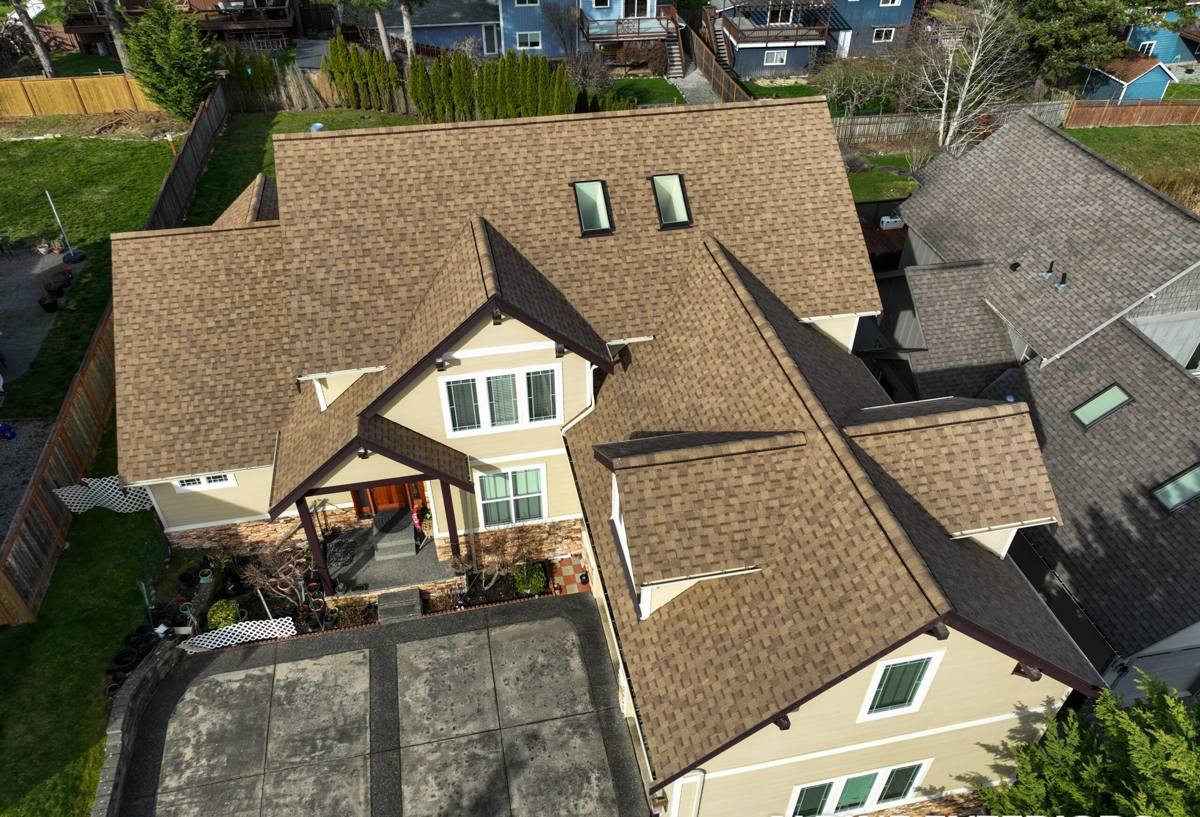
Skyline sits close enough to the water that homes here take on a different kind of weathering than roofs just a few miles inland in Skagit County. The combination of salt-laden air off the surrounding waterways, wind-driven rain that gets pushed sideways under normal flashing details, and a moss season that can run eight months out of the year means a roof here ages differently than one in a dry inland subdivision. A replacement that doesn't account for those three things will look fine for a year or two and then start failing in ways that are hard to trace back to the original install.
This page is specifically about roof replacement for homes in the Skyline area of Anacortes — what the climate demands, what a correct job actually includes, and how we approach it when we already know the neighborhood.
How Salt Air, Rain, and Moss Actually Damage a Roof
Salt Air
Airborne salt accelerates corrosion on any exposed metal — flashing, fasteners, vent stacks, and gutter hardware. Once corrosion starts at a nail head or a flashing seam, water finds that weak point long before the surrounding roofing material shows any wear. Homes closer to open water see this faster, but it affects the whole area over time.
Driving Rain
Anacortes gets a lot of rain that doesn't just fall straight down — it comes in sideways off the water during storms. That kind of weather exposes weaknesses that a calm, straight-down rain never would: shallow flashing laps, under-driven or backed-out nails, and step flashing that was cut short at a wall intersection. A roof built for "average" rain in a less exposed location can leak here even when every shingle looks intact.
Moss
The long wet season and shaded lots common around Skyline create ideal moss conditions. Moss isn't just cosmetic — it holds moisture against the roofing surface, lifts shingle edges as it grows, and works its way under laps and around fasteners. Left unchecked over several seasons, moss growth shortens the usable life of a roof significantly, especially on north-facing slopes and areas shaded by mature trees.
Signs a Skyline Roof Needs Replacement, Not Another Repair
Not every problem calls for a full replacement, and we'll tell you honestly when a repair is the right call. But there's a point where patching stops making sense — where the cost and disruption of repeated repairs exceeds what a properly built replacement costs over its lifespan. Watch for these:
- Granule loss heavy enough that you're finding granules in gutters every season, not just after a new roof settles
- Shingles that are cupping, curling, or cracking across large sections rather than one isolated area
- Moss or algae staining that returns within months of cleaning, even after treatment
- Soft spots or sagging in the roof deck when walked on — a sign moisture has reached the sheathing
- Daylight visible through the roof deck from inside the attic
- Flashing that's visibly corroded, especially around chimneys, skylights, and wall intersections
- Multiple active leaks, or leaks that reappear in a different spot after being patched
- A roof that's past 20-25 years old (for asphalt) and has never had underlayment or ventilation upgraded
What a Correct Roof Replacement Involves Here
Full Tear-Off, Not an Overlay
We don't recommend layering new shingles over old ones on homes in this area. An overlay traps moisture between layers, hides deck damage that's already happening, and does nothing for the ventilation and flashing upgrades that a marine-exposed roof actually needs. A full tear-off lets us inspect the deck, replace any damaged sheathing, and start clean.
Deck Inspection and Repair
Once the old roofing is off, we check the entire deck for soft spots, delamination, or rot — most commonly found around old flashing points, valleys, and anywhere moss has been sitting long-term. Any compromised sheathing gets replaced before anything new goes down. Skipping this step is one of the most common shortcuts in this trade, and it's the one that causes the most expensive failures later.
Underlayment Built for Wind-Driven Rain
Given how often rain here comes in at an angle, we use synthetic underlayment with self-adhering ice-and-water membrane at the vulnerable points — eaves, valleys, penetrations, and wall intersections — rather than relying on standard felt across the whole deck. This is the layer that protects the home if wind ever lifts or drives water past the shingles themselves.
Flashing That Accounts for Salt Exposure
We use corrosion-resistant flashing and fastener materials appropriate for a marine-influenced environment, with proper step flashing at walls, counter-flashing at chimneys, and continuous coverage at valleys. Flashing is where most roof leaks actually start, and it's also the detail most often rushed on a fast, low-cost install.
Ventilation That Fights Moss and Moisture
Balanced intake and exhaust ventilation keeps the underside of the roof deck drier and closer to outdoor temperature, which slows moss growth and reduces condensation-driven rot. On many Skyline homes, especially older ones, ventilation was never brought up to a standard that matches how wet this climate actually is — replacement is the right time to fix that.
Comparing Roofing Materials for This Climate
There's no single "best" roofing material — the right choice depends on your home's structure, your budget, and how much long-term maintenance you want to take on. Here's how the common options actually perform under Skyline's specific conditions:
| Material | Moss Resistance | Salt-Air Durability | Typical Lifespan | Maintenance Burden |
|---|---|---|---|---|
| Architectural Asphalt Shingle | Moderate — needs periodic cleaning/treatment | Good with corrosion-resistant flashing/fasteners | 25-30 years | Low to moderate |
| Standing Seam Metal | Very good — sheds moisture, little surface for growth | Requires marine-grade coatings/fasteners to avoid corrosion | 40-50+ years | Low |
| Cedar Shake | Poor without diligent upkeep — holds moisture readily | Requires regular treatment near salt air | 20-30 years with upkeep | High |
| Composite/Synthetic Shingle | Good — engineered surface resists moss better than wood | Good | 30-50 years | Low |
Our professional standard is to steer clients away from untreated cedar shake on homes in this specific micro-climate — not because it's a bad product broadly, but because the maintenance schedule needed to keep it performing well near the water is more than most homeowners realistically keep up with, and the moisture-holding behavior works directly against what this climate punishes. That's a maintenance and moisture-behavior trade-off we'll walk through honestly, not a knock on the material itself.
Our Roof Replacement Process
- On-site inspection. We walk the roof and attic, check current ventilation, flashing condition, and deck integrity, and take photos of anything that needs discussion.
- Written estimate with material options. You get a clear breakdown of scope, materials, and price — no vague allowances that turn into surprise add-ons mid-project.
- Scheduling around weather. Given how much of the year sees active rain here, we plan tear-off in sections and keep the deck covered and protected at every stage — we don't leave a home exposed overnight to save a day of labor.
- Tear-off and deck repair. Old roofing comes off, the deck gets inspected, and any damaged sheathing is replaced before moving forward.
- Underlayment, flashing, and ventilation install. This is where the climate-specific details described above actually get built in.
- Final roofing installation. Materials go down to manufacturer specification, with attention to nailing patterns and exposure — details that directly affect wind and warranty performance.
- Cleanup and final walkthrough. We clear debris, magnet-sweep for stray fasteners, and walk the finished roof with you before calling the job done.
What Affects the Cost of a Skyline Roof Replacement
Every home is different, so we won't quote a number without seeing the roof, but these are the factors that most often move the price up or down:
- Roof size and number of planes, valleys, and penetrations
- Pitch and accessibility — steep or high roofs take longer and require more safety setup
- Extent of deck repair needed once old roofing is removed
- Material choice (see comparison above) and whether upgraded underlayment is needed throughout
- Condition of existing ventilation and whether it needs to be added or corrected
- Chimney, skylight, and vent penetration count — each one is a flashing detail that adds labor
- Disposal and haul-away of old roofing material
Why Hiring a Crew That Already Works Skyline Matters
A roof replacement done to a generic standard can still fail here in ways it wouldn't somewhere drier and further from the water. A crew that's worked this specific area knows which flashing details actually hold up against wind-driven rain off the water, which slopes need extra ventilation attention because of moss, and which fastener and flashing materials are worth the upgrade given the salt exposure. That's knowledge built from repetition in this exact climate, not a generalized checklist applied everywhere the same way.
It also means realistic scheduling — knowing how to sequence a tear-off around Anacortes' wet stretches so your home isn't sitting open to the weather longer than it needs to be, and knowing which building department and permit steps apply locally so the project moves without unnecessary delay.
After Your New Roof: Living With Moss Season
A correctly built roof still benefits from basic upkeep in this climate. A yearly inspection and gentle moss treatment — not high-pressure washing, which can strip granules and shorten shingle life — keeps moss from re-establishing on shaded or north-facing slopes. Keeping gutters clear and trimming back branches that shade the roof both reduce how much moisture sits on the surface through the wet months. We're happy to talk through a simple maintenance schedule once your new roof is in.
If your Skyline home's roof is showing its age — or you just want an honest opinion on whether repair or replacement makes more sense — we'll come take a look and give you a straightforward, no-pressure estimate. Use the form below to get started.