 Anacortes Siding
 Why Similk Beach Homes Take a Different Kind of Beating
Homes along Similk Bay and the surrounding stretch of Fidalgo Island deal with a combination most inland Skagit County houses never see. Wind off the water carries salt, which finds its way into every seam, fastener, and unprotected edge on a home's exterior. Add the region's long, wet fall-through-spring stretch of driving rain, and siding here is under near-constant moisture load for a good chunk of the year. Then there's shade: mature trees and marine humidity together create the kind of "moss season" that can run from late fall well into spring, coating north-facing and shaded walls faster than most homeowners expect.
None of that is unusual for waterfront and near-waterfront Skagit County properties. But it does mean the siding material and the installation details matter more here than they would on a home twenty miles inland. Salt-air corrosion, wind-driven rain intrusion, and moss growth aren't cosmetic nuisances — they're the three things that shorten the life of the wrong siding system, or of the right system installed carelessly.
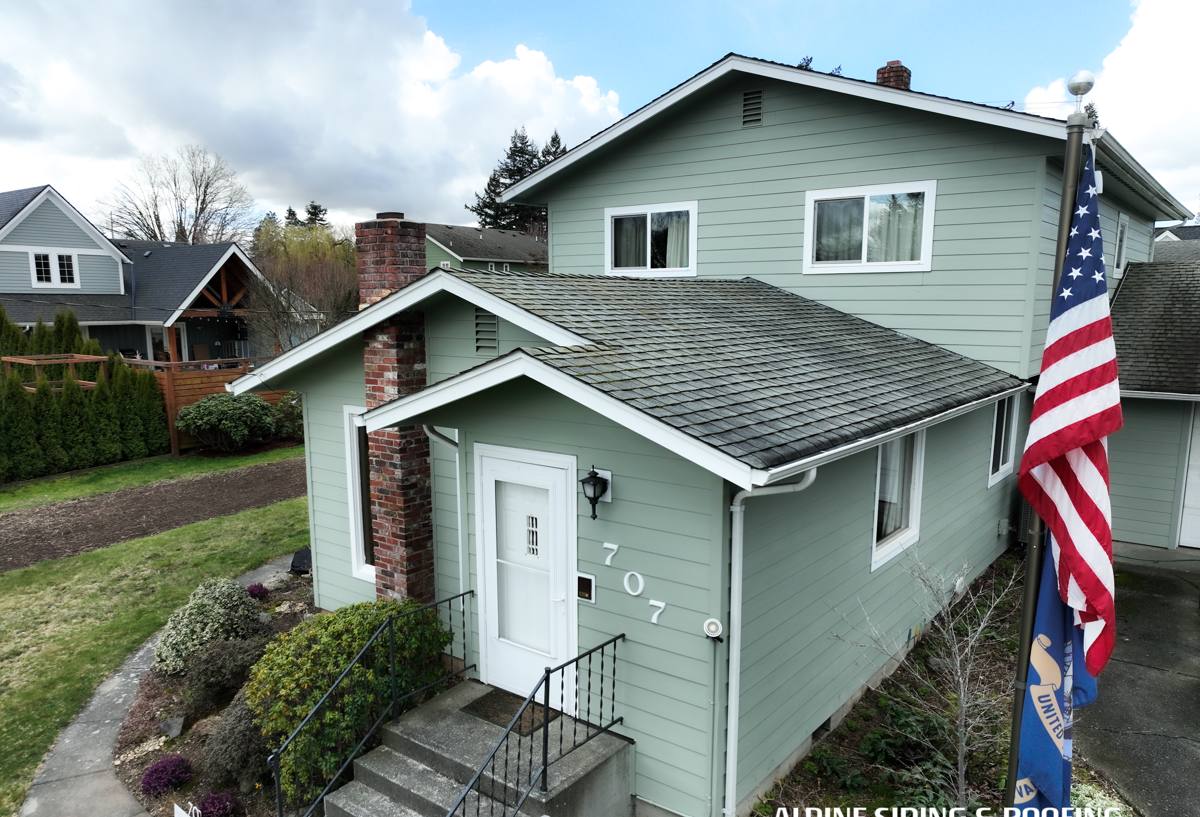
What James Hardie Fiber Cement Actually Solves
James Hardie siding is cement, sand, and cellulose fiber, cured into a dense, stable board. That composition matters directly for a home near Similk Beach for a few reasons:
- It doesn't rot, and it isn't a food source for the organisms that thrive in a shaded, moist marine environment.
- It's dimensionally stable across our wet winters and drier summers, so it doesn't cup, swell, or telegraph fastener lines the way some wood-based products can over time.
- The ColorPlus factory finish is baked on under controlled conditions, giving it better adhesion and fade resistance against sun and salt exposure than field-applied paint typically achieves.
- It's non-combustible, which is a genuine benefit anywhere, and one more thing homeowners don't have to think about once it's on the wall.
None of that makes a poor installation bulletproof. But it means the material itself isn't the weak link — which lets us put our attention where it actually belongs: flashing, fastening, clearances, and sealant details.
Choosing the Right Hardie Product Line and Finish for This Climate
James Hardie engineers its siding by climate zone, and western Washington — including Similk Beach — falls into the HZ5 zone, built for moderate, wet, freeze-prone conditions rather than the hot, humid HZ10 zone used in the Gulf Coast and Southeast. That distinction affects the specific formulation of the board, and it's one reason we only order HZ5-rated product for jobs in this area rather than treating "Hardie siding" as one generic product.
| Product / Finish | Where It Fits on a Similk Beach Home | Why |
|---|---|---|
| HardiePlank Lap Siding (HZ5) | Most full-home installations | Traditional profile, proven track record in wet marine climates |
| HardiePanel with battens | Modern or contemporary waterfront homes | Clean vertical lines, fewer horizontal joints for water to track along |
| HardieTrim boards | Corner posts, fascia, window and door casing | Won't rot at end grain the way wood trim does under constant rain exposure |
| ColorPlus factory finish | Recommended for all waterfront and near-waterfront applications | Factory-cured finish holds up to salt air and UV better than field paint |
Color choice matters here too, mostly for maintenance rather than looks. Darker ColorPlus finishes show water spotting and pollen less than very light ones, but any ColorPlus color will outperform a field-painted finish against salt exposure over the life of the siding.
Field Paint vs. ColorPlus in a Salt-Air Environment
We'll install primed Hardie board and field-paint it if a homeowner specifically wants that option, but we're upfront about the trade-off: field paint on any substrate near the water tends to need repainting sooner than a ColorPlus finish needs any attention at all. For a Similk Beach property, that's the difference between essentially zero exterior paint maintenance for well over a decade and a repaint cycle measured in a handful of years.
What Correct Installation Looks Like on a Waterfront-Adjacent Home
Moisture Management Behind the Siding
The siding itself is only half the system. Behind it, a correctly installed weather-resistive barrier and, where called for, a rainscreen gap give any incidental moisture that gets past the cladding a way to drain and dry instead of sitting against the sheathing. On a home exposed to wind-driven rain off the water, this layer does as much work as the siding itself.
Flashing and Clearances
Window heads, deck ledgers, roof-to-wall transitions, and the bottom edge of the siding are where water intrusion actually starts. James Hardie's installation specifications call for specific clearances — siding held up off decks, patios, and grade, gaps maintained at trim, and flashing integrated correctly at every horizontal transition. Skipping these details doesn't show up as a problem on day one; it shows up as rot in the sheathing two or three years later, hidden behind siding that still looks fine from the curb.
Fastening
Hardie specifies fastener type, spacing, and placement, and those specs assume the installer is actually following them. Over-driven nails crack the board's edge and create a moisture entry point; under-driven or misplaced fasteners leave siding loose enough to work in wind. In a location that gets real wind off the water, fastening discipline isn't optional.
Sealant Details
Not every joint on a Hardie installation gets caulked — some are designed to be left open so water can drain — but the joints that do need sealant need the right product, applied correctly, at trim, penetrations, and terminations. Marine-grade exposure is a good argument for using quality sealants rather than whatever's cheapest, since resealing means re-accessing scaffolding or ladders on a home that may not be simple to get around.
Our Process for a Similk Beach Siding Replacement
- Walk-through and assessment — we look at existing siding, trim condition, and any visible moisture or moss staining before we quote anything.
- Sheathing check — on tear-off jobs, we inspect what's underneath. Salt-air and moisture exposure sometimes mean sheathing repair is part of the real scope, and we'd rather flag that upfront than find it mid-project.
- Product and color selection — HZ5-rated Hardie product, ColorPlus finish recommended, color and profile chosen with the site's sun and shade exposure in mind.
- Permitting — siding replacement in Skagit County and the City of Anacortes typically requires a building permit; we handle that as part of the project rather than leaving it to the homeowner.
- Tear-off and prep — old siding removed, weather-resistive barrier and any needed sheathing repair addressed before a single new board goes up.
- Installation to Hardie's HZ5 specifications — correct fastening, clearances, and flashing at every transition, not just the visible surface.
- Trim and detail work — corners, fascia, and penetrations finished with the same attention as the field of the wall.
- Final walkthrough and cleanup — job-site debris cleared, and we walk the finished exterior with the homeowner before calling it done.
Cost Factors for a Project in This Area
Every home is different, so we won't quote a number without seeing the property, but these are the variables that actually move the price on a Similk Beach job:
| Factor | Why It Matters Here |
|---|---|
| Existing siding material | Some materials tear off and dispose of more easily than others |
| Sheathing condition | Long-term moisture and salt exposure occasionally means sections need replacement before new siding goes on |
| Home access and site layout | Waterfront and bluff-adjacent lots can be harder to stage scaffolding and material delivery on |
| Amount of trim and architectural detail | Corners, gables, and dormers all add labor beyond flat wall footage |
| ColorPlus vs. field-painted finish | ColorPlus carries a material premium but removes a recurring paint cost |
Living With Moss Season and Salt Air After Installation
Correctly installed Hardie siding is low-maintenance, not zero-maintenance. A few habits keep it looking and performing the way it should through Skagit County's wet season:
- Rinse siding with a garden hose periodically, especially shaded and north-facing walls where moss and mildew take hold first.
- Keep gutters clear so overflow doesn't run down the face of the siding and stain it.
- Trim back vegetation and tree limbs near the house to let walls dry out between rain events — the single biggest factor in how fast moss establishes.
- Have caulking and trim joints looked at every year or two; sealant is the one component that eventually needs attention before the siding itself ever will.
- Avoid high-pressure washing directly against the siding at close range — a garden hose or low-pressure setting is enough and won't force water behind panels.
Why It Matters to Hire a Crew That Already Works This Area
A siding installer who mostly works inland Skagit County jobs can still install Hardie correctly on paper, but they may not have thought through how a west-facing wall on Similk Bay takes wind-driven rain differently than a sheltered lot a few miles away, or how much shade a given site actually holds moss-friendly moisture. Crews who work this specific stretch of Fidalgo Island regularly also already know the local permitting process, have a feel for which lots need extra staging planning, and aren't guessing at how the marine climate here behaves over a full year rather than during one dry site visit.
That local pattern-recognition doesn't replace following Hardie's installation specifications — it's what makes following them well, on the specific conditions this property faces, second nature instead of a one-off.
If you're planning a siding project on a home in or near Similk Beach, we're happy to take a look and walk you through what it would actually involve — no pressure, no obligation. Use the form below to request a free estimate.