 Anacortes Siding
 Siding Built for Guemes Island's Marine Exposure
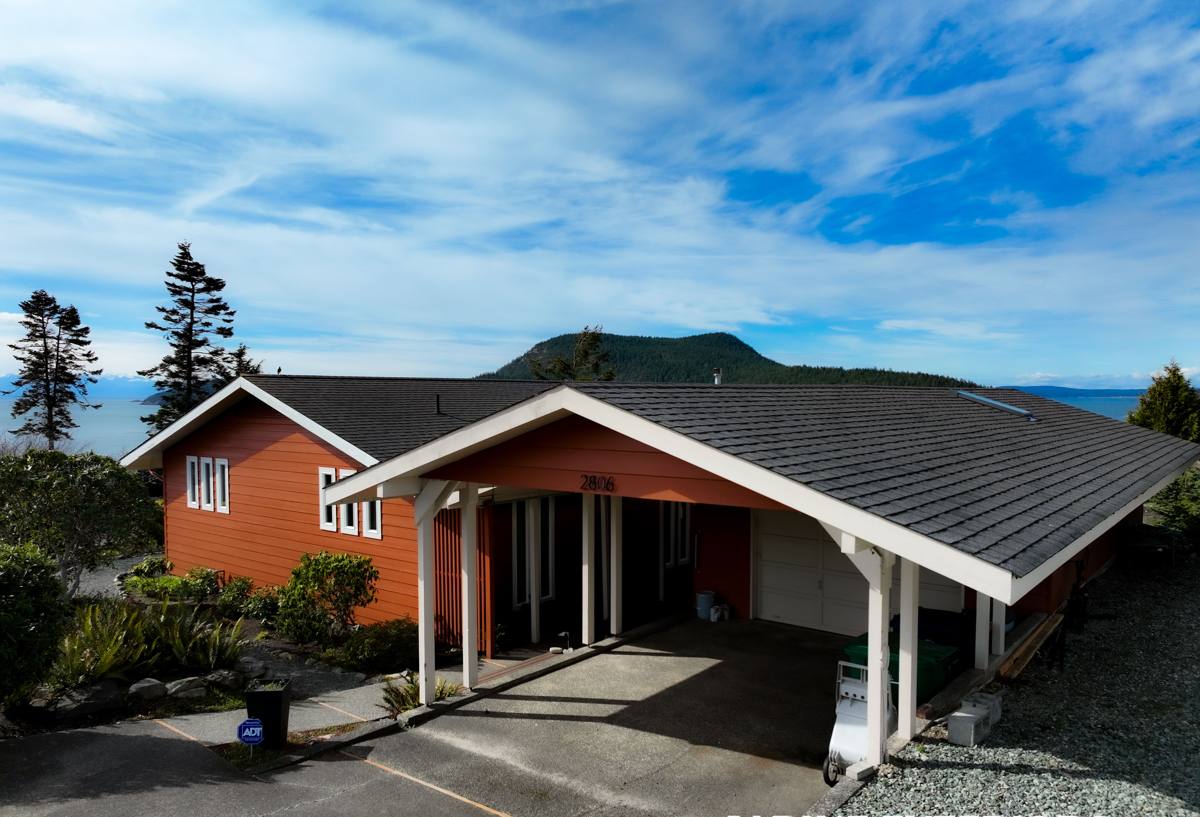
Guemes Island sits in the marine waters north of Anacortes, and that location shapes everything about how a home's exterior ages. Homes here take on salt-laden air off the water, wind-driven rain that gets pushed sideways into walls during winter storms, and long stretches of shade and dampness under fir and cedar canopy that keep siding wet far longer than it would stay wet on a more open, sun-exposed lot. Add in the humidity that settles over Skagit County for much of the year, and you get conditions that are genuinely harder on exterior cladding than what a typical inland Washington home deals with.
None of that means siding on Guemes Island is doomed to fail early. It means the material choice and the installation details matter more here than they do elsewhere. A siding job that would hold up fine in a dry, sheltered neighborhood can fail in five or six years on a waterfront or tree-shaded Guemes Island lot if the product or the installation wasn't matched to the exposure.
How Salt Air, Rain, and Moss Actually Damage Siding
Salt Air
Airborne salt doesn't just sit on the surface — over time it works into seams, fastener heads, and any place moisture can collect. On untreated wood and many painted surfaces, that accelerates finish breakdown and corrosion of exposed metal fasteners and trim. Materials that aren't engineered to resist this kind of exposure show chalking, pitting, and premature fading faster on Guemes Island than they would a few miles inland.
Driving Rain
Winter storms off the Strait of Juan de Fuca and Rosario Strait don't just drop rain straight down — wind pushes it horizontally into wall assemblies, especially on west- and south-facing elevations with less tree cover. If a house doesn't have a properly detailed drainage plane behind the siding, that wind-driven moisture finds its way past seams and laps and into the sheathing, where it causes rot long before anyone sees a problem on the surface.
Moss and Algae Season
Shaded, north-facing walls and anything under heavy tree cover stay damp for weeks at a time through fall, winter, and spring. That's exactly the environment moss and algae need to take hold. On wood, engineered wood, and even some fiber cement products without a durable factory finish, that constant moisture and biological growth eats away at the surface finish and, eventually, the material underneath it.
What a Correct Siding Replacement Actually Involves
Replacing siding on a Guemes Island home isn't just swapping old boards for new ones. Done right, it's a full weatherproofing upgrade to the wall assembly:
- Full tear-off of the old siding so the sheathing underneath can actually be inspected, not just covered over
- Repair or replacement of any rotted or water-damaged sheathing found during tear-off
- Installation of a continuous, properly lapped weather-resistant barrier (WRB)
- A drainage gap or rainscreen detail so any moisture that does get behind the siding can drain and dry instead of sitting against the wall
- Correct flashing at every window, door, and roofline intersection — the single most common place siding jobs fail
- Proper fastener type, placement, and spacing for the specific product and exposure
- Sealed and detailed butt joints and trim intersections, not just caulked-over gaps
Skip any one of these steps and the siding may look fine for a couple of years — the problems that show up later are almost always tied back to something that was rushed or skipped during installation, not a flaw in the material itself.
Why We Only Install James Hardie Fiber Cement
We don't install vinyl, LP SmartSide, cedar, primed spruce, or other fiber cement brands. That's not a marketing position — it's a standard we hold because of what we've seen these materials do in exactly the kind of exposure Guemes Island homes deal with.
Vinyl siding is inexpensive and low-maintenance in mild conditions, but it expands and contracts significantly with temperature swings, and in sustained wind-driven rain, water can work behind panels at the laps. It also fades under UV exposure over time and isn't repairable the way fiber cement is — a damaged panel gets replaced, and the replacement rarely matches faded existing panels perfectly.
Cedar and primed wood siding look great when new, but they demand a maintenance schedule — repainting, caulking, moss treatment — that most homeowners underestimate, and in a damp, shaded marine environment like Guemes Island, that maintenance window shrinks. Skip a cycle and moisture gets in.
LP SmartSide is an engineered wood product with a resin-treated strand board core. It performs reasonably well when installation details are followed exactly, but any breach in the factory coating — a cut edge left unsealed, a fastener hole not treated — gives moisture a path into an OSB-based core, which is far less forgiving of water intrusion than fiber cement.
James Hardie fiber cement is non-combustible, dimensionally stable, and doesn't support the kind of rot or insect damage wood products can suffer. It's engineered specifically for climate zones — the HZ5 product line is built for the colder, wetter conditions the Pacific Northwest sees, including freeze-thaw cycling and prolonged moisture exposure. The ColorPlus factory finish is baked on under controlled conditions, which holds color and resists fading, chipping, and cracking far better than field-applied paint — a real advantage against the salt air and UV exposure this area sees.
Guemes Island Logistics: Why Local Experience Matters
Guemes Island is only reachable by the Guemes Channel ferry, which changes how a siding job has to be planned. Material deliveries, dumpster drop-offs and pickups, and crew scheduling all have to work around ferry sailing times and load capacity — a contractor who hasn't worked the island before will often underestimate how much that adds to project timelines and how much extra coordination it takes to avoid a job stalling out waiting on materials or debris hauling.
A crew that's already done work on Guemes Island knows to batch material orders to minimize ferry trips, understands which parts of the island see the heaviest wind-driven rain exposure, and has a realistic sense of how tree cover and shade affect drying time between installation stages. That experience translates directly into fewer delays and a tighter, more weathertight installation.
Our Process for a Guemes Island Siding Replacement
- On-site assessment — we walk the exterior, check for signs of moisture intrusion, rot, and existing siding failure, and note the specific exposure conditions on each elevation of the home
- Scope and product selection — we recommend the appropriate James Hardie product line and profile for the home's exposure and design
- Logistics planning — material orders and disposal are scheduled around ferry access to keep the job moving without gaps
- Tear-off and sheathing inspection — old siding comes off, and any damaged sheathing is identified and addressed before anything new goes up
- Weather barrier and drainage plane installation — the WRB and rainscreen detailing go in correctly, not as an afterthought
- Hardie siding installation — installed to manufacturer specification for fastening, clearances, and joint treatment
- Flashing and trim detail — every penetration and intersection gets proper flashing, not just caulk
- Final walkthrough — we go over the finished job with the homeowner before calling it complete
Cost Factors for a Guemes Island Siding Project
| Factor | Why It Matters Here |
|---|---|
| Home size and wall complexity | More corners, dormers, and roof intersections mean more flashing detail and labor |
| Extent of sheathing damage | Rot found during tear-off adds repair work that can't be scoped until the old siding is off |
| Siding profile and finish choice | Lap width, texture, and ColorPlus color selection affect material cost |
| Access and site conditions | Waterfront bluffs, steep driveways, or heavy tree cover can affect staging and labor time |
| Ferry-dependent logistics | Material delivery and debris hauling scheduling can affect project timeline, though we plan around this |
Signs Your Guemes Island Home Needs Siding Replacement
- Visible moss or algae staining that returns quickly after cleaning
- Soft spots, warping, or bubbling in existing siding, especially on shaded or exposed elevations
- Paint that's chalking, peeling, or fading unevenly across different sides of the house
- Gaps opening up at seams, corners, or trim boards
- Musty smell or visible staining on interior walls near exterior corners — a sign moisture has already gotten past the siding
- Siding that's original to a home more than 20-25 years old and has never been fully replaced
What to Expect From a Contractor Working on the Island
A siding contractor who regularly works Guemes Island should be upfront about how ferry access affects scheduling, should carry the right materials and equipment over in as few trips as possible, and should be realistic about weather-dependent timelines rather than promising a schedule that ignores the region's rain patterns. If a contractor hasn't asked about your home's specific exposure — which direction it faces, how much tree cover it has, whether it's waterfront — that's a sign they're not accounting for the conditions that actually determine how the job should be done.
If your Guemes Island home's siding is showing wear, or you're planning ahead for a replacement, we're happy to take a look and walk you through what your home specifically needs. Reach out for a free, no-pressure estimate using the form below.