 Anacortes Siding
 Why Cap Sante Homes Wear Out Siding Faster Than Most
Cap Sante sits close enough to the water that homes here take a different kind of beating than siding a few miles inland. The combination of salt-laden air off the marina and channel, driving rain that comes sideways off Rosario Strait, and a moss season that can stretch from October well into April means the siding envelope on a Cap Sante home is working overtime year-round. We've replaced siding on enough homes in this pocket of Anacortes to know the failure patterns are consistent: north and west-facing walls that never fully dry out, trim boards gone soft at the bottom edge, and paint that chalks and fades years before it should because salt air breaks down cheaper coatings faster than a standard exposure rating accounts for.
None of that is unique to any one house — it's the environment. But it means a siding replacement in Cap Sante isn't the same job as one in a drier part of Skagit County. The material, the flashing details, and the finish all need to be chosen with that exposure in mind, not just matched to whatever was on the house before.
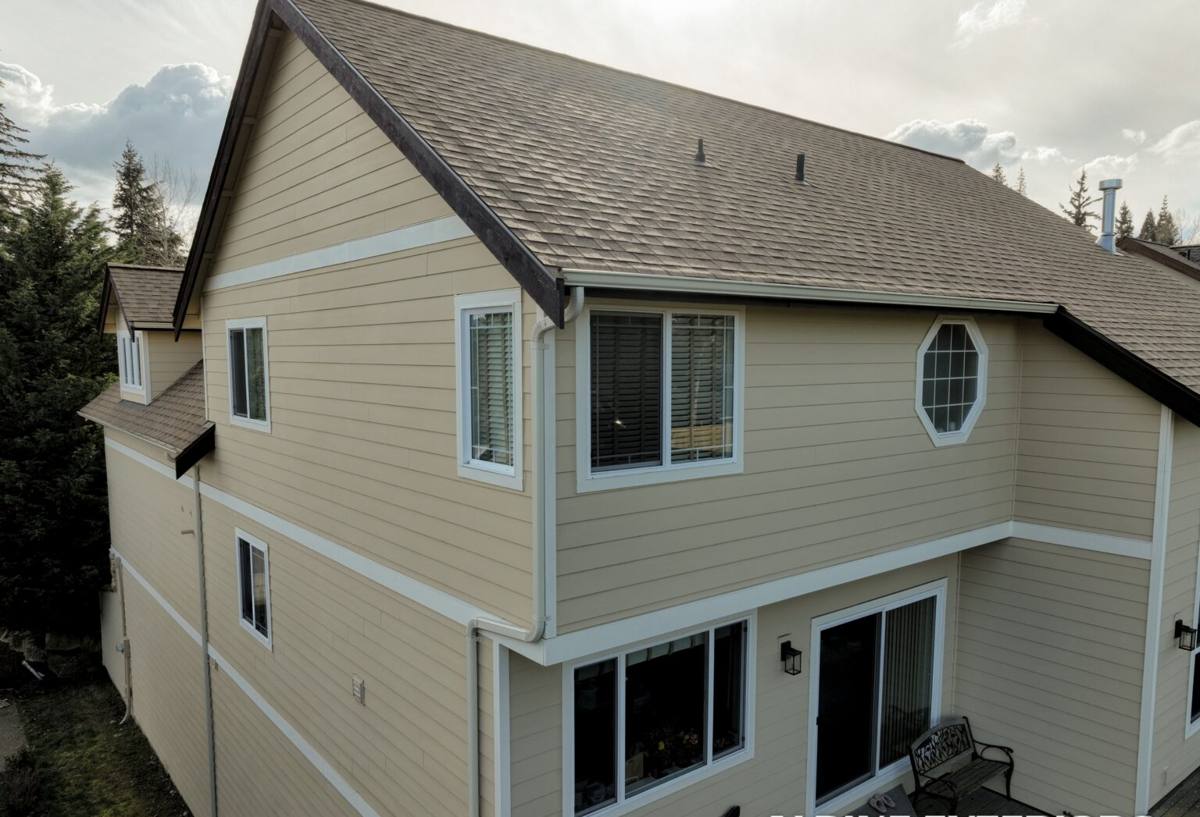
What Salt Air Actually Does to Siding Over Time
Salt air is corrosive to more than metal. It accelerates the breakdown of paint films, softens caulk joints faster than a typical warranty anticipates, and — combined with constant damp — creates ideal conditions for the kind of moss and algae growth that holds moisture against the wall assembly. On wood-based products (cedar, primed spruce, and even some engineered wood sidings), that moisture cycle is what eventually leads to swelling at butt joints, delamination at cut edges, and soft spots that show up first at the bottom courses and around window sills.
Vinyl siding handles the moisture side reasonably well since it doesn't absorb water, but it has its own problem in this exposure: UV and salt air both attack the plasticizers that keep vinyl flexible, so panels that started flat can warp, oil-can, or become brittle years before a homeowner expects to replace them. Fiber cement doesn't have either weakness — it doesn't absorb water like wood, and it isn't a petroleum-based material that degrades under UV and salt exposure the way vinyl does. That's a big part of why we only install James Hardie fiber cement on homes in this area.
Moss Season and the Parts of the House Most at Risk
Moss doesn't damage siding directly, but it holds moisture against the surface and it grows fastest exactly where a house dries slowest — north walls, under eaves, behind shrubs, and along ground-contact trim. Those are the same spots we find rot and coating failure on old siding during a tear-off. When we replace siding in Cap Sante, we pay specific attention to:
- Lowest siding course clearance above grade, decking, and hardscape
- Kickout flashing at every roof-to-wall intersection so runoff doesn't wash straight down the wall
- Trim and corner boards facing north or shaded by mature trees or neighboring structures
- Any spot where the old siding shows moss growth right at a seam or fastener line — usually a sign water was getting behind the panel, not just sitting on top of it
What a Correct Siding Replacement Involves
A siding replacement isn't just stripping old panels and nailing up new ones. Done right, it's a full envelope inspection with the wall open, and that's the only point in a home's life when you can see and fix what's actually happening underneath.
1. Tear-Off and Sheathing Inspection
Once the old siding comes off, we inspect the sheathing, house wrap, and framing for rot, delamination, or prior water intrusion. In a marine-exposure neighborhood like Cap Sante, this step matters more than in drier inland areas — moisture problems that started small often aren't visible from outside until the siding comes off.
2. Repair Before Cover-Up
Any soft or damaged sheathing gets cut out and replaced. We don't re-side over compromised wood — it's the single most common corner cut in this trade, and it's exactly what turns a 30-year siding job into a 10-year problem.
3. Weather-Resistive Barrier and Flashing
New house wrap goes on with correct shingle-lap sequencing so water sheds outward at every seam. Flashing gets installed at windows, doors, and every roof-to-wall transition — this is the detail that determines whether driving rain off the strait stays outside the wall assembly or finds its way in over the following winters.
4. Rainscreen Gap
For a marine-exposure job like this, we install a rainscreen furring system behind the Hardie panels wherever the wall assembly allows it. That gap lets any moisture that does get past the cladding drain and dry instead of sitting against the sheathing — it's one of the most effective upgrades available for a house this close to the water.
5. Hardie Installation to Manufacturer Spec
Fastener placement, panel gaps, and caulking all follow James Hardie's published installation guidelines exactly — not "close enough." Installation errors are the most common reason any fiber cement job underperforms, and they're also the most common reason a warranty claim gets denied.
6. Trim, Caulk, and Touch-Up
Corner boards, trim, and any field-cut edges get properly sealed and, where needed, factory-primed edges are touched up so no raw substrate is exposed to weather.
Why We Install Only James Hardie in This Neighborhood
We've made a standard company-wide decision not to install LP SmartSide, vinyl, Cemplank, Allura, primed spruce, or cedar — and in a salt-air, high-moisture neighborhood like Cap Sante, the reasoning is even more pronounced than elsewhere in Anacortes.
| Material | How it holds up near the water | Why we don't install it here |
|---|---|---|
| Cedar / primed spruce | Attractive but absorbs moisture; moss and algae take hold fast in constant damp | High maintenance burden, shortened lifespan in this exposure |
| Vinyl siding | Doesn't rot, but UV and salt air degrade flexibility over time | Warping, oil-canning, and brittleness show up earlier in marine exposure |
| LP SmartSide | Engineered wood strand product; performs well when maintained but is still wood-based | More sensitive to sustained moisture exposure than fiber cement |
| Cemplank / Allura | Also fiber cement, reasonable performers | We standardized on one product system for consistent factory finish, warranty, and installation training |
| James Hardie fiber cement | Non-combustible, engineered for moisture and climate exposure, factory ColorPlus finish | Our standard — installed to spec, backed by a strong transferable warranty |
James Hardie's HZ5 product line in particular is engineered for cold, wet, and marine climates — which describes Cap Sante's exposure well. The ColorPlus factory finish is baked on under controlled conditions, so it resists the fading and chalking that field-applied paint suffers under years of UV and salt exposure. That's the difference between repainting siding every several years and not having to touch it for a long time.
What This Costs and What Drives the Price
Every Cap Sante home is different — square footage, number of stories, trim complexity, and what we find once the old siding comes off all move the number. Rather than quote a number that doesn't mean anything without seeing the house, here's what actually drives cost on a job like this:
| Cost Factor | Why It Matters Here |
|---|---|
| Sheathing/framing repair extent | Homes with prior water intrusion (common near the water) may need more structural repair before siding goes on |
| Rainscreen system | Adds labor and material but is worth it in this exposure for long-term drying performance |
| Trim and architectural detail | Multiple gables, dormers, and trim boards add labor time |
| Board size and texture selection | Lap size, shake-style panels, and vertical siding all price slightly differently |
| Access and staging | Steep lots or tight setbacks near the water common in this neighborhood can add scaffolding time |
Signs a Cap Sante Home Needs Siding Replacement Now
- Soft spots when you press on siding near the bottom courses or under windows
- Persistent moss or algae growth that returns within a season of cleaning
- Visible gaps, warping, or buckling panels, especially on north-facing walls
- Paint that's chalking, peeling, or fading unevenly across the same wall
- Musty smell or visible staining on interior walls that share an exterior with problem siding
- Caulk joints that have cracked or pulled away at seams and trim
Why a Crew That Already Works Cap Sante Matters
Anacortes and Skagit County building requirements, typical lot conditions, and the specific wind and rain exposure around Fidalgo Island aren't things a crew learns overnight. A contractor who already works this neighborhood knows which walls need extra flashing attention, how the local moisture cycle behaves across the seasons, and what correct Hardie installation looks like in a marine climate versus a drier inland job. That familiarity shows up in fewer surprises during tear-off and a wall assembly built to actually perform in the conditions it will face for the next several decades.
Our Process, Start to Finish
- Free on-site assessment — we look at your current siding, trim, and any visible problem areas
- Written estimate with product, scope, and timeline spelled out plainly
- Tear-off and full sheathing inspection with photos of anything we find
- Repair any damaged sheathing or framing before anything gets covered up
- Install house wrap, flashing, and rainscreen system per manufacturer spec
- Install James Hardie siding and trim to manufacturer installation guidelines
- Final walkthrough and warranty paperwork
If your Cap Sante home is showing signs of wear from salt air, driving rain, or years of moss buildup, we're happy to take a look and give you a straight answer about what your siding actually needs. Reach out for a free, no-pressure estimate using the form below.