 Anacortes Siding
 March Point's Siding Problem Isn't Like Anacortes Proper's
March Point sits close to the water, with open exposure to wind coming off Fidalgo Bay and the surrounding tidal flats. That means homes here take a steadier dose of salt-laden air than houses tucked farther into town or up in the hills. Salt air accelerates corrosion on fasteners and trim metal, and it works into any gap in a siding system faster than plain moisture does. Combine that with Skagit County's long, wet fall-through-spring stretch and the shade many March Point lots get from mature trees, and you get siding that's fighting two things at once: chronic dampness and steady salt exposure. We've repaired enough siding out here to know the failure patterns look different from what we see on a dry, sun-exposed lot on the east side of Anacortes.
None of this means March Point homes need exotic solutions. It means the repair has to actually address moisture and salt intrusion at the source, not just cover up a soft spot with new boards and hope it holds.
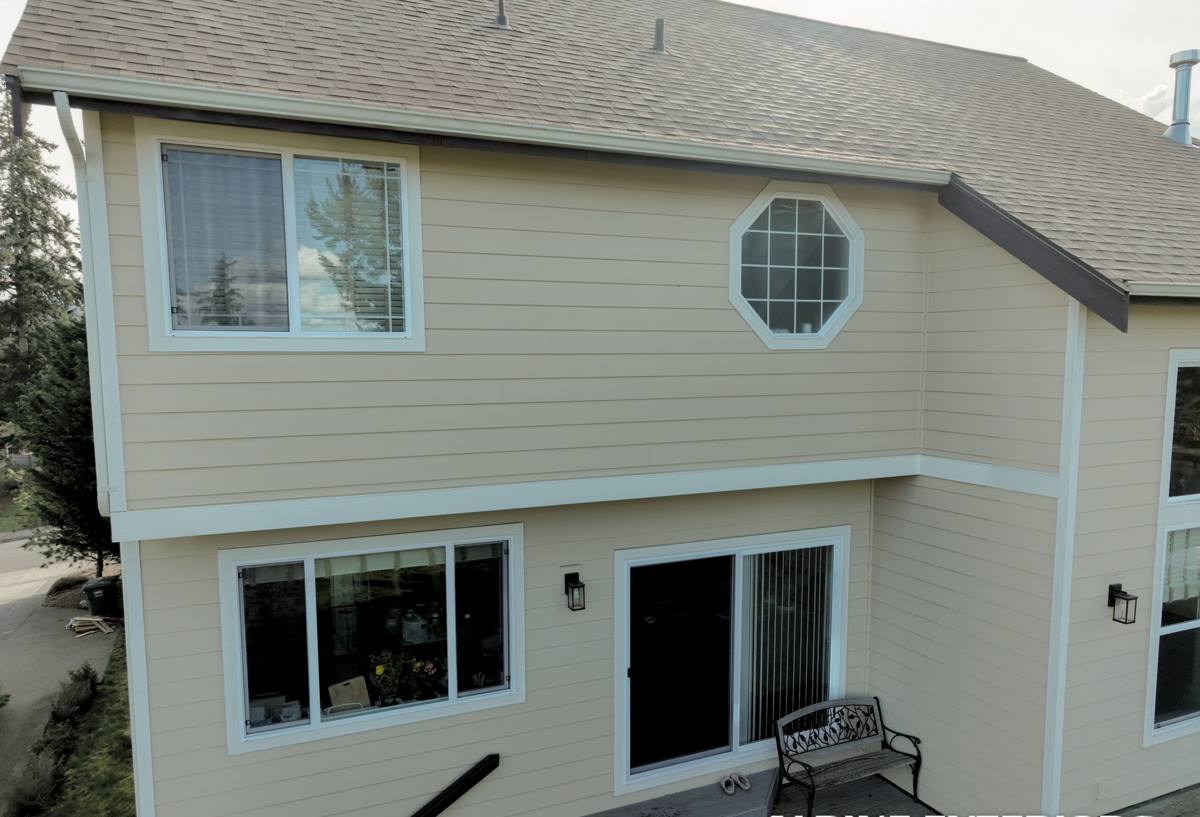
What Salt Air, Driving Rain, and Moss Actually Do to Siding
Salt Air
Airborne salt is corrosive to exposed fasteners, flashing, and any metal trim work. Once a fastener starts rusting, it loses grip and can back out slightly, opening a path for water behind the siding. Salt residue also holds moisture against a surface longer than plain rain does, which matters on wood-based or wood-adjacent siding products.
Driving Rain
Wind-driven rain off the water doesn't fall straight down — it gets pushed sideways into laps, seams, and butt joints. A siding system that was installed with tight, correctly lapped joints and proper flashing sheds that water fine. A system with gaps, caulk relied on as the primary water barrier, or boards that have cupped and pulled apart lets water track behind the cladding, where it can sit against sheathing and framing for weeks at a time.
Moss and Sustained Dampness
Skagit County's moss season runs long. On shaded elevations — north-facing walls, areas under trees, spots that don't get afternoon sun — moss and algae can establish on siding surfaces and in the seams between boards. Moss itself doesn't eat through fiber cement, but it holds water against the surface far longer than a clean, dry wall would, and it's often a visible sign that a section of wall isn't drying out between rain events the way it should.
Signs It's Time to Call for a Repair Assessment
- Soft, spongy, or visibly swollen areas when you press on the siding
- Paint or ColorPlus finish that's bubbling, peeling, or chalking in one localized area rather than uniformly
- Visible gaps opening up at butt joints or around trim
- Streaking or dark staining running down from a seam or fastener line
- Persistent moss or algae growth that keeps coming back in the same spot
- Rust stains bleeding from fastener heads or trim flashing
- Interior signs — a musty smell, a damp patch on drywall, or peeling interior paint on an exterior wall
What a Correct Siding Repair Actually Involves
A repair that just replaces the damaged boards you can see and stops there is a patch, not a repair. Water damage in a wall almost always extends past the visible failure point, because water travels down and sideways behind the cladding before it shows up as a stain or soft spot. A repair done right includes:
- Removing enough siding to expose the full extent of the damage, not just the section that looks bad from the outside.
- Inspecting the water-resistive barrier (house wrap) and sheathing underneath for saturation, rot, or breakdown, and replacing any compromised material before new siding goes back on.
- Correcting the flashing and drainage detail that let water in to begin with — this is the step that gets skipped most often, and skipping it means the same failure comes back in a few years.
- Re-installing siding with proper laps, gaps, and fastening per manufacturer spec, not just nailed back into whatever pattern was there before.
- Matching the replacement material and finish so the repaired section blends with the rest of the wall instead of standing out as an obvious patch.
Skipping the inspection step is the single most common reason a "repair" fails again within a couple of years. If the water source isn't found and corrected, new boards over old rot just buy time.
Repair vs. Replacement: How We Make the Call
| Situation | Usually a Repair | Usually Points to Full Replacement |
|---|---|---|
| Damage location | Isolated to one wall, corner, or a handful of boards | Recurring on multiple elevations |
| Sheathing condition | Sound once the leak source is fixed | Widespread soft or rotted sheathing |
| Siding age and material | Newer Hardie system with an isolated install defect | Original material at or near end of service life |
| Underlying cause | A single flashing or caulk-joint failure | Systemic issues — no house wrap, chronic drainage problems |
| Cosmetic match | Replacement boards can match existing finish closely | Discontinued color or product line, mismatch unavoidable |
We'll tell you honestly which category your home falls into. Most of the March Point repair calls we get are legitimately repairs — a section near a downspout, a corner that's caught more wind-driven rain than the rest of the house, an area where a past caulk joint failed. But if we open a wall and find the framing has been wet for a long time, we'll say so rather than nail new siding over a problem that's still there.
Why We Repair With James Hardie Fiber Cement — Not Whatever's Closest to a Match
This company installs James Hardie fiber cement siding exclusively — no vinyl, no LP SmartSide, no primed spruce or cedar, no off-brand fiber cement. When we repair a section of siding, we use Hardie product to make that repair, for the same reasons we spec it on full jobs:
- Non-combustible material that doesn't degrade the way wood-based products can when repeatedly wetted and dried.
- ColorPlus factory-applied finish, which holds color and resists the fading and touch-up mismatch that comes with field-painted repairs.
- HZ product engineering built for the specific moisture and climate demands of the Pacific Northwest, which is exactly what March Point's exposure calls for.
- A repair that matches — Hardie's consistent manufacturing means a patched section can blend in far better than trying to match discontinued or inconsistent legacy siding.
If your home currently has a different siding product, we'll still assess and repair what's there when that's the right call — but if the damaged section needs full replacement rather than a patch, we'll walk you through why Hardie is what we'd put back on, not because it's the only thing we sell, but because it's the product we've found actually holds up to this coastline.
Our Process for a March Point Repair Call
- On-site inspection. We look at the visible damage, check surrounding areas for related issues, and probe for soft spots you might not have noticed.
- Diagnosis, not just a quote for boards. We identify the actual water source before pricing anything.
- A written scope that spells out what's being opened up, what's being replaced, and what happens if we find additional damage once the wall is open.
- The repair itself — sheathing and barrier work first, then flashing correction, then siding re-installation with proper Hardie fastening and lap detail.
- A finish check to confirm the color match and seams read cleanly from normal viewing distance.
Because we already work in and around Anacortes and Skagit County regularly, a March Point repair call doesn't require a special trip or added mobilization cost the way it might for a crew based well outside the area. We know the general exposure patterns of the neighborhood — waterfront wind, shaded lots, moss pressure — and that shapes how we diagnose a call before we even open the wall.
Cost Factors for Siding Repair in This Area
| Factor | Why It Matters Here |
|---|---|
| Extent of hidden water damage | Determines how much sheathing and barrier work is needed beyond the visible boards |
| Wall height and access | March Point homes with water-facing elevations sometimes need lift or scaffold access |
| Color and profile matching | Matching an existing ColorPlus finish or discontinued profile can affect material sourcing |
| Number of affected areas | One corner repair prices very differently than damage spread across several elevations |
| Underlying cause correction | Fixing the flashing or drainage detail that caused the failure adds labor but prevents repeat calls |
We give a written scope before any work starts, and if we find more damage once a wall is opened, we stop and talk with you before proceeding rather than running up costs unannounced.
After the Repair: Keeping March Point's Climate From Undoing the Work
- Keep gutters and downspouts clear so water isn't dumping directly against a wall
- Trim back vegetation and tree cover where practical to let shaded walls dry out between rain events
- Rinse moss and algae buildup gently on a schedule rather than letting it establish and spread
- Have caulk joints at trim and penetrations checked periodically — caulk is a secondary defense, not the primary water barrier, and it does wear out
- Watch the same section that was repaired for a season or two to confirm the underlying cause was actually resolved
Why Hiring a Crew That Already Works March Point Matters
Siding repair diagnosis is largely about pattern recognition — knowing what kind of failure to expect given a home's exposure, elevation, and shade conditions. A crew that's repaired siding across Anacortes and the rest of Skagit County has already seen how salt air, driving rain, and long moss seasons show up in wall assemblies out here, which means less guesswork and a more accurate first assessment. It also means a repair crew that's genuinely local isn't adding a long-distance markup or treating your call as an inconvenient detour from a service area centered somewhere else.
If you're seeing soft siding, staining, recurring moss, or any of the signs above on your March Point home, we're happy to take a look and give you a straight answer about what's going on and what it'll take to fix it properly. Reach out for a free, no-pressure estimate using the form below.