 Anacortes Siding
 Why Guemes Island Siding Wears Differently Than the Mainland
Guemes Island sits right at the edge of the Salish Sea, and that location changes how siding ages. Homes on the island take a steadier dose of salt-laden air than most properties even a few miles inland in Anacortes, and that salt works its way into every seam, fastener head, and coating weak point on a wall. Add in driving rain that comes sideways off the water during winter storms, and siding here is fighting moisture intrusion from angles that a sheltered inland home rarely sees.
Then there's moss. Skagit County's long, wet shoulder seasons give moss and algae months at a time to establish themselves on anything that stays damp — north-facing walls, areas under tree cover, and the lower courses of siding near grade. Moss doesn't just look bad. It holds moisture against the siding surface far longer than open air ever would, which accelerates rot in wood-based products and can degrade paint and caulk on almost any siding type over time.
None of this means Guemes Island homes need exotic materials or gimmicks. It means repairs have to be done correctly, with the right materials and the right attention to water management, or the same failure will show up again in a year or two.
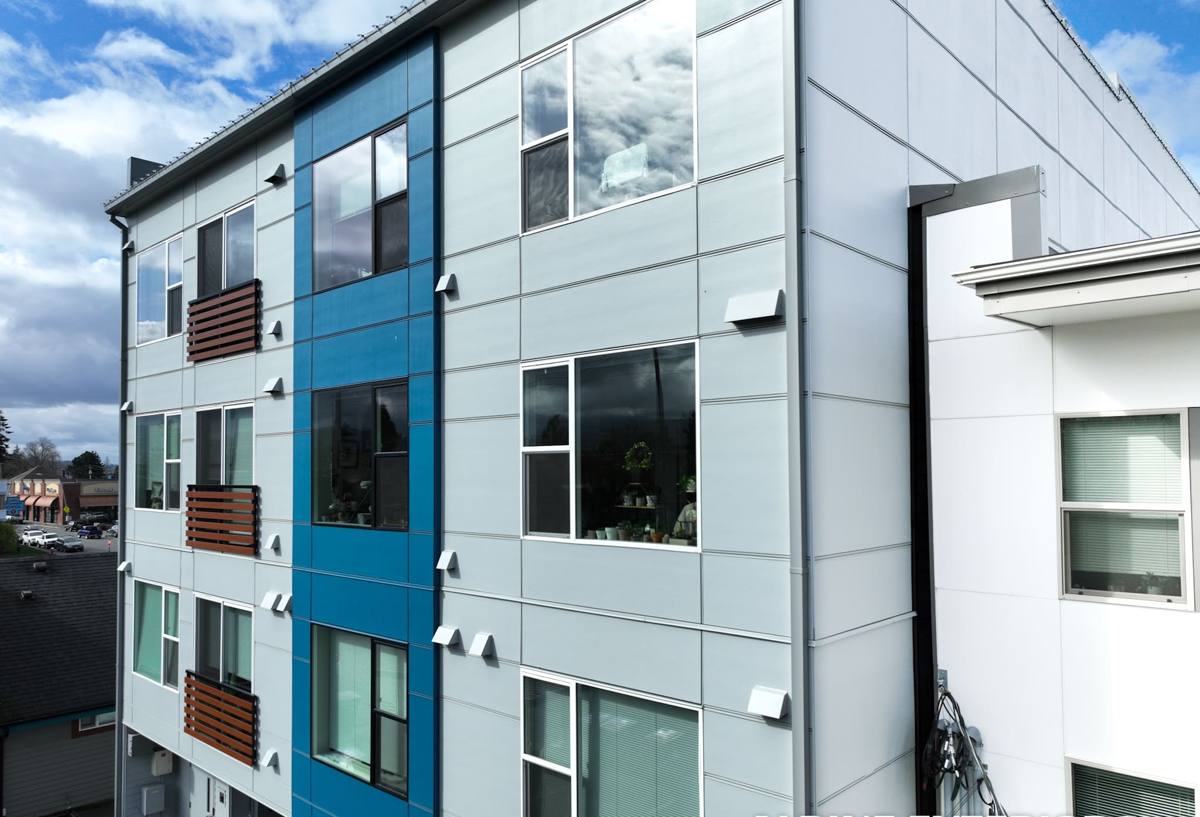
Warning Signs Worth a Second Look
Most siding problems on the island don't start as emergencies — they start small and get ignored because they're easy to miss during a quick walk-around. Here's what we tell homeowners to check, especially before the wet season sets in:
- Soft or spongy spots when you press on the siding, especially near the bottom courses and around window and door trim
- Visible moss, algae, or dark streaking that keeps coming back even after cleaning
- Paint that's peeling, bubbling, or chalking unevenly in patches rather than uniformly across a wall
- Gaps or separation at seams, corners, and butt joints where caulking has shrunk or failed
- Nail heads that are backing out, rusting, or leaving dark streaks below them
- Warping, cupping, or visible board separation, particularly on walls facing the water or prevailing weather
- Interior clues — musty smells, discoloration on interior walls, or trim that feels damp near exterior corners
Any one of these on its own might be minor. Several of them together, or any of them concentrated on the same wall, usually means water has been getting behind the siding for a while — and that's a different repair than swapping a cracked board.
Why Small Problems Don't Stay Small Here
On a sheltered inland lot, a failed caulk joint might sit for a couple of seasons before it causes real damage. On Guemes Island, with more direct wind-driven rain and longer damp periods, the same failure point tends to move faster from cosmetic to structural. That's the main reason we push island homeowners to deal with siding issues while they're still small — the cost difference between a targeted repair and a full wall section replacement is significant, and it's almost always driven by how long water was allowed to sit behind the cladding.
What a Correct Repair Actually Involves
A proper siding repair isn't just pulling a damaged board and nailing up a new one that matches. Done right, it starts with figuring out why that section failed in the first place. If the underlying issue — a flashing gap, a caulk failure at a penetration, poor drainage at grade — isn't fixed, the replacement piece will fail the same way, usually faster the second time because the water damage is already established.
Our repair process on the island includes:
- Removing damaged material back to solid, sound substrate — not just the visibly rotted piece
- Inspecting the water-resistive barrier and flashing underneath before anything goes back up
- Checking and correcting the source of intrusion (bad caulk joint, missing kick-out flashing, poor overlap, damaged house wrap)
- Treating any moss or algae growth on adjacent siding so the repaired area doesn't get re-contaminated immediately
- Matching replacement material, profile, and reveal so the repair is structurally sound and visually consistent
- Sealing and finishing with products rated for coastal exposure, not standard interior-grade caulks
Skipping any of these steps is how homeowners end up paying for the same repair twice.
Repair or Replace? What Actually Drives the Decision
Not every damaged section needs a full re-side, and not every "small" repair should be treated as small. The honest answer depends on how far the damage has spread and what's causing it. Here's how we walk through that decision with island homeowners:
| Factor | Leans Toward Repair | Leans Toward Replacement |
|---|---|---|
| Extent of damage | Isolated to one or two boards or a single wall section | Multiple walls, or damage that keeps reappearing in new spots |
| Underlying cause | A single identifiable failure point (flashing, caulk, one bad board) | Systemic issue — original installation defects, widespread moisture behind the wall |
| Siding material | Material is sound elsewhere and still performing | Original material (cedar, LP, aging vinyl) is past its practical service life island-wide |
| Age of siding | Relatively recent installation with a localized problem | Siding is decades old and showing wear consistent with its age everywhere |
| Cost over time | Repair cost is a small fraction of full replacement | Repeated repairs are adding up to a meaningful share of replacement cost |
We'll never talk a homeowner into a full replacement when a targeted repair will genuinely hold up — but we'll also be straight with you if we think a repair is a short-term fix on a wall that's going to keep failing.
Working Around Ferry Access and Island Logistics
Guemes Island is ferry-served, which changes how any contractor has to plan a job compared to work inside Anacortes proper. Material deliveries, crew scheduling, and equipment moves all have to account for ferry timing rather than just driving straight to the site. A crew that doesn't regularly work the island can underestimate this and end up with wasted trips, delayed material, or jobs that stretch out longer than they should.
Because we work on Guemes Island regularly, we plan repair jobs around the realities of island access from the start — batching material deliveries, scheduling crew time efficiently around ferry runs, and avoiding the back-and-forth that drives up cost and timeline on a job that should be straightforward. That planning is invisible when it goes right, but it's the difference between a repair that gets done in the window we quote and one that drags on because nobody accounted for the logistics.
Why We Only Install James Hardie Fiber Cement
When a repair calls for replacement material, or when damage has spread far enough that a section needs to come off entirely, we use James Hardie fiber cement — and only James Hardie. We don't install vinyl, LP SmartSide, cedar, primed spruce, Cemplank, or Allura, and on an island with this much salt exposure and moss pressure, that's not a brand preference, it's a performance decision.
Fiber cement is non-combustible and doesn't rot, swell, or delaminate the way wood-based products can when they stay damp for extended periods — which is exactly the condition moss creates on shaded or north-facing walls. Hardie's ColorPlus factory finish is baked on and warranted against fading and peeling in ways field-applied paint on wood siding simply isn't, which matters when a home is taking constant salt air and UV off open water. Hardie also builds region-specific HZ product lines engineered for the moisture conditions of the Pacific Northwest, rather than a single generic formulation used everywhere in the country.
We've seen what repeated salt and moisture exposure does to wood-based and lower-grade siding products on island homes over the years, and it's a maintenance burden most homeowners don't sign up for on purpose — it just accumulates one repair at a time. Fiber cement doesn't eliminate maintenance entirely, but it removes the rot and moisture-swelling failure modes that drive most of the repair calls we get on the island.
Our Repair Process, Start to Finish
- On-site inspection of the damaged area and a check of the rest of the exterior for related issues, since problems on one wall often hint at a similar issue starting elsewhere
- A clear, written explanation of what's causing the damage — not just what we'll replace
- An honest repair-vs-replace recommendation, with the reasoning behind it
- A scope and estimate that accounts for material, access, and island scheduling up front, so there are no surprise delays
- The repair itself, including addressing the underlying water intrusion point, not just the cosmetic damage
- A final walk-through so you know exactly what was done and what to watch for going forward
What to Ask Before Hiring Anyone for Island Siding Work
Guemes Island work has enough logistics and climate factors specific to it that it's worth screening for experience, not just price. A few questions worth asking any contractor you're considering:
- Have you done repair work on the island before, and how do you handle ferry scheduling and material delivery?
- Will you diagnose the cause of the damage, or just replace what's visibly broken?
- What siding material and fasteners do you use for repairs, and are they rated for coastal, high-moisture exposure?
- How do you handle moss and algae on adjacent siding so it doesn't undo the repair?
- Is the estimate written, itemized, and clear about what happens if hidden damage is found once the old siding comes off?
A contractor who can answer these clearly and specifically, without vague reassurances, is a good sign you're dealing with a crew that actually understands the conditions your home is up against.
If you've noticed soft spots, recurring moss, or paint failure on your Guemes Island home, it's worth having someone look at it before the next wet season makes the problem bigger. We offer free, no-pressure estimates — use the form below to get one scheduled.