 Anacortes Siding
 Siding Installation in La Conner: A Different Kind of Exposure
La Conner sits right on the Swinomish Channel, surrounded by the flat, open farmland of the Skagit Valley. That combination gives homes here a specific set of siding problems that a house ten miles inland doesn't deal with the same way. You've got salt-laden air coming off the channel, wind with nothing to slow it down across open fields, driving rain that hits siding sideways instead of straight down, and a long, damp shoulder season that keeps north-facing walls shaded and wet for weeks at a time. Add the moss and algae that thrive in that kind of moisture, and you've got a wall assembly that's under more or less constant low-grade attack for most of the year.
None of that means La Conner homes need anything exotic. It means the basics — material choice, water management, and installation detail — have to be done right, without shortcuts, because the margin for error is smaller here than it is in a drier, more sheltered part of Skagit County.
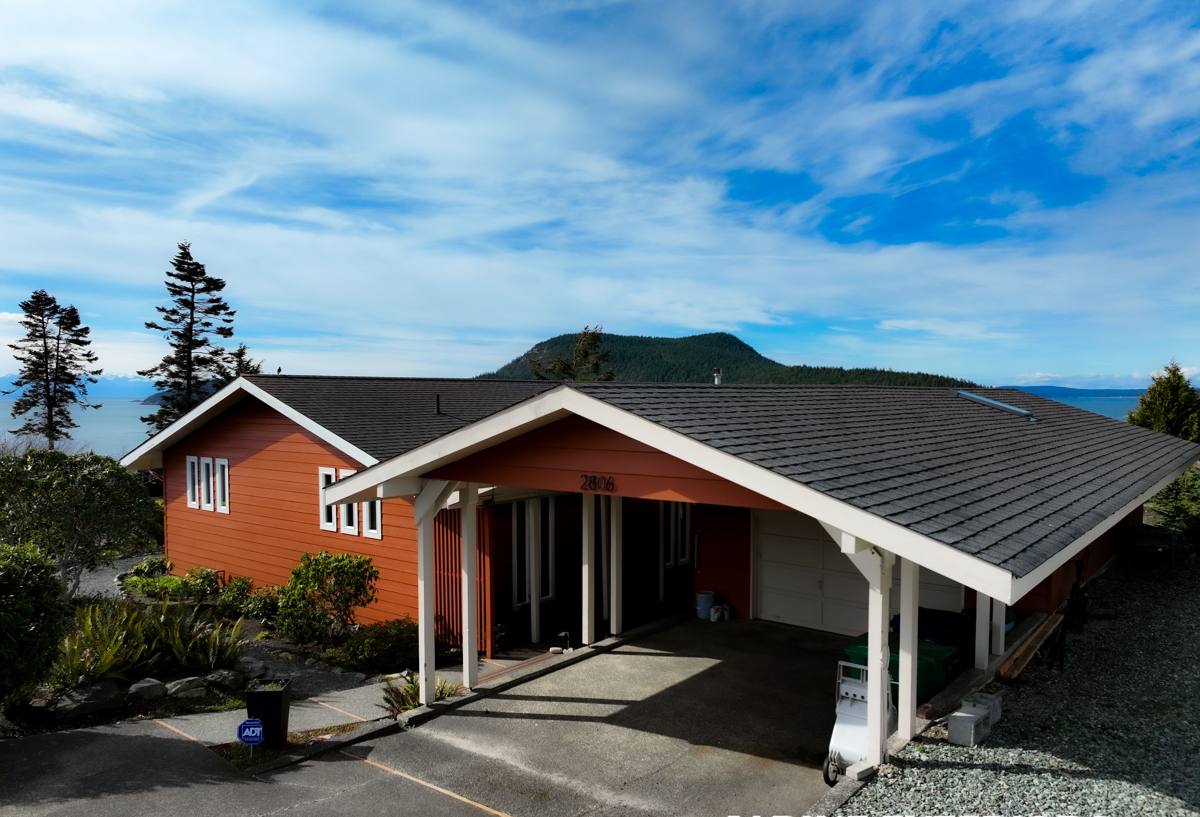
What Local Homes Actually Need From Their Siding
Moisture Management First
Any siding installation in this area has to start with how water is going to be kept out of the wall assembly, not just off the surface of it. That means a properly lapped weather-resistant barrier, correctly flashed windows and doors, and siding that's held off the wall enough to let trapped moisture dry out instead of sitting against the sheathing. A house near the channel that gets this wrong won't fail in a dramatic way — it'll fail slowly, with soft trim, staining, and rot showing up behind the siding long before it's visible from the street.
Standing Up to Salt Air
Salt air is corrosive to fasteners and hard on paint film. It also accelerates the breakdown of materials that rely on a surface coating rather than a factory-cured finish. Siding, trim, and fastener choices in La Conner need to account for that exposure specifically — this isn't a generic "coastal Washington" concern, it's a day-to-day reality for anything close to the channel.
Resisting Moss and Algae
The same shade and moisture that make the Skagit Valley good farmland make north and west-facing walls a magnet for moss and algae growth. Siding with a factory finish that resists mildew and algae staining holds up dramatically better here than raw or site-painted material, which can start showing green and black streaking within a couple of years.
Why We Install Only James Hardie Fiber Cement
We don't install vinyl, LP SmartSide, primed wood, or other fiber cement brands. That's not a marketing position — it's a standard we've held to because of what we've seen these products do (and not do) in exactly this kind of climate.
Vinyl siding can warp and distort in prolonged direct sun and gets brittle in cold snaps; more importantly for La Conner, it relies on loose-fit installation for expansion, which makes tight, wind-driven air seals harder to achieve on an exposed waterfront lot. Engineered wood products like LP SmartSide perform reasonably well when maintained perfectly, but they depend on an intact resin-treated surface and unbroken paint film — any breach lets moisture into the wood strand core, and that's a slow, hard-to-catch failure mode in a damp climate. Primed wood and cedar look great initially but require a repainting and caulking cycle that most homeowners underestimate, especially with salt air working against the paint film year-round.
James Hardie fiber cement is non-combustible, dimensionally stable in wet-dry cycling, and comes with a factory-applied ColorPlus finish that's baked on rather than field-painted — which matters enormously for algae and moisture resistance in this environment. Hardie's HZ5 product line is specifically engineered for cold, wet climates like ours. It's not the cheapest material on the market, but it's the one we're willing to put our name on for a house that's going to spend its life a few hundred yards from saltwater.
Our Installation Process for La Conner Homes
Assessment and Water Path Review
We start by walking the exterior and looking specifically at where water currently goes: roof runoff, grade slope, window and door flashing, and any spots where the existing siding shows staining, softness, or moss buildup. On a channel-side or open-field lot, we pay particular attention to the walls that take the most wind-driven rain and the least sun.
Removal and Sheathing Check
Old siding comes off in sections so we can inspect the sheathing underneath before it's covered back up. This is the point where hidden rot or past moisture damage actually gets found — and fixed — rather than sealed behind new siding and left to keep spreading.
Weather-Resistant Barrier and Flashing
We install a continuous weather-resistant barrier with properly lapped seams, and flash every window, door, and penetration so water sheds downward and outward, never behind the barrier. This step matters more in La Conner's wind-driven rain than in calmer inland conditions, where a lazier install might get away with it for longer.
Hardie Installation to Spec
James Hardie siding has documented installation requirements — fastener spacing and type, minimum clearance from grade and roofing, joint treatment, and caulking at specific locations — that directly affect both performance and warranty coverage. We follow those specs exactly, including the corrosion-resistant fasteners that matter for a salt-air environment.
Final Detail and Cleanup
Trim, caulking, and touch-up finish out the job, along with a walk-through so you know what was done and what to watch for going forward.
Common Siding Problems We See on La Conner Homes
- Moss and algae staining concentrated on shaded, channel-facing walls
- Soft or delaminating siding near ground level where splash-back and grade moisture collect
- Failed caulk joints around windows and trim from repeated wet-dry and salt cycling
- Paint film breakdown on wood or engineered wood siding well ahead of its expected repaint interval
- Corroded or rust-staining fasteners on older installations
- Gaps and warping at seams on vinyl siding after years of thermal movement
What Correct Installation Involves — Beyond the Material
A lot of siding problems aren't material failures at all — they're installation shortcuts. Fasteners driven too tight or too loose, missing or improperly lapped flashing, siding installed too close to grade or roofing, and gaps left unsealed at trim joints all show up as "siding failure" years later, even when the siding itself is a good product. This is exactly why installation detail matters as much as brand choice, especially in a climate that doesn't forgive mistakes quickly.
| Factor | Why It Matters in La Conner |
|---|---|
| Fastener type and spacing | Corrosion resistance and wind-load holding power in salt air and open-field gusts |
| Flashing at windows/doors | Directs wind-driven rain outward instead of into the wall cavity |
| Clearance from grade and roofline | Keeps splash-back and roof runoff from soaking the bottom courses |
| Weather-resistant barrier lap direction | Prevents water intrusion during sustained horizontal rain |
| Caulk joint placement | Reduces moisture entry points that accelerate rot behind siding |
Cost Factors for a La Conner Siding Project
Every home is different, so we don't quote broad numbers without seeing the job, but a few factors consistently move the price on siding replacement in this area:
| Cost Factor | Impact |
|---|---|
| House size and wall complexity | More corners, dormers, and trim detail mean more labor and cut waste |
| Existing wall condition | Rotted sheathing found during tear-off adds repair scope before new siding goes on |
| Siding profile and finish | Lap width, texture, and ColorPlus color selection affect material cost |
| Trim and accessory scope | Full trim replacement costs more than reusing sound existing trim |
| Site access | Waterfront or tight lots can add setup and staging time |
Why Hiring a Crew That Already Works This Area Matters
Skagit County covers a lot of different micro-climates, and La Conner's channel-side exposure isn't the same as siding a house set back in the trees a few miles away. A crew that's already worked waterfront and open-field properties here knows which walls take the worst weather, where moss tends to establish first, and how much clearance and flashing detail is actually necessary versus code-minimum. That local pattern recognition is hard to replace with a generic checklist, and it's part of why we treat every La Conner estimate as its own assessment rather than a copy-paste of a job from somewhere drier.
What to Look For in a Contractor
- Manufacturer-recognized installation training on the specific product they're installing
- A written scope that names fastener type, flashing details, and clearance specs — not just "siding replacement"
- Willingness to inspect and photograph sheathing condition once old siding is removed
- Clear answers about warranty coverage — both material and workmanship — including what voids it
- Local references or project history in Skagit County, not just general service-area claims
Maintenance After Your New Siding Is Installed
James Hardie's factory ColorPlus finish reduces maintenance considerably compared to field-painted siding, but "low maintenance" isn't "no maintenance," especially this close to the water. A yearly rinse to clear salt residue, moss spores, and pollen keeps the finish performing as designed. Keep gutters clean and functioning so roof runoff isn't dumping extra water onto siding below, and check caulk joints at windows and trim periodically for cracking or separation. Catching a failed caulk joint early is a five-minute fix; ignoring it for a couple of wet seasons can mean repair work behind the siding.
If you're weighing a siding replacement for a La Conner home, we're happy to walk the property, look at what's actually going on with your walls, and give you a straightforward assessment — no pressure, no upsell script. Use the form below to request a free estimate.