 Anacortes Siding
 Siding Installation Built for Burlington's Skagit Valley Climate
Burlington sits in the Skagit Valley, close enough to Puget Sound and the Anacortes coastline that the same damp, moisture-loaded air that soaks the waterfront also settles into the valley floor. Add the low-lying, agricultural terrain around Burlington and you get long stretches of fog, standing humidity, and slow-drying shade pockets around homes with mature trees or tight north-facing walls. Siding in this part of Skagit County isn't decorative — it's the first line of defense against a climate that stays wet for months at a time.
We install siding for homeowners throughout the Anacortes and greater Skagit County area, and Burlington's specific combination of valley moisture, driving rain off passing fronts, and a moss season that can run from fall through spring shapes how we approach every job here. This page walks through what a correct siding installation looks like for a Burlington home, and why the crew and the product matter as much as the color you pick.
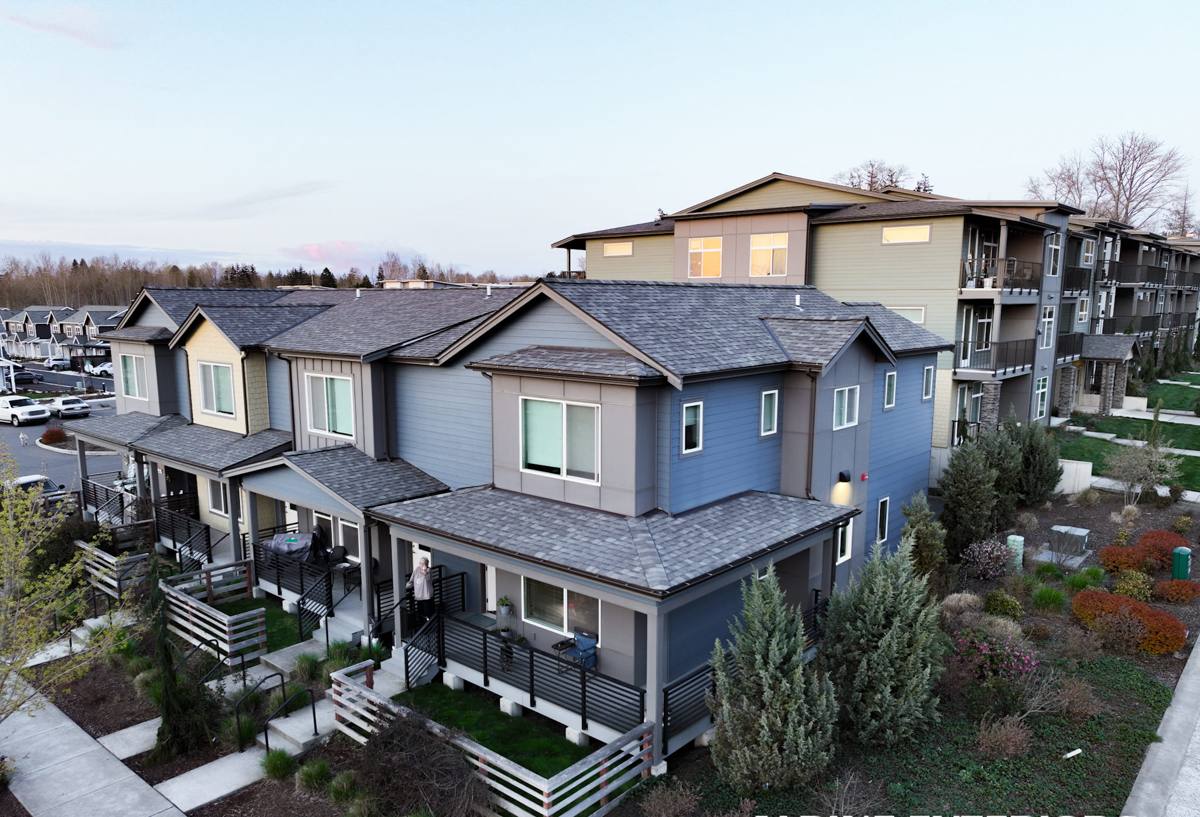
What Burlington's Climate Actually Does to Siding
Three things drive most of the siding failures and premature repaints we see on homes in this area:
- Driving rain: Wind-driven storms push water sideways into wall assemblies, not just down. Siding that isn't installed with the right flashing, laps, and clearances lets that water track behind it.
- Moss and algae growth: Shaded walls, north exposures, and anything near overhanging trees stay damp long enough for moss and algae to take hold. On the wrong siding material, that growth holds moisture against the surface and accelerates rot or coating breakdown.
- Long wet-dry cycling: Skagit Valley siding goes through repeated swelling and drying cycles across a typical winter. Materials that absorb water and expand, or that were installed too tight to breathe, take on stress at every seam and fastener point.
None of this is exotic — it's the normal cost of doing business in western Washington. The difference between a siding job that holds up for decades and one that needs attention in five years usually comes down to the product choice and the install details, not luck.
Why We Install Only James Hardie Fiber Cement
We standardized on James Hardie fiber cement siding for every home we side, including here in Burlington, because it's engineered for exactly the conditions this region throws at it. Hardie's HZ5 product line is formulated for climates with heavy moisture exposure and freeze-thaw cycling — it doesn't absorb water the way wood-based or wood-fiber composite sidings do, and it's non-combustible, which matters more each wildfire season even on this side of the Cascades.
We don't install vinyl, LP SmartSide, primed spruce, cedar, or other fiber cement brands. That's a deliberate standard, not a sales pitch — we'll explain the honest trade-offs of those materials on other pages. For Burlington specifically, the short version is that fiber cement resists moisture intrusion and moss-related surface damage in a way that keeps holding up after year one, which is when climate-driven problems on lesser materials tend to start showing.
The ColorPlus Advantage in a Wet Climate
Most of what we install carries Hardie's ColorPlus factory finish — a baked-on coating applied under controlled conditions, not brushed on at the job site. In a climate where field-applied paint has a narrow window to cure between rain systems, a factory finish removes that variable entirely. It also resists the fading and chalking that field-painted siding can show after a few damp Skagit County winters.
What a Correct Siding Installation Involves
The siding panel itself is only part of the system. On every Burlington home, we treat these as non-negotiable:
| Component | Why It Matters Here |
|---|---|
| Weather-resistive barrier (house wrap) | Second line of defense behind the siding when driving rain gets past the surface |
| Correct flashing at windows, doors, and penetrations | Most water intrusion starts at these transition points, not the flat wall field |
| Proper panel clearance from grade, roofing, and decks | Keeps the bottom edge of siding from sitting in standing moisture or splash-back |
| Manufacturer-spec fastening pattern | Under- or over-driven fasteners are a leading cause of early siding failure |
| Caulking and sealant only where Hardie specifies | Sealing the wrong joints traps moisture instead of letting it drain and dry |
Skip any one of these and you can install genuine James Hardie product and still end up with a wall that fails early. The material is only as good as the installation behind it — which is why we treat the install spec as strictly as the product selection.
Moss and Shaded-Wall Details
For walls we know will stay shaded — north sides, areas under mature trees, spots close to fences or neighboring structures — we pay particular attention to drainage plane continuity and panel spacing so the wall assembly can actually dry out between wet spells. Fiber cement doesn't feed moss growth the way some organic-based sidings can, but good installation practice still matters for how quickly a shaded wall sheds moisture.
Our Process for a Burlington Siding Installation
- On-site assessment: We walk the exterior, check the current siding and sheathing condition, note shaded and high-exposure walls, and identify any trim, window, or flashing issues that need to be addressed before new siding goes on.
- Product and profile selection: We go over Hardie's plank, panel, and shingle profiles along with the ColorPlus palette so you land on something that fits the home and the neighborhood.
- Prep and moisture check: Any water-damaged sheathing or framing found during tear-off gets addressed before new siding goes up — covering a wet wall with new material just delays the problem.
- Installation to manufacturer spec: Weather barrier, flashing, fastening, and clearances are installed per Hardie's published requirements, not shortcuts.
- Final walkthrough: We review the finished job with you, including care and maintenance basics specific to this climate.
Why Local Experience in Burlington Matters
A crew that's worked homes throughout Skagit County already knows which walls in this area tend to hold moisture, how local moss growth behaves through a wet winter, and what flashing details actually get tested by a real Pacific Northwest storm season — not just a spec sheet. That experience shows up in the small decisions during installation that a manufacturer's warranty won't catch if they're done wrong.
It also means straightforward answers about timing. Siding work here is weather-dependent, and a crew that's used to working around Skagit Valley rain patterns can plan a job to minimize exposed sheathing time rather than getting caught mid-project by a multi-day system.
Cost Factors for a Burlington Siding Project
Every home is different, so we don't quote fixed prices sight unseen, but these are the main factors that move a siding installation estimate up or down:
| Factor | Impact |
|---|---|
| Home size and wall complexity | More corners, gables, and dormers mean more cutting and trim work |
| Current siding removal | Tear-off and disposal of old material adds labor versus new construction |
| Sheathing or framing repair | Moisture damage found during tear-off needs to be fixed before re-siding |
| Siding profile chosen | Lap plank, panel, and shingle profiles vary in material and labor cost |
| Trim and accessory work | Window trim, corner boards, and fascia detailing add scope |
We provide a written, itemized estimate after the on-site walkthrough so you know exactly what you're paying for and why.
Signs Your Burlington Home May Need New Siding
- Persistent moss or algae staining that returns shortly after cleaning
- Soft or spongy spots when you press on the siding, especially near the bottom edge
- Paint that's peeling, bubbling, or chalking faster than it used to
- Visible warping, cupping, or gaps between panels
- Rising energy bills that suggest the wall assembly isn't sealing the way it should
- Interior wall staining or musty odors near exterior walls, which can point to moisture getting past the siding
Any one of these on its own isn't necessarily an emergency, but a few together are usually a sign the wall assembly is losing its ability to keep moisture out — worth having looked at before another Skagit County wet season.
Get a Straight Answer on Your Siding
If you're weighing a siding replacement for a Burlington home, we're happy to come take a look, tell you honestly what condition your current siding and wall assembly are in, and walk you through what a James Hardie installation would involve for your specific house. There's no pressure and no obligation — just a clear estimate and straight answers. Fill out the form below to get started.