 Anacortes Siding
 Why Ship Harbor's Marine Climate Is Hard on Siding
Ship Harbor sits on Fidalgo Island, close enough to open water that homes here take a different kind of weathering than houses inland in Skagit County. Salt-laden air moves off the strait and settles on exterior surfaces, wind-driven rain gets pushed sideways into seams and laps that would stay dry in a calmer spot, and shaded, tree-lined lots hold moisture long after a storm has passed. Add a moss season that can run most of the year in the Pacific Northwest, and siding here is working harder than the manufacturer's marketing photos ever show.
None of this means siding fails fast in Ship Harbor. It means the margin for error is smaller. A product that's marginal in a dry inland climate can become a real problem here within a few years, and an installation detail that "probably would have been fine" somewhere else — a missed flashing lap, a fastener driven wrong, a gap left for capillary water to sit in — tends to show up sooner on a home exposed to salt air and standing damp.
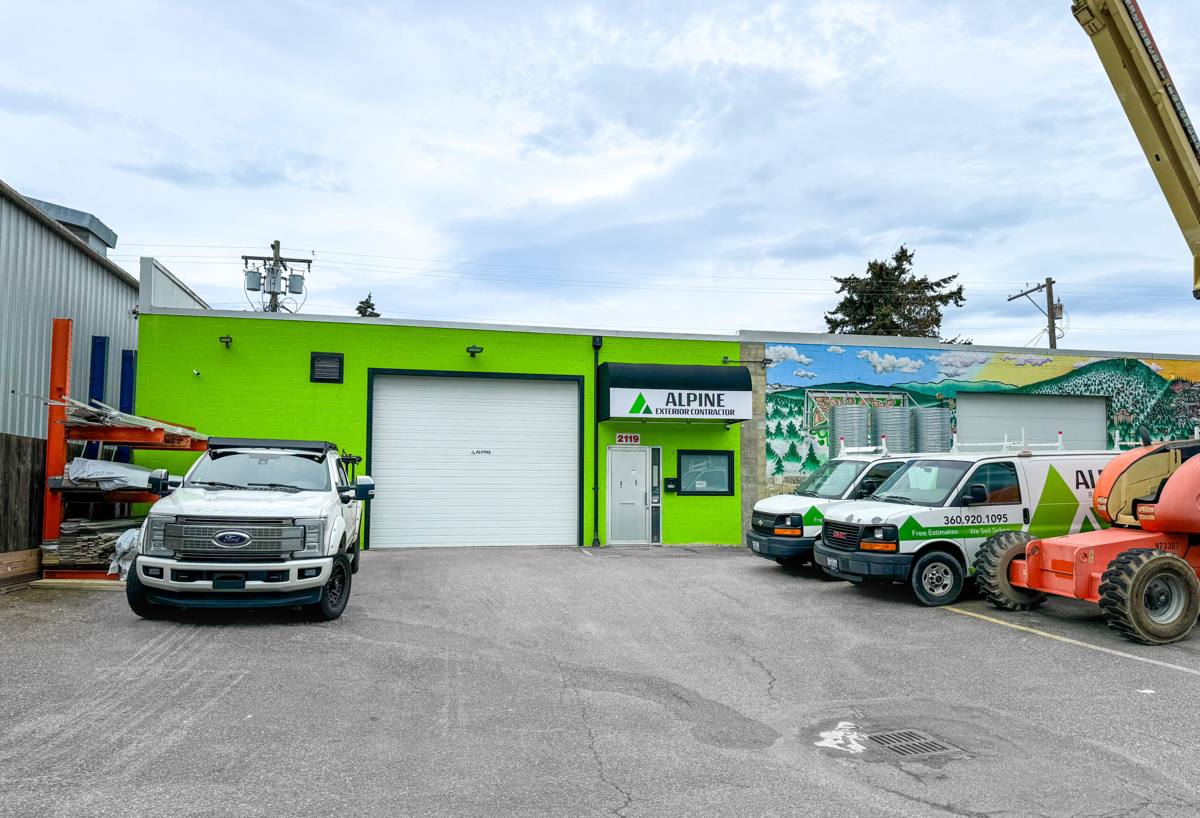
Signs Your Ship Harbor Home Is Due for Siding Replacement
Siding rarely fails all at once. It gives warning signs first, and in a marine climate those signs often show up at the corners, butt joints, and lower courses before anywhere else. Worth checking for:
- Soft, spongy, or crumbling siding when you press on it, especially near the bottom of walls
- Paint that's bubbling, peeling, or chalking faster than it should
- Persistent black or green streaking on shaded or north-facing walls that pressure washing only temporarily clears
- Visible gaps opening up at seams, corners, or where trim meets siding
- Warping, cupping, or boards that no longer sit flat against the wall
- A musty smell or damp feeling on interior walls that back up to exterior siding
- Rising heating or cooling bills that point to a wall assembly that's no longer sealing properly
Any one of these on its own might be a minor repair. Several at once, or rot found once a board is pulled, usually means the siding system as a whole has reached the end of its useful life and a patch will just relocate the problem.
What a Correct Siding Replacement Actually Involves
Siding replacement done right is mostly about what happens underneath the finished product, not the product itself. Once the old siding comes off, the sheathing gets inspected for rot, soft spots, and any water damage that's already working its way into the wall — and that damage gets repaired before anything new goes up. Skipping this step is the single most common way a siding job looks good on installation day and fails within a few years.
The details that matter most in this climate
A correct installation includes a continuous weather-resistive barrier, properly lapped and sealed housewrap, and flashing at every window, door, and penetration that directs water back out rather than behind the siding. In a location exposed to driving rain and salt air, a rainscreen gap behind the siding — a small air space that lets moisture drain and the wall breathe — matters more than it would in a drier inland setting, because it keeps bulk water and salt-laden moisture from sitting against the sheathing. Fastening schedule, caulking only where the manufacturer's spec actually calls for it, and correct clearance from grade, decks, and roof lines round out the list of details that separate a job that lasts decades from one that doesn't.
Why We Install Only James Hardie Fiber Cement Here
We standardized on James Hardie fiber cement siding and don't install vinyl, LP SmartSide, cedar, primed spruce, or other fiber cement brands. That's not a marketing position — it's a practical one, built around what actually holds up on homes exposed to salt air, driving rain, and a long moss season.
Vinyl is inexpensive and low-maintenance in a lot of climates, but it expands and contracts more with temperature swings, can become brittle over time in coastal exposure, and its seams and J-channels give moisture more places to collect. Cedar and primed spruce look great new and can be maintained well, but they demand a repainting and caulking schedule that most homeowners underestimate, and end grain exposed to constant damp is where rot starts. Engineered wood products like LP SmartSide perform reasonably when installed and maintained exactly to spec, but they're wood-based, and wood-based siding is inherently more vulnerable to the kind of sustained moisture exposure a marine climate delivers if any detail — caulking, flashing, ground clearance — falls short over the life of the product.
| Material | Salt air / moisture behavior | Moss & algae resistance | Maintenance burden |
|---|---|---|---|
| Vinyl | Doesn't rot, but seams and channels trap moisture; can become brittle with age | Moderate — surface growth is common, cleans off but returns | Low, but limited repair options once damaged |
| Cedar / primed wood | Attractive but absorbs moisture; end grain and joints are vulnerable | Low — organic surface, prone to growth without regular treatment | High — repainting, caulking, and inspection on a recurring schedule |
| Engineered wood (e.g. LP SmartSide) | Wood-based core; performs to spec but sensitive to installation and maintenance gaps | Moderate, similar upkeep needs to wood | Moderate to high, install-detail sensitive |
| James Hardie fiber cement | Non-combustible, dimensionally stable, engineered for moisture exposure | Higher resistance; factory finish sheds surface growth more easily | Low — occasional wash, no repainting cycle with ColorPlus finish |
Hardie's HZ5 product line was engineered specifically for climates with more moisture and temperature swings, which fits Skagit County generally and Ship Harbor's exposure specifically. The ColorPlus factory finish is baked on rather than field-applied, which matters in a spot where field-painted surfaces face more weathering pressure than average. And Hardie backs the product with a strong, transferable warranty — the kind of coverage that reflects real confidence in how the product performs over decades, not just years.
Our Process for Ship Harbor Siding Replacement Projects
The work follows the same sequence on every home, adjusted for what we find once the old siding is off:
- On-site assessment — walk the exterior, check exposure to prevailing wind and rain direction, note shaded and moss-prone areas, and look for early signs of failure at corners and low courses
- Tear-off and sheathing inspection — remove old siding, inspect the wall beneath for rot or moisture damage, and repair anything compromised before moving forward
- Weather barrier and flashing — install or verify a continuous weather-resistive barrier and correctly lapped flashing at every window, door, and penetration
- Material and color selection — choose the Hardie profile and ColorPlus color that fits the home and the homeowner's preference
- Installation — install to manufacturer spec, including correct fastening, clearances, and rainscreen detailing where called for
- Final walkthrough — review the completed work with the homeowner and go over basic care for the new siding
Cost Factors for Siding Replacement in This Area
Every home is different, but the same handful of factors drive most of the cost variation we see on Ship Harbor and broader Anacortes projects:
| Factor | Why it affects cost |
|---|---|
| Home size and wall complexity | More square footage and more corners, dormers, and trim details mean more labor and material |
| Existing damage found at tear-off | Rotted sheathing or framing discovered underneath old siding needs repair before new siding goes on |
| Siding profile and accessories | Lap width, trim style, and accent details all affect material cost |
| Site access | Steep lots, limited driveway access, or tight setbacks near neighboring homes can add time |
| Color and finish selection | Standard ColorPlus colors versus custom or premium options can shift material pricing |
We give a firm, itemized estimate after the on-site assessment rather than a rough number over the phone, because the condition of the sheathing underneath the old siding is the single biggest variable — and that's something you can't fully know until the old material comes off.
Why Local Experience in Ship Harbor Matters
A crew that already works this area knows which walls tend to hold moss longest, which exposures take the worst of the wind off the water, and how salt air affects fasteners and trim over time — knowledge that only comes from doing the work here repeatedly, not from a general siding background. That familiarity shows up in small decisions: where to pay extra attention to flashing, which elevations need a closer look at the sheathing during tear-off, and how to sequence a project around this area's weather windows so the wall isn't left exposed longer than necessary.
Local experience also means knowing the permitting and inspection expectations that apply in Anacortes and Skagit County, so a project moves through approval without avoidable delays. That's a small thing on paper, but it's the difference between a project that stays on schedule and one that stalls waiting on paperwork a contractor should have anticipated.
Caring for New Siding in a Marine Climate
James Hardie siding is low-maintenance, but "low-maintenance" isn't "no-maintenance" in a spot exposed to salt air and a long damp season. A few habits go a long way:
- Rinse the siding gently once or twice a year to clear salt residue and surface debris before it builds up
- Keep gutters and downspouts clear so water is directed away from the wall rather than running down the face of the siding
- Trim back trees and shrubs that keep siding shaded and damp, since reduced airflow is what lets moss and algae take hold
- Check caulking at windows, doors, and penetrations periodically, since caulk is the one component that does wear out faster than the siding itself
Following this kind of basic upkeep is what lets a correctly installed Hardie system reach its full service life rather than facing the same moisture problems that shortened the previous siding's life.
If your Ship Harbor home is showing any of the signs above, or you're just planning ahead for a siding project, we're happy to take a look and give you a straightforward, no-pressure estimate — no obligation, just an honest read on where things stand.