 Anacortes Siding
 Why Sedro-Woolley Roofs Take Storm Damage Differently Than You'd Expect
Sedro-Woolley sits back from Fidalgo Bay and the open water around Anacortes, so the salt air that eats through fasteners and flashing on the coast is a smaller part of the story here. What dominates instead is volume: long stretches of steady Skagit County rain, wind funneling down the valley off the foothills, and a moss season that runs longer than most homeowners realize. A roof here doesn't usually fail from one dramatic storm. It fails from months of water finding a small opening and making it bigger, one soaking at a time.
That distinction matters when you're deciding whether storm damage is cosmetic or structural. A roof that looks fine from the driveway can already have compromised underlayment, saturated sheathing, or moss roots working under the shingle tabs. We look at Sedro-Woolley roofs with that pattern in mind, not with a generic checklist built for a drier climate.
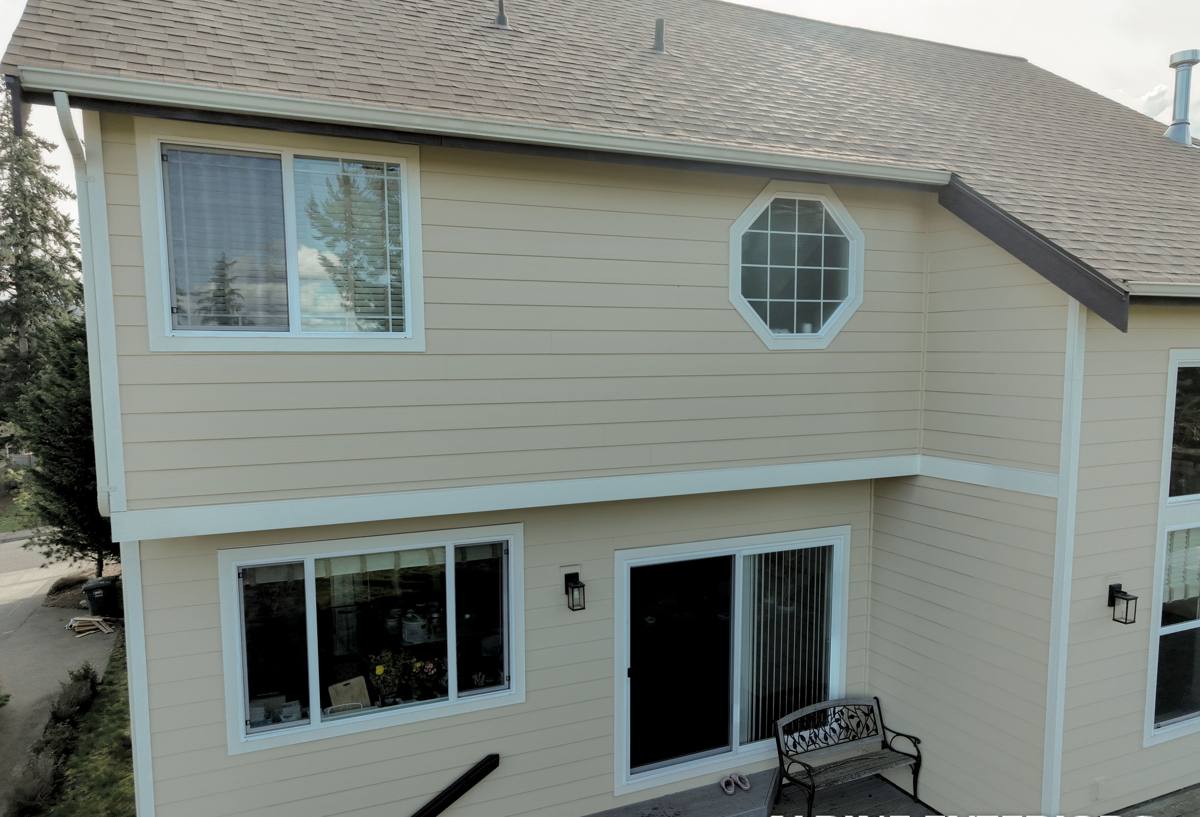
What Actually Counts as Storm Damage Here
"Storm damage" covers more than missing shingles after a windstorm. In this part of Skagit County, we treat all of the following as storm-related and worth a professional look:
- Wind-lifted or creased shingles that no longer seal flat, even if none are missing
- Granule loss from wind-driven rain, visible as bare, shiny patches on shingle surfaces
- Moss colonies that took hold after a wet stretch and have started lifting shingle edges
- Flashing pulled loose or bent around chimneys, skylights, and roof-to-wall transitions
- Gutter and downspout damage that's redirecting water back under the roof edge
- Branch strikes or debris impact from windstorms moving through the valley
- Ice-dam related damage from the occasional hard freeze followed by rapid thaw
Most of these show up gradually. That's exactly why a roof that "made it through the storm fine" can still develop a leak two or three rainy seasons later if the underlying damage was never addressed.
Signs a Sedro-Woolley Homeowner Should Not Ignore
You don't need to get on the roof to catch most of this early. Walk the property after a significant windstorm or at the start of the wet season and look for:
- Shingle granules collecting in gutters or at downspout outlets
- Dark streaking or green-black patches on north-facing or shaded roof slopes
- Ceiling stains, especially near chimneys, skylights, or where two roof planes meet
- A musty smell in the attic or upper closets after a rainy stretch
- Visibly curling, cracked, or lifted shingle tabs
- Daylight visible through the roof deck from inside the attic
- Sagging in the roofline, even a slight dip, which points to sheathing that's absorbed water over time
Any one of these on its own might be minor. Two or three together usually mean it's time for an inspection rather than a wait-and-see approach.
The Moss Factor
Moss deserves its own mention because it's often mistaken for a cosmetic issue. Moss doesn't just sit on top of shingles — its rhizoids work into the granule layer and shingle laps, holding moisture against the roof surface long after a rain has stopped. In a climate where the roof rarely gets a long dry stretch to fully shed that moisture, moss-affected areas age faster than the rest of the roof. Treating and removing moss the wrong way (aggressive pressure washing, for example) can strip granules and shorten shingle life just as much as leaving it alone. We remove it with methods that don't damage the shingle surface underneath.
How We Handle a Storm Damage Repair, Start to Finish
The process is the same whether the damage came from a single windstorm or built up over a wet winter — the goal is to find the actual extent of the problem before any repair work starts, not just patch what's visible from the ground.
- On-site inspection. We check the roof surface, flashing points, attic underside, and gutter system together, since damage in one area often explains a symptom showing up in another.
- Documentation. We photograph and note the specific damage found, which matters both for our repair plan and for any insurance claim you may file.
- Honest scope. We tell you plainly whether this is a targeted repair, a larger section replacement, or something that's reached the point where full replacement is the more cost-effective long-term choice.
- Repair or replace. Matching materials as closely as possible on repairs, or a full tear-off and re-roof when the damage or roof age calls for it.
- Flashing and moisture barrier check. Since flashing failure is one of the most common repeat-leak causes in this climate, we verify it's properly lapped and sealed before closing up any repair.
- Final walk-through. We show you what was done and what to watch for going forward.
Repair or Replace? How We Make That Call
This is the question every homeowner asks, and the honest answer depends on more than the size of the visible damage. Here's how we weigh it:
| Factor | Leans toward repair | Leans toward replacement |
|---|---|---|
| Roof age | Under 12–15 years, otherwise sound | Nearing or past typical shingle lifespan |
| Extent of damage | Isolated to one slope or area | Spread across multiple slopes or recurring in the same spots |
| Underlayment/deck condition | Dry, intact sheathing found on inspection | Soft spots, staining, or rot found in the deck |
| Moss/algae history | Recent, hasn't compromised shingle integrity yet | Long-term colonization with lifted or degraded shingles |
| Shingle match availability | Matching product still available | Discontinued color/style, patch would be visibly mismatched |
We'd rather repair a roof that has real life left in it than sell a replacement it doesn't need — and we'll say so directly if that's what the inspection shows.
What Repairs Typically Cost, and Why It Varies
Every roof and damage scenario is different, but as a general guide: isolated shingle and flashing repairs in this area often run in the range of a few hundred to around fifteen hundred dollars, depending on accessibility and the number of repair points. Section replacements covering a slope or two run higher. A full tear-off and replacement is its own separate estimate, typically in the low-to-mid five figures for an average-size home, driven mostly by roof size, pitch, layers being removed, and material choice. We'll give you an actual number after inspection — broad ranges only tell you so much.
| Cost driver | Why it matters |
|---|---|
| Roof pitch and access | Steeper roofs and limited ladder access take more time and safety setup |
| Number of penetrations | Each chimney, vent, and skylight is a flashing point that needs its own attention |
| Deck condition | Rotted or soft sheathing found mid-repair adds material and labor |
| Material match | Older or discontinued shingle lines can require a wider replacement area |
| Season and demand | Scheduling around the wettest months can affect timeline more than price |
Working With Your Insurance Claim
Wind and storm damage is often covered under a standard homeowner's policy, but coverage details, deductibles, and what counts as "storm-related" versus "wear and tear" vary by insurer and policy. We're not your insurance company and won't promise a claim outcome, but we can provide clear, photographed documentation of the damage we find and a written scope of repair that you can submit alongside your claim. Getting an independent, honest assessment before you talk to an adjuster is usually the most useful thing a homeowner can do.
Why a Crew That Already Works Sedro-Woolley Matters Here
Storm damage repair isn't just a technical skill — it's a judgment call about what's actually urgent versus what can wait, and that judgment is sharper when a crew has seen how roofs in this specific part of Skagit County age. We know which slopes tend to hold moss longest given the tree cover and shade patterns common around here, which flashing details tend to fail first in valley wind, and what a rushed patch job from a storm-chasing outfit looks like six months later. That local pattern recognition is what keeps a repair from becoming a repeat call.
It also means we're not disappearing after the invoice. If something about the repair doesn't hold up through the next wet season, we're a local call away, not a name from a door-hanger that showed up after one bad storm and moved on to the next county.
Protecting the Repair: Maintenance That Actually Helps
A good repair only stays good if the roof around it is maintained. In this climate, that means:
- Clearing gutters and downspouts at least twice a year, more often under overhanging trees
- Scheduling moss treatment before it colonizes, not after shingles are already lifting
- Keeping tree limbs trimmed back from the roofline to reduce debris and shade-driven moisture
- Having flashing points checked every few years, since they fail well before the shingle field usually does
- Getting a post-storm walk-around after any significant wind event, even if nothing looks obviously wrong
None of this is complicated, but it's the difference between a roof that reaches its full lifespan and one that develops the same problem twice.
Get an Honest Look Before Small Damage Becomes a Bigger Repair
If a recent storm has you wondering about your roof, or you've noticed moss, staining, or granule loss building up over time, it's worth getting it looked at before the next wet stretch makes the problem worse. We'll give you a straight assessment, a clear scope of what needs to happen, and a free, no-pressure estimate — use the form below to get started.