 Anacortes Siding
 Building a Deck That Holds Up in Sedro-Woolley's Skagit Valley Climate
Sedro-Woolley sits up the valley from saltwater, tucked along the Skagit River at the edge of the Cascade foothills. That location spares it some of the harsher salt-air exposure that coastal Anacortes properties deal with, but it trades that for its own set of conditions: heavier tree cover, more shade, higher humidity, and rainfall that tends to linger rather than blow through. For a deck, that combination matters as much as salt air does — moisture that sits, wood that stays damp longer, and moss that gets a head start in shaded corners of the yard.
A deck built without accounting for that reality will still look fine the first year or two. The problems in Skagit County's wet climate tend to show up in year three, four, or five — at the ledger board, at the fasteners, underneath the decking where nobody looks until something feels soft. Building it right the first time costs a little more up front and saves a full rebuild later.
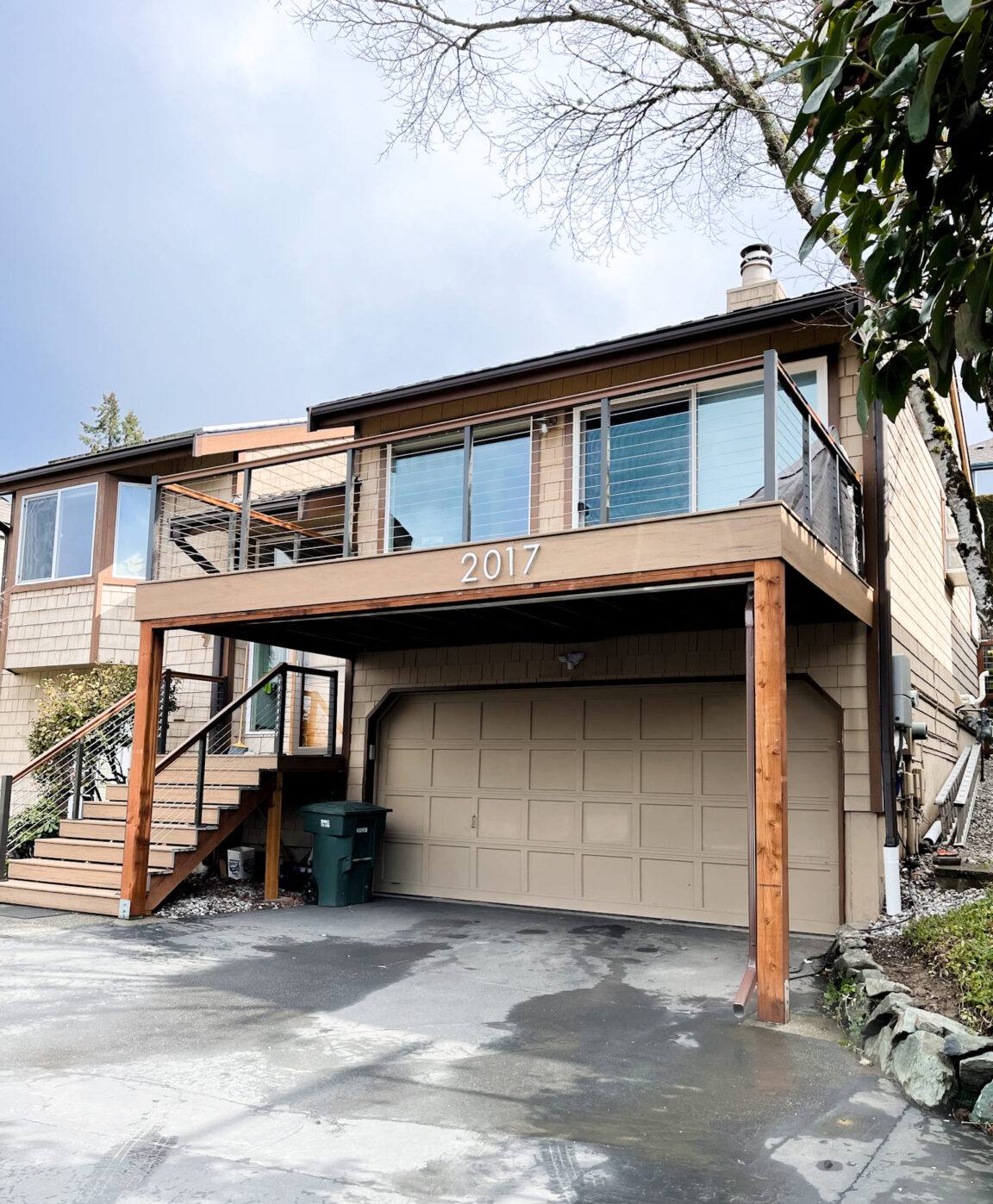
What the Local Climate Actually Does to a Deck Over Time
Most deck failures we see in this part of Skagit County aren't dramatic — they're slow. Water finds a gap, wood stays wet a few extra days after every rain, and over a few seasons that adds up.
Where Trouble Usually Starts
- Ledger board connection — where the deck attaches to the house is the single most common failure point when flashing wasn't done correctly, since it traps water against the house rim joist.
- Joist hangers and fasteners — standard galvanized hardware corrodes faster in a climate that's damp more months than not, especially where two dissimilar metals meet.
- Moss and algae on the deck surface — shaded, north-facing decks under tree cover grow moss quickly, and moss holds moisture against the wood while also making the surface slick.
- Standing water on the decking itself — boards installed dead-flat instead of with a slight pitch away from the house will pond water after every rain instead of shedding it.
None of this is unique to Sedro-Woolley, but the frequency and duration of wet weather here means these issues surface sooner than they would in a drier climate.
Choosing the Right Decking Material for This Climate
There's no single "best" decking material — there's a best fit for the amount of maintenance you're willing to do and how much shade the deck sits in. Here's how the common options actually perform in a valley climate like this one:
| Material | Moisture & Moss Resistance | Maintenance | Typical Lifespan Here |
|---|---|---|---|
| Pressure-treated pine | Fair — the treatment resists rot but the surface still absorbs water and grows moss in shade | Needs cleaning and re-sealing every 1-2 years | 15-20 years with upkeep |
| Western red cedar | Good natural rot resistance, but still an open-grain wood that takes on moisture | Annual cleaning and periodic sealing to hold its color and resist moss | 15-20 years with upkeep |
| Composite decking | Very good — resists rot outright, though cheaper composites can still grow surface mildew in deep shade | Occasional washing, no sealing or staining | 25-30+ years |
| PVC/capped composite | Best — fully sealed surface, nothing for moisture or moss to grab onto | Lowest — soap and water as needed | 25-30+ years |
We're honest with homeowners about the trade-off: composite and PVC cost more up front but remove most of the maintenance burden that wood decking creates in a climate this wet. Wood costs less initially but only holds up if someone actually keeps up with cleaning and sealing on schedule — skip a year or two and moss and rot get a foothold fast.
The Structural Details That Matter More Here Than in Drier Climates
Footings Below Frost Depth
Skagit County doesn't see deep, sustained freezes, but frost heave still happens on the occasional hard cold snap, and shallow or undersized footings can shift over time. Footings need to be sized and set to the depth required by code for the soil conditions on the lot — this isn't an area to shortcut.
Ledger Board Flashing
The ledger board should be flashed with a proper drip cap and water-resistant barrier between the ledger and the house sheathing, with the house's existing weather-resistive barrier lapped correctly over the top. This one detail prevents the majority of the rot damage we see at deck-to-house connections.
Fasteners and Hardware
Hot-dip galvanized or stainless steel hardware throughout — hangers, screws, bolts, and structural connectors — is worth the modest upcharge over standard coated fasteners. In a climate where hardware stays damp for long stretches, the cheaper option corrodes noticeably faster and can eventually compromise the connection it's holding.
Airflow and Drainage Underneath
Decking boards need a consistent gap for drainage and airflow, and the framing underneath needs enough clearance and ventilation that it can actually dry out between rain events instead of staying damp continuously. On lower decks close to grade, this is often the detail that gets missed.
Permits and Codes for a Sedro-Woolley Deck
Whether your permit goes through the City of Sedro-Woolley or Skagit County depends on exactly where the property sits, so that's one of the first things we confirm before design work starts. Most attached decks above a certain height, or any deck with a roof or that involves structural changes to the house, require a permit and inspection. Guardrails, when required by height, generally need to meet current code for rail height and baluster spacing so a small child can't pass through or climb the gaps.
We pull the permit, schedule the inspections, and handle the back-and-forth with the building department as part of the job — you shouldn't have to be the one chasing down inspection dates.
Our Deck-Building Process
- Site visit — we walk the yard, look at drainage patterns, sun and shade exposure, tree cover, and soil conditions before recommending anything.
- Design and material selection — sized to how you'll actually use the space, with an honest conversation about wood versus composite for your specific site.
- Permitting — we handle the application and inspection scheduling with the appropriate local jurisdiction.
- Footings and framing — footings set to proper depth, ledger flashed correctly, framing built with corrosion-resistant hardware throughout.
- Decking and rail installation — installed with correct spacing, pitch, and fastening method for the material chosen.
- Final walkthrough — we go over the finished deck with you and cover what maintenance it actually needs going forward.
Keeping a Skagit Valley Deck Looking Good Once It's Built
A well-built deck still needs some basic upkeep in this climate. None of it is complicated, but skipping it is how moss and moisture problems start:
- Sweep off fallen leaves and needles regularly — they trap moisture against the boards and are one of the fastest ways to start a moss patch.
- Keep gutters and downspouts clear so roof runoff isn't dumping directly onto or next to the deck.
- Wash wood decking at least once a year and re-seal on the schedule the product calls for, typically every one to two years.
- Keep planters and rugs from sitting directly on the boards for long stretches — they trap moisture underneath.
- Trim back overhanging branches where possible to let more sun and air reach shaded sections.
- Do a yearly check of the ledger flashing and any visible hardware for early rust or gaps.
Why a Crew That Already Works Sedro-Woolley Matters
Skagit County covers a lot of ground, and the conditions on a shaded, tree-lined lot in Sedro-Woolley aren't the same as a wide-open lot closer to the water in Anacortes. A crew that already works this area knows which lots tend to have drainage issues, which sites need extra attention to shade and moss exposure, and how the local permitting process actually runs. That familiarity shows up in fewer surprises during the build and a deck that's designed for the site it's actually sitting on — not a generic template.
It also matters after the job is done. A deck is a long-term structure, and if a fastener needs a look or a flashing detail needs a check five years down the road, it's worth having a local crew that's still around and easy to reach, rather than a company that isn't based in the area.
If you're planning a new deck or replacing one that's showing its age, we're happy to walk the site with you and put together a straightforward estimate — no pressure, no obligation. Use the form below to get started.