 Anacortes Siding
 Burlington's Weather Is Hard on Roofs — Here's Why
Burlington sits in the Skagit Valley, close enough to the water that marine air, driving rain, and a long, damp moss season all reach it the same way they reach Anacortes and the rest of Skagit County. The difference from a drier inland climate isn't one bad storm a year — it's months of low-angle sun, shaded rooflines that never fully dry out, and rain that comes sideways often enough to test every flashing detail on a roof. A roof built or repaired without that in mind will show it early: moss in the shaded valleys, soft spots at the eaves, and granule loss that shows up years before it should.
We're based in Anacortes and work Burlington regularly, so we're not guessing at what holds up here. The same salt-tinged, wet marine air that ages siding on Fidalgo Island works on shingles and underlayment too — it just shows up on the roof first, because that's the surface taking the direct hit from rain and sun.
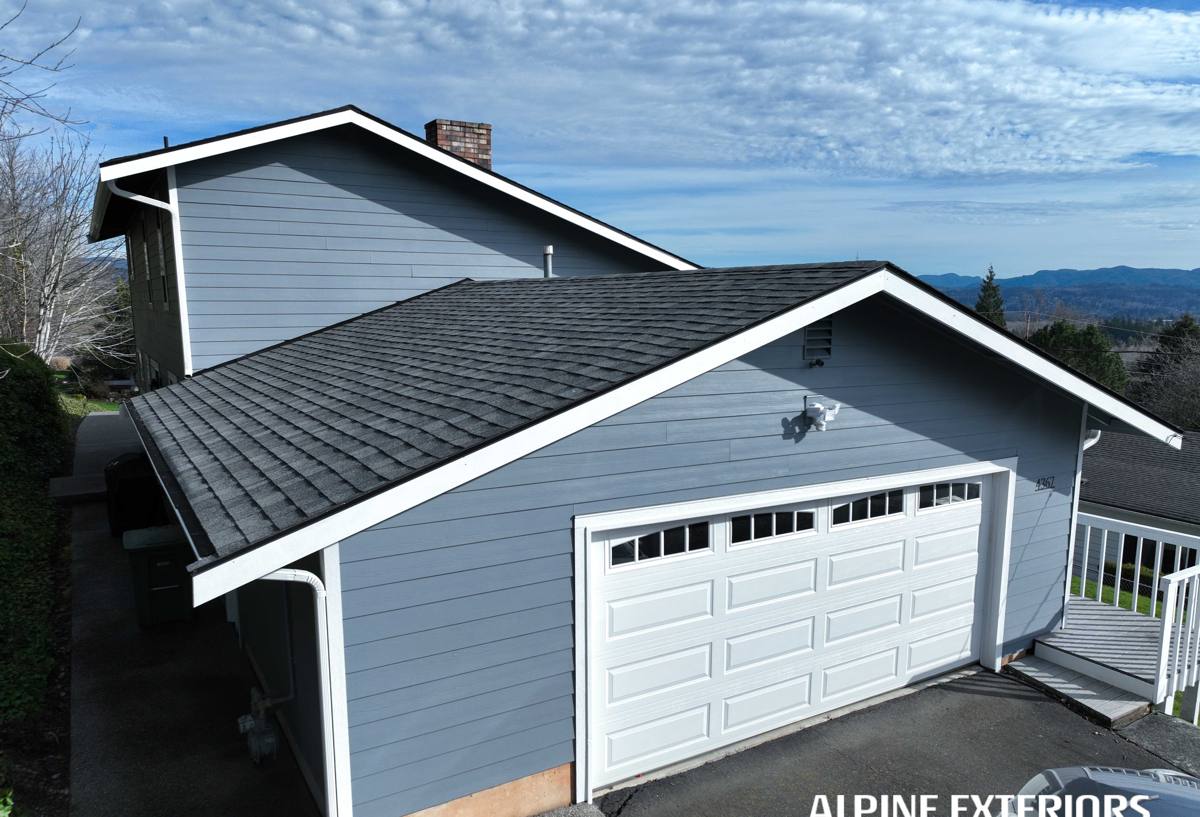
Signs a Burlington Roof Is Ready for Replacement
Moss, Algae, and Dark Streaking
A little moss on a north-facing slope isn't an emergency. Moss that's built up in mats, or dark algae streaking that keeps coming back after cleaning, means moisture is sitting in the shingle mat longer than it should. Once moss roots under the shingle tabs, it lifts them and lets water track underneath — at that point cleaning won't fix the underlying problem.
Granule Loss and Curling Shingles
Asphalt shingles shed their protective granules as they age; you'll see this as bald patches or granules collecting in gutters. Curling or cupped tabs mean the shingle has lost flexibility and is no longer sealing tightly against wind-driven rain, which is common enough here that it deserves real weight in the decision.
Leaks, Sagging, and Attic Signs
Water stains on ceilings, a musty attic smell, daylight through the roof deck, or any sagging along a ridge or valley are all signs the roof has already failed somewhere, even if the leak hasn't found its way inside yet. By the time you see a stain, water has usually been getting past the shingles for a while.
What a Correct Roof Replacement Actually Involves
Tear-Off and Deck Inspection
A proper replacement starts with a full tear-off to bare decking, not a layer-over-layer shortcut. That's the only way to actually see the plywood or OSB underneath — soft, delaminated, or water-stained decking has to be replaced before anything new goes down, or the new roof is just covering the same problem.
Underlayment and Moisture Protection
Given how much rain Skagit County sees, underlayment choice matters more here than in drier regions. We use synthetic underlayment across the field for its tear resistance and water shedding, with self-adhered ice-and-water membrane at eaves, valleys, and any low-slope transitions where wind-driven rain is most likely to work its way backward under the shingles.
Ventilation and Flashing
Balanced intake and exhaust ventilation keeps the attic dry and the roof deck at a consistent temperature, which slows moss growth and helps shingles last their full service life. Flashing at chimneys, skylights, walls, and roof-to-wall transitions gets replaced, not caulked over and reused — old flashing is one of the most common sources of hidden leaks we find during tear-off.
Roofing Material Options for Skagit County Homes
Most Burlington homes are well served by architectural asphalt shingle, but it's worth understanding the trade-offs before choosing. Here's how the common options compare for this climate specifically:
| Material | Typical Lifespan | Moss/Moisture Behavior | Maintenance | Relative Cost |
|---|---|---|---|---|
| Architectural asphalt shingle | 25–30 years | Algae-resistant granules help; still needs periodic moss removal on shaded slopes | Low to moderate | Lower |
| Standard 3-tab shingle | 15–20 years | Less wind and moss resistance than architectural | Moderate | Lowest |
| Metal (standing seam or panel) | 40–50+ years | Sheds moisture fast; moss struggles to hold on to smooth metal | Low | Higher |
| Cedar shake | 20–30 years with upkeep | Attractive but moisture-sensitive; needs regular treatment in a wet climate | High | Higher |
Cedar shake looks good on the right home, but we're straightforward about the trade-off: in a climate this wet, it demands more upkeep to keep moisture from working into the wood, and skipping that maintenance shortens its life fast. Metal costs more upfront but shrugs off moss and rain better than anything else on this list, which is why we see more of it going on Skagit County homes each year. For most homeowners, a quality architectural shingle with the right underlayment and ventilation is the practical middle ground.
What a Roof Replacement in Burlington Typically Costs
Every roof is different, but the price mainly comes down to a handful of factors we walk through on-site rather than quote over the phone:
- Roof size and complexity — a simple gable roof costs less to cover than one with multiple valleys, dormers, and hips
- Pitch and access — steep or hard-to-access roofs take longer and require more safety setup
- Number of layers to remove — tearing off two layers of old shingles costs more than one
- Deck condition — rotten or soft plywood found during tear-off adds material and labor
- Material choice — asphalt, metal, and cedar carry different material and labor costs
- Ventilation and flashing upgrades — bringing an older roof's ventilation up to current standards
We'd rather give you an honest, itemized number after actually looking at the roof than a rough figure that changes once we're up there.
Our Burlington Roof Replacement Process
- On-site inspection — we get on the roof, check the deck where accessible, and look at attic ventilation and any interior signs of leaking
- Written estimate — a clear breakdown of material, labor, and any deck repair allowance, with no surprise line items later
- Material selection — we walk you through shingle or metal options and colors that suit the home and budget
- Tear-off and deck repair — full removal of old roofing, replacement of any damaged decking found underneath
- Underlayment, flashing, and install — ice-and-water membrane at vulnerable areas, new flashing throughout, and correct installation to manufacturer specs
- Final walkthrough and cleanup — magnetic sweep for nails, full site cleanup, and a review of the finished roof with you before we consider the job done
Roofing Mistakes We See — and How We Avoid Them
A lot of roof problems in this region trace back to shortcuts taken during a previous install, not just age. Things we specifically watch for and correct:
- Nailing shingles above the manufacturer's specified nail line, which weakens wind resistance in exactly the storms this area gets
- Reusing old flashing instead of replacing it at valleys, chimneys, and wall transitions
- Skipping ice-and-water membrane at eaves, where wind-driven rain most often backs up under shingles
- Blocking soffit vents with insulation, which starves the attic of the airflow that keeps moss and mildew down
- Layering new shingles over old ones instead of a full tear-off, which hides deck damage and shortens the new roof's life
Why a Local, Anacortes-Based Crew Matters in Burlington
Roofing crews that don't work this region day to day tend to build for average conditions — average rainfall, average moss risk, average wind. Skagit County isn't quite average. We're out in Burlington, Anacortes, and the rest of the county regularly, so we know which details actually matter here: how far the ice-and-water membrane needs to run at the eaves, which slopes stay shaded long enough to need extra attention to ventilation, and how the salt-tinged marine air interacts with fasteners and flashing over time. That's knowledge you build by working the area, not by reading a spec sheet.
Being local also means we're reachable after the job is done. If something needs a look during the first heavy rain of the season, we're not driving in from out of the area to get to you.
After the Install: Keeping Moss and Moisture Off Your New Roof
A correctly installed roof still benefits from basic upkeep in this climate. Keep gutters clear so water doesn't back up under the shingle edge, trim back overhanging branches that keep a section of roof shaded and damp longer than the rest, and have moss growth removed gently before it has a chance to root under the tabs. Zinc or copper strips near the ridge can help slow moss regrowth on shaded slopes without repeated chemical treatments. None of this replaces a periodic visual check — catching a lifted shingle or worn flashing early is a lot cheaper than dealing with the water damage it causes if it goes unnoticed through a wet winter.
If your Burlington-area roof is showing moss, granule loss, or signs of a leak, we're happy to take a look and give you a straight answer about what it needs — whether that's a repair or a full replacement. Reach out for a free, no-pressure estimate using the form below.