 Anacortes Siding
 Why Old Town Anacortes Is Tough on Siding
Old Town sits close to the water on Fidalgo Island, which means it catches everything Skagit County's marine climate has to offer. Salt-laden air drifts in off the Guemes Channel and Rosario Strait almost year-round, and that airborne salt settles on exterior walls, works into seams and fastener heads, and slowly breaks down finishes that weren't built to handle it. Add driving rain that comes in sideways during fall and winter storms, and you have moisture finding its way into every gap, lap joint, and unsealed cut edge on a house.
Then there's moss. Anacortes gets a long, damp shoulder season on either side of winter, and shaded or north-facing walls in Old Town — especially on lots with mature trees or tight side yards between houses — stay wet longer than they dry. Moss and algae don't just look bad; they hold moisture against the siding surface for weeks at a time, which accelerates rot in wood-based products and stains even durable materials if it isn't kept in check.
None of this is unique to any one house. It's a function of geography. A siding replacement done for an Old Town home needs to be planned around these three stresses — salt, wind-driven rain, and moss — not around a generic weatherproofing checklist that could apply anywhere in the country.
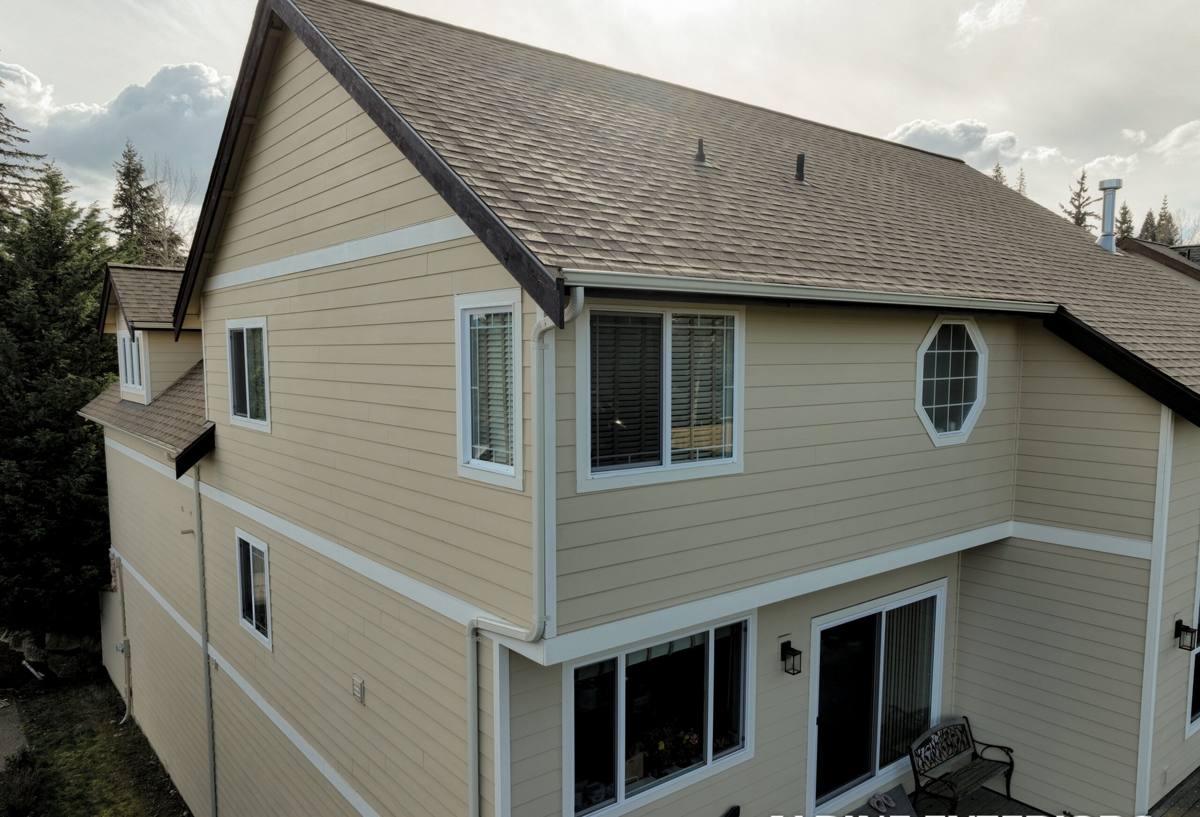
The Housing Stock in Old Town
Old Town is one of Anacortes's older residential areas, and the age of the homes matters for a siding project. Many houses here were built well before modern weather-resistive barriers, rain-screen gaps, and flashing details were standard practice. Over the decades a lot of these homes have already been re-sided at least once — sometimes with wood lap that's now failing, sometimes with an older vinyl or hardboard product installed directly over the original sheathing with minimal moisture management.
That history creates two common situations when we get called out to Old Town:
- Siding that looks fine from the street but is hiding soft sheathing, rot, or trapped moisture underneath because the original install had no drainage plane
- Older wood or hardboard siding that's simply reached the end of its service life after years of salt exposure and repeated wet-dry cycles
Either way, a straightforward "replace the boards" approach isn't enough. The wall assembly behind the siding needs to be checked and, where needed, corrected — otherwise the new siding just repeats the same failure on the same timeline.
Working Around Older Lots
Old Town's lots also tend to be narrower and more closely spaced than newer subdivisions elsewhere in Skagit County. That affects scaffolding, material staging, and how close crews can safely work to a neighbor's property line. It's a logistics detail, not a technical one, but it's the kind of thing that slows down a crew unfamiliar with the neighborhood and is routine for one that already works it regularly.
What a Correct Siding Replacement Actually Involves
Replacing siding correctly is not just pulling off old boards and nailing up new ones. In a climate like this, the sequence matters as much as the material:
- Full tear-off and inspection — removing existing siding to expose the sheathing, checking for rot, soft spots, and existing moisture damage before anything new goes up
- Sheathing repair — replacing any compromised sheathing rather than covering it, since new siding over damaged sheathing just hides a problem that keeps growing
- Weather-resistive barrier — installing a code-compliant house wrap or building paper, lapped correctly so water sheds outward rather than behind it
- Flashing at every penetration — windows, doors, hose bibs, vents, and any other wall penetration need proper flashing, since these are the most common entry points for wind-driven rain
- Drainage plane — where called for, a rain-screen gap that lets any incidental moisture drain and dry instead of sitting against the back of the siding
- Manufacturer-spec installation — correct fastener type, spacing, and clearances, which matter for both warranty coverage and actual performance in salt air
- Caulking and finish details — sealing joints and trim in a way that keeps water out without trapping moisture in
Skipping or rushing any one of these steps is how a siding job that looks good on install day starts failing within a few years — which is exactly what we see when we're called in to fix a prior re-side in this neighborhood.
Why We Install Only James Hardie Fiber Cement
We don't install vinyl, LP SmartSide, primed spruce, cedar, or off-brand fiber cement. We install James Hardie, and only James Hardie. That's a deliberate standard, not a lack of options.
Wood and engineered-wood siding products can perform well in the right conditions, but Old Town's combination of salt air, sustained moisture, and moss puts real strain on any product with an organic wood component — even factory-treated ones. Vinyl holds up fine against moisture itself, but it expands and contracts more with temperature swings, can become brittle over time, and doesn't offer the same fire performance or paint-grade finish durability. Those are honest trade-offs, not defects — they're just why we've chosen not to install those products.
James Hardie fiber cement is engineered specifically around climate exposure. The HardieZone HZ5 formulation, which fits the Pacific Northwest's wet, moderate climate, is manufactured to resist moisture absorption and hold up to repeated wet-dry cycling without swelling, cracking, or attracting rot the way wood-based products can. It's non-combustible, which matters for wildfire-adjacent insurance considerations even in a coastal town. And the ColorPlus factory finish is baked on under controlled conditions, so it resists the fading and chalking that field-applied paint goes through faster in salt air.
How Hardie Compares to What's Already on Old Town Homes
| Factor | Older Wood/Hardboard Siding | Vinyl Siding | James Hardie Fiber Cement |
|---|---|---|---|
| Salt air resistance | Degrades faster; finish breaks down, fibers absorb moisture | Doesn't absorb moisture but can become brittle over time | Engineered for moisture resistance; factory finish holds up well |
| Moss/algae resistance | Moss retains moisture against wood, speeding rot | Moss sits on the surface but doesn't damage the material | Moss can be cleaned off without compromising the board |
| Fire resistance | Combustible | Combustible, can melt/deform | Non-combustible |
| Repainting needs | Every 3-7 years in this climate | Rarely painted, but color fades | ColorPlus finish typically holds 15+ years before repaint |
| Typical service life here | 15-25 years, often less near the water | 20-30 years, but appearance degrades sooner | 30-50+ years when installed to spec |
Our Process for an Old Town Project
Every project starts with an on-site assessment, not a phone quote. We walk the exterior, check for soft spots and moisture intrusion, look at trim and window flashing, and get a real read on what's under the current siding before we talk numbers. From there:
- We give a written scope that spells out tear-off, any sheathing repair allowance, house wrap, flashing details, and the specific Hardie product and color being installed
- We schedule around Anacortes's wetter months when possible, since keeping open wall sections dry during tear-off matters more here than in a drier climate
- We handle permitting through the City of Anacortes as required for the scope of work
- We protect landscaping, walkways, and neighboring property lines given how tight some Old Town lots are
- We do a final walkthrough with the homeowner before calling the job complete
Signs Your Old Town Home Needs Siding Replacement Now
- Boards that feel soft, spongy, or give slightly when pressed
- Paint that's peeling, bubbling, or needing repainting more often than every few years
- Persistent moss or dark staining that comes back quickly after cleaning
- Visible gaps, warping, or separation at seams and corners
- Rising heating bills that suggest moisture or air infiltration behind the siding
- Siding that's 20+ years old and was never installed with a modern moisture barrier
- Soft or discolored sheathing visible at outlets, vents, or trim gaps
Why Hiring a Crew That Already Works Old Town Matters
A crew that regularly works this neighborhood already knows the tight-lot logistics, has a working relationship with the City of Anacortes permitting process, and has seen firsthand how the local combination of salt air and moss plays out on real houses over time — not just in a manufacturer's climate chart. That translates into fewer surprises mid-project: knowing to check specific trouble spots first, planning around the weather realistically, and installing with the right details the first time instead of learning them on your house.
It also means accountability. A local crew with an ongoing presence in Skagit County has a reputation to maintain in this community, which is a different incentive than an out-of-area crew that won't be back.
Get an Estimate
If your Old Town Anacortes home has siding that's showing its age — or you just want an honest read on whether it's holding up the way it should — we're happy to take a look. The estimate is free, there's no pressure, and you'll get a straight answer about what your home actually needs. Use the form below to get started.