 Anacortes Siding
 Old Town Anacortes Homes Have Their Own Siding Story
Old Town Anacortes is home to some of the oldest housing stock in this part of Skagit County, and that history shows up the moment you start looking closely at exterior walls. Many of these homes have been re-sided at least once already, sometimes layered over older material instead of stripped back to the sheathing. Additions and porch enclosures were often finished to match as best as the builder could at the time, which means wall assemblies on the same house can vary from one side to the next. None of that is a problem by itself, but it does mean a siding installer working in this neighborhood needs to actually look at what's underneath before quoting a job, not just measure the outside and order material.
We install siding across Anacortes and the surrounding Fidalgo Island area, and Old Town is one of the neighborhoods where the gap between "looks fine from the street" and "what's actually happening at the sheathing" tends to be widest. That's not a knock on the neighborhood — it's just what happens to exterior walls that have been through decades of Pacific Northwest weather.
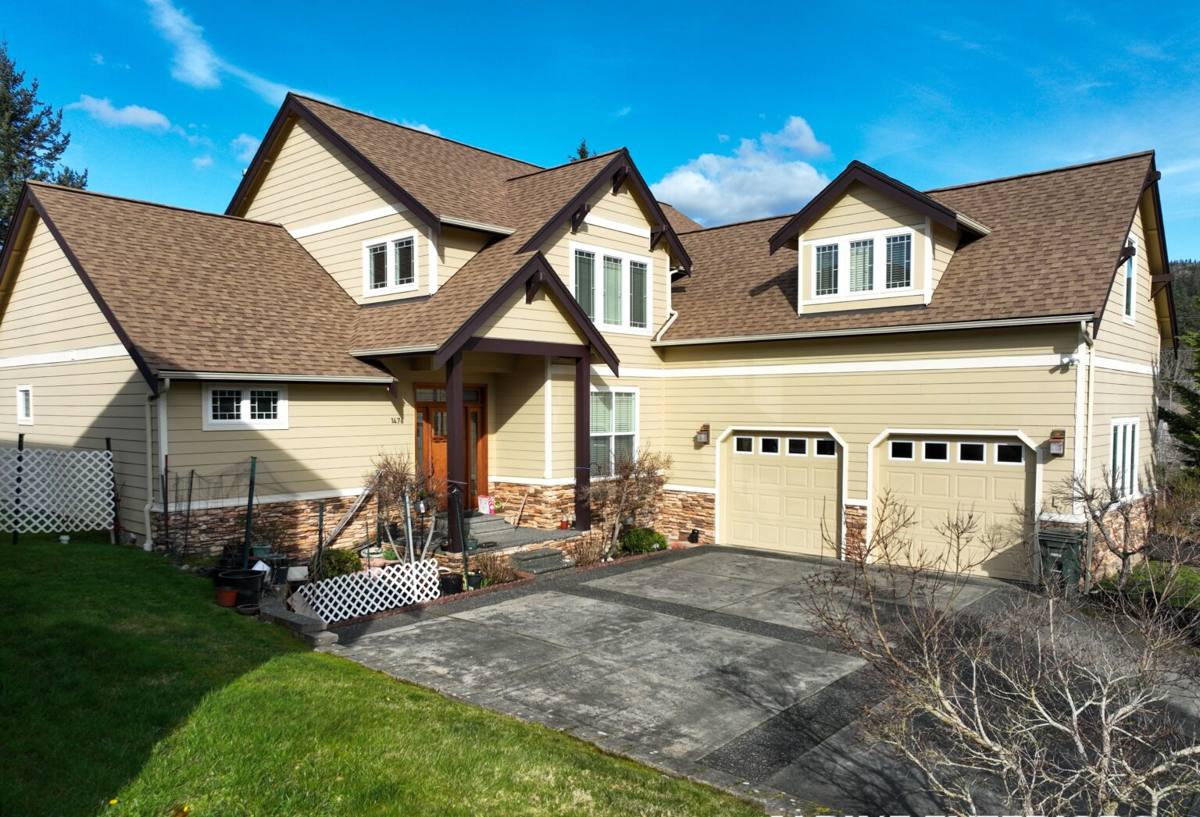
What This Climate Actually Does to Siding
Anacortes sits close enough to the water that salt-laden air is a real factor, not a theoretical one. Salt air accelerates corrosion on fasteners, flashing, and any exposed metal trim, and it breaks down paint and caulk faster than the same products would last further inland. On top of that, this area gets plenty of driving rain — wind-driven storms that push water sideways into laps, joints, and trim intersections rather than letting it run straight down and off the wall. Siding that's only detailed to shed water falling straight down will eventually let some of that sideways rain find its way behind the cladding.
Then there's moss. Skagit County's long, damp, mild winters create an extended moss season on north-facing walls, shaded elevations, and anywhere tree cover keeps a wall from drying out between rain events. Moss holds moisture directly against a wall's surface for extended periods, which is exactly the kind of sustained dampness that punishes absorbent siding materials and speeds up paint failure and rot at the substrate underneath.
Put those three things together — salt air, driving rain, and a moss season that can run half the year — and you get a climate that's genuinely harder on siding than most homeowners realize until they see what's happening behind an old panel.
Why This Matters More in Old Town Specifically
Mature trees, tighter lot spacing, and older grading around foundations are common in this part of Anacortes, and all three of those things slow down how quickly a wall dries after weather. A siding system that tolerates a wet-dry cycle well is worth more here than in a newer, more exposed subdivision where walls get more sun and airflow.
What a Correct Installation Actually Involves Here
Good siding installation is mostly invisible once the job is done — it's in the details you can't see from the sidewalk. In a climate like this, a few of those details matter more than usual:
- Weather-resistive barrier detailing — a continuous, properly lapped barrier behind the siding, with no gaps at penetrations, is the backup layer for the driving rain this area gets.
- Flashing at every transition — window and door heads, roof-to-wall intersections (kickout flashing), and horizontal trim boards all need flashing that directs water out and away, not just caulk covering a gap.
- Correct fastener placement and exposure — fastener pattern, spacing, and lap exposure need to match manufacturer specifications; getting this wrong is one of the most common causes of early siding failure.
- A drainage plane, not a sealed-tight wall — siding should be installed so any moisture that does get behind it has somewhere to go and can dry out, rather than being trapped against the sheathing.
- Caulk used sparingly and correctly — caulk is a detail, not a moisture-management strategy. Over-caulking is often a sign that flashing was skipped somewhere.
None of this is exotic. It's standard best practice for fiber cement installation. But it takes longer to do correctly than to do quickly, and in a climate this unforgiving of shortcuts, the difference shows up within a few winters, not decades.
Why We Install Only James Hardie Fiber Cement
We standardized on James Hardie fiber cement siding and don't install vinyl, LP SmartSide, or other fiber cement brands. That's a deliberate choice, not a brand preference. Hardie's fiber cement is non-combustible, doesn't absorb and swell with moisture the way wood-based siding products can, and holds up better against sustained damp conditions like the moss season this area sees every year. The HZ5 product line is engineered specifically for climate zones like ours, and the factory-applied ColorPlus finish is baked on and warrantied against fading and peeling — which matters in an environment where sun exposure, salt air, and moisture all work together to break down paint faster than most people expect. It also carries a strong, transferable warranty when installed to specification, which protects the investment for whoever owns the house next.
We're happy to explain the trade-offs of other products if you're comparing options — we just don't install them ourselves.
How We Approach a Project in Old Town Anacortes
- Inspection first. We look at the existing siding, trim, and — where accessible — the sheathing underneath, especially at corners, window sills, and any area that's shown staining or softness.
- Removal and substrate repair. Old siding comes off, and any rot or damaged sheathing gets repaired or replaced before anything new goes up. Covering damaged substrate with new siding just hides a problem that keeps getting worse.
- Weather-resistive barrier installation. A continuous barrier goes on with proper laps and taped seams before any cladding is installed.
- Flashing at every vulnerable point. Windows, doors, roof-wall intersections, and horizontal trim all get flashed before siding covers them.
- Hardie siding installation to spec. Panels or lap siding go on following manufacturer fastening and exposure requirements, matched to the wind and moisture exposure of each elevation.
- Trim, caulking, and touch-up paint. Finish details are completed and any factory-finish touch-up is done with matched product.
- Final walkthrough. We go over the completed work with the homeowner before calling the job done.
What Drives Cost on a Siding Project Like This
Every home is different, but the same handful of factors tend to drive price on Old Town Anacortes projects. This isn't a quote — it's meant to help you understand what a contractor is actually pricing when they walk your property.
| Cost Factor | Why It Matters |
|---|---|
| Condition of existing sheathing | Hidden rot or moisture damage found during tear-off adds repair scope that can't always be seen from outside |
| Total square footage and wall complexity | Multiple gables, dormers, and cut-ins take more labor per square foot than simple wall planes |
| Trim and detail work | Older homes often have more trim, corner detail, and transitions that need custom flashing and fitting |
| Siding profile and finish selected | Lap width, panel style, and ColorPlus color options vary in material cost |
| Site access and lot conditions | Mature trees, tight setbacks, and limited staging space can slow crew efficiency |
| Number of stories and roofline intersections | Second stories and multiple roof-wall junctions add scaffolding time and flashing complexity |
Signs Your Old Town Anacortes Home May Need New Siding
A lot of siding problems in this climate develop slowly and don't announce themselves until they've been an issue for a while. Worth checking for:
- Soft or spongy spots when you press on the siding, especially near the bottom of walls or under windows
- Paint that's peeling, bubbling, or chalking heavily rather than just fading evenly
- Persistent moss or algae growth that comes back within weeks of cleaning
- Visible cracking, warping, or separation at seams and corners
- Gaps opening up between siding and trim, window frames, or door casings
- A musty smell near exterior walls inside the house, which can point to moisture getting behind the siding
- Noticeably higher heating bills, which can mean compromised siding is letting moisture and drafts into the wall cavity
Older Neighborhoods, Practical Considerations
Working in an established neighborhood like Old Town Anacortes usually means dealing with mature landscaping, narrower side yards, and sometimes tighter access for staging material and equipment. It can also mean navigating whatever permitting requirements apply to your specific property and street. We handle the permitting process as part of the job and plan crew logistics around your lot rather than expecting the lot to accommodate a generic setup. If your property has any specific requirements or considerations, we'll flag those during the initial walkthrough rather than after work has started.
Why Local Experience with This Neighborhood Matters
A crew that already works in Anacortes and around Fidalgo Island has a practical read on how this climate behaves on real houses — which elevations take the worst of the driving rain, where moss tends to establish first, and how salt air exposure differs even between properties a few blocks apart depending on tree cover and orientation. That kind of familiarity doesn't replace careful inspection on each individual job, but it does mean fewer surprises and a crew that's already thought through the details this environment demands before they ever start tearing off old siding.
If you're weighing a siding replacement for a home in Old Town Anacortes, we're glad to come take a look and give you a straightforward, no-pressure estimate — including what we find when we check the condition underneath the existing siding, not just what it costs to cover it back up.