 Anacortes Siding
 Roofing Built for West Anacortes Conditions
West Anacortes sits close enough to the water that salt-laden air, wind-driven rain, and long stretches of shaded, damp weather are just part of owning a home here. A roof that would hold up fine in a drier inland climate can wear out faster on this side of Skagit County if it wasn't installed with these conditions in mind. That's not a scare tactic — it's just what happens when a roofing system gets tested by moisture almost year-round instead of a few weeks a season.
A correctly installed roof in this neighborhood needs to manage three things well: water that's being pushed sideways by wind, moisture that lingers under tree cover and morning fog, and the slow biological growth — moss and algae — that thrives in that combination. Get those three right and a new roof will do its job quietly for decades. Get them wrong and you'll see problems well before the shingles are technically "worn out."
What Actually Goes Wrong on Underbuilt Roofs Here
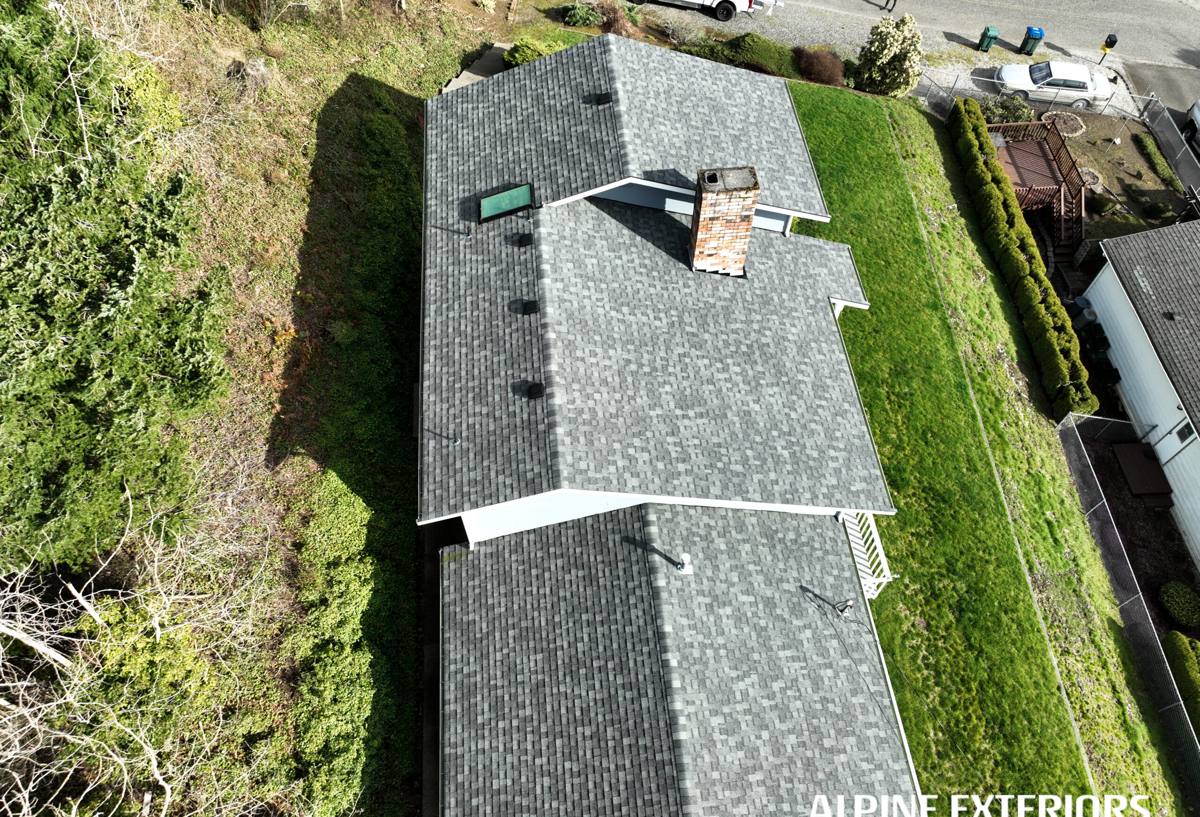
Most premature roof failures we see in this area aren't about the shingles themselves — they're about what's underneath or around them. Driving rain finds its way in at flashing details, not open field. Moss holds moisture against the roofing surface long after a storm has passed, which shortens the life of the material sitting under it. Poor attic ventilation traps humid air that condenses on the underside of the roof deck, which can rot sheathing from the inside without any obvious sign from the ground.
None of this is unique to any one brand of shingle. It comes down to installation detail: how flashing is layered, how much ventilation the attic actually has, and whether the roofer paid attention to the parts of the job that aren't visible once it's done.
Salt Air's Effect on Metal Components
Because West Anacortes is close to the water, we pay extra attention to metal roofing components — flashing, fasteners, vents, and any exposed metal trim. Salt air accelerates corrosion on lower-grade or unprotected metal over time. We spec corrosion-resistant metals and fasteners for coastal-adjacent homes rather than treating every job the same regardless of distance from the water.
What a Correct New Roof Installation Includes
A full roof replacement is more than laying new shingles over what's there. Done right, it includes several layers working together, and skipping any one of them is usually where future leaks come from.
- Complete tear-off: old roofing removed down to the deck so we can actually see what's underneath, not just cover it up.
- Deck inspection and repair: any soft, water-damaged, or delaminated sheathing gets identified and replaced before anything new goes down.
- Ice-and-water shield at vulnerable points: eaves, valleys, and around penetrations, where wind-driven rain is most likely to work its way underneath.
- Synthetic underlayment across the field: a water-resistant barrier under the whole roof, not just the high-risk areas.
- New flashing at every transition: chimneys, skylights, sidewalls, and valleys — reused old flashing is one of the most common causes of early leaks.
- Balanced ventilation: intake at the eaves and exhaust at the ridge, sized correctly for the attic space.
- Roofing material installed to manufacturer spec: correct nailing pattern, exposure, and fastening for the wind exposure of the specific site.
Each of those steps matters more here than it would in a drier climate, because West Anacortes gives moisture more chances to find a weak point.
Choosing a Roofing Material for This Climate
There's no single "best" roofing material for every home — it depends on the roof's pitch, the home's style, the budget, and how much long-term maintenance the homeowner wants to take on. What we can speak to honestly are the trade-offs each option carries in a wet, salt-air, moss-prone environment like this one.
| Material | Moisture & Moss Behavior | Maintenance | Typical Lifespan |
|---|---|---|---|
| Architectural asphalt shingle | Good drainage when installed with proper underlayment; can hold moss if not periodically cleaned | Low to moderate — occasional moss/debris removal recommended | 25-30 years |
| Standing seam metal | Sheds water and moss quickly due to smooth, steep-friendly surface | Low — minimal moss adhesion | 40-50+ years |
| Synthetic/composite shingle | Resists moisture absorption well; moss can still take hold on textured surfaces | Low to moderate | 30-50 years, varies by product |
| Wood shake | Absorbs moisture readily; requires active moss and moisture management | High — regular treatment and inspection needed | 20-30 years with upkeep |
We'll walk through these trade-offs against your roof's pitch, sun exposure, and tree cover during the estimate rather than pushing one product for every house. A roof under heavy tree shade, for example, is a very different moss-management conversation than one that gets full sun most of the day.
Ventilation and Moisture Management
Attic ventilation gets overlooked more than any other part of a roofing job, but it's one of the biggest factors in how long a new roof actually lasts in this climate. When intake and exhaust vents aren't balanced, warm moist air from inside the house gets trapped against the underside of the roof deck. Over a long, damp Pacific Northwest winter, that trapped moisture can lead to sheathing rot, mold, and premature aging of the roofing material from below — problems that have nothing to do with the quality of the shingles on top.
We check existing ventilation as part of every new roof estimate and correct it as needed, whether that means adding ridge vent, correcting blocked soffit intake, or resizing exhaust to match the attic's actual square footage. It's not an upsell — it's part of making the roof last.
Our Installation Process
- On-site inspection and estimate: we look at the roof, attic ventilation, flashing points, and any moss or moisture issues, and put together a clear, itemized estimate.
- Material selection: we go over the options that make sense for your roof's pitch and exposure, with honest pros and cons for each.
- Scheduling around weather: we plan the tear-off and install for a window with the best available weather, since an open roof deck needs dry conditions.
- Tear-off and deck inspection: old roofing comes off, the deck is inspected, and any damaged sheathing is repaired or replaced.
- Underlayment, flashing, and ventilation installed: the protective layers go in first, correctly, before any finish material is installed.
- Roofing material installed to spec: proper fastening, exposure, and detail work at every valley, edge, and penetration.
- Final walkthrough and cleanup: we inspect the finished roof with you, answer questions, and make sure the site is cleared of debris and nails.
Signs a West Anacortes Home May Need a New Roof
Not every roof problem means a full replacement, but these are the signs worth having a professional look at sooner rather than later — especially in a climate that doesn't give a struggling roof much of a break:
- Shingles that are curling, cracking, or losing significant granule coverage
- Heavy moss growth that keeps returning shortly after cleaning
- Daylight visible through the roof deck from inside the attic
- Soft or spongy spots when walking the roof
- Staining or moisture marks on interior ceilings, especially after wind-driven rain
- Flashing that's visibly rusted, lifted, or separated from the roof surface
- A roof that's 20+ years old and has never had underlayment or ventilation upgraded
If you're only seeing one or two of these, a repair may be enough. If several show up together, or the roof is old enough that repairs are becoming frequent, replacement usually ends up being the more cost-effective path.
Why Hiring a Crew That Already Works in West Anacortes Matters
Roofing crews that work across a wide, generic service area tend to install the same way everywhere. A crew that regularly works West Anacortes specifically has already seen how this stretch of Skagit County behaves — how wind comes off the water, which roof orientations collect the most moss, and how quickly a poorly ventilated attic causes problems in this kind of damp, coastal-adjacent air. That familiarity shows up in the details: flashing choices, fastener selection, and ventilation decisions that are dialed in for this specific environment rather than a one-size-fits-all approach.
It also matters for permitting and follow-up. A local crew knows the local permitting process, shows up quickly if a question comes up after the job, and isn't disappearing to the next region over once the install is finished.
Warranty and What Happens After Installation
Roofing materials carry manufacturer warranties that vary by product and are worth reviewing in detail before you choose — we'll go over exactly what's covered for whichever material you pick. On our end, workmanship is backed by our own installation warranty, since most roof problems trace back to how something was installed rather than the material itself.
After installation, a little seasonal attention goes a long way here: keeping gutters and valleys clear of debris, and having moss growth checked and treated before it becomes established, especially on shaded sections of the roof. We're happy to talk through a simple maintenance routine at the end of the job so the new roof performs the way it's supposed to for its full lifespan.
If you're weighing a new roof for a home in West Anacortes, we're glad to take a look and put together a straightforward, no-pressure estimate — just fill out the form below and we'll go from there.