 Anacortes Siding
 Roofing Built for the Skagit Valley, Not a Showroom Climate
Sedro-Woolley sits inland along the Skagit River, ringed by fir and cedar cover that keeps the town shaded, humid, and green most of the year. That's part of what makes it a good place to live, and part of what makes it hard on a roof. Tree canopy means constant leaf and needle litter collecting in valleys and against chimneys. River-valley humidity means shingles and sheathing rarely get a full, fast dry-out between storms. And a long Pacific Northwest wet season means moss and moisture have months at a time to work into anything that isn't sealed and flashed correctly the first time.
None of that is unusual for Skagit County. But it does mean a roof designed for a drier climate, or installed by a crew that doesn't normally work this area, tends to underperform here — sometimes years before it should. A correctly installed roof accounts for all of it: the moss, the standing damp, the driving rain that comes sideways off a storm system, and the freeze-thaw swings that hit the valley a few times most winters.
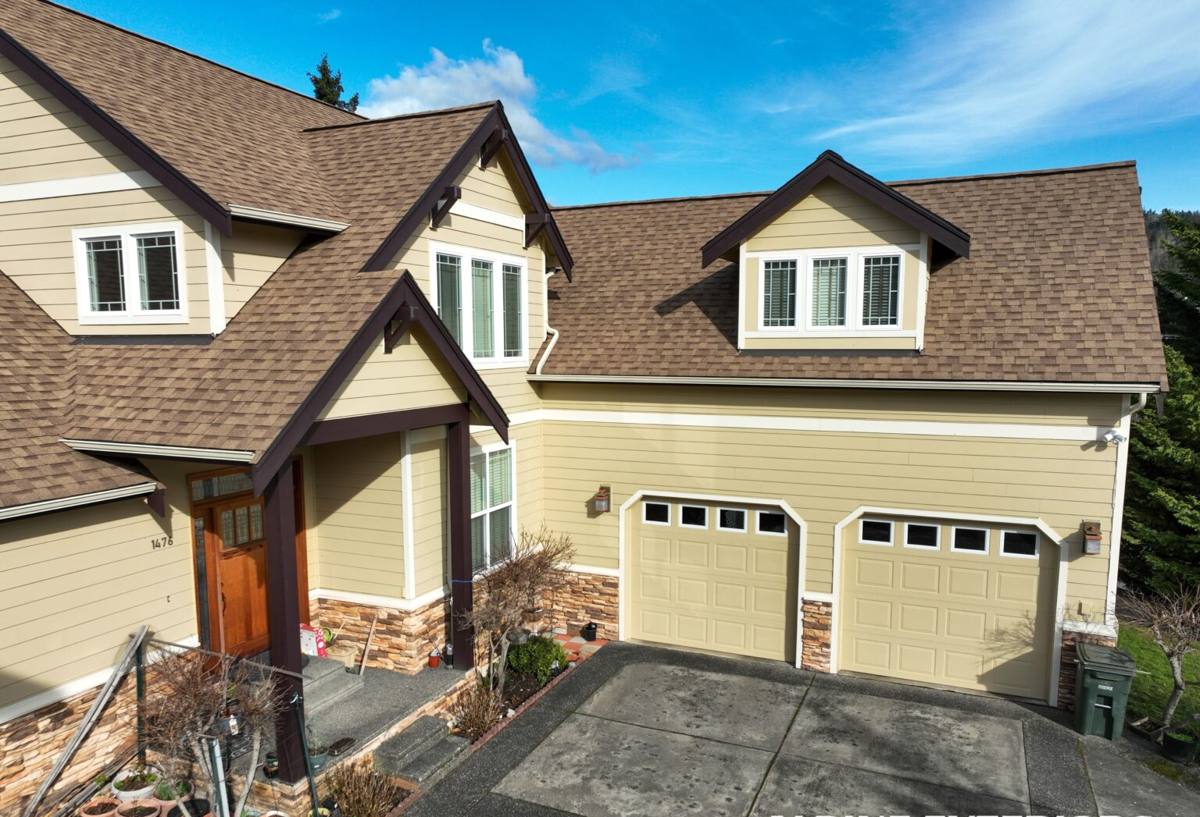
Signs a Sedro-Woolley Home Needs a New Roof, Not Another Patch
Roof repairs make sense when the damage is isolated and the rest of the roof still has useful life left. A full replacement makes sense when the roof's overall condition, not just one spot, is the problem. Common signs we see on homes in this area include:
- Granule loss heavy enough to show bare, shiny patches on shingles, especially on south- and west-facing slopes
- Moss or algae established at the shingle tabs, not just on the ridge — a sign moisture is being held against the roof surface, not shedding off it
- Curling, cupping, or cracked shingles, particularly on roofs original to the house or older than 20 years
- Soft spots or sagging when walked, which usually means the decking underneath has taken on moisture damage
- Daylight visible through the attic roof boards, or water staining on attic sheathing and rafters
- Repeated leaks around the same penetration (chimney, vent stack, skylight) even after past repairs
If a roof is showing two or more of these at once, patch repairs usually become a short-term fix on a system that's failing as a whole. A full replacement resets the clock and lets us correct any underlying issues — deck rot, poor ventilation, bad flashing — instead of building a new roof surface on top of old problems.
What a Correct Roof Installation Actually Involves
A new roof is a system, not a single product. Skipping or shortcutting any layer is where most premature failures start — and it's rarely visible from the ground until years later.
Tear-Off and Deck Inspection
We remove the old roofing down to the deck rather than layering over it. That lets us actually see the sheathing — soft, delaminated, or water-stained boards get replaced before anything new goes down. Roofing over a compromised deck just hides the problem and shortens the life of the new roof.
Underlayment and Ice-and-Water Protection
Synthetic underlayment goes down first as the roof's backup water barrier. In vulnerable areas — eaves, valleys, around chimneys and skylights — we add self-adhering ice-and-water membrane. In a climate where driving rain and wind-blown moisture are routine, this layer is what keeps water out even if it gets past the shingles or panels themselves.
Flashing Details
Flashing at chimneys, walls, valleys, and roof penetrations is where the majority of leaks actually originate — not in the field of the roof itself. We use new metal flashing formed to the specific roof, not reused or caulked-over old flashing, and valleys are built to shed the volume of water Skagit County storms actually produce.
Ventilation
Attic ventilation balances intake at the eaves with exhaust at the ridge, letting the attic breathe rather than trap warm, moist air against the underside of the deck. In this humid, tree-shaded region, poor ventilation is one of the fastest ways to grow hidden mold and rot from the inside, even on a roof that looks fine from outside.
Roofing Materials That Hold Up in Skagit County
There's no single "best" roofing material — the right choice depends on the home's roof pitch, budget, and how much moss and moisture exposure the site actually gets. Here's how the common options compare for a Sedro-Woolley home:
| Material | Typical Lifespan | Moss & Moisture Behavior | Relative Cost |
|---|---|---|---|
| Architectural asphalt shingle | 25–30 years | Good with algae-resistant granules; needs periodic moss treatment on shaded roofs | $ |
| 3-tab asphalt shingle | 15–20 years | Lower moss resistance, thinner profile sheds moss less effectively | $ |
| Metal (standing seam) | 40–50+ years | Sheds moisture fast, very moss-resistant, minimal maintenance | $$$ |
| Composite/synthetic shake or slate | 30–50 years | Good moisture resistance; installation quality matters more than with asphalt | $$–$$$ |
For most Sedro-Woolley homes under heavy tree cover, we lean toward architectural shingles with algae-resistant granules or metal roofing, since both handle sustained shade and moss pressure better than standard 3-tab shingles. We'll walk through the honest trade-offs — upfront cost versus long-term maintenance versus lifespan — for the specific roof, rather than pushing one product across every home.
Cost Factors Homeowners Should Actually Weigh
Roofing quotes vary widely for real reasons, not just markup. The factors that most affect the price of a new roof installation include:
| Factor | Why It Matters |
|---|---|
| Roof size and complexity | More valleys, dormers, and penetrations mean more flashing labor and material |
| Deck condition | Rotted or soft sheathing found at tear-off adds replacement cost, but skipping it costs more later |
| Pitch and access | Steep or hard-to-access roofs take longer and require more safety setup |
| Material choice | Asphalt, metal, and composite products have significantly different material and labor costs |
| Tear-off layers | Removing multiple existing layers of roofing takes more labor than a single-layer tear-off |
We give homeowners a written estimate that breaks these out, rather than a single lump number, so it's clear what's driving the cost.
How Our New Roof Installation Process Works
- On-site inspection — we assess the current roof, decking condition (where visible), attic ventilation, and any recurring leak history
- Written estimate — material options, scope of work, and pricing broken down by factor, not bundled into one number
- Scheduling and prep — we coordinate around weather windows, since this isn't a job to rush during an active Skagit County storm system
- Tear-off and deck check — old roofing removed, deck inspected and repaired as needed
- Underlayment, flashing, and ventilation install — the layers that determine whether the roof actually performs over the next 20–40 years
- Final roofing material installation — installed to manufacturer spec, which protects both performance and warranty coverage
- Cleanup and final walkthrough — site cleared of debris and old materials, roof reviewed with the homeowner before we call the job done
Why Local Experience in Sedro-Woolley Matters
A roof installed by a crew that doesn't regularly work Skagit County can still look fine on day one — the differences show up two, five, or ten years later, in the form of moss regrowth, hidden deck rot, or a flashing detail that wasn't built for this much sustained rain. Working this area regularly means we already know how tree cover, humidity, and storm patterns typically show up in roof failures here, and we build against those specific conditions rather than a generic install.
It also means we're not disappearing after the job. If a question comes up during the first wet season on a new roof, we're a local crew, not a one-time out-of-town install.
Roof Installation Checklist Before You Sign a Contract
- Confirm the contractor is licensed and insured, and ask for proof
- Get a written estimate that itemizes materials, labor, and scope — not just a single total
- Ask what happens if deck rot is found during tear-off, and how that's priced
- Confirm what underlayment and ice-and-water protection is included, not just the visible roofing material
- Ask about attic ventilation as part of the scope, not as an afterthought
- Get manufacturer warranty terms in writing, including what voids them
- Ask how debris and old roofing material will be removed and disposed of
A roof installed with these steps clearly answered up front tends to be the roof that performs the way it's supposed to for decades, not just for the first dry season.
If your Sedro-Woolley roof is showing wear, or you just want an honest read on how much life it has left, we'll come take a look and put together a free, no-pressure estimate — use the form below to get started.