 Anacortes Siding
 Guemes Island Roofs Work Harder Than Most
A roof on Guemes Island earns its keep. The island sits out in the marine air off Anacortes, and that means every roof up here deals with three things at once: salt-laden air off the water, driving rain that comes in sideways during fall and winter storms, and a moss season that runs long because of the shade, humidity, and mild temperatures typical of Skagit County. None of these are dealbreakers on their own, but stacked together over 20-30 years they explain why roofs out here fail earlier than the same product would on a dry inland lot.
A correct new roof installation on Guemes Island isn't just "put shingles on a house." It's choosing materials and details that specifically answer to salt exposure, wind-driven water, and moss pressure — and installing them the way the manufacturer actually intends, not the fast way.
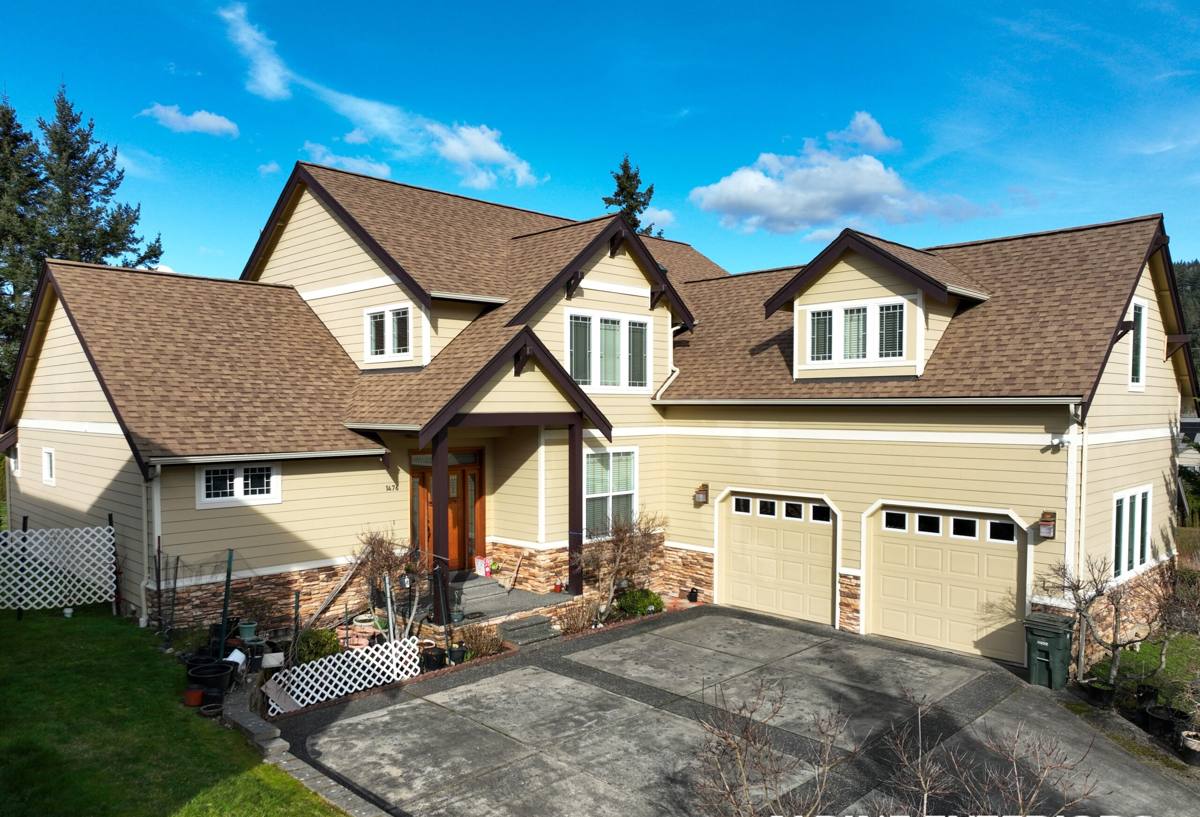
What the Local Climate Actually Does to a Roof
Salt Air and Metal Components
Homes close to the water pick up airborne salt that settles on every exposed metal surface — flashing, fasteners, vent caps, drip edge. Over time, salt accelerates corrosion on lower-grade metals and can eat through cheap fasteners well before the shingles themselves are worn out. A leak that starts at a corroded nail or a rusted-through flashing seam looks like a small problem, but it's usually the actual failure point on an otherwise healthy roof.
Driving Rain
Storms coming off the water don't just fall straight down — they push rain sideways and up under laps, ridge caps, and poorly sealed valleys. A roof that would shed rain fine in a calm climate can still take on water here if the underlayment, valley work, and flashing weren't detailed for wind-driven exposure.
Moss and Shade
Guemes Island has plenty of tree cover and damp, shaded roof sections that stay wet longer than sun-exposed slopes. Moss doesn't just look bad — its root structure lifts shingle tabs, holds moisture against the roof deck, and shortens the life of the roofing material underneath it. Left unchecked for a few seasons, moss growth alone can turn a roof with years of life left into one that needs early replacement.
What a Correct Installation Involves Here
The visible shingles or panels get most of the attention, but the parts that actually determine whether a roof holds up to this climate are underneath and around the edges.
Deck Inspection and Prep
Before anything new goes down, the existing deck gets inspected for soft spots, delamination, or rot — common wherever moss or ice-dammed water has been sitting against the sheathing for years. Any compromised decking gets replaced, not covered over.
Underlayment Built for Wind-Driven Rain
We use synthetic underlayment rated for high wind and water exposure, with self-adhering ice-and-water membrane at the eaves, valleys, and any low-slope transitions — the spots most likely to take on water when rain is being pushed sideways rather than falling straight.
Flashing at Every Penetration
Chimneys, skylights, plumbing vents, and valleys are where roofs actually leak, not the open field of shingles. We use corrosion-resistant flashing and fasteners suited to a marine environment, and we tie new flashing into the underlayment correctly rather than just caulking over old metal.
Ventilation
A roof deck that can't breathe traps moisture from inside the house, which softens sheathing from underneath even if the exterior is doing its job. Balanced intake and exhaust ventilation is part of a correct installation, not an upsell.
Choosing a Roofing Material for a Guemes Island Home
There's no single "best" roofing material for every house on the island — it depends on your budget, how much shade and moss exposure your particular lot has, and how long you want to go between maintenance visits. Here's how the common options actually compare for this climate:
| Material | Upfront Cost | Salt/Corrosion Resistance | Moss Resistance | Typical Lifespan | Maintenance |
|---|---|---|---|---|---|
| Architectural asphalt shingle | Lowest | Good, with corrosion-resistant flashing/fasteners | Moderate — benefits from zinc/copper strips | 20-30 years | Periodic moss treatment, gutter checks |
| Standing seam metal | Higher | Very good with marine-grade coatings | Excellent — sheds moss with minimal buildup | 40-50+ years | Low; occasional fastener/seam checks |
| Cedar shake | High | Fair — needs regular treatment | Poor without diligent upkeep | 20-30 years with upkeep | High; regular cleaning and treatment |
We're honest about the trade-offs rather than steering everyone to one product. Cedar shake can look great on the right house, but it's the most maintenance-intensive option in a shaded, damp environment, and we'll say so up front. Metal costs more initially but sheds moss and handles salt air with the least ongoing attention. Architectural shingle remains the most common choice because it balances cost and performance well when the details underneath — underlayment, flashing, fasteners — are done right.
Why Ferry Access Changes How We Plan the Job
Guemes Island is reached by ferry from Anacortes, and that one fact shapes how a roofing project actually runs. Material deliveries, dump trailers, and crew schedules all have to work around ferry sailings — you can't just run back to a supply yard mid-afternoon if something's short. That means our planning happens before the crew ever loads the ferry: materials are ordered with a buffer, tools and fasteners are double-checked, and the crew is staffed for a full, self-sufficient day on-site.
A crew that hasn't worked the island before often underestimates this and either loses a day to a forgotten supply run or rushes details to avoid a second trip. A crew that already works Guemes Island builds the ferry schedule into the plan from the start, which keeps the job moving at the pace it should.
Our Process for a Guemes Island Roof Replacement
- On-site assessment — we inspect the existing roof, deck condition, ventilation, and any moss or water staining, and take real measurements rather than estimating from a satellite image.
- Written estimate — material options, scope, and pricing laid out clearly, with the trade-offs of each material explained honestly.
- Scheduling around weather and ferry logistics — we target dry weather windows typical for this region and confirm delivery timing in advance.
- Tear-off and deck inspection — old roofing removed, deck checked and repaired as needed before anything new goes down.
- Underlayment, flashing, and material installation — installed to manufacturer specification, with extra attention to valleys, penetrations, and eaves.
- Ventilation check — intake and exhaust balanced for the specific roof shape and attic space.
- Final walkthrough — we go over the finished roof with you, including what routine maintenance will look like going forward.
Keeping a New Roof Healthy After Installation
A properly installed roof still needs a bit of homeowner attention in a climate like this, especially where moss and shade are part of daily life. None of it is complicated, but skipping it shortens the roof's life.
- Clean gutters at least twice a year — clogged gutters back water up under the roof edge
- Remove built-up moss and debris from shaded slopes before it takes hold, rather than after
- Trim back overhanging branches that keep sections of roof shaded and damp
- Check attic ventilation isn't blocked by insulation or debris
- After major windstorms, look for lifted shingles, dented flashing, or debris damage
- Have flashing and fasteners inspected periodically, since salt-air corrosion is gradual and easy to miss from the ground
Why It Matters to Hire a Crew That Already Works This Island
Anacortes and the surrounding Skagit County waterfront communities each have their own quirks, but Guemes Island adds the ferry logistics and a heavier moss and shade profile than most mainland lots nearby. A contractor who regularly works out here already knows how to price the ferry and staging time into a fair estimate instead of surprising you with it later, already carries corrosion-resistant fastener and flashing stock suited to marine exposure, and already understands which parts of a typical island roof — valleys under tree cover, low-slope sections near the water side — need the most attention.
That familiarity shows up as fewer surprises during the job and a roof that's actually built for the conditions it has to survive, not just a standard installation dropped onto an island lot.
Get a Straightforward Estimate
If your Guemes Island roof is showing moss buildup, worn flashing, or you're just planning ahead for a replacement, we're happy to take a look and give you a clear, no-pressure estimate — including an honest read on how much life might be left in what you've got. Use the form below to get started.