 Anacortes Siding
 Building New in Conway Means Getting the Window Install Right the First Time
Conway sits in the low, flat stretch of Skagit County between the Skagit River delta and Puget Sound, close enough to salt water that wind-driven moisture and salt-laden air are part of daily weather, not an occasional event. When you're framing a new home or outbuilding here, the windows you choose and how they're installed set the tone for the next 20-30 years of that structure's performance. Get the flashing and flange details wrong at rough-in and you won't see the consequences for a few years — then it shows up as rot at the sill, fogged glass, or a musty smell in a wall cavity that never fully dries out.
New construction is actually the easier scenario to do well, compared to a retrofit into an existing wall. You have open stud bays, unfinished siding, and full access to the weather-resistive barrier. The tradeoff is that mistakes made now get sealed behind siding and trim, and nobody checks on them again until there's a problem. Doing it right the first time matters more here than almost anywhere else in the build.
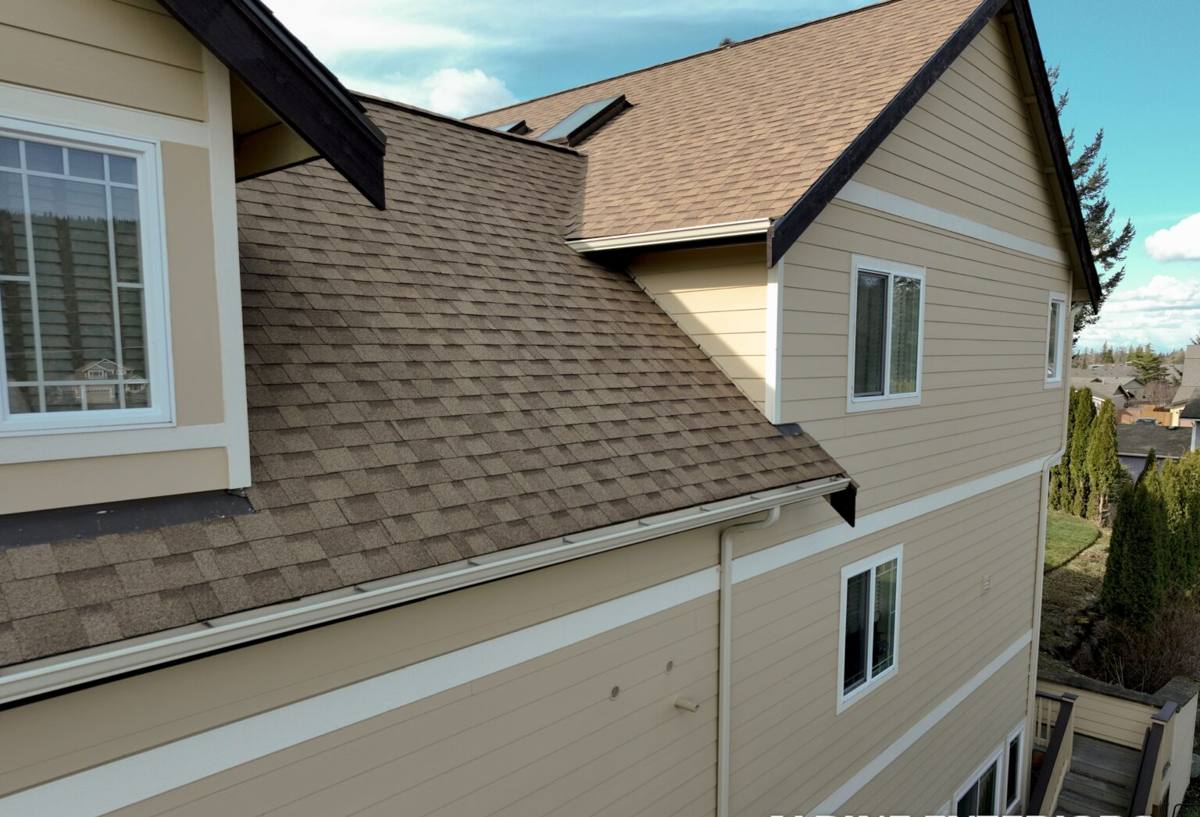
What Skagit County's Marine Climate Actually Does to a Window Opening
Three things drive window decisions for a Conway build:
- Salt air corrodes exposed fasteners, low-grade hardware, and unprotected aluminum trim faster than it would inland. Anything metal in or near the window opening needs to be rated for it, not just "exterior grade."
- Driving rain off the Sound doesn't fall straight down — it gets pushed sideways into wall assemblies, which means flashing has to shed water outward and downward under wind pressure, not just gravity.
- A long moss and mildew season keeps exterior surfaces damp for months at a stretch. Any water that gets past the primary seal and sits in a sill pan or stud cavity has a long window to do damage before things dry out again.
None of this means you need exotic materials. It means the ordinary steps — sill pans, proper flashing sequencing, correct flange integration — can't be skipped or rushed, because the margin for error is thinner here than in a drier climate.
New-Construction Windows vs. Replacement Windows: Why the Distinction Matters
A true new-construction window has a nailing flange around the perimeter that gets integrated into the wall's weather-resistive barrier and flashing before siding goes on. A replacement (or "pocket") window has no flange and is designed to fit into an existing frame with the old exterior trim left in place. Using the wrong type on a new build — or a builder trying to save money by installing pocket-style units during framing — skips the flange integration that's the main defense against wind-driven rain. On a Conway lot, that's not a shortcut worth taking.
For new construction, the flange also needs to be compatible with how your siding installer will build out the trim — fiber cement, engineered wood, and vinyl siding all have slightly different clearance and flashing needs around a window opening.
What a Correct New-Construction Window Install Involves
Before the Window Goes In
- Rough opening checked for square, level, and correct size (typically 1/2" larger than the window unit on each side)
- Sill pan installed and sloped to drain outward, not into the wall
- Weather-resistive barrier cut and prepped so it can be integrated in the correct shingle-lap sequence
Setting the Window
- Window set into the opening, shimmed level and plumb, never relying on the flange alone to hold shape
- Fastened per the manufacturer's schedule — skipping fasteners to "save time" is one of the most common corners cut on production builds
After the Window Is Set
- Flashing tape or flexible flashing applied over the flange in the correct order: sill, sides, then head — so water is always directed outward and down, never trapped behind a lapped layer
- WRB integration completed so the whole assembly drains as one system, not window-then-house as two separate ones
- Interior air sealing (low-expansion foam or backer rod and sealant) so conditioned air isn't leaking around the frame — this also keeps humid interior air from condensing inside the wall cavity
Every one of those steps is standard trade knowledge. The failures we get called out to diagnose almost always trace back to one of them being skipped, not to an exotic problem.
Choosing Frame and Glass for a Conway Build
| Frame Material | How It Handles Salt Air & Moisture | Maintenance | Typical Fit |
|---|---|---|---|
| Vinyl | Won't corrode or rot; performs consistently near salt water | Low — occasional cleaning | Most cost-effective for full-house new construction |
| Fiberglass | Very stable dimensionally, handles moisture and temperature swings well | Low | Good for larger openings or where less frame flex is wanted |
| Wood-clad (exterior clad, wood interior) | Clad exterior protects the wood, but any breach in the cladding seal exposes wood to a wet climate | Higher — cladding seams and interior wood need periodic attention | Chosen for interior wood look; requires disciplined installation and upkeep |
| Aluminum | Conducts cold and can corrode faster near salt air unless properly coated | Moderate | Less common for residential in this climate; more typical in commercial framing |
Glass packages matter too. Dual-pane with a low-E coating is the baseline we'd recommend for anything in Conway — it cuts down on condensation on the glass surface, which in a marine climate with big day-to-night humidity swings is a real, visible problem, not just an efficiency talking point. Argon-filled units add a modest performance bump; whether that's worth the incremental cost depends on your budget and how many windows are on the build.
How We Handle New-Construction Window Work in Conway
- Site visit during framing. We look at rough openings before windows arrive — catching an out-of-square opening now is far cheaper than fighting it after the fact.
- Coordination with your builder or GC. Window installation touches framing, WRB, and siding trades. We work on the schedule your build needs, not around it.
- Sill pan and flashing installation to manufacturer spec, adjusted for the wind-driven rain pattern common to this part of Skagit County.
- Window setting and fastening per the manufacturer's published schedule — full fastener count, correct shim placement, verified plumb and square.
- Interior and exterior sealing completed before siding crews close the wall.
- Final walkthrough with photos of the flashing and flange integration taken before it's covered, so there's a record of what's behind the siding.
Cost Factors for a New-Construction Window Package
| Factor | Why It Moves the Price |
|---|---|
| Number and size of openings | More and larger windows mean more units, more flashing labor, more glass |
| Frame material | Vinyl is typically the most economical; fiberglass and wood-clad cost more per unit |
| Glass package | Low-E and argon-fill add cost but reduce long-term condensation and energy loss |
| Wall assembly complexity | Taller walls, unusual framing, or high-wind-exposure elevations need extra flashing detail and labor |
| Access and scheduling | Coordinating tightly with a framing and siding schedule can affect labor efficiency |
We don't quote a job without seeing the plans and the site — broad ranges without that are close to meaningless on a new build where opening count and sizes vary so much house to house.
A Homeowner's Checklist for New-Construction Window Work
- Confirm the windows spec'd are true new-construction units with a nailing flange, not pocket/replacement units
- Ask to see the sill pan and flashing before siding goes on — a reputable installer will welcome this, not resist it
- Verify the glass package (dual-pane, low-E, argon or not) matches what was quoted
- Ask how many fasteners per window the installer uses and confirm it matches the manufacturer's schedule
- Get photos of the flashing integration for your own records before the wall is closed up
- Confirm who is responsible for warranty claims — the manufacturer, the installer, or both — and get it in writing
Why Hiring a Crew That Already Works Conway Is Worth It
Conway's exposure to Sound weather isn't identical to inland Skagit County or the more sheltered parts of Anacortes proper. A crew that installs windows across this stretch of the county knows which elevations catch the worst of the driving rain, how long the moss season really runs here, and where salt air does the most damage to hardware and trim first. That's not a marketing point — it's the difference between a flashing detail that's technically correct on paper and one that's actually sized for what this specific location sees. We'd rather spend an extra ten minutes on a rough opening now than get a callback in three years for water damage that a proper sill pan would have prevented.
If you're framing a new home, ADU, or outbuilding in Conway and want windows installed correctly the first time, we're happy to take a look at your plans and walk the site. Reach out for a free, no-pressure estimate using the form below.