 Anacortes Siding
 Siding Installation for Mount Vernon Homes
Mount Vernon sits inland from the salt water compared to Anacortes proper, but it still gets the full weight of Skagit County's wet-season weather: long stretches of driving rain off the Sound and Strait, humidity that lingers in the low-lying areas near the Skagit River, and a moss and algae season that can run from fall through spring. Homes here don't need siding that just looks good on install day — they need a system that keeps shedding water and resisting rot for decades, through winter after winter of the same pattern.
We're based in Anacortes and work Mount Vernon regularly as part of our normal Skagit County service area. That matters more than it sounds like it should. A crew that already knows how wind-driven rain behaves against a two-story wall in this part of the county, how much moss pressure a north-facing elevation is going to see, and which details tend to fail first on older Skagit homes is a crew that builds in the right protection from the start — not one that's improvising based on a spec sheet written for a drier climate.
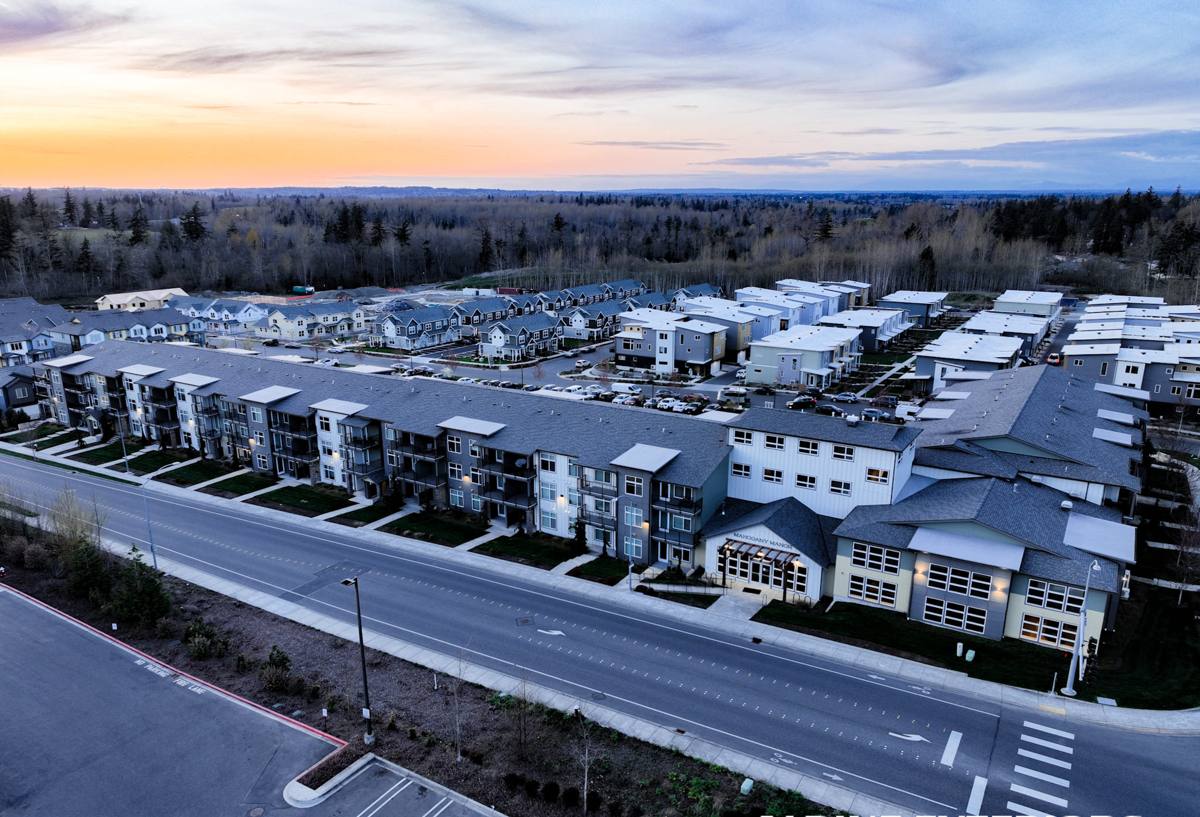
What the Local Climate Does to Siding
The Skagit Valley's climate is a specific kind of hard on exterior materials — not extreme in any one way, but relentless and cumulative.
- Sustained moisture exposure: Rain here isn't just frequent, it's often prolonged — days of steady wet weather that keep siding surfaces damp far longer than an occasional downpour would.
- Moss and algae growth: Shaded, north-facing, and tree-covered walls stay damp long enough for moss and algae to take hold, especially on materials with any texture or porosity for spores to grab onto.
- Wind-driven rain: Storms coming off the water can push rain sideways into wall assemblies, testing every seam, joint, and piece of flashing on a home.
- Temperature swings: Cool, damp nights and warmer days cause siding materials to expand and contract — repeated cycles that stress caulk joints, fasteners, and any material prone to swelling.
None of this is dramatic weather. It's the accumulation that matters — a siding system that's marginal on day one shows it within a few winters, not a few decades.
Why We Install James Hardie — and Only James Hardie
We standardized on James Hardie fiber cement siding for every job we do, including in Mount Vernon, because it's engineered to hold up under exactly this kind of sustained, moist climate:
- Fiber cement composition: Hardie siding is made from cement, sand, and cellulose fiber — a material that doesn't swell, rot, or delaminate the way wood-based or wood-fiber products can when they stay damp for extended periods.
- Non-combustible: It carries a noncombustible rating, which is a genuine advantage for insurance and long-term peace of mind, independent of the moisture question.
- Climate-engineered product lines: Hardie's HZ10 formulation is built for cooler, wetter climate zones like ours, which is the specific version we spec for Skagit County homes.
- ColorPlus factory finish: A baked-on finish applied under controlled conditions holds color and resists fading and moisture intrusion at the surface far better than field-applied paint.
- Strong transferable warranty: Hardie backs its siding with a long, transferable warranty — a real asset if the home sells down the road, and a signal of how confident the manufacturer is in the product's field performance.
We don't install LP SmartSide, vinyl, Cemplank, Allura, primed spruce, or cedar. Each of those has legitimate uses somewhere, but none of them hold up to Skagit County's climate as consistently as Hardie does, and we'd rather put one product on every home and stand fully behind it than offer a menu of options with different long-term outcomes.
What a Correct Siding Installation Actually Involves
The siding board is only part of the system. Most siding failures we see on older homes trace back to installation details, not the material itself. A correct James Hardie install includes:
Water Management Behind the Siding
A drainage plane — house wrap or building paper, installed and lapped correctly — sits behind the siding so any moisture that gets past the surface has somewhere to go besides into the wall framing. This layer is invisible once the job is done, but it's the single biggest factor in whether a wall assembly stays dry over time.
Flashing at Every Penetration
Windows, doors, hose bibs, vents, and any other wall penetration need proper flashing integrated with the water-resistive barrier. In a climate with this much wind-driven rain, a missed or shortcut flashing detail is where water finds its way in — often years before it shows up as a visible problem.
Correct Fastening and Clearances
Hardie specifies fastener type, spacing, and placement, along with minimum clearances from grade, roof lines, and abutting surfaces. Skipping these — nailing too close to a board edge, or setting siding too close to the ground or a roof deck — creates weak points that show up as cracking, water staining, or accelerated wear.
Joint and Seam Treatment
Butt joints, corners, and trim transitions need to be sealed and detailed correctly so they shed water instead of collecting it. Poorly treated seams are a common entry point for moisture on any siding job, regardless of material.
Ventilation Behind the Cladding
Depending on the wall assembly, a rainscreen gap can help siding dry out between wet spells rather than staying saturated — an important detail in a climate where dry stretches between storms aren't guaranteed.
Our Installation Process
| Step | What Happens |
|---|---|
| 1. On-site assessment | We walk the home, check existing siding and sheathing condition, and identify problem areas — moss buildup, past water intrusion, trim and flashing condition. |
| 2. Scope and estimate | We put together a clear, itemized estimate covering material, prep, and installation — no vague allowances. |
| 3. Tear-off and prep | Old siding comes off, sheathing is inspected and repaired as needed, and any hidden moisture damage is addressed before anything new goes up. |
| 4. Water-resistive barrier and flashing | House wrap and flashing are installed and integrated at every penetration — the part of the job that determines long-term performance. |
| 5. Hardie installation | Siding, trim, and accessories go on to manufacturer spec, with correct fastening, clearances, and joint treatment. |
| 6. Final walkthrough | We review the finished job with the homeowner and confirm everything meets our standard before calling it done. |
Signs Mount Vernon Homeowners Should Watch For
- Persistent moss or algae staining that comes back shortly after cleaning
- Visible gaps, cracking, or separation at siding seams and corners
- Soft or spongy spots when pressing on siding near the base of walls
- Peeling or bubbling paint, especially on older wood or engineered wood siding
- Water stains on interior walls near exterior corners or window openings
- Warping or swelling along board edges, particularly on lower courses
Any of these are worth a closer look before they turn into sheathing or framing damage — catching it early is almost always cheaper than fixing it after water's been getting into the wall for a season or two.
Cost Factors for a Mount Vernon Siding Job
| Factor | Why It Matters Here |
|---|---|
| Home size and wall complexity | More corners, dormers, and trim details mean more flashing and cutting labor. |
| Condition of existing sheathing | Moisture-damaged sheathing found during tear-off adds repair scope before new siding can go on. |
| Siding profile and trim selection | Lap width, panel style, and trim details affect material cost and install time. |
| Access and site conditions | Tree cover, tight lot lines, or difficult grading can affect staging and labor time. |
| Existing moss or moisture damage | Homes with a history of moss buildup or past leaks may need extra prep before installation. |
We won't give you a number without seeing the home — anyone who quotes a whole-house siding job over the phone is guessing. What we can tell you is that every estimate we provide is based on Hardie material and installed to the same standard, on this home and every other one we do in Skagit County.
Why a Local Crew Matters
Anacortes and Mount Vernon share the same regional climate, but a crew that's worked both knows the specific patterns — where wind-driven rain hits hardest, which elevations hold onto moss the longest, and how older Skagit County homes tend to be built. That local knowledge shows up in the small decisions on a job: where extra flashing attention goes, which details get reinforced, how the drainage plane is planned around a home's specific exposure. It's the difference between a crew executing a generic spec and a crew building a wall assembly that's actually suited to where the house sits.
If you're planning a siding project in Mount Vernon, we'd be glad to take a look at your home and put together a straightforward, no-pressure estimate for James Hardie installation. Fill out the form below and we'll get in touch to schedule a time.