 Anacortes Siding
 Roof Repair Built for Mount Vernon's Weather, Not a Generic Climate
Mount Vernon sits inland from the salt water but still gets the full Skagit County weather pattern: long stretches of driving rain off the Sound, heavy fall and winter cloud cover that keeps roofs wet for days at a time, and a moss season that runs longer here than it does in drier parts of the state. None of that is exotic to us. We're based in Anacortes and work this corridor of Skagit County regularly, so when we look at a Mount Vernon roof we're not guessing at how the local climate treats asphalt, moss, and flashing over time — we've seen the pattern repeat on roof after roof.
A roof repair page that could apply to Arizona or eastern Washington isn't much use to a Mount Vernon homeowner. This one is written specifically for what happens to roofs here: moss working under shingle tabs, gutters that back up during a hard rain and push water under the roof edge, and flashing that was fine when it was installed but has since loosened enough to let water find a path inside.
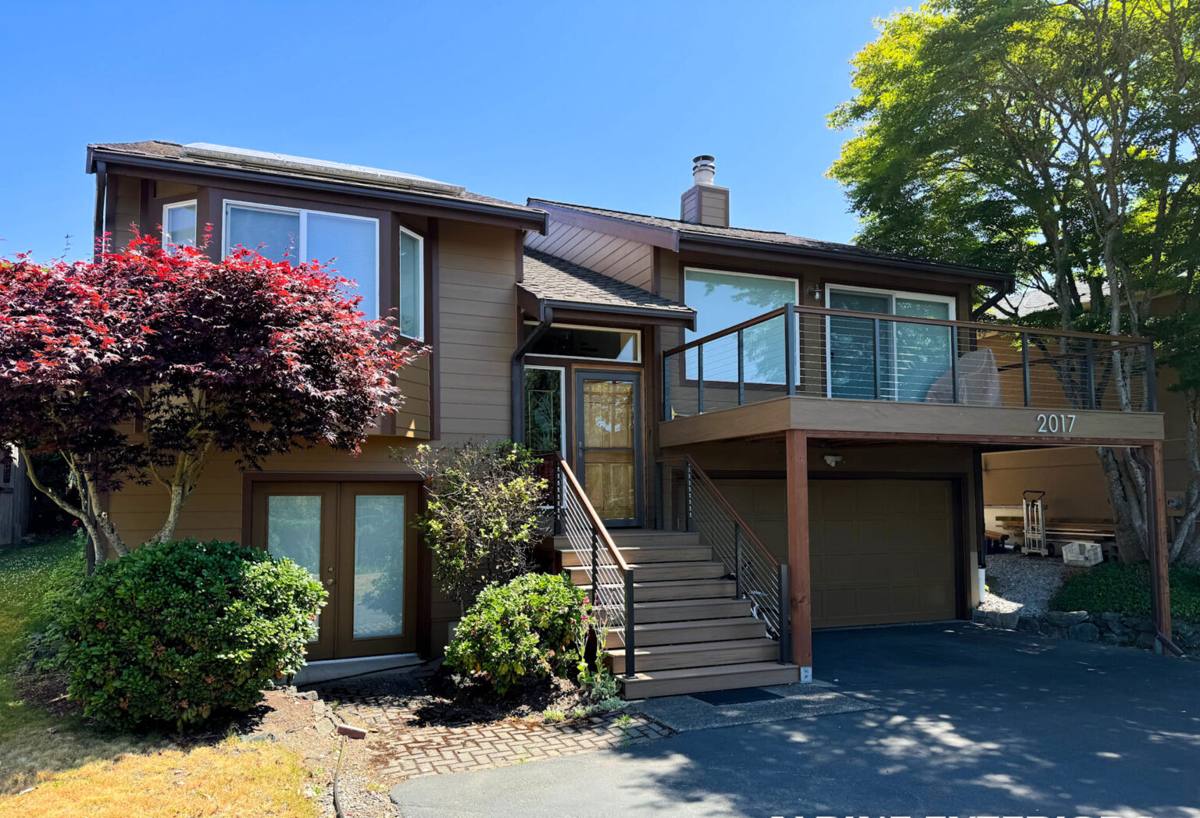
Why Local Homes Need More Than a Quick Patch
In a drier climate, a small roof leak might sit dormant for a season before it causes visible damage. In Skagit County, constant moisture means a small problem accelerates. Water that gets past a compromised shingle or a gap in flashing doesn't just sit — it wicks along the underlayment, soaks into sheathing, and can show up as a stain on an interior ceiling well away from where the actual entry point is. That's one of the most common misunderstandings we run into: the wet spot inside the house is rarely directly under the failure point on the roof.
That's also why moss matters more here than a lot of roofing content gives it credit for. Moss doesn't just look bad — it holds moisture against the roofing material, lifts shingle edges as it grows, and can work its way into gaps that were watertight when the roof was new. A roof that gets moss treatment and repair together lasts longer than one where moss is just power-washed off and the underlying wear is ignored.
What Driving Rain Does Differently
Wind-driven rain off the Sound doesn't fall straight down — it gets pushed sideways and up under roof edges, around vent pipes, and behind flashing that would be fine in calm rain. Repairs in this area need to account for that lateral water movement, not just assume water only travels downhill.
Common Roof Repair Issues We See in Mount Vernon
- Moss buildup along north-facing slopes and shaded valleys that stays wet longer after each rain
- Flashing around chimneys, skylights, and roof-to-wall transitions that has loosened or corroded over time
- Shingle tabs lifted or cracked from repeated wet/dry and freeze/thaw cycling
- Clogged or undersized gutters causing water to back up under the roof edge (ice dams in cold snaps, standing water otherwise)
- Nail pops and fastener failure where sheathing has taken on moisture over the years
- Ventilation problems that trap humid attic air against the underside of the roof deck
- Pipe boots (the rubber collars around plumbing vents) that have cracked or shrunk with age and UV exposure
Signs Your Roof Needs a Repair Call Now, Not Later
Most roof failures give warning signs before they become an emergency. In this climate, the gap between "small issue" and "active leak" tends to close faster than homeowners expect because the roof rarely gets a long dry stretch to reveal a problem on its own terms.
- Visible moss or dark streaking on shingles, especially on shaded or north-facing slopes
- Granules collecting in gutters or at downspout outlets (a sign shingles are wearing thin)
- Curling, cracked, or missing shingle tabs anywhere on the roof
- Daylight visible through the attic roof deck
- Water stains on ceilings or upper walls, even faint or old-looking ones
- Soft or spongy spots when walking the roof (a sign of sheathing damage)
- Flashing that looks lifted, rusted, or has visible gaps at seams
- Gutters overflowing during moderate rain rather than only in the heaviest storms
What a Correct Repair Actually Involves
A repair that just covers the visible symptom tends to fail again within a season or two around here. A repair that holds up needs to address what let the water in and what's happened underneath since it got there.
1. Find the Real Entry Point
Because of how water travels under shingles and along underlayment in wind-driven rain, we trace the leak back from the interior stain or the visible damage rather than assuming the closest surface flaw is the source.
2. Check What's Underneath
Any area that's had sustained moisture gets checked for sheathing damage, not just re-covered. Nailing new shingles over soft or rotted decking doesn't fix anything — it just hides it for a while.
3. Repair or Replace Flashing Properly
Flashing around chimneys, skylights, vent pipes, and roof-to-wall joints is one of the most common failure points we see. Correct flashing work means new step flashing, counterflashing, or pipe boots installed to shed water in the direction it actually moves during a storm — not just caulked over.
4. Match Materials and Tie Into the Existing Roof Correctly
Repairs need to weave into the existing shingle courses so water sheds over every seam, not into one. A patch that's simply laid on top of the old roofing without proper overlap is a common shortcut that fails at the first hard rain.
5. Address the Moss, Not Just the Symptom
Where moss contributed to the failure, we treat and remove it as part of the repair, and talk through options like zinc or copper strips that help slow regrowth on future maintenance visits.
Repair vs. Replacement: How We Decide
Not every roof issue in Mount Vernon needs a full replacement, and not every roof is a good candidate for another round of patching. We walk through this honestly with every homeowner rather than defaulting to whichever job is bigger.
| Factor | Leans Toward Repair | Leans Toward Replacement |
|---|---|---|
| Roof age | Under 15-20 years, still within expected service life | Approaching or past the material's expected lifespan |
| Extent of damage | Localized — one slope, one flashing detail, one leak point | Widespread wear, multiple leak points, moss and granule loss across most slopes |
| Sheathing condition | Solid decking under and around the damaged area | Soft, rotted, or repeatedly-repaired sheathing found during inspection |
| History of repairs | First or second repair on this roof | Roof has needed repeated patching in recent years |
| Budget timeline | Needs to extend roof life a few more years | Ready to invest in a long-term, low-maintenance roof |
When a roof is a genuine repair candidate, we say so and repair it properly. When the damage or age tells a different story, we explain exactly why and what we found — no pressure either direction.
How Our Process Works
- Inspection: We look at the roof itself, the attic from underneath where accessible, and the areas showing interior symptoms, so the diagnosis is based on the whole picture.
- Honest assessment: We explain what we found, whether it's a repair or replacement situation, and why — in plain language, not sales language.
- Written estimate: A clear scope of work and price before anything starts, so there are no surprises mid-job.
- The repair itself: Proper tie-in with existing roofing, correct flashing detail work, and attention to what's happening underneath, not just what's visible from the ground.
- Cleanup and walkthrough: We clear debris and old material and walk the completed repair with you before we consider the job done.
Materials and Methods We Use
For most Mount Vernon repairs we're working with composition asphalt shingle roofing, since that's what the large majority of homes in this area already have. We match existing shingle profiles and colors as closely as products allow, and we use flashing metals and pipe boots rated for long-term exposure to this climate rather than the cheapest available option. For homeowners considering a longer-term upgrade during a repair conversation, we'll talk through trade-offs honestly — for example, metal roofing sheds moss and moisture differently than asphalt but comes with its own installation sensitivities and a different cost structure, and it's not automatically the right call for every home or budget.
Why Hiring a Crew That Already Works This Area Matters
A roof repair is only as good as the person doing it understanding how water actually behaves on that specific roof, in that specific climate. Crews that don't regularly work Skagit County sometimes underestimate how much wind-driven rain and sustained moss growth change what "watertight" needs to mean here. We work Anacortes, Mount Vernon, and the surrounding communities routinely, which means we're not learning the local weather pattern on your roof — we already know what a Skagit County winter does to flashing, shingles, and attic ventilation, and we build the repair accordingly.
It also means we're realistic about timing. Roof repairs here are best scheduled around the weather, not just the calendar, and a local crew can plan around actual forecasted dry windows rather than guessing.
Simple Maintenance That Extends Roof Life Here
- Clean gutters at least twice a year, more often if the property has overhanging trees
- Have moss treated before it spreads across a full slope, not after
- Check attic ventilation periodically — trapped humid air shortens roof life from underneath
- Address small flashing issues promptly rather than waiting for a leak to show up inside
- Have the roof inspected after any major windstorm, even if nothing looks obviously wrong from the ground
If you're seeing moss, a stain on a ceiling, or you just want an honest read on where your roof stands, we're happy to take a look. Use the form below to request a free, no-pressure estimate and we'll walk you through exactly what we find.