 Anacortes Siding
 Why a New Roof in Mount Vernon Has to Answer to Local Weather
Mount Vernon sits inland from the coast, but that doesn't put it out of reach of the same conditions that wear down roofs closer to the water. Marine air moving up the Skagit Valley still carries enough salt to speed up corrosion on exposed metal, and the region's fall-through-spring storms don't just rain straight down — wind pushes water sideways and forces it up under shingle edges and around flashing details that weren't built to handle it. On top of that, a long moss season settles into shaded and north-facing roof planes and doesn't fully let go until well into summer. None of this means a new roof is a bad investment here. It means the installation has to be built for these specific stresses from the first course of underlayment, not treated like a generic roof going on a generic house.
This page covers what a correct new roof installation actually involves for a home in Mount Vernon — how to think about material choice, what separates a roof that lasts from one that leaks early, and how we run the job from the first estimate to final cleanup.
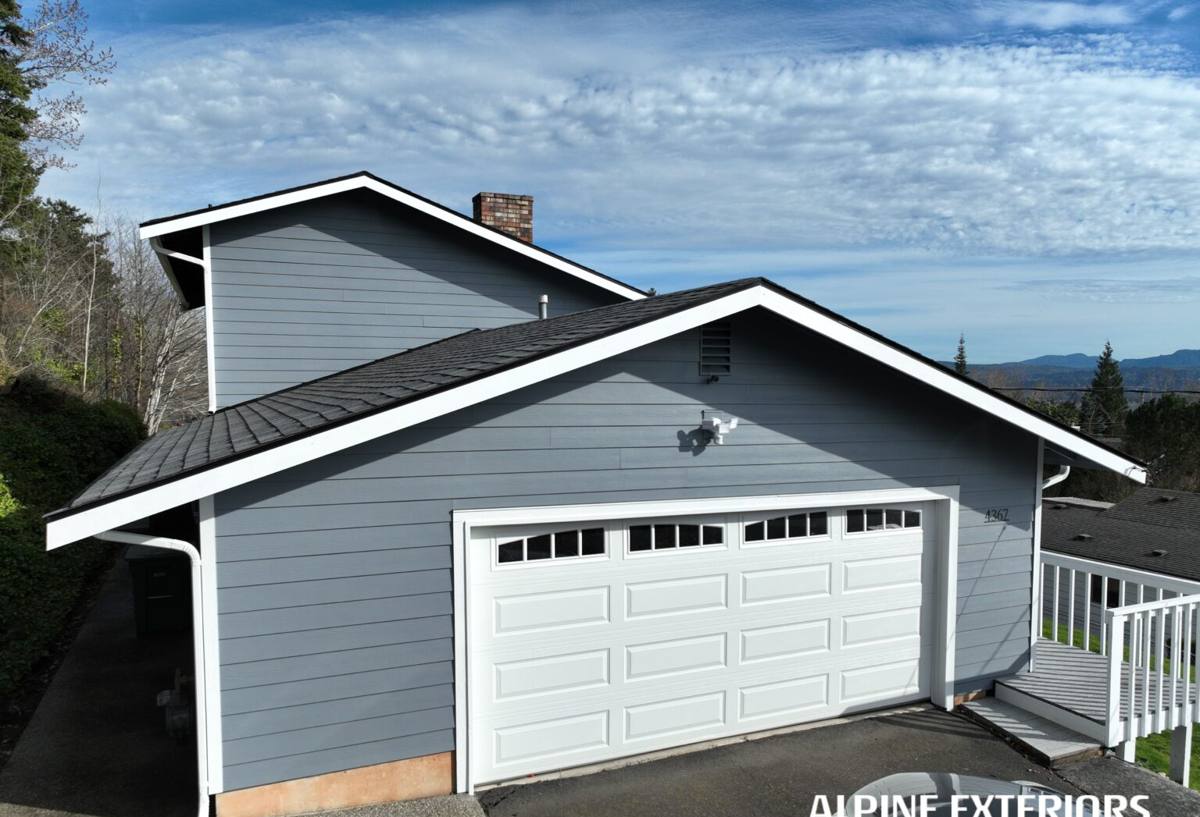
Choosing a Roofing Material That Fits Mount Vernon's Conditions
There isn't one "right" roofing material for every Mount Vernon home — the right choice depends on your roof's pitch, sun and shade exposure, budget, and how long you plan to stay in the house. What matters most is picking a material with realistic expectations about how it will hold up against this area's rain and moss pressure, not just its price tag on install day.
Asphalt Shingles
Asphalt shingles remain the practical choice for most homes here. They're well-proven in this climate, priced reasonably compared to metal or tile, available in a wide range of colors and profiles, and repairable in sections if damage happens later. Algae-resistant shingle lines are worth the modest upcharge on any roof plane that stays shaded through the wet months.
Metal Roofing
Standing-seam and other metal roofing systems shed moss and driving rain more readily than shingles and typically outlast them by decades when installed correctly. The tradeoffs are a higher upfront cost and the need for a crew experienced specifically in metal roofing details — panel seams, fastener spacing, and flashing all work differently than they do under shingles, and mistakes there show up as leaks just like anywhere else.
Synthetic and Composite Roofing
Synthetic shake and slate-look composites give homeowners a heavier, dimensional look without the weight or maintenance burden of real cedar or slate. They perform well against moss and moisture when installed to manufacturer spec, though product quality varies more between brands in this category than it does with shingles or metal.
| Material | Typical Lifespan | Moss/Algae Resistance | Relative Upfront Cost | Best Fit For |
|---|---|---|---|---|
| Asphalt shingle (standard) | 18-25 years | Moderate | Lowest | Most homes, budget-conscious replacements |
| Asphalt shingle (algae-resistant) | 20-30 years | Good | Low-Moderate | Shaded roof planes, north-facing slopes |
| Standing-seam metal | 40-60+ years | Very good | Highest | Long-term owners, steep or moss-prone roofs |
| Synthetic shake/composite | 30-50 years | Good | High | Homeowners wanting a dimensional look without cedar upkeep |
What a Correct New Roof Installation Involves
A new roof is a system, not a single product. Every layer has a specific job, and skipping or shortcutting one layer to save time on a Mount Vernon roof usually shows up as a leak within a few wet seasons, not immediately.
Tear-Off and Deck Inspection
A full tear-off down to the plywood or OSB decking is the only reliable way to find rot or hidden moisture damage that's been developing quietly under the old roofing. Installing new material directly over an existing layer skips this step and simply seals whatever problems are already there underneath a fresh surface.
Underlayment and Ice-and-Water Barrier
Synthetic or self-adhered underlayment gives the deck a real secondary water barrier, which matters directly when wind-driven rain is being forced under the roofing material's edges rather than just running off the surface. Self-adhered membrane at eaves, valleys, and other vulnerable transitions adds a second line of defense exactly where water is most likely to find a way in.
Flashing at Valleys, Chimneys, and Wall Transitions
Most roof leaks in this region don't start in the open field of the roof — they start at flashing. Valleys, chimney and vent penetrations, and the places where a roofline meets a wall all need flashing that's properly lapped and integrated with the underlayment as part of the system, not caulked over as an afterthought once the roofing is already down.
Ventilation
Balanced intake and exhaust ventilation keeps moisture from building up under the roof deck, which accelerates both wood rot and moss growth from underneath at the same time weather is working against the roof from above. Ventilation gets overlooked more often than any other part of a roof replacement, and it's one of the more common reasons a roof underperforms its expected lifespan.
Fastening to Manufacturer Specification
Nail placement, fastener count, and exposure all affect a roof's wind rating and warranty validity. Rushed fastening is invisible on a finished roof and is exactly the kind of shortcut that only shows up years later, usually during the first serious windstorm.
Permits and Code Considerations Around Mount Vernon
A full roof replacement in Mount Vernon and unincorporated Skagit County generally requires a building permit, and the roofing system needs to meet Washington's wind exposure and structural load requirements for the area. A licensed contractor pulling the permit and scheduling any required inspections is part of doing the job correctly, not an optional extra — it protects you if a warranty or insurance question ever comes up down the road. If you're not sure whether your specific project needs a permit, that's a reasonable question to ask any contractor you're getting bids from before work starts.
How Our Installation Process Works
- On-site inspection and written estimate: We look at the existing roof, deck condition where visible, ventilation, and any problem areas, then provide a clear itemized estimate rather than a single vague number.
- Material selection: We walk through the tradeoffs between shingle, metal, and synthetic options for your specific roof and budget, honestly, including what each one will and won't solve.
- Permitting: We handle the permit application and any required scheduling with the local building department.
- Tear-off and deck repair: Old roofing comes off completely, and any rot or soft decking we find gets repaired before anything new goes down.
- Underlayment, flashing, and roofing installation: Each layer goes on to manufacturer specification, with extra attention at valleys, penetrations, and wall transitions.
- Ventilation check: We confirm intake and exhaust ventilation is balanced for the new roofing system before closing anything up.
- Final walkthrough and cleanup: We review the finished roof with you in person and do a full site and magnetic nail sweep before calling the job done.
Scheduling Around Skagit Valley's Wet Season
Roofing work in this part of Washington gets planned around the weather, not in spite of it. We build reasonable flexibility into every schedule, because rain delays during the wetter months are a normal part of working here, not an excuse pulled out after the fact. When a job has to pause partway through due to incoming weather, the exposed deck gets properly tarped and protected before anyone leaves the site — that detail matters as much as anything else on this list, because an unprotected deck left open overnight in a driving rain can undo a day's worth of good work.
Why Hiring a Crew That Already Works in Mount Vernon Matters
A crew that regularly roofs homes in and around Mount Vernon has already seen which roof orientations hold moss longest through the wet months, how far inland marine air still affects fastener and flashing corrosion, and how driving rain off the valley behaves differently on a low-pitch roof than a steep one. That's practical, earned knowledge that shows up in dozens of small decisions over the course of a job, not something a crew unfamiliar with this specific area is likely to think through on the first try.
It also matters after the job is finished. A workmanship warranty is only as good as the company standing behind it years later, and a contractor with an established, ongoing presence in the area is one you can actually reach if a question comes up, rather than a name that's moved on somewhere else.
A Practical Checklist Before You Choose a Roofer
- Do they perform a full tear-off with deck inspection, not just a layover?
- Does the estimate specify underlayment type and roofing product, not just "new roof"?
- Is flashing work at valleys, chimneys, and walls explicitly written into the bid?
- Do they carry current WA contractor licensing, liability insurance, and workers' compensation?
- Will they pull the required permit themselves, or leave that step to you?
- Can they point to recent, real roofing work in or near Mount Vernon?
- Does the bid clearly separate the manufacturer's material warranty from the contractor's own workmanship warranty?
Signs Your Mount Vernon Roof Needs a Full Replacement, Not a Repair
Roofs rarely fail all at once — they give warning signs first, often well before a leak shows up inside the house. Catching those signs early is frequently the difference between a targeted repair and a full replacement becoming your only option.
- Granules collecting in the gutters, signaling shingles wearing thinner than they should be at this stage of their life
- Curling, cracking, or lifted edges, especially on wind-exposed slopes
- Dark streaking or visible moss buildup that keeps returning on shaded or north-facing planes even after cleaning
- Water staining on interior ceilings or in the attic, particularly near valleys or penetrations
- Visible sagging along the roofline, which can point to deck-level moisture damage underneath
- A roof already past 20-25 years old with multiple repair patches rather than one consistent system
If several of these sound familiar, it's worth having the roof looked at before the next stretch of heavy weather rather than waiting for a leak to force the decision.
If you'd like an honest, no-pressure look at your Mount Vernon roof and a written estimate you can compare against anything else you've received, we're glad to come take a look. Use the form below to request a free estimate.