 Anacortes Siding
 Custom Decks Built for Mount Vernon's Coastal Climate
A deck in Mount Vernon lives a harder life than a deck in a dry inland climate. Between the marine air rolling in off the Salish Sea, the long stretch of wet months typical of Skagit County, and the shade and tree cover that keep moss and algae established well into summer, a deck here is under near-constant moisture pressure for most of the year. We build and replace custom decks specifically with that reality in mind, not with a generic build that happens to be installed here.
This page covers what we actually do differently for a Mount Vernon deck project: the materials that hold up, the structural details that matter most in a wet climate, and how our process works from first estimate to final walkthrough.
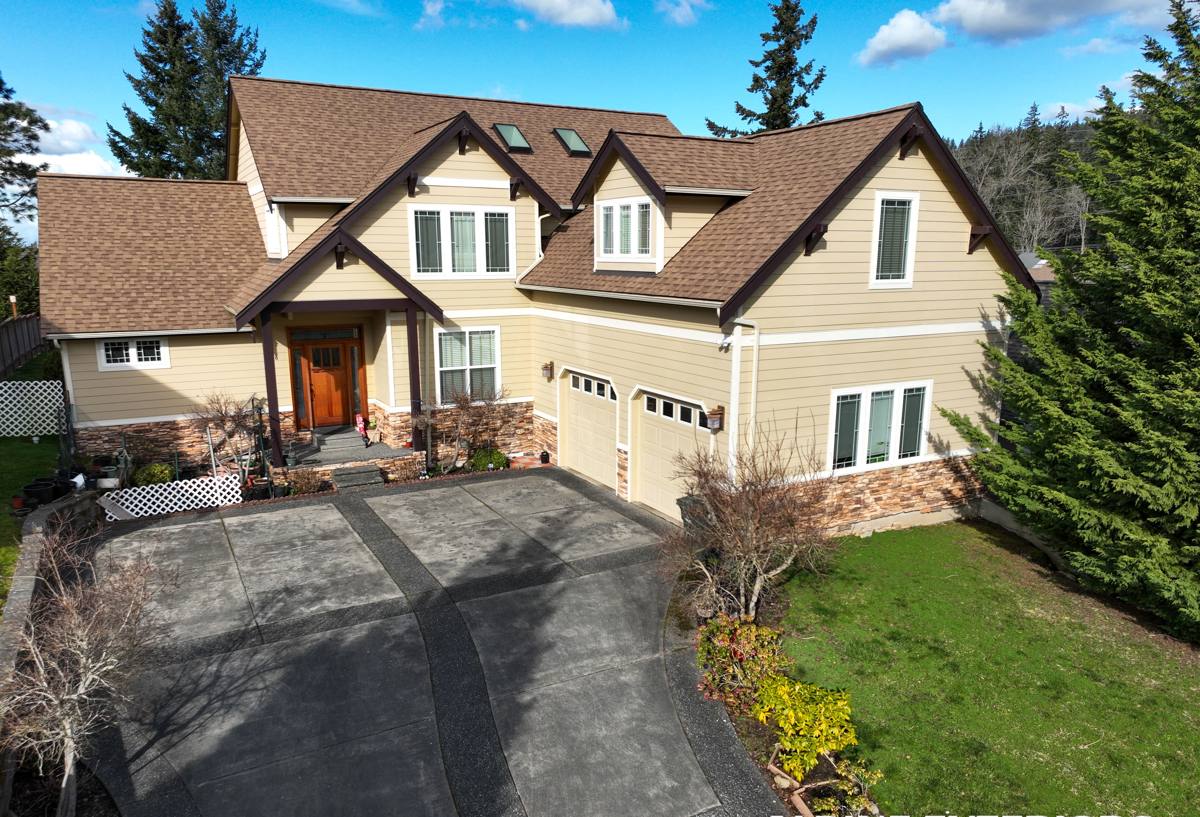
What the Local Climate Actually Does to a Deck
Salt Air and Metal Corrosion
Homes closer to the water pick up airborne salt that accelerates corrosion on anything metal — fasteners, joist hangers, railing brackets, and hinges. A deck built with standard interior-grade hardware in this environment will show rust streaks and weakened connections years before it should. This is one of the most common failure points we find on older decks we're asked to repair or replace in this area.
Driving Rain and Trapped Moisture
Skagit County gets a lot of sideways rain, not just straight-down rain. That matters because driving rain gets pushed into places a vertical rain never would — under railing base plates, behind ledger boards, into end-grain cuts that weren't sealed. Decks fail from the inside out far more often than they fail from the surface wearing down. The visible boards can look fine for years while the framing underneath is quietly rotting.
Moss and Algae Season
Shaded yards, morning dew, and a wet season that runs long in this region create ideal conditions for moss and algae to establish on deck surfaces — especially on north-facing decks or ones tucked under trees. Beyond looking bad, moss holds moisture against the decking material and creates a genuinely slippery surface, which is a real safety issue on stairs and landings.
Choosing a Decking Material That Fits This Climate
There's no single "best" decking material — there's a best fit for your budget, how much upkeep you want to do, and how the deck will be used. Here's how the common options actually compare for a coastal Skagit County property.
| Material | Upfront Cost | Moisture/Rot Resistance | Moss & Algae Resistance | Ongoing Maintenance |
|---|---|---|---|---|
| Pressure-Treated Lumber | Lowest | Good if properly sealed and maintained | Fair — needs regular cleaning | Annual cleaning, periodic re-sealing |
| Cedar | Moderate | Naturally decent, degrades if unsealed | Fair — porous surface holds moisture | Regular sealing/staining to preserve it |
| Capped Composite | Higher | Excellent — won't rot or absorb water | Good — smoother surface resists staining | Occasional washing, no sealing needed |
| PVC Decking | Highest | Excellent — fully synthetic | Very good | Minimal — periodic washing |
We're honest with clients about trade-offs rather than pushing one product. Real wood costs less upfront and has a natural look many homeowners want, but it demands a real maintenance commitment in a climate this wet — skip a year of sealing and you're playing catch-up. Composite and PVC cost more initially but remove most of the moisture-related maintenance burden, which matters if the deck sees a lot of shade or tree cover. The framing underneath, by contrast, should almost always be pressure-treated lumber or better regardless of what decking surface you choose — that structural layer needs to handle moisture whether the top surface does or not.
What a Correctly Built Deck Actually Involves
A deck that lasts in this climate is decided mostly by what you can't see once it's finished. The decking boards are the last five percent of the job.
Footings and Structural Framing
Footings need to be sized and set below the frost line and bear on solid, undisturbed soil — not fill dirt or soft ground that will settle unevenly over time. Joists and beams should be sized to the actual span and load, not just "what's typically used," and spaced to prevent bounce or sag as the structure ages.
Ledger Board Attachment and Flashing
If the deck attaches to the house, the ledger board connection is the single most important detail on the entire project. It needs proper flashing that directs water away from the house sheathing, correct fasteners rated for the load, and a gap or flashing detail that keeps water from getting trapped between the ledger and the siding. This is the connection point we see fail most often on older or poorly built decks in wet climates — and it's usually invisible until there's already rot behind the siding.
Fasteners and Hardware
Given the salt air common closer to the water in this region, we use corrosion-resistant, exterior-rated fasteners and structural hardware throughout — not standard interior hardware that happens to be labeled for outdoor use. Joist hangers, structural screws, and post bases all matter here.
Drainage and Airflow Underneath
A deck built low to the ground with poor airflow underneath traps moisture and accelerates rot in the framing. Where grading and height allow, we build in airflow and drainage paths so water moves away from the structure instead of sitting under it.
Railings and Stairs — Details That Matter Locally
Railing posts and stair stringers take on outsized importance in a wet climate because they're structural, weight-bearing, and exposed to the same driving rain as everything else. Post connections need to be through-bolted into properly blocked framing, not just screwed to the rim joist. Stair treads and any surface prone to moss should get a slip-resistant finish or material, since a mossy stair tread in a wet climate is a real fall hazard, not a cosmetic issue.
Our Process for a Mount Vernon Deck Project
- Free on-site estimate — we walk the site, assess grade, sun/shade exposure, and how the deck will be used before recommending anything.
- Material and design conversation — we lay out real trade-offs between wood and composite/PVC options based on your budget and how much upkeep you want to take on.
- Permitting — we handle the permit process where required for the scope of work and structural changes.
- Demo and site prep — removal of the old deck if this is a replacement, with attention to what condition the ledger area and framing are in underneath.
- Structural build — footings, framing, ledger flashing, and hardware installed to hold up under this region's rain and moisture load.
- Decking, railing, and finish work — surface material installed, railings set, stairs finished.
- Final walkthrough — we go over the finished deck and basic care so it holds up long-term.
Repair vs. Full Replacement
Not every deck that looks tired needs to be torn out completely. When we're called out to look at an aging deck, we check the framing, ledger connection, and posts first — if those are structurally sound and it's really the surface boards or railings showing their age, a resurfacing or partial rebuild can make sense and cost significantly less than starting over. But if the ledger connection or main framing has rot from years of trapped moisture, patching the surface just hides a structural problem, and we'll tell you that directly rather than sell cosmetic work over a real issue.
Maintaining a Deck in a Wet, Mossy Climate
Whatever material you choose, a little seasonal attention goes a long way in this climate. Here's what we recommend to homeowners after a build:
- Clear leaves and debris out of gaps between boards regularly — trapped organic matter holds moisture and feeds moss growth
- Sweep or rinse shaded areas more often, since they stay damp longer and are where moss establishes first
- For wood decks, reseal or restain on the schedule the product calls for — don't wait until it visibly needs it
- Check railing posts and stair connections annually for looseness, which can signal moisture getting into the framing
- Keep gutters and downspouts near the deck clear so runoff isn't draining directly onto or under the structure
- Address any soft or spongy spots in decking immediately rather than waiting — it's cheaper to fix a small area than a spreading one
Why It Matters to Hire a Crew That Already Works This Area
A deck built from a generic, one-size-fits-all spec sheet is the deck most likely to need premature repair in Skagit County. Crews unfamiliar with how much driving rain, salt air, and shade-driven moss this region deals with tend to under-spec hardware, skip proper ledger flashing, or recommend materials that aren't a good match for the amount of shade or exposure a specific yard actually gets. We work on homes in and around Mount Vernon and the wider Anacortes area regularly, so the moisture-management details covered above aren't an afterthought — they're the starting point for how we design and build every deck.
If you're planning a new deck or replacing one that's showing its age, we're happy to come take a look and give you a straightforward, no-pressure estimate — including an honest read on whether repair or full replacement makes more sense for your situation. Use the form below to get started.