 Anacortes Siding
 Board & Batten Siding Built for March Point's Marine Exposure
March Point sits close enough to the water that homes here take a different kind of weathering than houses a few miles inland in Anacortes or elsewhere in Skagit County. Wind off the bay carries salt, moisture sits longer on north- and west-facing walls, and the wet season stretches long enough that anything organic-friendly on your siding gets a real head start on moss and algae. Board and batten is a popular look for this area — it reads as clean, vertical, and a little more modern-farmhouse than standard lap siding — but the style only holds up if the assembly underneath it is built for the exposure it's actually going to see.
This page is about that one service in this one area: what board and batten needs to do differently here, what a correct installation actually involves, and why we install it the way we do on March Point homes specifically.
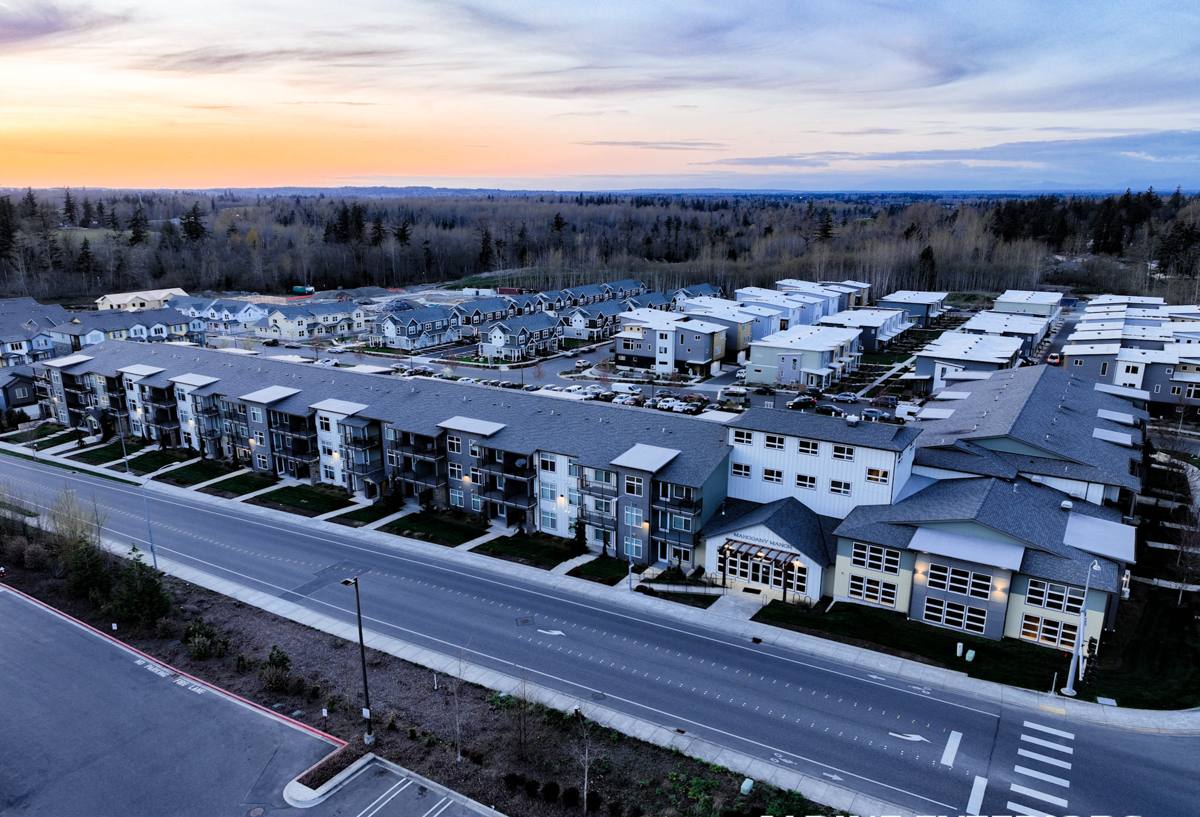
What This Climate Does to Vertical Siding
Board and batten siding is inherently more joint-heavy than horizontal lap siding — every seam between a board and a batten, and every seam where panels meet, is a place water can find its way in if the detailing isn't right. In a drier climate that's a minor concern. In March Point's climate, it's the whole ballgame.
- Salt air accelerates corrosion on fasteners, flashing, and any hardware that isn't rated for coastal exposure, and it degrades cheap paint films faster than a standard exterior finish.
- Driving rain off Fidalgo Bay and Padilla Bay doesn't just fall straight down — wind-driven rain gets pushed sideways into vertical seams and butt joints, which is exactly where a poorly detailed board and batten job fails first.
- A long moss season means anything that stays damp for extended stretches — shaded walls, areas under trees, low-sun exposures — will grow moss and algae unless the material and finish resist it.
None of that means board and batten is a bad choice for this neighborhood. It means the product and the installation both have to be chosen with this exposure in mind, not just picked for looks.
Why Board & Batten Still Makes Sense Here
The style fits the area
A lot of homes in and around March Point — whether newer builds or updated older houses — lean toward the clean vertical lines that board and batten provides, sometimes as a full exterior and often as an accent on gables, entries, or a mix with horizontal siding elsewhere on the same house. It's a legitimate architectural choice, not just a trend.
The performance question is separate from the style question
Where board and batten gets a bad reputation is when it's installed with the wrong material or the wrong detailing — thin boards that cup, battens that trap moisture instead of shedding it, or fastening that wasn't built for a marine environment. That's an installation and material problem, not a reason to avoid the look. Get both right and board and batten performs just as well as any other Hardie profile.
What a Correctly Installed Board & Batten System Actually Involves
The field panel
The vertical field panels need to be a material that won't swell, cup, or rot when it takes on repeated wetting — which is exactly the failure mode we see most often with wood-based or engineered-wood board and batten products in wet coastal climates. Fiber cement doesn't absorb water the way wood-based products do, which matters enormously in a climate where the siding is wet more often than it's dry for parts of the year.
The battens
The vertical battens that cover the panel seams are doing real structural work, not just decoration — they need to be fastened correctly, spaced to match the panel layout, and installed with the right gap and sealant strategy so water that gets behind them can still drain and dry out instead of getting trapped.
Flashing and drainage
Every horizontal transition — window heads, doors, the base of the wall, roof-to-wall intersections — needs proper flashing behind the siding, not caulk doing a flashing's job. On a home exposed to driving rain, this is the single most common place we find prior work that was cutting corners.
A drainage gap behind the siding
A rainscreen gap between the back of the siding and the water-resistive barrier gives incidental moisture a way to drain and the wall a way to dry. In a climate with this much sustained dampness, skipping this detail is one of the more common reasons siding — of any brand — fails early.
The James Hardie Board & Batten System
We install James Hardie exclusively, and board and batten is one of the profiles where that decision matters the most in this climate. Hardie's vertical siding panels are engineered fiber cement — noncombustible, dimensionally stable, and manufactured with moisture resistance built into the material rather than relying entirely on paint or caulk to keep water out.
| Feature | Why it matters in March Point |
|---|---|
| Fiber cement composition | Won't swell, cup, or rot from repeated wetting the way wood-based board and batten products can in a wet marine climate |
| ColorPlus factory finish | Baked-on finish holds color and resists fading and moss growth far better than field-applied paint exposed to salt air and constant damp |
| HZ5 climate-engineered formulation | Hardie's Pacific Northwest product line is formulated for high-moisture, marine-influenced climates like Skagit County's |
| Noncombustible material | A material advantage independent of climate, but relevant to any home near vegetation or open space |
| Transferable warranty | Backed by a manufacturer warranty that stays meaningful if the home changes hands |
We don't install vinyl, LP SmartSide, or other engineered-wood board and batten products, and in a climate like this one that's not a marketing position — it's a maintenance and moisture-behavior decision. Wood-based panels can perform fine for years and still be more sensitive to sustained moisture exposure and joint detailing than fiber cement is, and vinyl board and batten profiles don't hold up visually or structurally to sustained coastal wind and salt exposure the way a factory-finished fiber cement system does. Hardie is what we're willing to put our name behind on a March Point wall.
Our Process on a March Point Board & Batten Job
- On-site assessment — we look at wall exposure, existing moisture damage, current flashing conditions, and which walls are getting the worst of the wind and rain off the water.
- Tear-off and inspection — removing the old siding lets us actually see the sheathing and framing underneath, which is where hidden water damage from years of bad flashing usually shows up.
- Water-resistive barrier and rainscreen installation — this is the layer that does the real work of keeping the wall assembly dry over time, and it's the part that's invisible once the job is done.
- Panel and batten installation to Hardie's fastening spec — correct fastener type, spacing, and embedment, sized for the exposure this location actually gets.
- Flashing detail at every penetration and transition — windows, doors, roof lines, and the base of the wall.
- Final inspection and walkthrough — so you know exactly what's under the finish and how the system is built to perform.
Why a Crew That Already Works in March Point Matters
Siding installation isn't identical from one part of Skagit County to another. A crew that's already done work close to the bay knows to spec corrosion-resistant fasteners as a default rather than an upgrade, knows which orientations on this stretch of coastline take the worst wind-driven rain, and doesn't need to relearn moss and algae exposure patterns on every new job. That local repetition shows up in the details — flashing choices, fastener grade, where extra attention to the drainage plane actually pays off — that a crew unfamiliar with this specific exposure might treat as optional.
Cost Factors for Board & Batten in This Area
| Factor | How it affects the job |
|---|---|
| Wall exposure | Walls facing the water or prevailing wind need more attention to flashing and fastening, which can add labor time |
| Existing damage | Tear-off sometimes reveals sheathing or framing repairs needed before new siding goes on |
| Panel vs. accent use | Full-house board and batten costs more than using it as an accent alongside another Hardie profile |
| Trim and batten complexity | Tighter batten spacing or custom trim details take more labor than a standard layout |
| Access and site conditions | Lot slope, landscaping, and setbacks near the water can affect equipment access and staging |
We give straightforward, honest numbers during the estimate rather than a generic price sheet, because these factors genuinely change job to job.
Keeping Board & Batten Looking Right in a Wet Climate
- Rinse off accumulated grime, salt residue, and organic buildup once or twice a year, especially on shaded or north-facing walls.
- Keep gutters and downspouts clear so roof runoff isn't dumping extra water directly onto siding or foundation walls.
- Trim back vegetation and tree cover that keeps specific wall sections damp longer than the rest of the house.
- Check caulking at trim edges and penetrations annually — caulk is a maintenance item even on a well-built wall.
- Watch for early moss or algae spotting and address it before it spreads across a wider section of wall.
None of this is unique to Hardie, but a factory-finished fiber cement system needs far less of it than a wood-based or vinyl board and batten system would in the same location.
If you're weighing board and batten for a home in March Point, we're glad to come take a look, walk the exposure with you, and give you a straightforward, no-pressure estimate based on what your specific walls are actually dealing with.