 Anacortes Siding
 Guemes Island Is a Different Kind of Siding Job
Guemes Island sits just across the water from Anacortes, reached by a short ferry ride rather than a bridge. That single fact changes how a siding project has to be planned. Material deliveries, crew scheduling, dumpster drop-off and pickup, and even simple things like a forgotten fastener or a color-match touch-up all have to work around a ferry schedule instead of a quick drive across town. A contractor who hasn't worked the island before tends to underestimate this, and it shows up later as delays, rushed installs, or trips that never happen because the return ferry was tighter than expected.
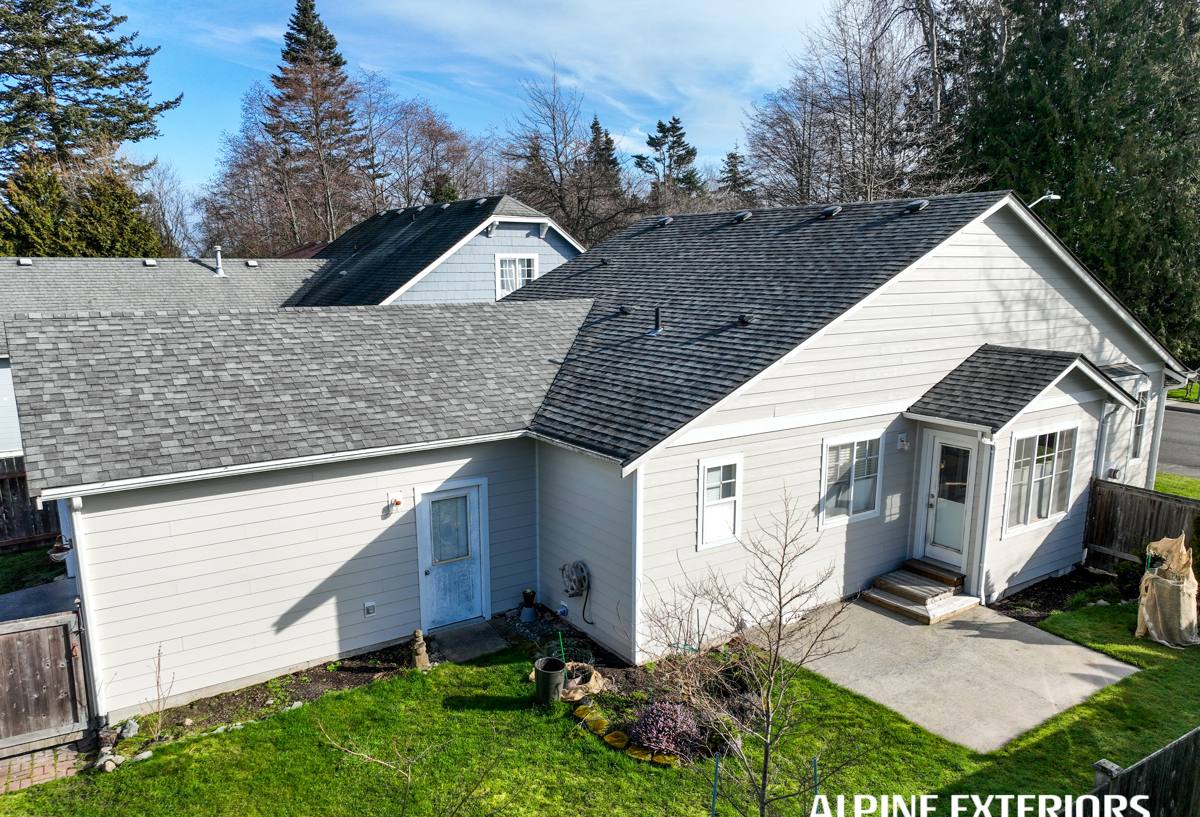
The building itself faces a tougher environment too. Homes on Guemes Island sit closer to open water and exposed shoreline than most properties in town, which means more direct salt-laden wind, more wind-driven rain hitting walls at an angle instead of straight down, and a longer damp season that keeps moss and algae established on north and west-facing walls for much of the year. Siding that would hold up fine a mile inland in Anacortes can fail years early out here if it wasn't chosen and installed with those conditions in mind.
What Salt Air, Driving Rain, and Moss Actually Do to a Wall
Salt Air
Airborne salt is corrosive to metal fasteners, flashing, and trim, and it accelerates the breakdown of finishes that aren't rated for marine exposure. On wood-based and wood-composite siding products, salt-laden moisture works into any exposed cut edge or fastener hole and speeds up swelling and rot from the inside out, often before a homeowner sees anything wrong on the surface.
Driving Rain
Wind off the water doesn't just wet a wall, it drives water sideways and upward under laps, around window and door trim, and into any gap where flashing or caulking is even slightly off. On an island lot with fewer windbreaks than a sheltered in-town property, this happens more often and with more force. Siding that depends on paint film or caulk alone to keep water out will eventually let water in.
Moss and Algae Season
Skagit County's wet season runs long, and shaded, north-facing walls on tree-lined island lots can stay damp for months at a stretch. Moss and algae need that sustained moisture to establish, and once they take hold on a porous or absorbent surface, they hold water against the wall even longer, creating a cycle that shortens the life of the siding and the paint both.
Common Failure Points We See on Island Homes
- Fastener heads and trim corners showing rust bleed or corrosion staining
- Soft, swollen siding at butt joints and lower courses near grade
- Persistent green-black growth on shaded walls that pressure washing only knocks back temporarily
- Caulk failure at window and door trim allowing water behind the siding plane
- Paint chalking and fading faster than expected on the water-facing elevation
Why We Install Only James Hardie Fiber Cement Here
We don't install vinyl, LP SmartSide, cedar, primed spruce, or other fiber cement brands. That's not a marketing position, it's a standard we hold because of what we've seen happen to those products in exactly this kind of coastal, high-moisture environment.
Wood and wood-composite sidings are organic materials. Even with good factory treatments, they absorb moisture at cut edges and fastener penetrations, and salt air accelerates that process. Vinyl handles moisture fine but is a poor fit for driving coastal wind: it can deform in heat, crack in cold, and its color is baked into a thin material that fades unevenly under strong reflected light off the water. Other fiber cement brands aren't unreasonable products in general, but we standardized on one so our crews master one system's fastening, clearances, and finish requirements to the letter rather than splitting attention across several.
James Hardie fiber cement is cement, sand, and cellulose fiber — it doesn't rot, it isn't food for insects, and it doesn't absorb moisture the way wood-based products do. It's also non-combustible, which matters anywhere wildfire smoke and ember exposure is a seasonal concern in the Pacific Northwest. For a Guemes Island property exposed to salt air and driving rain, that combination of moisture resistance and dimensional stability is the difference between siding that needs attention in five years and siding that's still doing its job in thirty.
HardieZone HZ5 Engineering
James Hardie engineers its product lines to different climate zones under its HardieZone system, and our region falls into HZ5, the zone built for freeze-thaw cycling and sustained damp conditions like Western Washington sees. That engineering affects the formulation and the factory finish, not just the look of the board, which is exactly the kind of detail that matters on an exposed island lot rather than a sheltered inland yard.
ColorPlus Factory Finish
Because moss, algae, and salt residue attack a painted surface fastest at the finish layer, we specify Hardie's ColorPlus factory-applied finish rather than field-painting site-primed boards. A factory-baked finish is more uniform and more resistant to fading and chalking than a field-applied coat, and it comes with its own finish warranty separate from the product warranty — both of which matter more on a wall that's going to spend a decade in wind-driven salt spray.
What a Correct Installation Involves
The product is only half the job. Fiber cement siding installed without attention to water management will still let a home down in this climate, warranty or not. A correct install on an island property includes:
- A drainage plane and weather-resistive barrier installed and lapped correctly behind the siding, not just stapled up as an afterthought
- Rainscreen furring or a similar gap strategy on exposed elevations so water that gets behind the cladding can drain and the wall can dry
- Correct fastener type, spacing, and depth per Hardie's published installation specs — over-driven or under-driven fasteners are one of the most common causes of early failure and warranty denial
- Proper clearance from siding to grade, roofline, and deck surfaces so standing water and splash-back don't sit against the board
- Caulk and flashing details at every window, door, and penetration sized for wind-driven rain, not just vertical drip
- Factory-cut, factory-primed edges kept intact wherever possible, with any field cuts sealed per manufacturer instructions
Skipping any one of these doesn't usually show up in the first year. It shows up in year four or five as a soft spot, a stain, or a warranty claim that gets denied because the installation didn't follow spec — which is the exact scenario a durable, non-combustible product is supposed to prevent.
How We Handle a Guemes Island Project
Because the island adds a logistics layer that in-town Anacortes jobs don't have, we plan differently from the first estimate:
- On-site assessment: we walk the exposure of every elevation, checking which walls take direct wind and rain off the water and which stay shaded and damp, since that changes detailing decisions wall by wall.
- Material staging: siding, trim, flashing, and fasteners are ordered and staged in full before the crew and equipment cross over, so a shortfall doesn't strand a job mid-install waiting on the next sailing.
- Crew and equipment scheduling: we build the ferry schedule into the project timeline up front rather than treating it as a surprise, so days aren't lost to mistimed crossings.
- Installation to spec: full water management detailing — house wrap, rainscreen gap, flashing, correct fastening — installed to James Hardie's published requirements for our HZ5 climate zone.
- Final walkthrough: we review trim, caulk lines, and finish consistency with the homeowner before we consider the job done, not just the siding panels themselves.
Comparing Siding Options for an Exposed Island Property
| Factor | Vinyl | Wood / Composite (LP, Cedar, Primed Spruce) | James Hardie Fiber Cement |
|---|---|---|---|
| Salt air / corrosion resistance | Fair — fasteners and trim can corrode | Poor — absorbs moisture at edges and fasteners | Strong — cement-based, non-organic |
| Driving rain performance | Depends heavily on installation quality | Vulnerable at joints and cut edges | Strong when installed with proper water management |
| Moss / algae resistance | Growth sits on surface, doesn't feed on material | Growth can hold moisture against organic material | Surface growth, doesn't compromise the board itself |
| Fire resistance | Combustible | Combustible | Non-combustible |
| Factory finish options | Color molded through, limited depth of tone | Field-painted or factory-primed, repaint cycles needed | ColorPlus factory finish with separate finish warranty |
This table reflects our professional standard, not a claim that every alternative product fails on every home. It's why, after years of installing and repairing siding in this exact climate, we chose to stop offering the other options and install James Hardie exclusively.
Cost Factors on a Guemes Island Project
| Factor | Why It Affects Cost |
|---|---|
| Ferry access and staging | Material and equipment moves add scheduling and logistics time compared to an in-town job |
| Exposure level of the site | Waterfront and wind-exposed elevations need more rainscreen and flashing detail than sheltered walls |
| Existing wall condition | Rot, mold, or failed sheathing found during tear-off needs repair before new siding goes on |
| Trim and detail complexity | Multiple window openings, corners, and rooflines add labor beyond flat wall square footage |
| Board and finish selection | Panel profile, plank width, and ColorPlus color selection affect material pricing |
We give every homeowner a specific, written number after the on-site assessment — broad averages don't account for a given home's exposure or existing wall condition, and on an island property those two factors can swing the scope more than they would on a typical in-town lot.
After Installation: Keeping Island Siding Performing
Fiber cement needs far less upkeep than wood-based siding, but "low maintenance" doesn't mean "no maintenance" in a salt-air, high-moss environment. A simple annual routine keeps the investment protected:
- Rinse the siding, especially shaded and water-facing elevations, once or twice a year to keep salt residue and early moss growth from building up
- Keep gutters and downspouts clear so runoff doesn't sheet down the wall face during heavy rain
- Trim back vegetation and tree cover that keeps a wall section shaded and damp longer than it needs to be
- Inspect caulk lines at trim and penetrations every year or two and have any cracked or shrunken caulk redone before water gets behind it
- Watch for any staining at fastener heads or trim corners and have it checked early rather than waited out
Why It Matters That We Already Work Guemes Island
A crew that hasn't worked the island before will often quote it like an in-town job, then discover mid-project that the schedule, the exposure, or the wall condition doesn't match what they assumed. We've planned around the ferry, staged materials for island crossings, and detailed siding for direct water exposure enough times that it's built into how we estimate and schedule from the first visit, not something we figure out on the fly. That matters as much as the siding brand on the wall — the best product in the world still fails if the job around it wasn't planned for where it's actually going.
If you're planning a siding project on Guemes Island, we're glad to come out, walk the property, and give you a straight, no-pressure estimate built around your home's actual exposure and condition — fill out the form below to get started.