 Anacortes Siding
 Why Guemes Island Homes Need a Different Approach to Siding
Guemes Island sits right in the Guemes Channel off Anacortes, and that location matters more than most homeowners realize when it comes to exterior siding. A house on the island takes on a different combination of weather stress than a similar house a few miles inland in Skagit County — more direct salt exposure, more wind coming off open water, and a shoulder season that stays damp and shaded long enough to grow a solid coat of moss on anything that holds moisture. Siding that performs fine in a sheltered inland neighborhood can fail years early out here if it isn't matched to the site.
This page is about one service in one place: James Hardie fiber cement siding, installed correctly on Guemes Island homes. We don't sell it as a generic upgrade — we sell it because, after years of working in this exact climate corridor, it's the one siding system we're comfortable standing behind for island exposure.
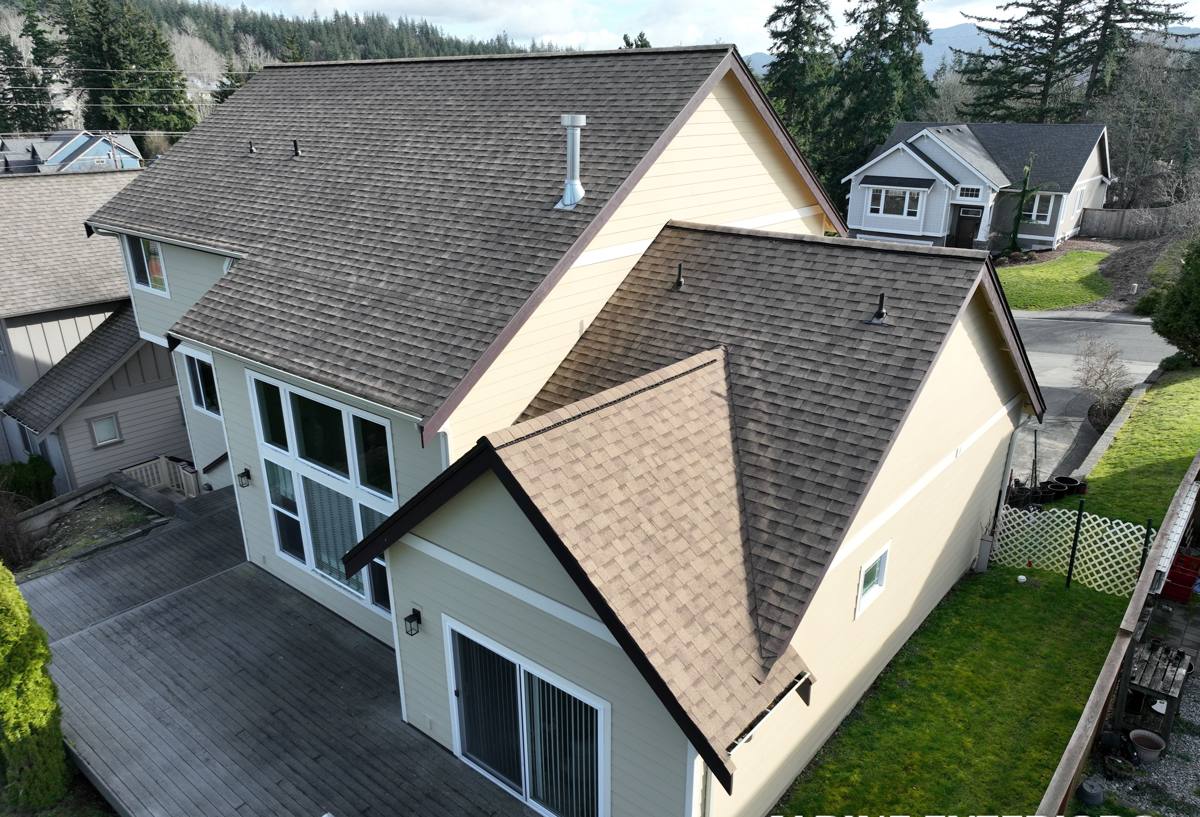
The Guemes Island Climate Test: Salt, Wind-Driven Rain, and Moss
Salt Air and Marine Exposure
Homes closer to the water on Guemes Island are exposed to a steady low-level dose of salt-laden air coming off the Salish Sea. Salt air doesn't just affect metal fasteners and flashing — it accelerates the breakdown of paint films and can pit or discolor materials that aren't engineered to shed it. Siding that relies on a field-applied paint job for its color and protection tends to show chalking, fading, and touch-up needs sooner in this kind of exposure than siding with a factory-cured finish.
Driving Rain and Wind Exposure
Island and shoreline properties around Anacortes typically see more wind-driven rain than sheltered inland lots. That means water isn't just falling on the siding — it's being pushed sideways and upward under laps, around trim, and into any gap that isn't properly flashed. A siding job that's technically installed but loosely detailed at the seams, corners, and penetrations will eventually let water behind the cladding, and once that happens the sheathing and framing pay the price, not just the paint.
The Long Moss Season
Northwest Washington's wet season stretches long, and shaded, north-facing, or tree-adjacent walls on Guemes Island often stay damp for weeks at a stretch. That's ideal growing conditions for moss and algae. Siding that absorbs moisture or has a porous surface gives moss something to root into; a dense, factory-finished fiber cement surface gives it much less to hold onto, which matters a lot over a 20- or 30-year ownership horizon.
Why We Only Install James Hardie on Island Homes
We don't install LP SmartSide, vinyl, Cemplank, Allura, primed spruce, or cedar — on Guemes Island or anywhere else we work. That's a deliberate standard, not a lack of options. Each of those products has real strengths, but each also has a trade-off that shows up faster in marine, high-moisture exposure than it does in a mild inland yard: engineered wood products are still wood at the core and depend entirely on perfect edge-sealing and maintenance to keep moisture out; vinyl can warp, fade, or crack under UV and temperature swings and offers little real protection against wind-driven water intrusion since it isn't a water barrier itself; unfinished wood siding demands a maintenance schedule most homeowners can't keep up with once salt air and moss are in the mix.
James Hardie fiber cement is non-combustible, dimensionally stable in wet-dry cycling, and available in HZ product lines engineered for specific climate zones, which is directly relevant to a site that swings between saturated winters and dry, sun-exposed summer walls. The ColorPlus factory finish is baked on and warranted separately from the substrate, which takes the weakest link — field paint adhesion in salt air — out of the equation. That combination is why it's the only system we put our name behind on island and shoreline jobs.
What a Correct James Hardie Install Involves
The product only performs as designed if the installation matches Hardie's published specifications, which are more detailed than most homeowners expect. On a site like Guemes Island, we don't shortcut any of the following.
Fastening and Flashing Details
Every fastener needs to be the correct type and spacing for the exposure category, driven flush without overdriving (which crushes the board's fiber and opens a path for moisture). Flashing at windows, doors, roof-to-wall transitions, and any wall penetration has to shed water outward and downward, lapped correctly with the water-resistive barrier behind it — not just caulked and hoped for. In wind-driven rain conditions, flashing details are usually where a mediocre install fails first, long before the siding itself would.
Clearances and Gaps
Hardie specifies minimum clearances from grade, roofing, decks, and other transitions, plus gaps at butt joints and trim for expansion. Skipping these to make a tighter, "cleaner" look is a common shortcut that traps moisture against the bottom edge of the board — exactly the spot most vulnerable to wicking and rot underneath.
Factory Finish vs Field Painting
ColorPlus boards come with the finish and touch-up system matched at the factory, engineered to hold color and resist fading in UV and salt exposure. Field-painting Hardie voids that portion of the warranty coverage and puts the long-term performance back on a standard exterior paint job, which is a weaker bet in this climate.
Working on Guemes Island: Logistics That Matter
Island jobs aren't the same as a job two blocks from the shop. Materials, crew, and equipment all have to cross the channel, which means scheduling has to account for ferry timing rather than treating it as an afterthought. A crew that hasn't worked the island before often underestimates this and ends up with wasted trips, split-up material deliveries, or a job that drags because nobody planned the logistics up front.
Because we already work Guemes Island regularly, we plan material staging and crew scheduling around the realities of getting equipment and full board bundles across efficiently, which keeps the job moving at the same pace as a mainland Anacortes project instead of losing days to back-and-forth trips.
Our Process From Estimate to Finished Siding
- Site walk and assessment — we look at exposure direction, existing moisture damage, trim and window details, and moss/algae patterns unique to your lot.
- Product and line selection — matching the right Hardie plank, panel, or shingle profile and HZ line to your wall's actual exposure, not a one-size-fits-all spec.
- Removal and sheathing check — old siding comes off and the sheathing underneath gets inspected before anything new goes up, since covering hidden rot is how island jobs go wrong later.
- Water-resistive barrier and flashing — this layer is what actually keeps water out; the siding is the second line of defense, not the first.
- Installation to Hardie spec — correct fastening, clearances, and joint treatment throughout.
- Trim, caulking, and final detail — the finish details that determine how the job ages over the next decade.
- Walkthrough — we go over the finished work and warranty coverage with you directly.
Cost Factors for a Guemes Island Siding Project
Every home is different, but the following factors move the price on island jobs more than they typically do on a comparable mainland Anacortes project.
| Factor | Why It Matters Here |
|---|---|
| Wall exposure and elevation | Higher wind/salt exposure walls may call for a higher HZ line or extra flashing detail |
| Existing damage under old siding | Moisture-related sheathing repair is more common on long-exposed island walls |
| Access and logistics | Ferry scheduling and material staging affect crew time and delivery planning |
| Siding profile choice | Lap, shingle, and panel profiles differ in material and labor cost |
| Trim and detail complexity | Homes with more corners, windows, and rooflines require more flashing and finish work |
Keeping Island Siding Performing Long-Term
Correct installation gets you most of the way there, but a little homeowner attention keeps a Hardie install performing at its best in this climate for decades.
- Rinse salt residue off exterior walls occasionally, especially on the water-facing side of the home
- Keep gutters clear so water isn't overflowing down the face of the siding
- Trim back vegetation and tree cover that keeps walls shaded and damp longer than necessary
- Address any caulking or trim gaps early rather than waiting for visible water staining
- Use touch-up paint matched to your ColorPlus finish if a repair or scratch ever needs it
Why a Crew That Already Works Guemes Island Matters
When you're vetting a contractor for island work, ask directly whether they've worked on Guemes before, how they plan for ferry logistics, and whether they install to Hardie's published fastening and clearance specs or just "however it's always been done." A crew unfamiliar with the island's exposure patterns can install a technically fine product in a way that's still mismatched to the site — the wrong HZ line, under-flashed transitions, or clearances tightened for looks instead of performance. Working here regularly means we've already seen how salt air, wind-driven rain, and moss behave on this specific stretch of the Salish Sea, and we build the install around that, not around a generic checklist.
If you're planning a siding project on Guemes Island, we're happy to take a look at your home and walk you through what it actually needs. Fill out the form below for a free, no-pressure estimate.