 Anacortes Siding
 Flounder Bay's Location Puts Extra Demands on Siding
Flounder Bay sits on the water, and that changes the math on what siding will actually hold up. Homes here don't just deal with normal Pacific Northwest rain — they take on salt-laden air off the water, wind-driven rain that hits siding at an angle instead of falling straight down, and a shaded, damp shoulder season that lets moss and algae get a foothold on anything that stays wet too long. A siding product that performs fine three miles inland in Anacortes can wear noticeably faster right on the bay.
That's the starting point for every recommendation we make in this neighborhood: whatever goes on the wall has to handle constant moisture exposure, resist the corrosive effect of salt air on fasteners and finishes, and shed water fast enough that moss doesn't have time to establish. This page focuses on one product, in one place — James Hardie fiber cement siding installed correctly on Flounder Bay homes — because that combination is what we've found actually holds up here.
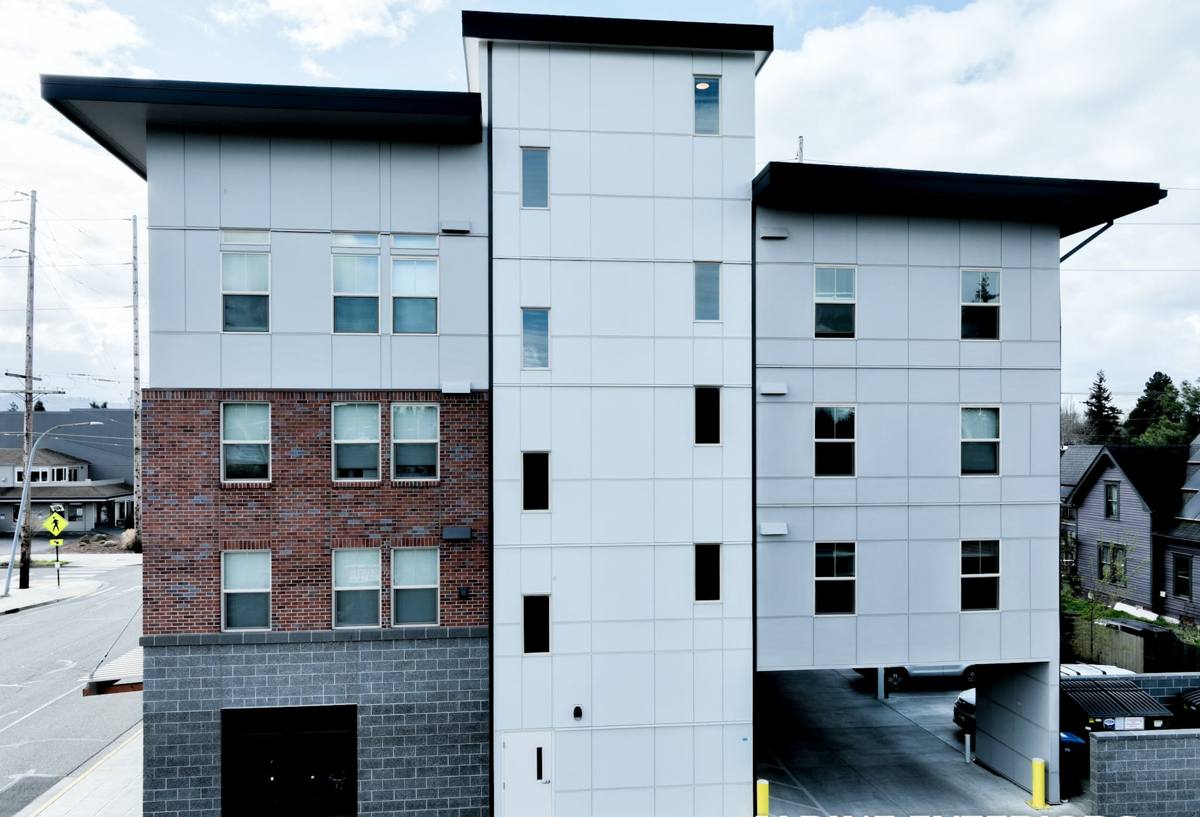
What Salt Air, Rain, and Moss Actually Do to Siding
Salt Air
Airborne salt is mildly corrosive and it settles on every exterior surface within reach of the water, not just the side facing the bay. Over years, it can degrade coatings, accelerate rust on exposed metal fasteners and trim, and leave a dulling film that shows up faster on darker or glossier finishes. Siding with a weak factory finish, or siding that relies on field-applied paint, tends to show this wear sooner and needs repainting more often near the water than it would a few miles inland.
Driving Rain
Wind off the bay pushes rain sideways into wall assemblies, not just down over them. That means lap joints, butt seams, and anywhere two pieces of siding meet are under more pressure to actually shed water rather than just deflect it. Gaps, poor caulking, or siding that wicks moisture into its core will let water find its way behind the cladding, and once it's behind the siding, it's a slow, hidden problem — rot, mold, and sheathing damage — rather than something you notice right away.
Moss and Algae
Skagit County's wet season runs long, and shaded, north-facing, or tree-covered walls near the water stay damp for extended stretches. Any siding material that holds surface moisture — wood grain textures, porous surfaces, or seams that trap standing water — gives moss and algae exactly what they need to grow. Once established, moss holds even more moisture against the wall, which compounds the problem instead of just being a cosmetic nuisance.
Why James Hardie Is the Product We Install Here
We install James Hardie fiber cement siding exclusively — not vinyl, not LP SmartSide, not cedar, not any of the other common alternatives. That's a deliberate standard, not a limitation of what we're capable of installing. Fiber cement is made from cement, sand, and cellulose fibers, which makes it non-combustible and dimensionally stable in a way that wood-based and vinyl products aren't. It doesn't expand and contract with moisture the way engineered wood siding can, and it doesn't soften, warp, or become brittle under sustained damp conditions the way other materials do.
James Hardie also engineers its siding for specific climate zones rather than selling one formulation everywhere. Products built for our region (the HZ5 line) are formulated for areas that see sustained wet weather and freeze-thaw cycles, as opposed to the HZ10 formulations built for hot, humid Southern climates. That distinction matters on the water in Skagit County — it's the difference between siding engineered for our actual conditions and siding that just happens to be sold here.
ColorPlus Factory Finish
Instead of field-applied paint, James Hardie's ColorPlus color system is baked on at the factory in multiple coats under controlled conditions. That finish resists fading and holds up better against the kind of airborne salt and UV exposure a waterfront home deals with than a job-site paint job typically does. It also means touch-up and future color-matching is more consistent, since the color comes from Hardie rather than whatever happened to be mixed on-site.
Warranty Backing
James Hardie backs its siding with a 30-year limited product warranty, and ColorPlus finishes carry their own separate finish warranty. That's a real, transferable commitment from the manufacturer — worth factoring in on a home you may sell someday, since a documented, brand-name warranty carries more weight with a buyer than an unbranded or off-brand product would.
Matching the Right Hardie System to a Flounder Bay Home
Not every Hardie product is the right fit for every wall. Part of doing this correctly is choosing the right combination for the specific home and its exposure to wind and water.
- HardiePlank lap siding — the most common choice for traditional home profiles; comes in several exposure widths and textures (smooth, cedarmill) to match the look of the existing home.
- HardiePanel vertical siding — often used for accent sections, gables, or modern architectural styles, and pairs well with board-and-batten details.
- HardieTrim boards — used around windows, doors, and corners; matching trim material to the field siding matters for consistent moisture performance, not just looks.
- ColorPlus vs. field-painted Hardie — for a home this exposed to salt air, the factory finish is worth the difference over time compared to primed Hardie that gets painted on-site.
We walk homeowners through these choices based on the home's actual sun and wind exposure, not just a catalog preference — a wall that faces directly into the prevailing wind off the bay may call for a different detail approach than a sheltered side of the same house.
What a Correct Installation Actually Involves
Fiber cement siding performs the way it's supposed to only if it's installed to spec. Most siding failures we see on any brand of siding trace back to installation shortcuts, not the material itself. On a home exposed to driving rain off the water, these details matter more than usual, not less.
- Proper weather-resistive barrier installed underneath, lapped correctly to shed water downward and outward
- Correct fastener type, spacing, and depth — over-driven or under-driven nails compromise the siding's ability to move slightly with the wall and can create entry points for moisture
- Rain screen or drainage gap detailing where appropriate, so water that does get behind the siding has somewhere to drain and dry rather than sitting against the sheathing
- Manufacturer-specified clearances at the ground, roofline, and any deck or porch attachment points
- Correctly flashed windows, doors, and any wall penetrations, since these are the most common points where wind-driven rain finds a way in
- Caulking only where Hardie's instructions call for it — over-caulking gaps that should be left open to drain can trap moisture rather than keep it out
Skipping any one of these doesn't usually show up right away. It shows up two, five, or ten years later as a soft spot, a stain, or a section that needs to be opened up and redone — often costing more than doing it right the first time would have.
Siding Options Compared for a Waterfront Skagit County Home
| Factor | James Hardie Fiber Cement | Vinyl | Wood / LP SmartSide |
|---|---|---|---|
| Moisture behavior near water | Dimensionally stable; doesn't swell, warp, or rot | Can warp or crack with temperature swings and wind stress | Wood-based core can absorb moisture at cut edges and seams |
| Salt air / coastal wear | Factory finish resists fading and chalking | Can fade, chalk, and become brittle over time | Finish and substrate both vulnerable to accelerated wear |
| Moss and algae resistance | Smooth, dense surface sheds water quickly | Sheds water but seams can trap debris and moisture | Textured/wood-grain surfaces hold moisture, feeding growth |
| Fire resistance | Non-combustible | Combustible, can melt/deform near heat | Combustible |
| Typical manufacturer warranty | 30-year limited, transferable | Varies widely by brand | Varies; often shorter, moisture-related exclusions common |
Our Process for a Flounder Bay Siding Project
Assessment
We start by walking the home and identifying which walls take the most direct exposure to wind and driving rain off the water, where existing moisture damage or moss growth has already shown up, and where the current siding or trim has failed. This shapes the flashing and drainage detailing plan before we ever order material.
Prep and Removal
Old siding comes off carefully so we can inspect the sheathing and weather-resistive barrier underneath. Any water damage found at this stage gets addressed and repaired before new siding goes on — covering up an existing moisture problem with new siding just hides it for a while.
Installation
New barrier, flashing, and Hardie siding go on to manufacturer spec, with the fastening and clearance details called out above followed on every wall, not just the ones most visible from the street.
Finish and Walkthrough
Trim, caulking (where it belongs), and touch-up work get finished, and we walk the home with the homeowner to review the work and go over basic care going forward.
Why a Crew That Already Works Flounder Bay Matters
General siding experience doesn't automatically translate to knowing how a specific waterfront neighborhood behaves. A crew that has already worked homes in Flounder Bay has seen firsthand which walls take the worst of the wind, how moss tends to establish on shaded sections near the water, and which flashing details actually hold up here versus just on paper. That local pattern recognition shows up in fewer callbacks and fewer surprises once the project is done — it's the difference between a generic install and one detailed for this specific exposure.
It also matters for something more practical: knowing realistic timelines around this area's weather windows, and not scheduling exterior work during stretches when wind and rain off the bay would compromise a proper install.
Living With Hardie Siding in a Salt Air, Moss-Prone Environment
Correctly installed Hardie siding is genuinely low-maintenance, but "low-maintenance" isn't "no-maintenance," especially this close to the water. A periodic rinse-down to clear accumulated salt film and any early moss growth, keeping gutters clear so water isn't sheeting down the wall, and trimming back vegetation that keeps a wall section shaded and damp all go a long way toward keeping the siding performing the way it's designed to for decades.
If you own a home in Flounder Bay and want a straight answer on what your siding actually needs given its exposure, we're happy to take a look. The estimate is free, there's no pressure, and you'll get a clear picture of what correct James Hardie installation looks like for your specific home before you decide anything.