 Anacortes Siding
 Flounder Bay's Waterfront Climate Is Hard on Windows
Flounder Bay sits close enough to the water that homes here take a different kind of weathering than houses a few miles inland. Salt-laden air corrodes hardware and finishes faster than plain rain does. Wind-driven storms push moisture sideways into gaps that would stay dry on a calmer site. And the long, gray stretch of fall through spring that Skagit County gets means moss and algae have months to work on any surface that stays damp — including window sills, tracks, and the wood trim around older frames.
None of that is unusual for this part of Washington. But it does mean a window that performs fine in a catalog spec sheet can still underperform on a Flounder Bay house if it isn't the right product for a marine-exposure site, or if it isn't installed with that exposure in mind. This page is about what actually matters when you're replacing windows in this specific location — not a generic rundown of window types.
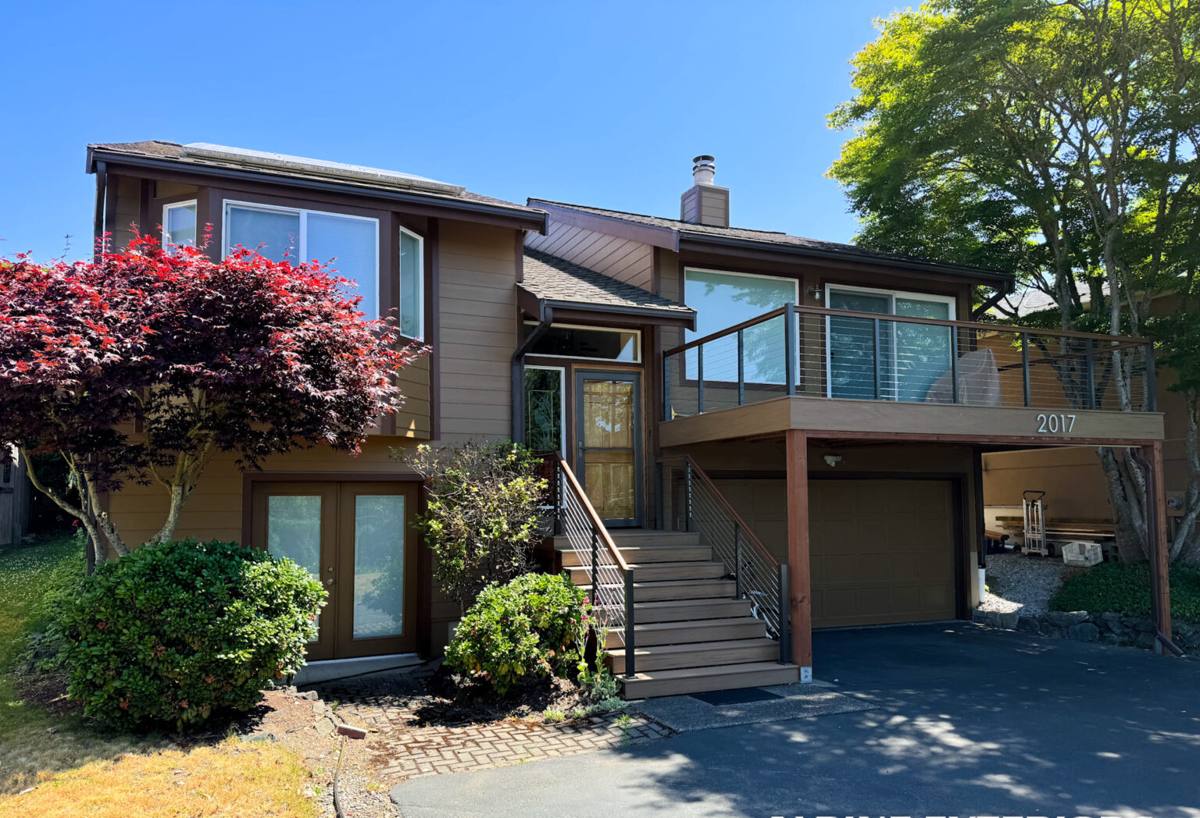
What "Energy-Efficient" Really Means Here
Energy efficiency in a window comes from three things working together: the glass package, the frame material, and the installation. Get one wrong and the other two can't fully compensate.
Glass Package
Double-pane, low-E, argon-filled glass is the standard baseline for this climate — it's not overkill for a starter home and it's not underkill for a nicer one. The low-E coating matters more here than the argon fill; it's what keeps summer heat gain down and winter heat loss down at the same time, which is exactly the swing Skagit County sees year to year. We look at U-factor (how much heat escapes) and SHGC, or solar heat gain coefficient (how much heat gets in from sun), for every window based on which direction it faces. A north-facing window over the water and a south-facing window on the same house often call for slightly different glass specs.
Frame Material
Frame choice affects both energy performance and how the window holds up to salt air. Vinyl, fiberglass, and clad-wood frames all insulate reasonably well; the real differences show up in how each one ages near the water. We'll walk through that in the comparison table below.
Installation
A well-specified window installed poorly will leak air and eventually moisture, no matter what the spec sheet says. This is the part homeowners can't easily verify by looking at a brochure, and it's where most of the actual performance difference between contractors comes from.
Signs a Flounder Bay Home Needs New Windows
- Visible fogging or a hazy band between the panes — the seal has failed and the argon fill is gone
- Hardware (locks, cranks, hinges) that's pitted, stiff, or corroded from salt exposure
- Wood sills or trim that stay damp or show soft spots, especially on the weather side of the house
- Persistent moss or dark streaking on the sill or below the window that keeps coming back after cleaning
- Noticeable draft at the frame edge during a windy, wet storm
- Single-pane or original builder-grade windows that have never been upgraded
- Difficulty opening or closing due to swollen wood or warped vinyl
Any one of these is worth a look. Several at once usually means the windows are past the point where caulk and weatherstripping will fix the problem.
Frame Material Comparison for a Marine-Exposure Site
| Frame Type | Energy Performance | Salt-Air Durability | Maintenance |
|---|---|---|---|
| Vinyl | Good; consistent U-factors | Good — won't rust or rot, but can chalk over time in strong UV/salt exposure | Low |
| Fiberglass | Very good; stable through temperature swings | Very good — dimensionally stable, resists corrosion well | Low |
| Aluminum-clad wood | Good, depends on interior wood core | Fair — cladding protects the exterior, but any breach exposes wood to moisture | Moderate |
| Bare wood | Good with proper glass package | Poor to fair near the water without diligent upkeep | High |
We don't push one material on every job. A vinyl or fiberglass window is usually the more sensible choice for a house that takes direct weather off the bay, simply because it holds up with less upkeep. A clad-wood window can still make sense on a more sheltered lot where the look matters and the owner is comfortable with periodic maintenance. What we won't do is put a bare-wood or poorly clad frame on a home's most exposed elevation and call it a long-term solution — that's a maintenance burden we'd rather flag up front than let a homeowner discover in five years.
Our Installation Process
- On-site assessment. We look at each window's exposure — which walls take direct weather off the water, which are sheltered — and check existing framing and sill condition before recommending anything.
- Product selection. We match glass package and frame material to that exposure, not a one-size spec for the whole house.
- Removal and inspection. Old windows come out carefully so we can check the rough opening for hidden rot or moisture damage before it's covered back up.
- Flashing and sealing. This is the step that determines whether a window stays watertight through a real Pacific Northwest storm. Proper flashing tape, correct lap order (so water sheds down and out, never in), and a continuous air seal around the frame.
- Setting and shimming. The window is leveled, plumbed, and shimmed so it operates smoothly and doesn't stress the frame — a racked frame will fail its seals early no matter how good the glass is.
- Interior and exterior finish. Trim, caulk, and insulation around the frame are finished to shed water on the outside and seal air on the inside.
- Final check. We test operation and look for any gaps before we consider the job done.
The Details That Matter Most Near the Water
A lot of window problems near Flounder Bay don't come from the glass or the frame at all — they come from how the opening around the window was handled. Wind-driven rain finds any gap in the flashing and pushes water in sideways, which is a different failure mode than the straight-down rain most flashing details are drawn for. We pay particular attention to head flashing above each window and to how the sill pan sheds water back out rather than trapping it against the framing.
Hardware choice matters too. Standard steel components corrode faster in salt air; where it's practical, we favor corrosion-resistant hardware options so locks and cranks don't seize up or stain the sill within a couple of years.
Moss and algae growth on sills and trim is mostly a moisture-and-shade problem, not something a coating alone solves. Good drainage detailing and a sill that actually sheds water do more for long-term appearance than any surface treatment applied after the fact.
What Drives the Cost
| Factor | Why It Matters |
|---|---|
| Number and size of windows | Straightforward — more openings and larger glass area mean more material and labor |
| Frame material | Vinyl is typically the most budget-friendly; fiberglass and clad-wood cost more upfront but can cost less in upkeep over time |
| Glass package upgrades | Higher-performance low-E coatings or tempered glass (required in some locations by code) add cost |
| Condition of the existing opening | Rot or damage found during removal adds repair work before the new window can go in |
| Access and site conditions | Second-story or hard-to-reach windows take more time and equipment |
| Full-frame vs. insert replacement | Full-frame replacement (removing down to the studs) costs more than an insert but lets us fully address flashing and moisture issues — often the better call on an exposed elevation |
We give straightforward, itemized estimates rather than a single lump number, so you can see what you're actually paying for and where the options are if budget is a factor.
Choosing a Contractor for This Kind of Work
- Ask how they detail flashing for wind-driven rain, not just standard rainfall — the answer should be specific, not a shrug
- Ask whether they adjust product recommendations based on which side of the house faces the water
- Check that they're licensed and insured to work in Washington, and ask for proof rather than taking it on faith
- Ask what happens if they find rot or damage once the old window is out — get the process in writing before work starts
- Ask about warranty coverage on both the product and the labor, and get clear on which manufacturer handles product claims versus who handles installation issues
- Be wary of anyone quoting a whole-house price without ever assessing individual window exposure or condition
Why Local Experience in Anacortes and Skagit County Matters
A crew that works this area regularly has already seen how salt exposure, wind direction, and moss season play out on real houses around Anacortes — not just in a manufacturer's technical bulletin. That translates into better judgment calls on-site: which elevation needs the more durable frame, where the flashing detail needs extra attention, and when a window's condition means the surrounding wall needs a closer look before the new unit goes in. It also means we're not learning Skagit County's weather patterns on your project.
If you're weighing whether it's time to replace windows on a Flounder Bay home, we're happy to take a look and give you a straight assessment — no pressure, no inflated urgency. Reach out for a free estimate using the form below, and we'll walk the property with you and talk through what actually makes sense for your home's exposure and budget.