 Anacortes Siding
 Fidalgo Island's Climate Is Harder on Siding Than Most Homeowners Realize
Fidalgo Island sits where Skagit County meets the Salish Sea, and that location cuts both ways. The water views and marine air that make the island a great place to live also create one of the more demanding siding environments in Western Washington. Homes here deal with a near-constant combination of salt-laden air, wind-driven rain off Rosario Strait and Fidalgo Bay, and a wet season that runs long enough to grow moss on almost any north-facing wall that isn't actively shedding water.
None of that is dramatic on its own. Siding doesn't fail here because of one big storm — it fails slowly, from years of moisture finding small gaps, salt air breaking down finishes and fasteners, and moss holding water against the wall longer than the material was ever designed to tolerate. A siding replacement on Fidalgo Island has to be planned around that reality, not around a generic weatherproofing checklist written for a drier climate.
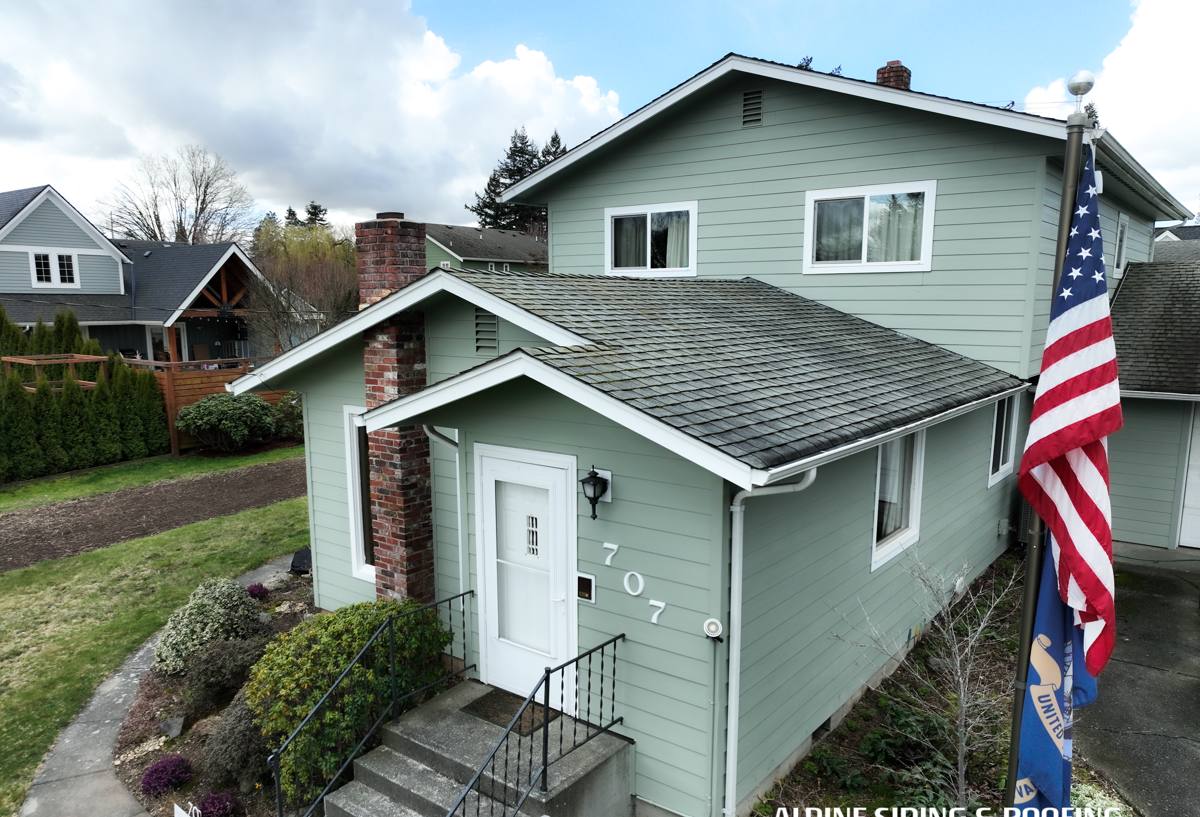
What "Driving Rain" Actually Does to a Wall Assembly
Anacortes and the surrounding island don't get the heaviest rainfall totals in the state, but wind direction matters as much as volume. Storms coming off the strait push rain sideways into exposed walls, corners, and anywhere siding meets a window, door, or roofline. That's a different stress than rain falling straight down, and it's why so many siding problems on the island start at the details rather than the flat field of the wall — a poorly flashed window, a butt joint that wasn't caulked correctly, or trim that was never back-primed before installation.
A correct replacement addresses this by treating the water-resistive barrier, flashing, and joint sealing as the real weatherproofing system, with the siding itself as the outer layer. Get the barrier and flashing wrong and no siding material — Hardie, wood, or vinyl — will keep a wall dry long-term.
Where Water Gets In Most Often
- Window and door flashing that wasn't lapped correctly with the house wrap
- Butt joints and seams that were caulked instead of properly flashed
- Bottom edges of siding installed too close to grade, decks, or roof lines
- Inside corners where two wall planes meet and water concentrates
- Penetrations for hose bibs, vents, and electrical fixtures
Salt Air and Moss: The Two Slow Problems
Salt air is corrosive to metal fasteners and flashing over time, which is why fastener choice and flashing material matter more here than in an inland Skagit County location. Moss is the other long-term issue — it thrives on shaded, moisture-retentive surfaces, and once it establishes on a wall it holds water against the siding and any coatings on it far longer than an open, sun-exposed wall ever experiences. On wood-based or fiber cement products without a durable factory finish, that constant damp exposure accelerates paint failure, swelling, and edge deterioration.
This is less about any one product being "bad" in the marine environment and more about how much maintenance a homeowner is realistically willing to keep up with over 15, 20, or 30 years. A siding system with a long-lasting factory finish and a fiber cement core that doesn't swell with moisture simply asks less of the homeowner over time than one that depends on repainting and caulk maintenance to stay ahead of the climate.
Why We Install Only James Hardie Fiber Cement
We standardized on James Hardie siding for every job we do, including here on Fidalgo Island, for reasons that come directly from what this climate does to a wall over decades. Hardie's fiber cement doesn't rot, and it isn't a food source for the moss and mildew that thrive in this rainfall pattern. It's also non-combustible, which matters increasingly for insurance conversations even in a wet coastal climate. James Hardie makes climate-engineered product lines — including HZ5 formulations built for wetter, more variable regions — and backs its ColorPlus factory-applied finish with a coating warranty that isn't dependent on the homeowner repainting on a strict schedule.
That combination — a moisture-stable core, a factory finish engineered to hold color and resist the elements, and a manufacturer warranty that transfers with the home — is why fiber cement is what we put on Fidalgo Island houses. We don't install LP SmartSide, vinyl, Cemplank, Allura, or primed spruce and cedar siding, and we're upfront that this is our own standard, not a claim that every alternative product fails. It's a judgment call based on what holds up with the least maintenance in this specific environment, and we'd rather build our business around one system we trust completely than install several we have reservations about.
What Correct Installation Involves
James Hardie siding performs the way it's rated to perform only when it's installed to the manufacturer's specifications — proper clearances from grade and roof lines, correct fastener pattern and type, factory-recommended caulking at joints, and flashing details that actually shed water instead of trapping it. Installing Hardie siding like it's any other panel product is one of the most common ways a homeowner ends up with a warranty claim down the road. Our crews install to spec because that's the only way the product's 30-year warranty and long-term performance actually apply.
Signs Your Fidalgo Island Home May Need Siding Replacement
- Visible cracking, warping, or soft spots, especially on north and west-facing walls
- Persistent moss or algae growth that returns shortly after cleaning
- Paint that's peeling, bubbling, or chalking faster than a normal repaint cycle
- Gaps opening up at seams, corners, or trim that weren't there when the siding was new
- Rising energy bills that suggest the wall assembly is no longer sealing well
- Visible fastener corrosion or staining running down from nail heads
- Interior signs — musty smell, staining, or soft drywall near exterior walls
Any one of these can be minor. Several showing up together on the same elevation usually means the wall assembly behind the siding has been taking on moisture for a while, and it's worth having someone look at more than just the visible surface.
Our Replacement Process
| Step | What Happens |
|---|---|
| Inspection | We walk the exterior, check problem areas closely, and look at trim, flashing, and any signs of moisture behind the current siding |
| Assessment & estimate | You get a clear, no-pressure estimate that explains scope, product line, color, and timeline |
| Tear-off & sheathing check | Old siding comes off and we inspect the sheathing underneath before anything new goes up — this is where hidden moisture damage gets caught |
| House wrap & flashing | Water-resistive barrier and flashing at every window, door, and penetration, installed to shed water outward |
| Hardie installation | Siding installed to James Hardie's fastening, clearance, and joint specifications so the warranty is intact |
| Final walkthrough | We review the finished work with you before calling the job done |
What Affects Cost on an Island Job
Every home is different, and we won't quote a number without seeing the house, but a few factors consistently move the price on Fidalgo Island projects more than homeowners expect.
| Factor | Why It Matters |
|---|---|
| Condition of the sheathing underneath | Hidden moisture damage found during tear-off adds repair scope before new siding can go on |
| Home access and site layout | Waterfront and hillside lots common on the island can mean more staging and scaffolding time |
| Trim and detail complexity | Multiple gables, dormers, and corners take more flashing and cutting time than a simple rectangular wall |
| Siding profile and color | Lap width, panel style, and ColorPlus color selection affect material cost |
| Removal and disposal | What's coming off — and whether there's more than one layer of old siding — affects labor and haul-away |
Why a Crew That Already Works Fidalgo Island Matters
Siding installation is detail work, and the details that matter change with the environment. A crew that regularly works Anacortes and the surrounding island already knows to pay extra attention to flashing at exposed, wind-facing elevations, to plan around the wetter months rather than fight them, and to recognize early moss and moisture patterns specific to this coastline. That local repetition matters more than it sounds like it should — it's the difference between a crew following a generic install manual and one that's seen how this specific climate actually treats a wall over time.
When you're vetting any siding contractor, on the island or anywhere else, ask direct questions: Are they a certified James Hardie installer or working from manufacturer specs? What's their warranty on labor, separate from the manufacturer's product warranty? Will they show you the sheathing before it's covered back up, not just describe it afterward? A contractor confident in their work will answer all of that without hesitation.
Maintenance After Installation
One of the practical advantages of Hardie fiber cement with a ColorPlus finish is how little ongoing maintenance it asks for compared to painted wood or repaint-dependent products. That said, no siding is entirely maintenance-free in a marine climate. A periodic rinse to keep moss and salt residue from building up, keeping gutters clear so water doesn't sheet down the wall, and a visual check of caulking at joints and trim once a year will keep the system performing the way it's designed to for decades.
Get a Free, No-Pressure Estimate
If your Fidalgo Island home is showing signs of wear, or you're just planning ahead for a siding replacement, we're happy to take a look and walk you through what we see — no pressure, no obligation. Use the form below to request a free estimate and we'll get back to you to schedule a time that works.