 Anacortes Siding
 Why Fidalgo Island Is a Tough Place for Siding
Fidalgo Island sits where the Salish Sea meets Skagit County, and that location cuts both ways. The water views that make these properties desirable also mean homes here take a steady beating from salt-laden air, wind-driven rain off Rosario Strait and the surrounding channels, and a wet season that can stretch from October well into spring. Add in the shade and moisture that many Anacortes-area lots hold onto under mature evergreens, and you get long stretches of the year where exterior walls simply do not dry out between storms.
Siding on Fidalgo Island isn't just cladding — it's the first line of defense against a climate that never really lets up. Materials that perform fine in a drier inland climate often struggle here, especially where salt spray reaches the exterior directly or where a home sits in a wind corridor. Any siding decision on the island should start with those three stressors: salt air, driving rain, and moss.
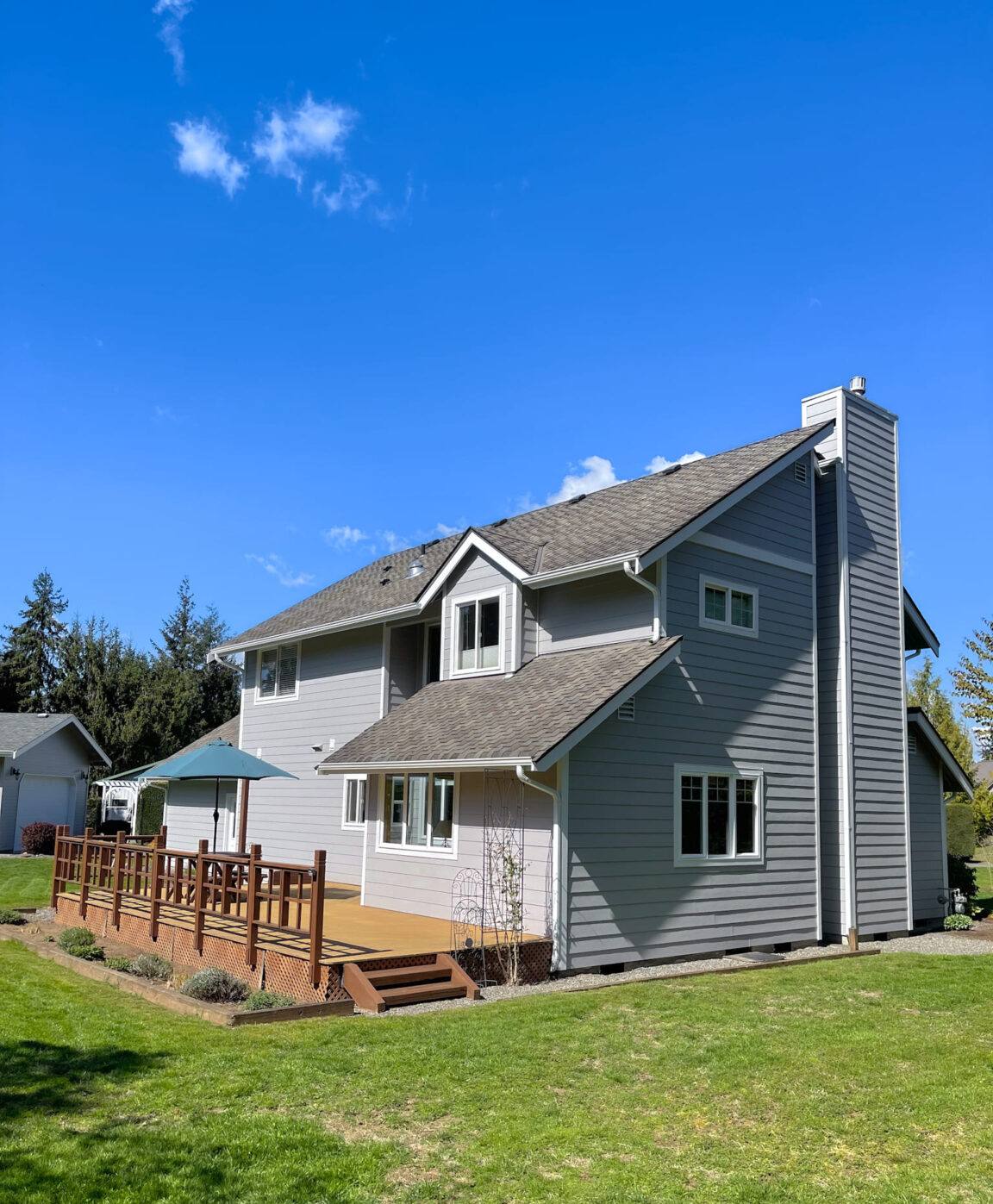
The Three Climate Factors That Actually Matter
Salt Air and Corrosion
Homes closer to the water deal with airborne salt that settles on exterior surfaces and accelerates corrosion of fasteners, trim, and any siding material with metal components or exposed seams. Over years, that exposure can degrade caulking, loosen trim, and create small gaps where moisture gets a foothold.
Driving Rain
This isn't gentle, straight-down rain. Storms coming off the water push rain sideways into wall assemblies, which means siding has to shed water at seams, laps, and penetrations — not just on the flat field of the wall. A siding system with weak lap performance or poor water-shedding detailing will eventually let moisture behind the cladding, and once that happens, the sheathing and framing behind it pay the price.
Moss and Prolonged Dampness
Skagit County's long moss season is a direct result of shade, humidity, and mild temperatures that let organic growth take hold on north-facing walls, under eaves, and anywhere airflow is limited. Moss and algae hold moisture against the siding surface for extended periods, which is hard on any material that isn't dimensionally stable or that absorbs water readily.
What Fiber Cement Needs to Get Right for This Environment
Fiber cement is a strong match for Fidalgo Island's climate when it's the right product, engineered for the region, and installed correctly. Three things matter most:
- Moisture resistance without wood's downsides. Fiber cement doesn't rot, swell, or provide a food source for organic growth the way wood-based products can.
- A factory finish that holds up to salt air and UV. Field-applied paint fails faster in coastal conditions; a baked-on factory finish resists fading and chalking far longer.
- Correct water management at every joint. Flashing, caulking, and gapping details have to account for wind-driven rain, not just vertical rainfall.
This is exactly why we install only James Hardie fiber cement siding and don't offer LP SmartSide, vinyl, Cemplank, Allura, primed spruce, or cedar. Each of those products has legitimate uses elsewhere, but for a Fidalgo Island exterior facing salt air, sustained rain exposure, and heavy moss pressure, we've standardized on the product line that gives homeowners the best combination of moisture performance, factory-applied finish durability, and a warranty backed by manufacturer engineering rather than field variables.
Why James Hardie for This Climate Specifically
James Hardie's HZ10 product line is engineered for cold, wet, freeze-prone climates like the Pacific Northwest, with moisture-resistant composition and installation specifications built around this kind of weather exposure. A few specifics that matter for an island property:
- Non-combustible core — relevant given the dry-season wildfire smoke and ember exposure that reaches Western Washington in late summer, even on the water.
- ColorPlus factory finish — a baked-on finish that resists the fading and chalking that salt air and UV accelerate on field-painted surfaces, and that doesn't require repainting on the same cycle as wood siding.
- Dimensional stability — fiber cement doesn't expand and contract the way wood or some composites do, which matters for keeping caulked joints intact through the wet season.
- Transferable warranty — backed by the manufacturer, not just the installer, which matters for resale on properties that change hands.
We're not going to tell you every other product on the market is bad — many have legitimate applications. What we will say is that after years of siding work in this specific climate, Hardie is what we're willing to put our name behind and what we install on our own standards.
How Siding Materials Compare for This Climate
| Factor | James Hardie Fiber Cement | Vinyl | Wood / Cedar |
|---|---|---|---|
| Moisture absorption | Very low | Low, but seams can trap moisture | High — absorbs and swells |
| Salt air resistance | Strong with factory finish | Can become brittle over time | Requires frequent maintenance |
| Moss/algae resistance | Good — non-organic material | Moderate | Poor — organic surface feeds growth |
| Fire resistance | Non-combustible | Melts/deforms under heat | Combustible |
| Finish longevity | 15+ years factory finish | Fades, doesn't repaint well | Repaint every 3-7 years |
What a Correct Fiber Cement Installation Involves
Fiber cement performs only as well as its installation. In a climate this demanding, cutting corners on details shows up fast — usually within one or two wet seasons. A correct job includes:
- Removal of existing siding and inspection of the sheathing underneath for hidden moisture damage.
- Repair or replacement of any compromised sheathing before new material goes up.
- Installation of a code-compliant weather-resistant barrier with proper lapping for drainage.
- Correct rainscreen or furring detail where called for, to let the wall assembly dry.
- Manufacturer-specified fastening, gapping, and clearance at grade, trim, and penetrations.
- Flashing at windows, doors, and roof intersections — the most common failure points in wind-driven rain.
- Caulking only where James Hardie specifications call for it, not as a substitute for proper flashing.
Skipping any one of these steps doesn't necessarily show up on install day. It shows up two or three winters later, when water that should have been shed at a lap joint or flashing detail has found its way behind the cladding instead.
Checklist: What to Confirm Before Hiring for a Fidalgo Island Siding Job
- Is the crew factory-trained or experienced specifically with James Hardie installation requirements?
- Will they inspect and address sheathing condition before installing new siding, not just cover it up?
- Do they detail for wind-driven rain at every lap, corner, and penetration — not just standard vertical rainfall?
- Is a rainscreen or drainage gap included where the wall assembly needs it?
- Does the estimate specify which HZ10 product and ColorPlus finish, not just "Hardie siding"?
- Is the manufacturer warranty transferable, and is that explained clearly?
Our Process on Fidalgo Island Jobs
We start with a walk-around of the exterior, paying particular attention to north- and shade-facing walls where moss pressure tends to be worst, and to any elevation with direct water exposure. From there we assess what's underneath the existing siding — sheathing condition drives real decisions about scope, not just the visible surface. We then put together a written scope specifying the exact Hardie product, finish, and installation details for the home, including any rainscreen or drainage requirements the wall assembly needs given its orientation and exposure.
During installation, we follow James Hardie's published fastening and clearance specifications rather than general best practices, because those specs are what keep the manufacturer warranty intact. We also pay close attention to grade clearance and trim details around the base of the home, since standing moisture and splash-back at ground level are common problems on island lots with limited drainage.
Cost Factors for Fiber Cement Siding on Fidalgo Island
| Factor | Why It Affects Cost |
|---|---|
| Sheathing condition | Hidden moisture damage found during tear-off adds repair scope |
| Home size and elevation complexity | More corners, gables, and penetrations mean more flashing and trim work |
| Rainscreen/drainage detailing | Additional labor and material for walls with heavy exposure |
| Product line and profile | Lap width, texture, and trim style affect material cost |
| Access and site conditions | Steep lots, limited staging area, and tree cover common on the island can add labor time |
We don't quote a number without seeing the home, but these are the variables that move a bid up or down, and we walk homeowners through each one before finalizing a scope.
Why Local Experience on Fidalgo Island Matters
A crew that regularly works Anacortes and the surrounding Skagit County waterfront knows which walls take the worst of the weather before they even inspect a property, and they know how to detail around the moss and moisture patterns specific to shaded, water-adjacent lots. That experience shows up in the details that matter most — where a rainscreen gap is worth the extra cost, how much clearance a wall needs at grade, and which elevations need extra attention to flashing. It's the difference between siding that looks right on install day and siding that's still performing correctly after five wet seasons on the island.
If you're weighing a siding replacement on Fidalgo Island, we're happy to walk the exterior with you, look at what's actually happening underneath the current siding, and put together a straightforward, no-pressure estimate for a correctly installed James Hardie system built for this climate.