 Anacortes Siding
 Similk Beach Sits Right at the Edge of Two Problems
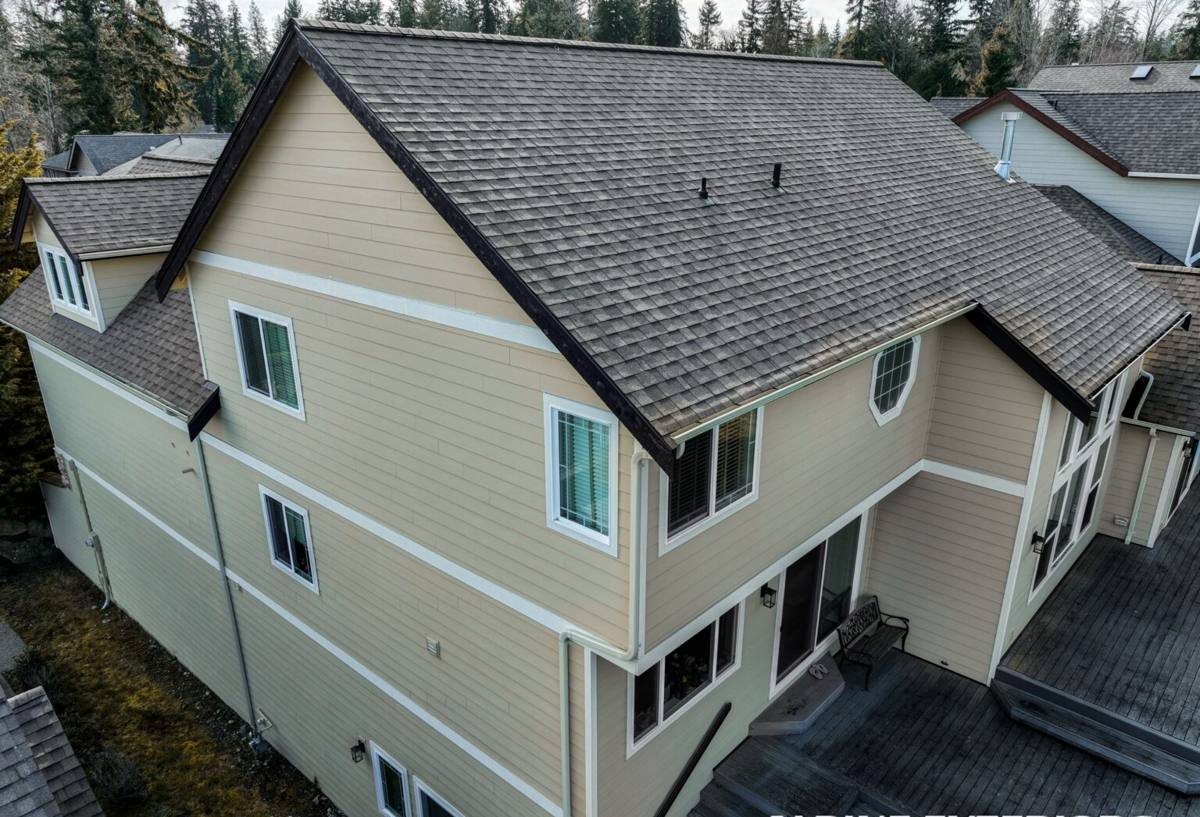
Homes around Similk Beach get a version of Skagit County weather that's harder on siding than most inland Anacortes lots. You're close enough to the water to catch salt-laden air moving off Similk Bay and the surrounding channels, and you're still squarely inside the long Pacific Northwest wet season that keeps exterior surfaces damp for months at a time. That combination — airborne salt plus sustained moisture — is exactly the mix that ages siding faster than manufacturers' glossy brochures suggest. Add in the tree cover common to the area, and you get shaded, slow-drying wall sections where moss and algae get a real foothold.
None of this means a home near Similk Beach needs anything exotic. It means the siding has to be a material and installation system that's actually built for sustained moisture exposure, not one that merely tolerates it in a lab test. That's the lens we use on every estimate out here.
What Salt Air and Moss Season Actually Do to Siding
Salt Air
Salt doesn't just sit on a wall — it's hygroscopic, meaning it pulls moisture out of the air and holds it against the surface it lands on. On some siding materials that means accelerated corrosion of fasteners and trim hardware, chalking or dulling of factory finishes, and faster breakdown of caulk and sealant joints. It's a slow, cumulative effect, which is why it's easy to underestimate until a home is 10-15 years old and the siding looks a decade older than that.
Moss and Algae Season
Western Washington's wet season generally runs from fall through spring, and on shaded or north-facing walls near Similk Beach that damp window can effectively stretch even longer. Siding that stays wet for extended stretches — especially anything with exposed wood fiber or a finish that traps moisture rather than shedding it — becomes a growth surface for moss, algae, and mildew. Beyond the cosmetic issue, sustained dampness against a wall assembly is the single biggest driver of rot, delamination, and paint failure in this region.
Driving Rain and Wind-Driven Wetting
Similk Beach's exposure means rain doesn't always fall straight down — wind off the water pushes it sideways into wall surfaces, seams, and trim details. That makes water management at the seams, laps, and penetrations just as important as the siding material itself. A great product installed with sloppy flashing and gapping details will still leak and fail early in this environment.
Why We Only Install James Hardie Fiber Cement Here
We don't install vinyl, LP SmartSide, primed spruce, cedar, or off-brand fiber cement products like Cemplank or Allura. That's not a marketing line — it's a standard we hold because of exactly the climate conditions Similk Beach homes deal with every year.
- Non-combustible core: Hardie's fiber cement doesn't rely on wood fiber or vinyl resin as its primary structure, so it doesn't feed a fire the way some alternatives can, and it holds up under UV and moisture without the softening or warping that plagues wood-based composite products in a wet climate.
- ColorPlus factory finish: The finish is baked on at the factory under controlled conditions, which gives better, more even adhesion than field-applied paint and holds color longer against salt exposure and UV than most site-painted products.
- HZ5 engineering: Hardie manufactures regional formulations, and the HZ5 line is engineered for wetter, harsher climates — which is the right specification for anything within reach of salt air and prolonged rain, including Similk Beach.
- Dimensional stability: Fiber cement doesn't swell and contract with moisture the way wood-based siding does, so caulked joints and butt seams stay tighter over time instead of opening up and letting water behind the cladding.
- Warranty structure: Hardie backs its product with a strong, transferable warranty when installed to spec — which matters on resale, and matters even more in a climate that's actively working against lesser materials.
We're not going to tell you vinyl or LP SmartSide are junk — they have legitimate uses in the right climate and price point. But we've made a professional call that for the moisture and salt exposure homes see near Similk Beach, fiber cement from a manufacturer with a climate-specific product line is the material we're willing to warranty our labor on.
What "Correct" Actually Looks Like on a Similk Beach Job
The material is only half the equation. A Hardie installation that's going to hold up against salt air and a long wet season needs these details done right, every time:
| Detail | Why It Matters Here |
|---|---|
| Weather-resistive barrier (housewrap) fully lapped and taped | Backstops any water that gets past the cladding during wind-driven rain events |
| Rainscreen or drainage gap behind siding | Lets any moisture that does get behind the boards dry out instead of sitting against the wall sheathing |
| Factory-primed cut edges re-sealed on site | Cut ends are the most vulnerable spot for water intrusion; every field cut needs sealing |
| Correct fastener type and spacing | Salt-air corrosion resistant fasteners driven per Hardie spec prevent streaking and loosening over time |
| Proper flashing at windows, doors, and penetrations | These are the leak points during sideways, wind-driven rain off the water |
| Minimum ground and roofline clearances maintained | Keeps siding out of standing moisture and splashback zones |
Skip any one of these and you can still end up with moisture problems behind even the best siding material on the market. This is where hiring based on brand name alone falls short — installation quality is what actually determines whether the material performs for 30+ years or 10.
Our Process for Similk Beach Homes
1. On-Site Assessment
We look at your home's specific exposure — how close you are to open water, how much tree cover shades the walls, which elevations take the worst of the wind-driven rain — and use that to shape the plan, not a one-size-fits-all spec.
2. Tear-Off and Sheathing Check
Existing siding comes off and we inspect the sheathing underneath for any moisture damage or rot that needs addressing before new material goes up. Covering a hidden problem is how good siding jobs go bad.
3. Weather Barrier and Drainage Plane
We install a fully lapped weather-resistive barrier and drainage gap sized for the site's moisture exposure, giving the wall assembly a way to dry rather than trap water.
4. Hardie Installation to Manufacturer Spec
Fasteners, spacing, clearances, and cut-edge sealing are all done per Hardie's published installation guidelines — not shortcuts, because those specs exist for climates exactly like this one.
5. Trim, Caulking, and Final Detailing
Seams, penetrations, and trim transitions get sealed with products rated for sustained wet exposure, and we walk the whole job checking every lap and joint before calling it done.
Maintenance Homeowners Near Similk Beach Should Actually Expect
Correctly installed Hardie siding is low-maintenance, not no-maintenance. Here's a realistic checklist:
- Rinse salt residue and general grime off the siding once or twice a year, especially on water-facing elevations
- Check and recaulk any joints or trim seams showing gaps, typically every several years
- Trim back vegetation and tree branches that keep wall sections shaded and slow to dry
- Address any moss or algae growth on shaded walls promptly with a gentle wash rather than letting it establish
- Inspect after major windstorms for any loosened trim or fastener issues
Why Local Experience with This Exact Area Matters
A crew that's worked Similk Beach and the surrounding Anacortes shoreline knows which elevations of a house take the worst wind-driven rain, how far salt exposure realistically reaches inland from the water, and where moss problems tend to show up first on a given lot orientation. That's the kind of judgment that doesn't come from a spec sheet — it comes from having installed and later revisited siding jobs in this specific stretch of Skagit County. It changes decisions like where to add extra flashing attention, which HZ5 detailing to prioritize, and how aggressive to be about ventilation and drainage gap sizing.
Cost Factors for a Similk Beach Fiber Cement Project
| Factor | Impact on Scope/Cost |
|---|---|
| Home size and number of stories | More surface area and access complexity (scaffolding, lifts) increase labor |
| Condition of existing sheathing | Rot or moisture damage found during tear-off adds repair scope |
| Trim and architectural detail level | Corner boards, window trim, and accent details add material and labor time |
| Siding profile chosen (lap, shingle, panel) | Different Hardie profiles vary in material cost and install time |
| Site exposure and access | Waterfront or wooded lots can add setup complexity and protective measures during install |
Every home and lot is different, so exact numbers only come from an on-site look — but these are the drivers that move a quote up or down.
If your Similk Beach home's siding is showing moss staining, chalking, soft spots, or is simply old enough that you're wondering if it's worth another repaint, we'll come take a look and give you a straight, no-pressure estimate on what a correctly installed James Hardie system would take and cost. Use the form below to get started.