 Anacortes Siding
 Windows Built for the Ship Harbor Waterfront
Homes near Ship Harbor sit close enough to the water that the weather they deal with is different from a house a few miles inland in Skagit County. Salt-laden air moves in off Rosario Strait, wind-driven rain hits west- and south-facing walls hard during fall and winter storms, and the region's long wet season keeps humidity and moss pressure high for months at a time. Windows in this kind of exposure work harder than windows almost anywhere else in the county, and they show wear differently too — hardware corrodes faster, seals get tested more often, and any gap in the installation flashing eventually finds its way into the wall.
When we talk about "energy-efficient windows" for a Ship Harbor property, we're not just talking about a glass package rating on a spec sheet. We're talking about a window unit and an installation method that can shed salt spray, resist wind-driven rain intrusion, and keep performing after a decade of Anacortes weather instead of just performing well on install day.
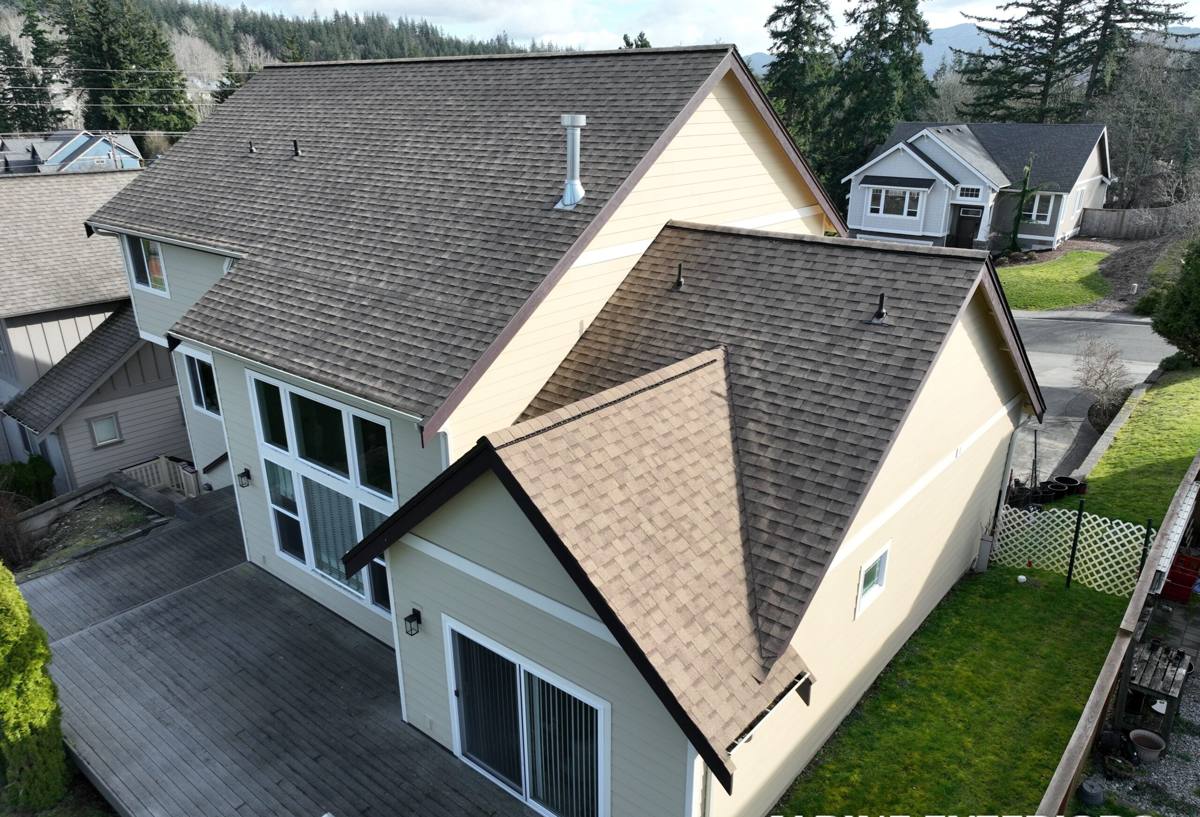
What Salt Air and Driving Rain Actually Do to Windows
It helps to understand the specific failure modes we're designing against, because they shape every decision in the job — from frame material to flashing detail.
Salt Air and Corrosion
Airborne salt is conductive and mildly corrosive. Over years of exposure it attacks unprotected fasteners, cheap hinge hardware on operable sashes, and weep-hole screens. Aluminum without a marine-grade finish can pit and chalk faster near the water than it would a few miles inland. This is why hardware selection and finish quality matter more here than in a typical suburban install.
Wind-Driven Rain
A window doesn't have to leak through the glass or the sash to cause a problem — most water intrusion happens at the perimeter, where the window unit meets the rough opening in the wall. Wind-driven rain pushes water sideways and upward under normal gravity-drainage assumptions, which means flashing details that would be adequate on a calm inland wall can fail on an exposed Ship Harbor elevation.
Moss and Sustained Moisture
Anacortes' long wet season keeps siding, trim, and window sills damp for extended stretches. Moss and algae growth on sills and lower trim isn't just cosmetic — trapped moisture against wood trim or a poorly sealed frame accelerates rot and can hide a slow leak behind healthy-looking paint for a long time before it's noticed.
What "Energy-Efficient" Should Mean for This Location
Energy efficiency and weather resistance are related but not identical, and a Ship Harbor home benefits from both being addressed together.
- Low-E glass coatings reduce heat loss in winter and heat gain in summer, which matters for comfort near large window walls that face the water and take direct exposure.
- Multi-point locking hardware compresses the sash evenly against the weatherstripping, which improves both the air seal and the water seal — important on elevations that take wind-driven rain.
- Warm-edge spacers in the glass unit reduce condensation risk at the edge of the glass, which is where humid coastal air tends to show moisture problems first.
- Corrosion-resistant hardware and fasteners keep the operating mechanism working smoothly for years instead of seizing up or rusting through in a salt-air environment.
- Frame material chosen for the exposure — vinyl and fiberglass frames generally resist salt-air corrosion and moisture-driven rot better than untreated wood in this kind of setting, though well-maintained wood-clad options can still work with the right upkeep commitment.
A window that's efficient on paper but poorly sealed at the rough opening will still let in moisture and drafts. The performance rating only means something if the installation delivers on it.
Our Installation Process
The install itself is where most window performance is won or lost, especially on an exposed site. Here's how we approach it.
1. Assessment and Measurement
We start by evaluating the existing opening — checking the condition of the framing, sill, and any existing flashing or sheathing paper, since a Ship Harbor home that's taken years of driving rain may have hidden moisture damage that needs to be addressed before a new window goes in. We take precise measurements for a proper fit rather than relying on the old unit's rough opening as a given.
2. Removing the Old Window and Inspecting the Opening
Once the old unit is out, we inspect the sill and jack studs for rot or soft wood. This is often the point where a hidden leak from years of undersized or poorly flashed openings gets found — and it's far better to catch it now than to seal a new window over a problem that will keep growing behind the wall.
3. Flashing and Weather Barrier Detail
This is the step that matters most for a wind-driven-rain exposure. We integrate sill pan flashing, side flashing, and head flashing in the correct shingle-lap order so that any water that does get past the window sheds down and out, not into the wall cavity. On elevations that take direct weather off the water, we pay particular attention to head flashing and kick-out details.
4. Setting and Shimming the Window
The unit is set level, plumb, and square, and shimmed at the manufacturer's specified points so the frame isn't racked or under stress — a racked frame won't seal or operate correctly even if every other step was done right.
5. Sealing and Insulating
We seal the exterior perimeter with a compatible sealant rated for the siding material, and insulate the gap between the frame and the rough opening with a low-expansion foam or backer rod and sealant, avoiding high-pressure foam that can bow a vinyl frame.
6. Interior and Exterior Trim
Trim is reinstalled or replaced, with attention to keeping any wood trim components properly primed and sealed on all sides — end grain is where rot usually starts, and it's easy to miss if you're not looking for it.
7. Final Check
We check operation, locking hardware engagement, and visually confirm the seal line before calling the job done.
Signs a Ship Harbor Home May Need New Windows
- Visible fog or moisture between the panes of a double- or triple-glazed unit — a sign the seal has failed
- Drafts felt near the frame even when the window is fully latched
- Wood sills that feel soft, spongy, or show paint failure and moss growth that keeps coming back
- Hardware that's stiff, corroded, or difficult to lock fully
- Condensation forming on the interior glass or frame during cold, wet weeks
- Visible daylight or gaps around the frame from outside
- Noticeably higher heating costs compared to a similarly sized home nearby
Comparing Frame Materials for a Salt-Air, High-Rain Exposure
| Frame Material | Salt-Air / Corrosion Behavior | Moisture Behavior | Maintenance |
|---|---|---|---|
| Vinyl | Does not corrode; UV-stable finishes hold up well | Does not absorb moisture or rot | Low — occasional cleaning |
| Fiberglass | Excellent corrosion resistance; dimensionally stable | Does not absorb moisture; handles temperature swings well | Low |
| Aluminum (marine-grade finish) | Good if properly coated; watch for pitting on lower-grade finishes | Does not rot but can transmit more cold/condensation without thermal breaks | Moderate |
| Wood / wood-clad | Cladding protects the exterior face; exposed wood is vulnerable | Requires intact seals and finish to prevent rot, especially at the sill | Higher — periodic inspection and refinishing |
There's no single "correct" material for every home — architectural style, budget, and how much upkeep an owner wants to commit to all factor in. Our job is to walk through those trade-offs honestly rather than push one option, and to make sure whatever material is chosen gets installed in a way that respects the site's exposure.
Cost Factors to Expect
Every home and opening is different, so we don't quote sight unseen, but the main variables that move the price on a Ship Harbor window project are generally:
| Factor | Why It Matters |
|---|---|
| Number and size of openings | More and larger windows mean more material and labor |
| Frame material | Vinyl, fiberglass, aluminum, and wood-clad options carry different material costs |
| Condition of the existing opening | Rot repair or reframing adds time and material beyond a straightforward swap |
| Glass package | Double vs. triple glazing, Low-E coatings, and gas fill affect both cost and performance |
| Exposure and access | Upper-story or hard-to-access openings on exposed elevations take more time to flash and seal correctly |
| Trim and finish work | Matching existing trim or upgrading damaged trim adds scope |
We provide a written, itemized estimate after seeing the actual openings in person, so you know exactly what you're paying for before any work starts.
Why a Local Anacortes Crew Matters for This Job
Window installation looks similar everywhere on the surface, but the details that actually keep water out change with the site. A crew that regularly works homes around Ship Harbor and the rest of Anacortes already knows which elevations tend to take the worst of the weather, what kind of flashing detail holds up against wind-driven rain off the water, and how quickly moss and moisture problems can develop in this climate if a seal isn't done right the first time. That familiarity shows up in fewer callbacks and windows that are still performing well years after install, not just on the day the crew leaves.
It also means we're accountable locally — we're not a crew passing through Skagit County on a regional route. If a question comes up after the job, we're the same people you can reach.
Ready for an Estimate?
If you're noticing drafts, fogged glass, or sticky hardware on windows near Ship Harbor, or you're planning ahead for a renovation, we're glad to take a look. We offer free, no-pressure estimates — we'll assess your current windows, talk through material and budget options honestly, and give you a clear, written quote with no obligation. Use the form below to get started.