 Anacortes Siding
 Roofing in Edison: A Different Set of Demands
Edison sits low and close to the water in Skagit County, surrounded by open farmland, tree-lined roads, and enough marine air off the bay to keep everything perpetually damp for a good chunk of the year. That combination is harder on a roof than most homeowners realize. It's not one big storm that ruins a roof out here — it's the slow, steady accumulation of moisture, salt, and shade that never fully lets a roof dry out between rain events.
A roof built for a drier inland climate doesn't hold up the same way in this part of Skagit County. Underlayment choices, ventilation, flashing details, and even the pitch of certain roof sections all need to account for driving rain coming off the water and a moss season that can run most of the year in shaded spots. When we install a new roof in Edison, we're not just putting shingles on plywood — we're building a system meant to shed water fast and dry out quickly, because those two things determine how long the roof actually lasts.
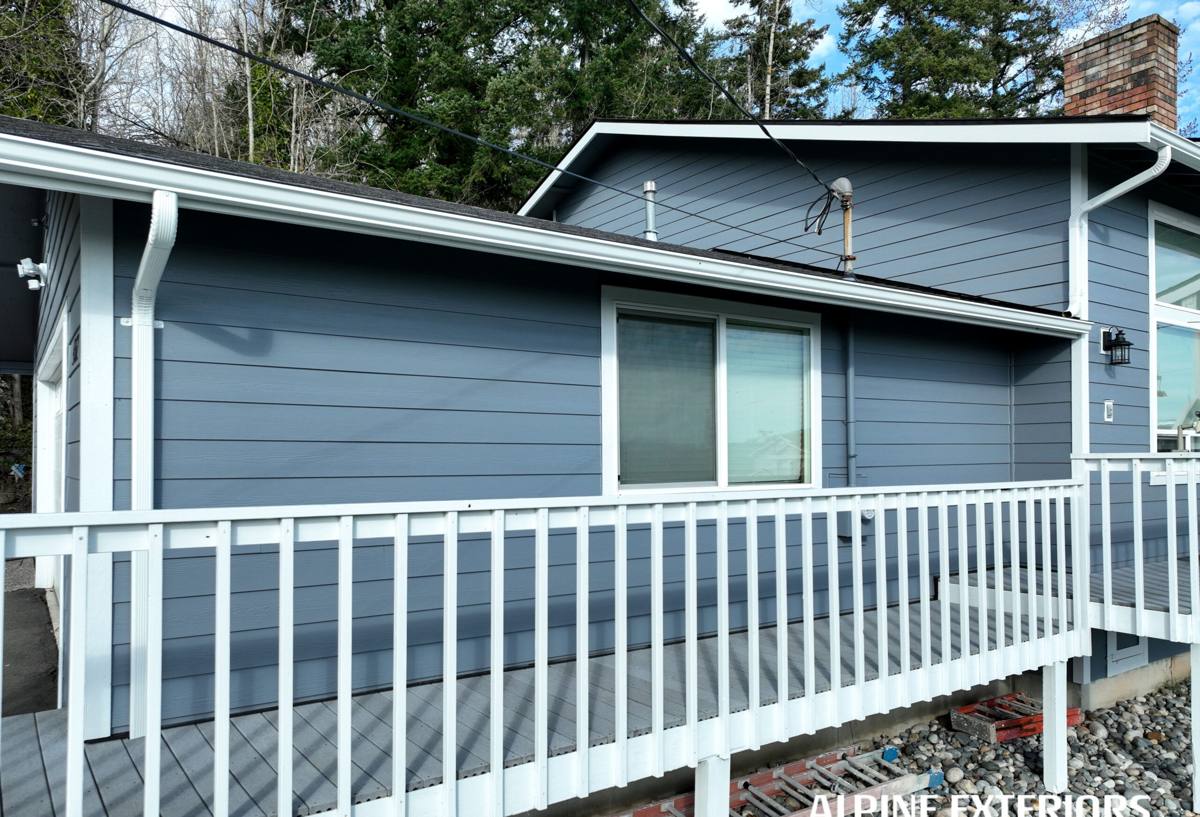
How the Local Climate Attacks a Roof
Three things do most of the damage to roofs in this area, and they work together rather than separately:
- Salt-laden air from the nearby bay accelerates corrosion on exposed metal — nails, flashing, vents, and fasteners — especially on roofs facing open water or wind.
- Driving rain pushed sideways by wind finds every weak seam, under-lapped shingle, and poorly flashed penetration. Roofs here need more forgiveness in the details than a roof in a calmer climate.
- Moss and moisture take hold anywhere shade and organic debris collect — under tree cover, in valleys, and on north-facing slopes. Moss holds water against the roofing material, lifts shingle edges, and shortens the life of almost any roofing product if it's left unmanaged.
None of these are dramatic on their own. Together, over ten or fifteen years, they're the reason a roof that should last two decades starts failing in twelve.
Signs an Edison Home Needs a New Roof
Roofs rarely fail all at once — they give warnings first. If you're seeing more than one or two of these, it's worth having someone take a real look rather than patching the same spot again:
- Granules collecting in gutters or at downspout outlets
- Shingles that are cupping, curling at the edges, or visibly bald in patches
- Moss or algae streaking that keeps coming back after cleaning
- Soft or spongy decking felt underfoot in the attic or during an inspection
- Daylight visible through the roof deck from inside the attic
- Water stains on interior ceilings, especially near valleys or chimneys
- Flashing that's rusted, lifted, or separating from the roof plane
- A roof approaching or past 20-25 years old, regardless of visible damage
Any one of these can usually be repaired. Several at once, or repairs that keep failing in the same area, generally means the underlying system has run its course.
Choosing the Right Roofing System for This Climate
There isn't one "best" roofing material for every home — it depends on the home's exposure, roof pitch, tree cover, and your maintenance appetite. Here's how the common options actually perform under Skagit County's coastal, moss-heavy conditions:
| Material | Moisture & Moss Behavior | Maintenance | Typical Lifespan |
|---|---|---|---|
| Architectural asphalt shingle | Good with proper underlayment and algae-resistant granules; still needs periodic moss removal in shaded areas | Low to moderate | 25-30 years |
| Standing seam metal | Sheds water and resists moss buildup better than any shingle product; needs quality coated fasteners near salt air | Low | 40-50+ years |
| Synthetic/composite shingle | Strong moisture resistance, doesn't absorb water the way organic materials can | Low to moderate | 30-40 years |
| Cedar shake | Attractive but holds moisture and is highly prone to moss and rot in shaded, damp conditions without diligent upkeep | High | Varies widely with maintenance |
We'll talk through what's realistic for your specific roof and budget rather than pushing one product. For homes tucked under trees or facing prevailing wind off the water, we often steer the conversation toward metal or a quality architectural shingle with solid ventilation — not because other materials can't work, but because they demand more upkeep to perform the same way here.
A Note on Cedar Shake
We understand the appeal of cedar shake's look, especially on older or farmhouse-style homes common in this area. Our concern isn't the product itself — it's that in a climate this damp, cedar needs consistent treatment and ventilation to avoid moss intrusion and rot, and that maintenance burden is significant. We'll install it if that's what you want and explain exactly what upkeep it requires, but we want you going in with the full picture.
What a Correct Installation Actually Involves
The roofing material homeowners see is maybe 20% of what determines how long a roof lasts. The rest is in details most people never see once the job is done:
- Full tear-off and deck inspection — replacing any soft, rotted, or delaminated sheathing before anything new goes down
- Ice-and-water shield at eaves, valleys, and around every penetration, not just the code minimum
- Proper underlayment rated for extended wet exposure, since a roof here doesn't always dry out on the manufacturer's timeline
- Balanced intake and exhaust ventilation so moist air actually leaves the attic instead of condensing against the deck
- Corrosion-resistant flashing and fasteners around chimneys, skylights, and wall intersections — the single most common source of leaks
- Correct nailing pattern and exposure per manufacturer spec, which matters more in high-wind, driving-rain conditions than in calmer climates
Skip any one of these and the roof may look fine for a few years while failing quietly underneath. This is exactly where cutting corners costs homeowners the most, because the damage isn't visible until it's already reached the decking or the interior.
Our Process, Start to Finish
- On-site inspection — we look at the existing roof, attic ventilation, decking condition, and any moss or moisture patterns specific to your property before recommending anything.
- Honest written estimate — material options, what your roof actually needs, and a clear scope of work, no pressure to decide on the spot.
- Scheduling around the weather — we plan installs with realistic weather windows in mind rather than rushing a tear-off into an open roof deck ahead of rain.
- Tear-off and deck repair — old material removed, decking inspected and replaced where needed, debris hauled off site.
- Installation — underlayment, flashing, ventilation, and roofing material installed to manufacturer spec and matched to this climate's demands.
- Final walkthrough — we go over the finished roof with you, including care and moss-prevention guidance specific to your property's sun and tree exposure.
Ventilation and Moss Management Matter as Much as the Roofing Material
A brand-new roof installed over poor attic ventilation will grow moss and shorten its own lifespan almost as fast as an old one. Moisture that can't escape the attic condenses against the underside of the deck, which keeps the roofing material damp from below even when the surface looks dry. We size and balance ventilation to the home rather than treating it as an afterthought, and we'll flag existing ventilation problems even on jobs where we're not the ones who caused them.
For moss specifically, prevention beats removal. Proper granule selection, keeping overhanging branches trimmed back where practical, and simple annual debris clearing do more to extend a roof's life in this area than any one-time treatment applied after moss has already taken hold.
Why a Crew That Already Works This Area Matters
Roofing crews that mostly work drier, inland regions tend to under-detail the parts of the job that matter most here — ventilation balance, flashing at wall transitions, and underlayment choices suited to extended damp exposure. We work throughout Skagit County and see how roofs in Edison's specific conditions age over time, which shapes how we detail every new install: more attention to valley and eave protection, ventilation sized for consistently damp air, and material choices that hold up against salt exposure and shade-driven moss rather than just looking good on installation day.
That local pattern recognition is the difference between a roof that meets code and a roof that's actually built for where it sits.
Get a Straightforward Estimate
If your roof is showing its age or you're just weighing options before it becomes urgent, we're happy to take a look and give you an honest read on where things stand — no pressure, no inflated urgency. Use the form below to request a free estimate for new roof installation on your Edison home.