 Anacortes Siding
 Why Decks Around Edison Wear Out Faster Than the Manual Says
Edison sits low, close to the water, and squarely in the path of weather that comes straight off the Salish Sea. That combination is hard on a deck in ways that a lot of manufacturer warranties and generic maintenance guides don't account for. Salt-laden air corrodes fasteners and hardware faster than it would twenty or thirty miles inland. Wind-driven rain gets pushed sideways under railings and into ledger connections that were only ever designed to shed water falling straight down. And the long, damp stretch from fall through spring keeps every horizontal surface wet enough, long enough, for moss and algae to take hold and start working their way into the wood grain.
None of that means a deck in this part of Skagit County is doomed — it means it needs to be built and replaced with those specific conditions in mind, not with a one-size-fits-all approach borrowed from a drier climate.
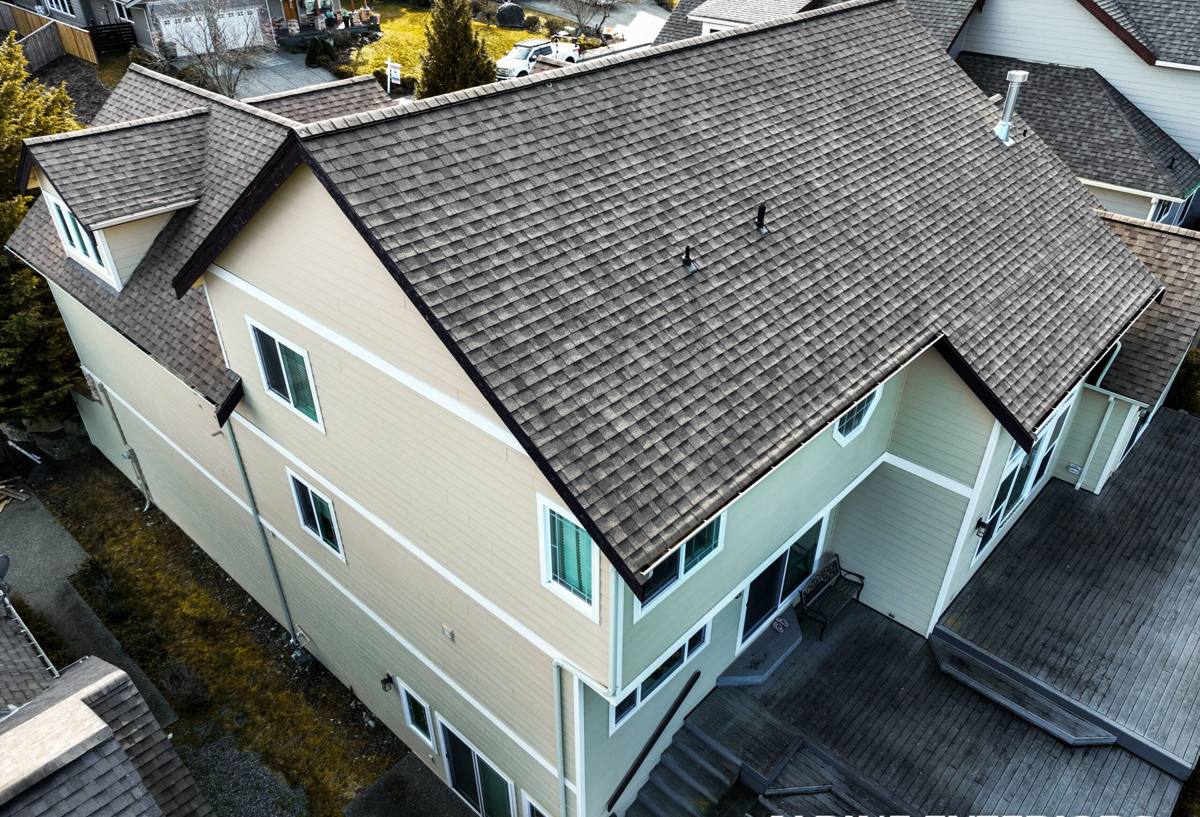
Signs a Deck Has Crossed From "Repairable" to "Replace It"
Homeowners often call us thinking they need a few boards swapped, and sometimes that's true. But there are signs that point to a structural problem underneath, not a cosmetic one:
- Boards that feel spongy, springy, or noticeably softer in one area than the rest of the deck
- Rust streaks bleeding out from screw heads or joist hangers
- Visible gaps, soft wood, or dark staining where the deck attaches to the house (the ledger board)
- Posts that are soft, cracked, or crumbling at the point where they meet the ground or a concrete footing
- Noticeable bounce or movement when you walk across the deck or lean on the railing
- A railing system that doesn't feel solid when you push on it — this is a safety issue, not a cosmetic one
- A deck built more than 20-25 years ago that has never had its structural connections inspected
Any one of these on its own might be a repair. Two or three together, especially involving the ledger board or posts, usually means the frame has been compromised and patching the surface just delays a bigger problem.
What a Correct Deck Replacement Actually Involves
Ledger Board and Flashing
This is where most deck failures start, and it's the single most important detail on a coastal rebuild. The ledger board — the piece that bolts the deck to the house — has to be properly flashed so water is directed out and away from the house framing, not trapped behind the board where it can rot both the deck and the wall structure it's attached to. In a climate with this much sustained rain, corner-cutting here shows up as damage within a few years, not decades.
Footings and Framing
Footings need to be sized and set to current code depth, and posts need proper post bases that hold the wood up off concrete and standing water rather than sitting directly on it. Joists and beams should be sized for the actual span and load, not just matched to whatever was there before — older decks were frequently under-built by today's standards.
Fasteners and Hardware
This is the detail that separates a deck that lasts from one that starts showing rust streaks in year two. In an environment with regular salt air, we use fasteners and structural hardware rated for corrosion resistance — stainless steel or heavy-duty coated hardware rather than standard galvanized products that were never intended for a marine-influenced climate.
Decking Material Selection
Whatever surface material gets chosen has to handle sustained moisture and a long moss season without becoming a slip hazard or a rot problem within a few seasons. We'll walk through the honest trade-offs of each option below rather than pushing one product as a universal answer.
Comparing Decking Materials for This Climate
| Material | Upfront Cost | Maintenance Needed | Moisture & Moss Behavior |
|---|---|---|---|
| Pressure-treated wood | Lowest | Annual cleaning, periodic sealing/staining | Prone to moss and graying without upkeep; can rot at fastener points if not sealed |
| Cedar | Moderate | Regular sealing to hold color and resist moisture | Naturally more rot-resistant than treated pine, but still needs upkeep in constant damp |
| Composite decking | Higher | Occasional washing, no staining or sealing | Won't rot, but can develop surface moss/algae film if never cleaned in shaded, damp spots |
| PVC decking | Highest | Lowest — periodic washing only | Fully moisture-proof surface; best resistance to moss taking hold, easiest to keep clean |
There's no single "correct" choice here — it depends on your budget, how much maintenance you're willing to do, and how shaded or exposed the deck location is. A deck tucked under trees in a damp corner of the yard behaves very differently than one out in open wind and sun, even on the same property.
Permits and Code Considerations
Deck replacement in unincorporated Skagit County typically requires a building permit, especially when the ledger connection, footings, or framing are being redone rather than just the surface boards. This isn't paperwork for its own sake — inspections at the framing stage catch ledger and footing problems before they're buried under decking, which is exactly when they're cheapest and easiest to fix. Guardrails, baluster spacing, and stair details also have to meet current residential code, which has gotten more specific over the years than what many older decks in this area were originally built to. Part of doing a replacement right is bringing the whole structure up to current code, not just the parts a homeowner happens to notice.
Our Process for a Deck Replacement in Edison
- On-site assessment — we look at the ledger connection, posts, footings, and framing, not just the surface, and tell you honestly whether you're looking at a repair or a full replacement
- Written scope and estimate — clear on what's being removed, what's being rebuilt, and what materials are included, before any work starts
- Permitting — we handle the permit application and coordinate the required inspections with the county
- Tear-off and structural rebuild — old decking, framing, and any compromised ledger or posts come out; the frame is rebuilt to current code with corrosion-resistant hardware throughout
- Decking and railing installation — installed to manufacturer spec if it's a composite or PVC product, since improper spacing or fastening is what voids warranties on those materials
- Final walkthrough — we go over the finished deck with you, including basic maintenance guidance specific to the material you chose
What to Ask Before Hiring Anyone for This Job
A deck is a structural project with real safety implications, not just a cosmetic upgrade. Before you hire anyone, it's worth asking:
- Are you licensed and bonded to do this work in Washington State?
- Will you pull the required building permit, or is that left to me?
- What hardware and fasteners will you use, and are they rated for a coastal or marine-influenced environment?
- How will the ledger board be flashed to keep water out of the house framing?
- What's included in the written estimate, and what would count as a change order?
- Can you walk me through the difference in long-term maintenance between the material options?
A contractor who answers these clearly and specifically, without deflecting, is generally a good sign. Vague answers about hardware or flashing are worth pausing on.
Why It Matters That We Already Work in Edison
A crew that regularly works this stretch of Skagit County already knows how the local weather pattern behaves — which corners of a property tend to hold moisture longest, how fast moss re-establishes on a north-facing deck near tree cover, and which fastener and flashing details actually hold up here versus what looks fine on paper. That local pattern-recognition shows up in fewer callbacks and a deck that's built for the conditions it will actually face, not just the conditions in a manufacturer's install guide written for a different climate. It also means faster response if a storm causes damage or if something needs a look before it becomes a bigger repair.
Keeping a New Deck in Good Shape Once It's Built
Whatever material you choose, a few habits go a long way in this climate: keep gutters and downspouts clear so water isn't dumping onto or near the deck, sweep leaves and debris off the surface before they trap moisture underneath, and do an annual look at the railing and stair connections for any looseness. Wood decks need their sealer or stain reapplied on a regular schedule; composite and PVC decks mainly just need an occasional wash to keep the surface from staining or hosting a moss film in shaded spots.
If your deck in Edison is showing soft spots, rust stains, or just feels older than it should, we're happy to come take an honest look. There's no cost and no pressure to move forward — just a straight answer on whether you're looking at a repair or a replacement, and what that would involve. Use the form below to request a free estimate.