 Anacortes Siding
 Deck Repair Built for Mount Vernon's Climate, Not a Generic Fix
Mount Vernon sits in the Skagit Valley, close enough to the water and the delta flats that homes here deal with a specific combination of weather: salty marine air drifting in off the Sound, long stretches of driving rain through fall and winter, and a moss season that can run from October well into spring. A deck built or repaired without that combination in mind will fail faster than the same deck built the same way somewhere drier and further inland. We work on decks throughout the Anacortes and Mount Vernon area regularly, and the patterns we see here are consistent enough that we can usually tell what's wrong with a deck before we finish walking around it.
This page is specifically about deck repair for Mount Vernon homes — what tends to go wrong, what a repair should actually include, and how to tell the difference between a deck that needs patching and one that's telling you it's done.
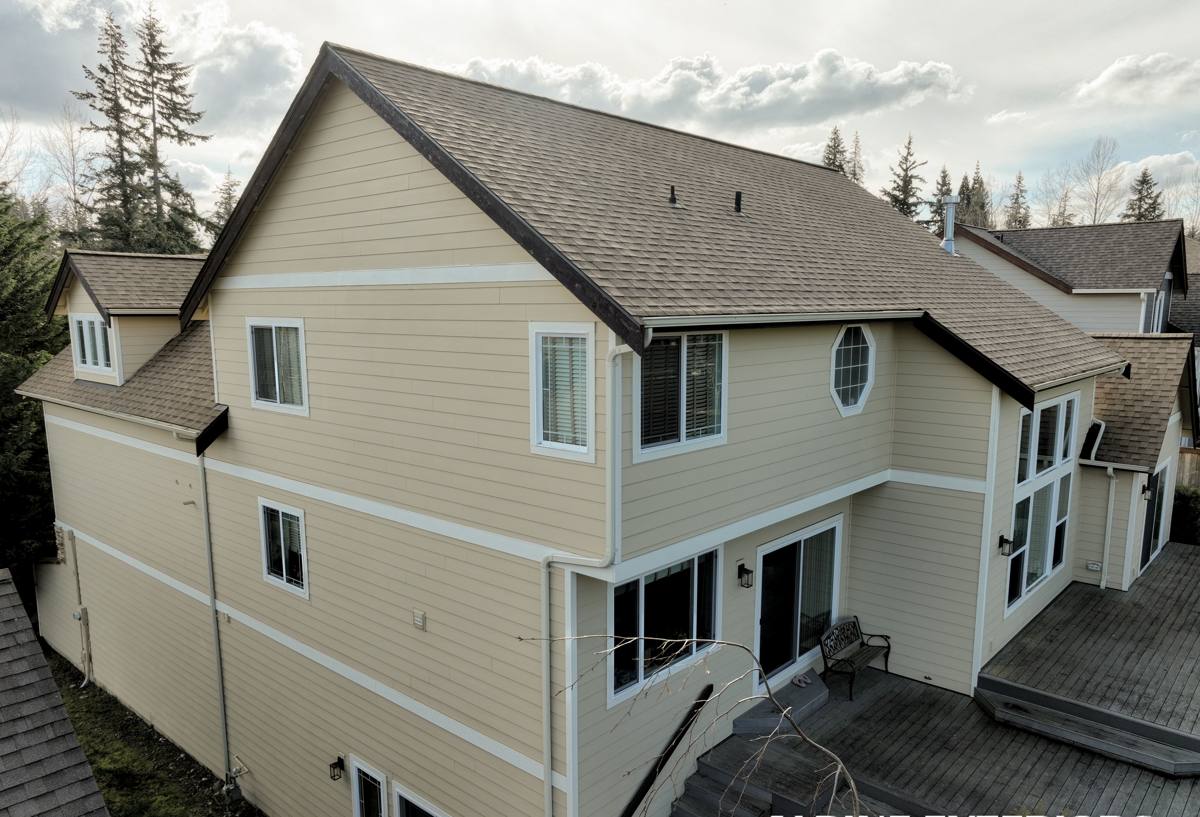
What the Local Climate Actually Does to a Deck
It helps to understand the mechanism, not just the symptom. Three things are working against a deck in this part of Skagit County, and they compound each other.
Salt Air and Metal Fasteners
Even a few miles inland from the water, airborne salt accelerates corrosion on anything metal — nails, screws, joist hangers, bolts. Corroded fasteners lose holding strength quietly, from the inside, long before rust is visible on the surface. A deck can look structurally fine and still have fasteners that have lost a meaningful percentage of their grip.
Driving Rain and Water Intrusion
Rain here doesn't just fall straight down — wind-driven rain gets pushed sideways into joints, under ledger boards, and behind flashing that isn't detailed correctly. Wood doesn't need standing water to rot; it just needs repeated wetting and drying cycles in a spot that never fully dries between storms. That's exactly what a long Pacific Northwest rain season produces.
Moss and Trapped Moisture
Moss doesn't just look bad — it holds moisture directly against decking boards and blocks airflow, so wood underneath a moss patch stays damp far longer than exposed wood nearby. On boards with any horizontal grain or checking, that constant dampness is where rot usually starts.
None of these three problems are dramatic on their own. Together, over several seasons, they're the reason a deck that's only 10-15 years old can already have real structural issues in Mount Vernon, even if it would have another decade of life somewhere drier.
Signs a Mount Vernon Deck Needs Repair
Some of these are obvious once you know to look for them. Others hide underneath the deck or under boards that still look okay from above.
- Soft or spongy spots when you walk across the decking, even small ones
- Rust streaking below joist hangers or around fastener heads
- Gaps or movement where the ledger board attaches to the house
- Persistent moss growth in the same spots every year, even after cleaning
- Railing posts that flex or wiggle more than they used to
- Discoloration or dark staining on the underside of the deck, visible from below
- Stairs that feel less solid than the deck itself
- Standing water that takes more than a day to dry after rain
Any one of these by itself might be minor. Two or three together, especially near the ledger connection or stairs, usually mean it's time for a real inspection rather than a surface patch.
What a Correct Repair Actually Involves
A lot of deck "repairs" amount to replacing a few visibly bad boards and calling it done. That fixes the symptom but not the cause, and in this climate the same failure tends to come back within a season or two. A repair worth paying for addresses the structure underneath the decking, not just what's visible from the top.
Ledger and Flashing
The ledger board — where the deck attaches to the house — is the single most important connection on the whole structure, and it's also where water damage is most common and most serious, because it's tied directly into the house framing. Correct flashing here isn't optional trim; it's what keeps water from working its way behind the ledger and into the rim joist or the house wall itself.
Joists and Framing
We check joists for soft spots, especially near joist hangers and anywhere water has been pooling. Sistering a joist (bolting a new piece alongside a damaged one) is often more honest and durable than trying to patch a joist in place.
Fasteners and Hardware
Given the salt air issue described above, we replace corroded hardware with fasteners and hangers rated for coastal or treated-lumber exposure, not standard interior-grade hardware. This is a small material cost difference that matters a lot over a 10-year span.
Decking and Stairs
Individual boards get replaced where rot, cupping, or splitting has actually compromised them — not automatically across the whole deck. Stairs get the same structural scrutiny as the deck itself, since they take concentrated foot traffic and are often the first thing to loosen.
Repair vs. Full Replacement — How We Help You Decide
This is the question almost every homeowner has, and the honest answer depends on what's damaged and where. The table below is a general guide, not a diagnosis — every deck gets its own inspection before we recommend either path.
| Factor | Repair usually makes sense | Replacement usually makes sense |
|---|---|---|
| Ledger board condition | Solid, properly flashed | Soft, rotted, or poorly flashed originally |
| Number of affected joists | One or two isolated joists | Widespread soft spots across the frame |
| Age of structure | Under 15 years, built to code | Older, unknown build quality, or undersized framing |
| Decking material | Boards fail individually over time | Whole surface cupping, splitting, or delaminating |
| Railings and stairs | Structurally sound, cosmetic wear only | Loose posts, failing connections |
| Your plans for the deck | Keeping current size and layout | Wanting a different footprint, size, or material |
In practice, a lot of decks fall somewhere in between — solid framing but decking that's had it, or a good deck surface sitting on a ledger connection that needs to be redone properly. We'll tell you plainly which category yours falls into and why, including when a repair is the more sensible choice even if a full rebuild would be more profitable for us.
How Our Process Works
Because we work in the Mount Vernon and greater Anacortes area regularly, we're not guessing at what a first look should cover. The process is straightforward:
- Walk the deck top and bottom — we check from underneath whenever access allows, since that's where early rot and rust show up first
- Test the ledger connection and key structural points — probing for soft wood and checking fastener condition, not just a visual glance
- Give you a plain explanation of what we found, what's causing it, and what the realistic options are — repair, partial rebuild, or full replacement
- Provide a written scope so you know exactly what's included before any work starts
- Do the work with hardware and materials suited to this climate — not the cheapest fastener that happens to fit
We don't upsell a full rebuild when a targeted repair will genuinely hold up. We also won't tell you a patch job will last if the framing underneath says otherwise. Our reputation in this area depends on that call being right, not on the size of the invoice.
Why a Crew That Already Works Mount Vernon Matters
Deck problems here follow patterns that are specific to Skagit County's combination of coastal air, rainfall, and shade-driven moss growth. A crew that mostly works drier or more inland regions may not immediately clock that a deck's soft spot is a salt-corrosion issue at the fastener level rather than simple age, or that a moss patch in one corner is masking a moisture problem that's been building for two years. Local, repeat experience with this exact climate is what turns a repair from "looks fixed" into "actually fixed."
It also means we're not learning on your project. We've seen how ledger flashing details hold up (or don't) after several wet seasons in this area, which shapes how we detail the repair, not just how we patch what's failing today.
Keeping a Repaired Deck in Good Shape
A good repair buys you years, but a little seasonal upkeep protects that investment, especially given the moss season here.
- Clear moss and organic debris from decking and between boards before it sits through a full wet season
- Keep gutters and downspouts clear so runoff isn't draining directly onto or under the deck
- Re-seal or re-stain wood decking on the schedule appropriate to the product used — don't wait until it visibly fails
- Check the ledger flashing and fastener heads once a year for early rust or gaps
- Trim back vegetation that's shading the deck and slowing how quickly it dries after rain
None of this is complicated, but skipping it in a climate like this one is how a solid repair turns into a repeat repair a few years earlier than it should.
Get a Straight Answer About Your Deck
If you're in Mount Vernon or nearby and dealing with a deck that's showing any of the signs above, we're happy to come take a look and give you an honest read on repair versus replacement — no pressure either direction. Use the form below to request a free estimate, and we'll walk you through what we find in plain terms.