 Anacortes Siding
 Building Decks for Skyline's Setting
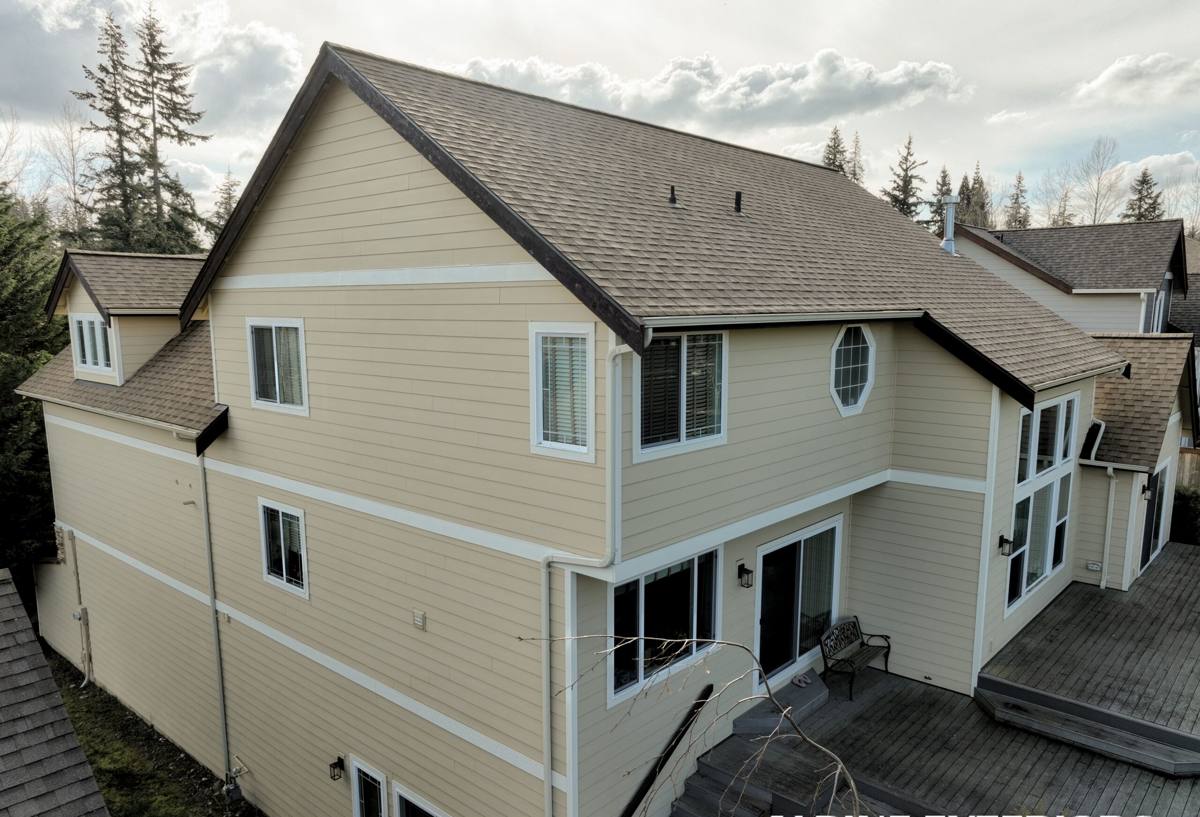
Skyline sits up on elevated, tree-lined ground on the west side of Anacortes, with views out toward Rosario Strait and the San Juans. That setting is exactly why decks matter so much here — homes are built to take advantage of the outlook, and the deck is often the main living space for half the year. But that same elevation and proximity to open water means a deck in Skyline takes a different kind of weathering than one built ten miles inland in Skagit County. Salt-laden air moves through constantly, rain comes in sideways more often than straight down, and the tree cover that makes the neighborhood so pleasant also keeps decks shaded and damp longer than open lots. Building a deck that holds up here isn't about using fancier materials across the board — it's about knowing which details actually matter in this specific environment and not cutting corners on those.
What Anacortes and Skagit County Weather Does to a Deck
Anacortes sits right on the water, and that marine exposure shapes every part of a deck's lifespan. We see the same handful of failure patterns over and over on older Skyline decks, and almost all of them trace back to three things: salt air, driving rain, and a long moss season.
Salt Air and Fasteners
Airborne salt accelerates corrosion on any exposed metal — screws, nails, joist hangers, bolts, and railing hardware. On a lot of older decks in this area, the wood itself is still sound but the fasteners holding it together have rusted, streaked, or weakened well ahead of schedule. Once a fastener starts to corrode, it loses grip strength, and that's a structural issue, not a cosmetic one.
Driving Rain and Drainage
Storms off the water frequently push rain sideways instead of straight down. That means water gets driven into places a standard drainage plan assumes it won't reach — under railing base plates, behind ledger boards, into end-grain cuts. A deck built with generic flashing and drainage assumptions for a drier inland climate will let water sit in places it shouldn't, and that's where rot starts.
Moss and Shade
Skyline's tree cover is part of the appeal, but shaded, tree-covered decking stays damp far longer after a storm than decking in full sun. Moss and algae take hold on any surface that doesn't shed water and dry out efficiently, and once established, moss holds moisture against the decking surface around the clock. Beyond looking bad, a mossy deck surface is genuinely slick and a fall hazard, especially on stairs.
What a Correctly Built Deck Involves Here
A deck that's going to hold up in Skyline's conditions needs the right approach at every layer, not just a good-looking surface material. The framing, the fasteners, the flashing, and the surface all have to work together.
Ledger Attachment and Flashing
Where the deck attaches to the house is the single most common failure point on any deck, anywhere — and in a driving-rain climate it matters even more. The ledger board needs proper flashing that directs water out and away from the house band joist, not just a bead of caulk. We treat this connection as the most important part of the build, because a failure here can mean water damage to the house itself, not just the deck.
Footings and Post Bases
Skagit County's frost depth and soil conditions matter for footing design, and post bases need to keep wood posts up off standing water and off direct concrete contact, where moisture wicks in fastest. We also make sure post bases allow water to drain away rather than pool at the base of the post.
Joist Protection
Joists that aren't protected on their top edge take on moisture through nail and screw penetrations from the decking above. A joist tape or protective barrier on top of the joists, combined with corrosion-resistant hardware, is a small added step during framing that prevents a much bigger repair down the road.
Decking Material Choices for a Marine Climate
There's no single "best" decking material — every option is a trade-off between upfront cost, maintenance, and how it behaves in salt air and shade. Here's how the common choices actually perform in Skyline's conditions specifically.
| Material | How It Handles Salt Air & Moisture | Maintenance | Typical Lifespan Here |
|---|---|---|---|
| Pressure-treated wood | Needs sealing to resist moisture intrusion; end cuts are vulnerable | Annual cleaning and periodic sealing/staining | 10-15 years with upkeep |
| Cedar | Naturally moisture- and insect-resistant, but still needs finish maintenance in shade | Regular cleaning, refinish every few years | 15-20 years with upkeep |
| Composite decking | Doesn't absorb moisture like wood; performs well in damp, shaded spots | Periodic washing to prevent surface moss/algae buildup | 25+ years, brand-dependent |
| PVC decking | Fully moisture-resistant surface; least prone to moss adhesion | Occasional washing | 25+ years, brand-dependent |
In shaded, tree-covered lots like much of Skyline, we lean toward recommending composite or PVC decking for the walking surface specifically because it doesn't wick moisture the way wood does, which cuts down on the moss and algae problem at the source. That said, plenty of homeowners want the look and feel of real wood, and that's a completely reasonable choice as long as everyone's clear going in on the maintenance schedule it requires — this is a trade-off we lay out honestly rather than push one direction.
Railings, Fasteners, and Hardware
Railings and hardware get overlooked in a lot of deck quotes, but in a salt-air environment they're often the first thing to show wear. Base plates, brackets, and any exposed fastener heads should be a corrosion-resistant grade — stainless steel or a coated fastener rated for exterior and coastal use, not a standard interior-grade screw. We also pay attention to how railing posts are mounted: a surface-mounted base plate needs a gasket or barrier underneath it so water doesn't sit trapped against the decking surface, which is a very common spot for hidden rot to start.
Our Deck Building Process
We keep the process straightforward and make sure you know what's happening at each stage.
1. On-Site Assessment
We look at the site itself — sun and shade exposure, drainage slope, tree cover, and how exposed the location is to wind-driven rain — before recommending materials or a framing approach.
2. Design and Material Selection
We walk through decking, railing, and hardware options with the actual trade-offs for your lot, not a one-size-fits-all package.
3. Permitting
We handle the permit application through the City of Anacortes for the scope of work, so you're not left figuring out code requirements on your own.
4. Framing and Structural Work
Ledger flashing, footings, post bases, and joist protection get built to hold up to this climate specifically, not just to pass inspection.
5. Decking, Railing, and Finish Work
Surface material and railings go in with corrosion-resistant fasteners and correct fastener spacing for the material's expansion and contraction.
6. Final Walkthrough
We go over the finished deck with you, including what maintenance it needs and on what schedule, so there are no surprises later.
Permits and Code Considerations
Most new decks and many deck replacements in Anacortes require a permit, and the requirements depend on the deck's height, size, and attachment to the house. Guardrail height and baluster spacing are governed by code and aren't optional design choices, regardless of the railing style you prefer. We handle the permit process as part of the job rather than treating it as the homeowner's problem to sort out, and we build to pass inspection the first time.
Maintenance That Actually Matters in Skyline's Conditions
A well-built deck still needs some seasonal attention in this climate, especially with moss season running long under tree cover. None of this is complicated, but skipping it is how a good deck turns into an expensive repair.
- Sweep debris and needles off the surface regularly — trapped organic matter holds moisture and feeds moss growth
- Wash the deck surface at least once a year, more often in heavily shaded areas, to interrupt moss and algae before it takes hold
- Check railing base plates and fastener heads periodically for early signs of corrosion or staining
- Keep gutters and downspouts near the deck clear so roof runoff isn't dumping extra water onto or under the deck
- Reseal or refinish wood decking on the schedule appropriate to the product — don't wait until it's visibly gray and dry
- Look underneath the deck once a year for signs of moisture at the ledger connection or post bases
Why a Crew That Already Works in Skyline Matters
A deck built to a generic national spec sheet can still fail early here if it doesn't account for what this specific stretch of coastline actually does to a structure over time. Working regularly in Anacortes and across Skagit County means we're not guessing at how salt air, driving rain, and shaded moss conditions interact with a given material or fastener choice — we've seen it play out on real decks in this area and we build around it from the start. That's the difference between a deck that looks right on day one and one that's still structurally sound in fifteen years.
If you're planning a new deck or need to replace one that's showing its age, we're happy to walk your property and put together a free, no-pressure estimate — just fill out the form below and we'll take it from there.