 Anacortes Siding
 Building Decks for Ship Harbor's Marine Climate
Ship Harbor sits close enough to the water that homes here take a different kind of weather beating than decks built a few miles inland. Salt-laden air off Rosario Strait works on metal fasteners and connectors year-round, driving rain off the Sound finds every gap in a ledger flashing detail, and Anacortes' long, damp shoulder seasons keep horizontal wood surfaces wet for weeks at a stretch. A deck built to a generic spec sheet can look fine the first summer and start showing rust bleed, soft spots, or slick green growth by the second winter. Building correctly for Ship Harbor means treating the salt air and moisture exposure as a design input from day one, not an afterthought.
We've built and repaired decks throughout Anacortes and Skagit County long enough to know which details matter here and which ones are just extra cost. This page focuses specifically on deck building for Ship Harbor properties — what the site conditions demand, what a correct build involves, and how we approach the job.
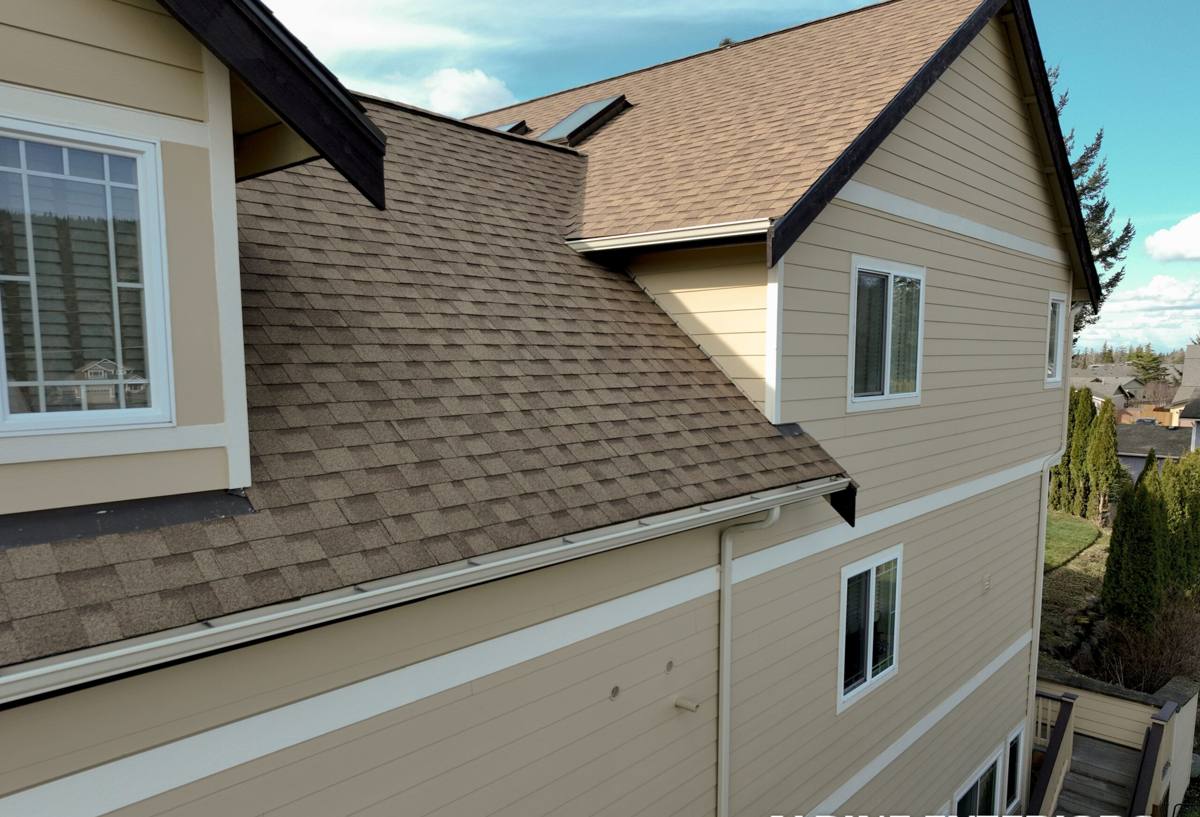
What Ship Harbor's Climate Does to a Deck
Three factors drive almost every deck problem we see in this part of Anacortes:
- Salt air corrosion — ordinary hot-dipped galvanized fasteners and connectors can start showing surface rust within a couple of seasons this close to the water, and rust stains bleed into decking and stain surfaces well before the hardware itself fails structurally.
- Driving, wind-blown rain — storms coming off the Strait push rain sideways as often as straight down, which means ledger flashing, house-to-deck transitions, and any horizontal ledge on railings or stair stringers need to shed water actively, not just sit dry when the weather is calm.
- Extended moss and algae season — Anacortes stays damp and mild for much of the year, and shaded decks under trees or on the north side of a house can stay wet enough, long enough, to grow moss and algae on boards, especially in board grooves and around fastener heads where water sits.
None of this makes a deck impossible to build well in Ship Harbor — it just means the material choices, hardware grade, and drainage details need to match the site instead of a one-size-fits-all approach.
Framing and Fastener Choices That Actually Hold Up
The structural frame is the part of a deck nobody sees once the boards go down, which is exactly why it's the part most likely to get cut corners. For Ship Harbor sites we treat a few things as non-negotiable:
Fasteners and Connectors
Standard galvanized coatings can be marginal this close to salt air. We spec stainless steel or heavy-coated, marine-rated fasteners and structural connectors (joist hangers, hurricane ties, post bases) rated for the exposure, not just the minimum the framing lumber calls for. It costs more up front than builder-grade hardware, but replacing rusted-out hangers under a deck you can no longer see is a much bigger job than paying the difference at construction.
Pressure-Treated Lumber Grade
Ground-contact-rated pressure-treated lumber belongs anywhere framing touches concrete, sits near grade, or stays consistently damp — not just where code technically requires it. In a climate that keeps wood wet longer than drier parts of the state, the margin matters.
Joist Protection
Joist tape or a comparable capping product over the top of PT joists keeps standing water out of screw penetrations and dramatically slows joist-top rot, which is one of the most common hidden failure points we find when we're called out to inspect an older deck.
Decking Material: What Actually Performs in This Climate
There's no single "right" decking material for every Ship Harbor property — it depends on sun exposure, tree cover, budget, and how much upkeep the owner actually wants to do. Here's how the common options compare against this specific climate:
| Material | Moss/Algae Resistance | Salt Air Behavior | Maintenance |
|---|---|---|---|
| Composite (capped) | Good — smooth cap sheds growth better than wood grain, though shaded boards still need occasional cleaning | Excellent — doesn't corrode; check fastener hardware still, not the boards | Low — periodic washing, no staining or sealing |
| Cedar | Fair — natural oils help initially but fade; grain holds moisture in shade | Good — wood itself doesn't corrode, but fasteners in contact do | Moderate to high — needs re-staining/sealing every 2-3 years |
| Pressure-treated fir/hem-fir | Fair to poor in shaded spots without upkeep | Good if paired with proper hardware | Moderate — sealing recommended, more prone to splintering over time |
| Tropical hardwood (e.g. ipe) | Very good — dense grain resists moisture uptake | Good — but stainless fasteners are essential given the wood's acidity and hardware demands | Moderate — oiling to maintain color, though structurally very durable |
For decks under tree cover or on shaded north- and east-facing sides of Ship Harbor homes, we lean owners toward composite or well-sealed hardwood, simply because those surfaces stay damp longest and show moss first. For open, sun-exposed decks, cedar or PT lumber with a good maintenance routine is often the more economical, perfectly durable choice.
Ledger Attachment and Flashing — Where Most Deck Failures Start
If a deck is going to fail structurally, it's usually at the ledger board — the point where the deck attaches to the house. Driving rain off the water pushes moisture into this joint harder than a calm-weather rain ever would, and once water gets behind a poorly flashed ledger, it rots the house's rim joist and sheathing from the inside, often invisibly for years.
A correct ledger installation includes: proper flashing that laps over the house's weather-resistive barrier (not tucked under it), a gap or drainage path between the ledger and siding so water can't sit trapped against the wall, and structural lag bolts or through-bolts sized to the load — not undersized deck screws. This is the single detail we'd tell any Ship Harbor homeowner to ask about explicitly, whether they hire us or someone else.
Footings and Posts on Ship Harbor Terrain
Soil and drainage conditions vary across Anacortes, and Ship Harbor's proximity to the water means some lots deal with a higher water table or more saturated soil for longer stretches of the year than lots further inland. We size and set footings based on actual soil conditions at your site and to current Skagit County/Anacortes building code requirements — footing depth, diameter, and post-base hardware all need to account for frost, load, and moisture, not just meet a minimum. Post bases that hold the post above standing water, rather than embedding wood directly in concrete or wet soil, add years of life to the structural posts.
Railings and Hardware Selection
Railings take direct weather exposure and see the most fastener corrosion of any part of a deck, since they're rarely covered. We match railing hardware — brackets, screws, cable or baluster fittings — to the decking material and the site's exposure level, favoring stainless steel wherever the railing faces open weather. Cheaper coated hardware may look identical on day one, but it's usually the first thing to show rust streaks down painted or stained rail posts within a season or two in this climate.
Permits, Code, and Doing It Right the First Time
Most deck projects in Anacortes require a building permit, particularly for decks attached to the house, decks above a certain height, or anything with a roof or structural cover. We handle the permitting process and build to current Anacortes/Skagit County code, including guardrail height, baluster spacing, stair geometry, and structural connection requirements. Skipping the permit might save time short-term, but it can create real problems later — at resale, at insurance claims time, or if the deck needs future work and an inspector finds unpermitted framing.
Our Process for a Ship Harbor Deck Project
Every deck we build follows the same general sequence, adjusted for your site's slope, sun exposure, and how the deck will actually be used:
- On-site assessment of soil, drainage, existing structure (for attached decks), and sun/shade pattern
- Material recommendation based on your budget, maintenance preference, and the deck's exposure to weather
- Design and permit submission to the City of Anacortes
- Footings and framing built with ground-contact lumber, corrosion-rated hardware, and joist protection
- Ledger flashing detail installed to shed water away from the house, not toward it
- Decking, railing, and stair installation to code with fasteners matched to the material and exposure
- Final walkthrough covering maintenance expectations specific to your material choice
Keeping a Ship Harbor Deck Looking and Performing Well
However well a deck is built, this climate rewards a bit of ongoing attention. A yearly rinse to knock off algae and organic debris before it takes hold, keeping gutters and downspouts clear so runoff isn't dumping onto or under the deck, and a quick visual check of railing hardware for rust streaks are all worth five minutes a couple of times a year. Wood and composite decks both benefit from keeping planters, mats, and furniture legs from sitting in one spot too long, since trapped moisture under an object is exactly the kind of damp, shaded condition that grows moss fastest.
If you're planning a new deck in Ship Harbor, replacing an aging one, or just want a professional opinion on whether your current deck's framing and flashing are holding up, we're happy to take a look and put together a straightforward, no-pressure estimate — use the form below to get started.