 Anacortes Siding
 Windows on Cap Sante Take a Different Kind of Beating
Cap Sante sits close enough to the water that salt air is just part of daily life. That salt doesn't only show up as a haze on your car windshield — it settles into window hardware, works its way into aluminum cladding seams, and slowly pits anything that isn't built to shrug it off. Add in driving rain that comes sideways off the water during winter storms, plus the long stretch of gray, damp months that let moss and algae get a foothold on anything shaded or north-facing, and you've got a climate that is genuinely harder on windows than most inland parts of Washington ever see.
None of this means Cap Sante homes need exotic products. It means the ordinary parts of a window job — flashing, sealant choice, hardware grade, glass package — have to be done right, every time, because there's less margin for a shortcut here than there would be somewhere drier and calmer.
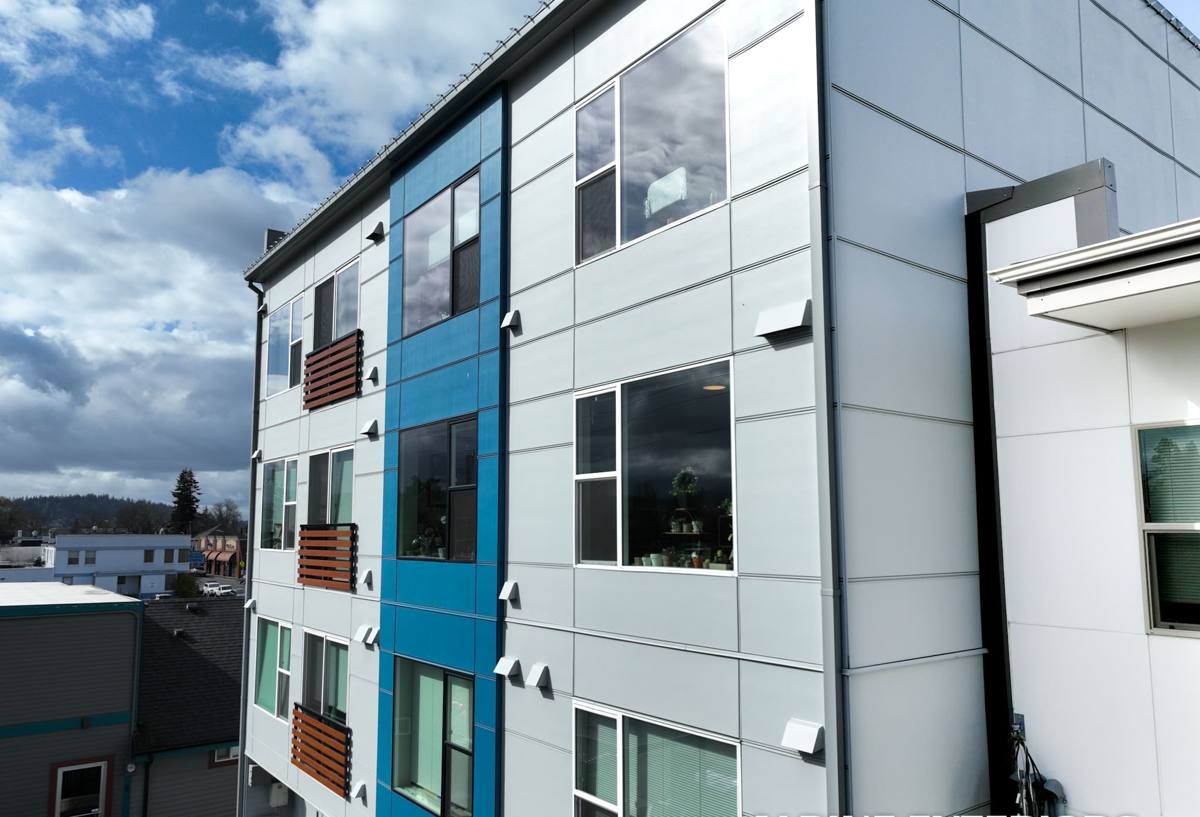
What Actually Fails First in This Neighborhood
When we get called out to look at older or poorly installed windows near Cap Sante, the failure pattern is pretty consistent:
- Corroded or seized hardware — cranks, locks, and hinges on aluminum or lower-grade vinyl units that were never rated for coastal salt exposure
- Soft or discolored trim and sill framing where flashing was skipped or installed backwards, letting wind-driven rain track behind the window instead of over it
- Foggy double-pane glass, meaning the seal has failed and the argon gas (or just the dry air pocket) has leaked out — no amount of cleaning fixes this
- Moss and green staining building up in exterior tracks and on north- or shade-facing trim, which holds moisture against wood and paint far longer than it should sit there
- Drafts and condensation on interior glass in winter, usually a sign the seal or the frame's insulation value has given out
Most of these aren't cosmetic. A seized lock is a security issue. Trapped moisture behind flashing is a rot problem waiting to get expensive. Getting the install details right the first time is what keeps a window job from turning into a siding or framing repair five years later.
What a Correct Job Looks Like Here
Flashing and Water Management Come First
The window itself is only part of the system. How it's flashed into the wall — sill pan, side flashing, head flashing lapped correctly with the house wrap or building paper — determines whether wind-driven rain off the water ends up outside the wall or inside it. On a site this exposed, we don't treat flashing as an afterthought; it's the part of the job that decides whether the window lasts.
Hardware Rated for Salt Exposure
Standard mill-finish aluminum hardware corrodes faster this close to the water. We spec locks, cranks, and hinges built to hold up under salt air rather than the cheapest stock option, because replacing a $40 lock set is a lot easier than replacing a window in eight years because the hardware seized and someone forced it.
Sealant and Caulk Choice
Not every exterior sealant handles constant damp-dry cycling well. We use products rated for the movement and moisture this climate puts them through, and we don't caulk over a flashing mistake to make it look finished — if the water management underneath isn't right, caulk is a temporary patch, not a fix.
Frame Material: What We Recommend and Why
There's no single "best" window material for every home — it depends on your home's age, your budget, and how much upkeep you want to take on. Here's how the common options actually perform in a Cap Sante-type coastal exposure:
| Material | Salt/Moisture Performance | Maintenance | Our Take |
|---|---|---|---|
| Vinyl (quality, welded-corner) | Good — won't corrode or rust | Low; occasional cleaning | Solid value choice for most Cap Sante homes; look for reinforced frames on larger openings |
| Fiberglass | Excellent — dimensionally stable, resists moisture and salt | Low | Our pick when budget allows, especially on the most exposed, water-facing walls |
| Wood (clad exterior) | Depends entirely on the cladding and detailing | Higher — exterior clad helps, but seams need monitoring | Great look, but we're upfront that it needs more long-term attention in this climate |
| Bare aluminum | Poor to fair — prone to pitting and hardware corrosion near salt air | Higher, and corrosion isn't cosmetic-fixable | We generally steer clients away from it for direct coastal exposure; it's not that it's a bad product everywhere, it just isn't the right match for this specific exposure |
We'll walk through actual product lines and pricing during your estimate — this table is about the trade-offs, not a specific brand recommendation, because the right call depends on your home's exposure and what you're trying to solve.
Glass Packages Worth Discussing
Double-pane, low-E glass is the baseline we'd recommend for any Anacortes home at this point — it's the standard that makes sense for our winters and summers alike. On homes with more direct exposure to wind and water, we'll also talk through:
- Impact-resistant or laminated glass options for the most storm-exposed elevations
- Argon or krypton gas fill for better insulating performance in a home that runs cold in winter
- Tempered glass where code requires it (near doors, low sills, bathrooms) — we check this regardless of what's being replaced
Our Process for a Cap Sante Window Job
1. On-Site Assessment
We look at every window being discussed — not just the ones that are obviously failing — because a job that only replaces the worst two units often means we're back in a few years for the next two. We check framing condition, existing flashing, and how each elevation is exposed to wind and rain.
2. Honest Scope and Options
You get a written estimate that separates "needs to happen" from "worth considering." If a window is structurally fine and just needs new hardware or reseal, we'll say so rather than push a full replacement.
3. Removal Without Collateral Damage
Old windows come out carefully so we're not tearing up more siding or trim than necessary — and if we do find hidden rot or water damage behind the old unit (which happens more often on older Cap Sante homes than people expect), we stop and show you before proceeding, not after.
4. Correct Flashing and Installation
Sill pan, flashing sequence, insulation around the frame, and air sealing — done in the order that actually keeps water out, not just the order that's fastest.
5. Finish and Walkthrough
Trim, paint or caulk finish work, hardware operation check, and a walkthrough so you know how to operate and maintain the new windows before we leave.
Why Local Experience on This Coast Matters
A crew that mostly works drier, calmer inland areas can install a technically fine window and still get the flashing detail wrong for wind-driven coastal rain, because that's not the problem they normally solve. Working Anacortes and the rest of Skagit County regularly means we've seen how salt air and moss actually behave on homes here over years, not just at install day — which failure points show up first, which products hold up, and which shortcuts turn into callbacks. That's the kind of judgment that doesn't come from a spec sheet.
A Simple Pre-Estimate Checklist
Before we come out, it helps to walk your own home and note what you see. Bring this list to your estimate:
- Windows that are hard to open, lock, or crank — especially anything facing the water
- Visible fogging or moisture between panes of double-pane glass
- Soft, discolored, or moss-covered trim and sills around any window
- Drafts or cold spots near windows in winter
- Visible gaps, cracked caulk, or daylight around the frame
- Any window that's original to a home more than 20–25 years old
Cost Factors, Realistically
Window replacement pricing varies a lot based on size, material, glass package, and how much flashing or trim repair is involved once we open up the wall. Rather than quote a number that won't mean much without seeing your home, we'll break down the actual cost drivers for your project during the estimate: frame material, number and size of openings, whether hidden water damage needs repair, and any custom shapes or sizes. We'd rather give you a real number than a lowball figure that changes once work starts.
If you're weighing custom windows for a Cap Sante home, we're happy to walk the property, look at what your windows and siding are telling us, and put together a straightforward, no-pressure estimate — just fill out the form below to get started.