 Anacortes Siding
 Decks Built for Burlington's Coastal Climate, Not Against It
Burlington sits inland enough from Anacortes to feel a little more shelter from the wind, but it still shares the same Skagit County weather pattern that wears down outdoor structures faster than homeowners expect: salt-laden air pushing in off Rosario Strait and the Sound, long stretches of driving rain from fall through spring, and short, mild summers that never fully dry out shaded or north-facing wood. A deck built to a generic national spec — the kind you'd see in a big-box how-to guide — will often look fine for the first year or two here and then start showing problems that a climate-appropriate build would have avoided from day one.
We build decks in this area specifically, which means every material choice, fastener spec, and drainage detail gets filtered through one question: how does this hold up through a Skagit County winter, year after year, without babysitting?
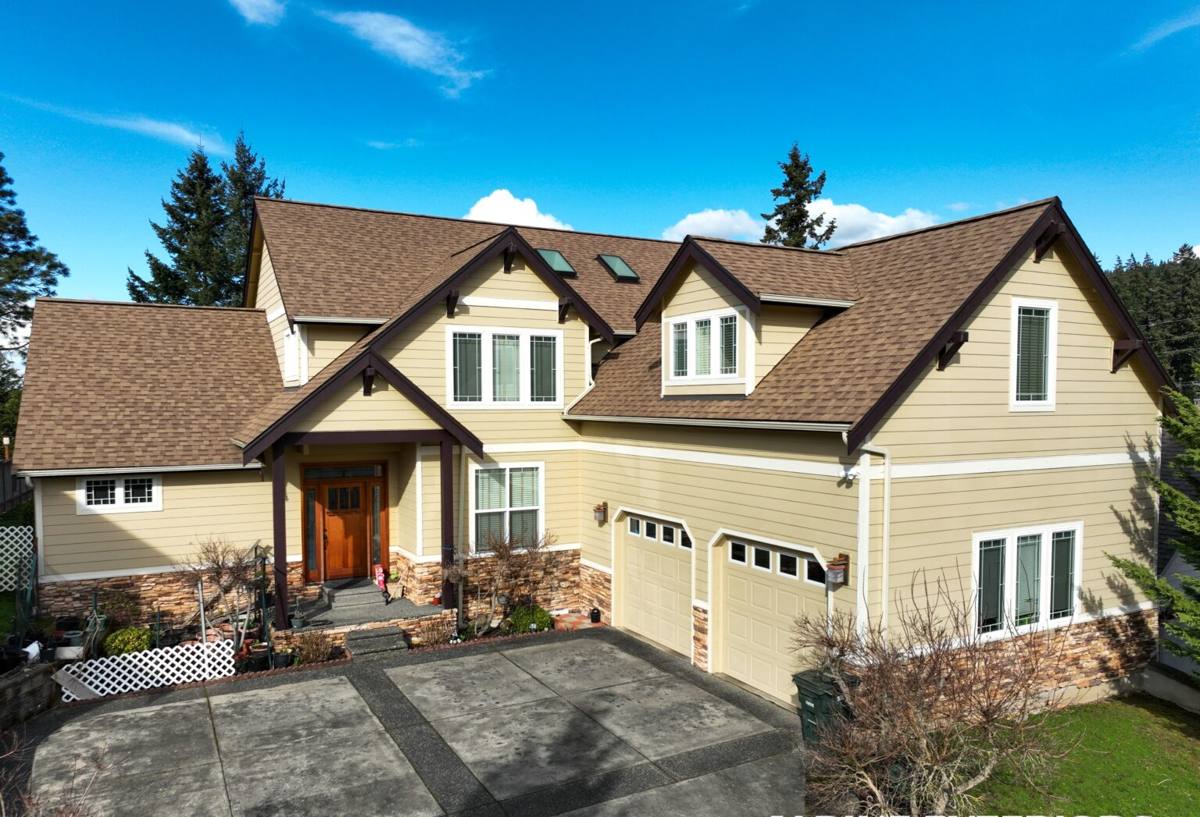
What Salt Air, Rain, and Moss Actually Do to a Deck
These aren't abstract concerns — they show up in predictable, specific failure points if a deck isn't built to handle them.
Salt Air and Corrosion
Airborne salt from the Sound accelerates corrosion on any exposed metal — screws, joist hangers, bolts, and railing hardware. Standard hot-dip galvanized fasteners can start rusting and staining the decking around them within a few seasons. This is the single most common cause of premature deck hardware failure we see in this region.
Driving Rain and Standing Water
Rain here doesn't just fall straight down — wind-driven rain gets pushed sideways and up under railings, against ledger boards, and into gaps that a calmer climate wouldn't test. Any spot where water can collect and sit — a poorly sloped surface, a tight board gap, a flashing detail that was skipped — becomes a rot or mold starting point.
Moss and the Long Wet Season
Skagit County's moss season runs long. Moss holds moisture directly against wood and composite surfaces for extended periods, and on shaded decks or the north side of a house it can establish itself within a single wet season if the surface material and airflow underneath aren't accounted for.
Choosing the Right Decking Material for This Area
There's no single "best" decking material — the right choice depends on how much maintenance a homeowner actually wants to do, budget, and how exposed the deck is to weather. Here's how the common options actually perform in a Burlington/Anacortes climate:
| Material | Moisture Behavior | Moss/Mildew Resistance | Maintenance | Typical Lifespan Here |
|---|---|---|---|---|
| Pressure-treated wood | Absorbs and releases moisture readily; prone to cupping if not sealed | Needs regular cleaning to prevent moss buildup | Annual cleaning + resealing every 1-2 years | 15-20 years with upkeep |
| Cedar | Naturally moisture-resistant, but still needs sealing on cut ends and fastener holes | Better natural resistance, still needs cleaning | Sealing every 2-3 years | 20-25 years with upkeep |
| Composite decking | Doesn't absorb water into the board itself; moisture can still sit on the surface | Better than wood, but capped composites can still grow surface moss if never cleaned | Occasional washing, no sealing/staining | 25-30+ years, manufacturer-dependent warranty |
| PVC decking | Fully moisture-resistant board material | Best resistance of the common options | Lowest — occasional washing | 25-30+ years, manufacturer-dependent warranty |
We install both quality wood and composite/PVC systems. The honest trade-off: wood costs less up front but demands real annual maintenance to hold up in this climate — skip a season of sealing and you're playing catch-up. Composite and PVC cost more initially but remove most of that maintenance burden, which matters a lot in a place where the wet season is long enough to punish neglect.
What We Steer Away From
We're selective about lower-grade composite products with thin capping or poor core moisture protection — in a coastal, high-rain climate, weak moisture barriers show up as swelling or delamination at board ends well before the manufacturer's warranty period should have allowed. That's not a knock on composite decking as a category; it's a reason we stick to products with proven moisture performance and back that up with proper end-cap sealing at every cut, which is often the actual point of failure rather than the product itself.
Framing, Fasteners, and Footings: Where the Real Work Is
The decking surface is what homeowners see, but the structure underneath is what determines whether the deck is still solid in fifteen years.
Fasteners and Hardware
Given the salt air here, we use stainless steel or high-grade coated fasteners and connectors rated for coastal exposure, not the minimum-spec galvanized hardware that's fine inland but corrodes faster this close to the water. This applies to structural screws, joist hangers, hurricane ties, and railing hardware alike.
Ledger Board Flashing
Where the deck attaches to the house, proper flashing is non-negotiable. A ledger board without correct flashing is one of the most common sources of hidden rot damage to the house itself — water gets behind the ledger, sits against the rim joist, and by the time it's visible it's often already into the framing. We flash every ledger connection properly, every time.
Footings and Frost
Footings need to be sized and set to local frost depth and soil conditions and inspected/permitted accordingly. Skipping proper footing depth is invisible until the deck starts shifting or settling unevenly — a problem that's expensive to fix after the fact and cheap to avoid at build time.
Drainage and Layout Details That Prevent Rot
Most premature deck failures we see in this region trace back to water management, not material failure. The details that matter:
- Correct board spacing to let water drain through rather than pool on the surface
- A slight slope away from the house so water sheds off the deck instead of toward it
- Adequate clearance and airflow underneath the deck to let framing dry out between rain events
- Flashing and proper caulking at every point the deck meets siding, posts, or railings
- Post bases set above grade and away from standing water or soil contact
None of these are visible once the deck is finished, which is exactly why they're worth asking about before construction starts.
Our Deck-Building Process
- On-site assessment — we look at sun/shade exposure, drainage patterns, and how exposed the site is to wind-driven rain off the Sound before recommending materials.
- Design and material selection — sized to the home, budget, and how much upkeep the homeowner wants to take on long-term.
- Permitting — we handle the permit process for the build, coordinated with the applicable local jurisdiction.
- Footings and framing — set to proper depth, framed with coastal-rated hardware and fasteners.
- Decking, railing, and finish work — installed with correct spacing, flashing, and sealed cut ends.
- Final walkthrough — we go over care and maintenance specific to the material installed.
Permits and Local Considerations
Deck construction in Skagit County typically requires a building permit, with specifics depending on deck height, size, and attachment to the home. Permit requirements and inspection steps vary by jurisdiction, and we work through that process as part of the job rather than leaving it to the homeowner to sort out. This also matters for resale — an unpermitted deck can become a problem during a future home sale or refinance appraisal.
Maintenance Checklist for a Burlington-Area Deck
Whatever material a deck is built from, a few habits go a long way toward getting the full lifespan out of it in this climate:
- Sweep debris and standing leaves off the surface regularly, especially in fall
- Rinse or wash the surface periodically to keep moss and mildew from establishing
- Check and reseal wood decking on the manufacturer's or installer's recommended schedule
- Inspect fastener heads and railing hardware annually for early corrosion
- Keep gutters and downspouts clear so roof runoff isn't dumping extra water onto the deck
- Trim back vegetation that's shading the deck and keeping it damp longer than necessary
Why It Matters to Hire a Crew That Already Works This Area
A deck built to a spec that works in a drier climate is a deck that's guessing when it comes to Skagit County weather. Crews who work Burlington and Anacortes regularly already know which fastener grades hold up near the water, which flashing details actually stop wind-driven rain, and which materials are worth the added cost versus which ones just add price without added durability here. That local pattern recognition is the difference between a deck that needs real repair work in year five and one that's still solid two decades later.
If you're planning a new deck or replacing an aging one in Burlington or the surrounding Anacortes area, we're happy to take a look at your site and walk through material and design options with you. The estimate is free, there's no pressure, and you'll get a straight answer about what your specific site actually needs — just fill out the form below to get started.