 Anacortes Siding
 Roofing a Home in Conway's Corner of Skagit County
Conway sits down in the Skagit River valley, close enough to the water that the same marine weather system that soaks the rest of Skagit County settles in here too — often with an extra layer of ground humidity from the river bottomland around it. That combination is hard on a roof. Driving rain off the water finds every gap in flashing and underlayment. Long stretches of overcast, damp weather feed moss and algae growth that a drier inland climate simply doesn't produce. And because this is farm and lowland country, homes here tend to sit more exposed to wind and weather than roofs tucked into denser, tree-sheltered neighborhoods closer to town.
None of that means a roof in Conway needs to be exotic or overbuilt. It means the installation has to be done correctly, with the right underlayment, flashing, and ventilation choices for a climate that stays wet for months at a stretch — not just a fast shingle-over job that looks fine for the first year or two.
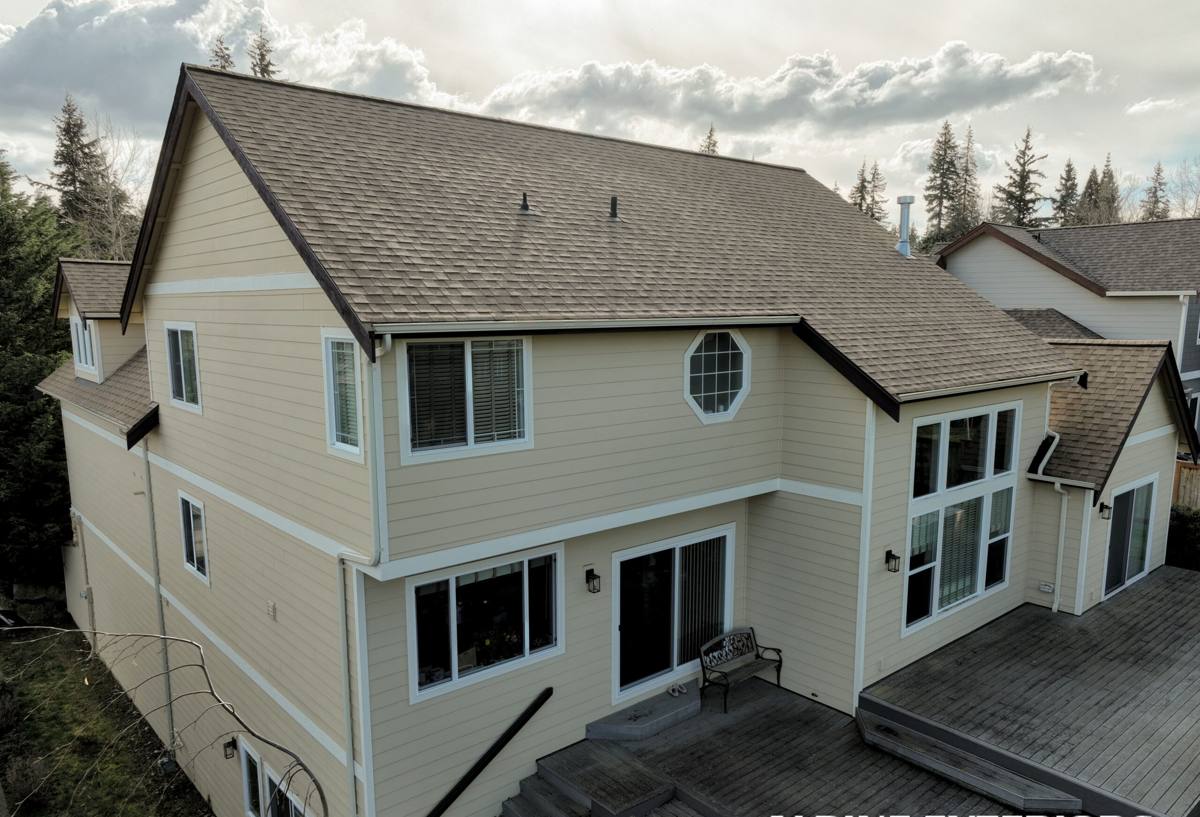
Signs a Conway Roof Has Moved Past Repair
Most homeowners call us for a roof inspection thinking they need a patch, and sometimes that's true. But there's a point where repair spending stops making sense and a full replacement becomes the honest recommendation. Watch for:
- Granules collecting in gutters and at downspout outlets — a sign the shingle surface is wearing through
- Shingles that are cupping, curling at the edges, or cracking when you look at them from the ground
- Moss established thickly enough that it's lifting shingle tabs, not just growing on the surface
- Daylight visible through the roof deck from inside the attic, or damp insulation after a storm
- Multiple past repairs in different spots, which usually means the underlayment and decking are failing, not just the shingles
- A roof already carrying two layers of shingles from prior tear-overs — code and good practice both call for a full tear-off at that point
If a roof is past 20-25 years old and showing two or more of these signs, we'll tell you straight whether repair still makes sense or whether you're better off putting that money toward a new install.
What a Correct New Roof Installation Actually Involves
Tear-Off and Deck Inspection
We don't install new roofing over old. A full tear-off lets us see the actual condition of the roof deck — plywood or board sheathing that's been hiding water damage, soft spots, or rot won't show up until the old material is off. Any damaged decking gets replaced before anything else goes down. Skipping this step is the single most common shortcut that leads to early roof failure in this climate, because a compromised deck undermines everything installed on top of it.
Underlayment and Ice-and-Water Protection
Given how much sustained wet weather this area gets, we don't rely on felt paper alone. Self-adhering ice-and-water shield membrane goes down at eaves, valleys, and around every penetration — the places where wind-driven rain is most likely to work its way underneath the shingle field. A synthetic underlayment covers the rest of the deck as a second line of defense.
Flashing
Flashing around chimneys, skylights, sidewalls, and vent penetrations is where most roof leaks actually originate, not in the open field of shingles. We install new flashing rather than reusing old, bent, or rusted pieces — it's a small material cost against a roof's lifespan and it's not a place to cut corners.
Ventilation
A roof system needs balanced intake and exhaust airflow to manage moisture and temperature in the attic. In a wet, humid climate like this one, poor ventilation traps moisture against the underside of the deck, which accelerates rot and helps mold and mildew take hold. We check existing ventilation and correct it as part of the install rather than treating it as an afterthought.
Material Installation
Shingles, panels, or whatever material is chosen go on to manufacturer specification — correct nailing pattern and placement, proper exposure, and starter and cap details done right at ridges, hips, and rakes. This is where installation quality shows up most in wind resistance and long-term watertightness.
Choosing a Roofing Material for This Climate
There's no single "best" roofing material — the right choice depends on budget, how long you plan to stay in the home, and how much moss and maintenance you're willing to deal with over the years. Here's how the common options compare for a Conway-area home:
| Material | Typical Lifespan | Moss/Algae Resistance | Maintenance Needs |
|---|---|---|---|
| Standard asphalt composition shingle | 20-25 years | Moderate — benefits from algae-resistant granules | Periodic moss removal, gutter cleaning |
| Algae-resistant / architectural shingle | 25-30 years | Better — copper or zinc granules slow growth | Lower, but not maintenance-free |
| Metal roofing (standing seam or panel) | 40-50+ years | High — sheds moisture, little for moss to grip | Low — occasional debris clearing |
| Wood shake/shingle | 20-30 years with upkeep | Low — needs active moss control | Higher — regular treatment required |
For most Conway homes we recommend at least an algae-resistant architectural shingle as the baseline given how much moss pressure this area gets. Metal is a strong option for homeowners planning to stay long-term and wanting to largely take moss and re-roofing cycles off their list of ongoing concerns. We'll walk through the honest trade-offs for your specific roof rather than pushing one product — every material has a maintenance and cost profile that has to fit how you actually want to own the home.
What Drives Installation Cost
Every roof is priced individually after an on-site look, but the main factors that move the number are consistent:
| Factor | Why It Matters |
|---|---|
| Roof size (squares) | Material and labor scale directly with total roof area |
| Pitch and complexity | Steep roofs, multiple valleys, and dormers take longer and need more safety setup |
| Layers of existing roofing | Tearing off two layers costs more in labor and disposal than one |
| Deck condition | Rotted or damaged sheathing found during tear-off adds replacement cost |
| Material selected | Standard asphalt, architectural shingle, and metal sit at different price points |
| Access to the property | Rural and lowland lots can add setup time for material staging and equipment |
We give a written estimate before any work starts, and we flag likely deck issues during the inspection so cost surprises during tear-off are the exception, not the rule.
Our Installation Process, Start to Finish
- On-site inspection — we get on the roof, check the deck where accessible, and look at ventilation, flashing, and drainage
- Written estimate — material options, cost breakdown, and timeline, no pressure to decide on the spot
- Scheduling around weather — we plan installs for dry weather windows, which in this valley means watching forecasts closely rather than working on a fixed calendar
- Tear-off and deck repair — old material removed, decking inspected and replaced where needed
- Underlayment, flashing, and ventilation work — the protective layers that determine how the roof performs long-term
- Material installation — shingles or panels installed to spec, with attention to nailing, exposure, and detail work at ridges and valleys
- Cleanup and final walkthrough — magnetic sweep for nails, debris hauled off, and a walkthrough so you know what was done and what to watch for
Most straightforward residential re-roofs are completed in a few days once weather cooperates; complex rooflines or deck repairs can extend that.
Why Hiring a Crew That Already Works Conway Matters
A roofing crew that regularly works this part of Skagit County knows how the local weather actually behaves — when the dry windows tend to show up, how much moss pressure a north-facing slope will see compared to a south-facing one, and how rural and lowland properties differ from in-town lots when it comes to access and material staging. That local familiarity shows up in fewer surprises during the job and in installation choices — underlayment coverage, ventilation, material selection — that are matched to what actually holds up here rather than a generic spec sheet.
It also matters for permitting and code compliance. Skagit County has its own permitting requirements for roof replacement, and a crew that pulls permits here regularly knows the process rather than treating it as a one-off.
Protecting the Investment After Installation
A correctly installed roof still benefits from basic upkeep, especially in a climate this favorable to moss and algae. A simple annual routine goes a long way:
- Clear gutters and downspouts each fall so water isn't backing up under the roof edge
- Have moss and debris removed from the roof surface before it builds up thick enough to lift shingles
- Trim back overhanging branches to cut down on shade and debris that feed moss growth
- Check attic ventilation isn't blocked by insulation or stored items
- Have the roof looked at after any major windstorm, not just on a fixed schedule
These steps aren't complicated, but skipping them is how a well-installed roof loses years off its expected lifespan in a wet climate like this one.
Get a Straight Answer on Your Roof
If your Conway home's roof is getting up in years, showing moss buildup, or you're just not sure whether it's a repair or replacement situation, we're happy to take a look and give you a straight, no-pressure answer. Fill out the form below for a free estimate — we'll walk the roof, tell you honestly what we find, and lay out your options.