 Anacortes Siding
 Decking in Similk Beach Has to Answer to the Weather
Similk Beach sits close enough to the water that salt air, wind-driven rain, and a long stretch of damp, low-light months are just part of owning a home here. A deck built without that in mind will show it early — soft spots at the fasteners, mildew in the grain, fading on the sun-facing boards, and hardware that rusts faster than anyone expects. Composite decking, installed correctly, is one of the more sensible answers to that environment: it doesn't absorb water the way wood does, it doesn't need annual staining, and it holds up to the freeze-thaw swings and near-constant humidity that define a Skagit County winter and spring.
That said, "composite" isn't a single product with one install method. The board you choose, the substructure underneath it, and the fastening system all matter more here than they would in a dry inland climate. This page covers what actually goes into a composite deck built for Similk Beach conditions, not a generic decking overview.
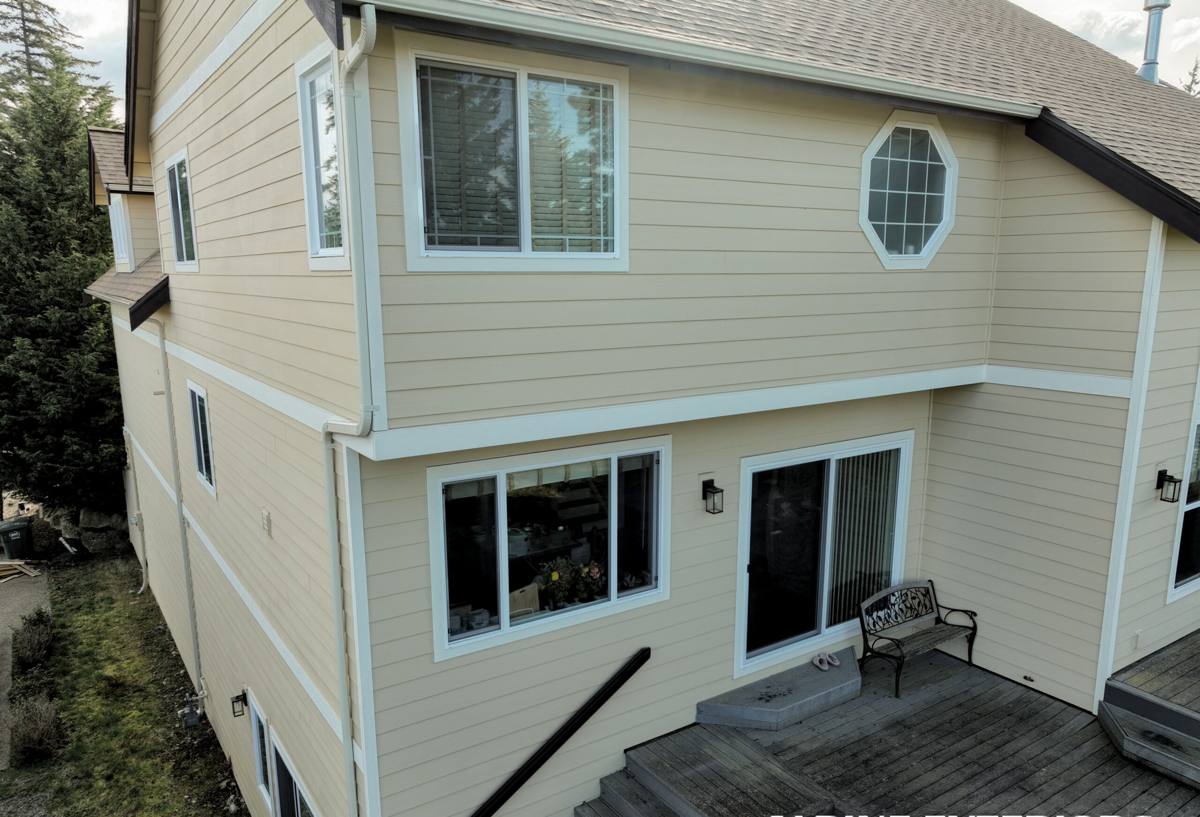
What Salt Air and Moss Season Actually Do to a Deck
It helps to be specific about the failure modes we're designing against, because they shape every decision below.
- Salt-laden air corrodes exposed metal. Standard fasteners, brackets, and ledger hardware pit and rust faster near the water. This affects the substructure and connectors more than the decking surface itself.
- Driving rain gets under boards, not just on top of them. Wind off the water pushes moisture sideways and underneath the deck surface, which is why ventilation and drainage below the boards matter as much as the board material.
- Moss and algae need shade, moisture, and time — Similk Beach has all three for a good chunk of the year. Composite boards with a capped, textured surface resist organic growth far better than uncapped composite or bare wood, but no surface is immune if water sits and debris collects.
- Freeze-thaw cycling stresses fasteners and joints. It's not extreme cold here, but repeated freezing and thawing through a wet winter works loose anything that wasn't fastened correctly the first time.
None of this is unique to Similk Beach specifically, but it's more concentrated here than a few miles inland in Anacortes proper, simply because of proximity to the water and the tree cover common in the area.
Choosing the Right Composite Board for This Location
Capped vs. Uncapped Composite
Capped composite — boards with a fused polymer shell around a wood-fiber core — is the standard we recommend for anything near the water. The cap sheds moisture, resists staining, and keeps the core from wicking water at cut ends and fastener holes, which is exactly where uncapped composite tends to fail first in a wet climate. Uncapped or "first-generation" composite is cheaper up front but it's the product most likely to swell, discolor, or grow mildew within a few seasons here, and we generally steer homeowners away from it for that reason.
Surface Texture and Color
A textured, matte, wood-grain surface hides pollen film, water spotting, and light mildew far better than a smooth or high-gloss board. Lighter and mid-tone colors show less heat and less algae contrast than very dark boards in a shaded, damp yard — worth thinking about if your lot has significant tree cover, which is common closer to the beach.
Board Profile
Grooved-edge boards paired with hidden fastener clips give the cleanest look and keep screw heads (a corrosion point) off the walking surface entirely. Solid-edge boards with face screws are more affordable but leave more exposed metal to maintain over time.
What a Correct Composite Deck Build Involves Here
The decking material gets most of the attention, but in a climate like this, the substructure and drainage details determine whether the deck lasts 10 years or 25.
Ledger and Structural Connections
Where the deck attaches to the house, correct flashing is non-negotiable. A poorly flashed ledger is one of the most common sources of hidden water damage to the house itself, not just the deck — and it's much cheaper to get right at install than to repair after the fact.
Joists, Framing, and Hardware
We use fasteners and structural connectors rated for coastal/high-moisture exposure, not standard interior-grade hardware. Joist tape over the framing adds a second moisture barrier under the boards, which matters more here than in a dry climate where it's sometimes treated as optional.
Ventilation and Drainage Underneath
Low-clearance decks and decks over grade need enough airflow underneath to let moisture escape instead of sitting against the joists. Where grading allows standing water to collect near footings, we address drainage before the deck goes down, not after.
Gaps and Fastening for Board Movement
Composite still expands and contracts with temperature and moisture, just less than wood. Correct board spacing and fastener spacing keep that movement from telegraphing as buckling or gapping down the road.
Composite vs. Other Decking Materials for This Climate
| Material | Moisture Resistance Here | Maintenance | Typical Lifespan (Local Conditions) |
|---|---|---|---|
| Capped composite | Strong — resists absorption and moss growth | Occasional wash; no staining/sealing | 20-30 years |
| Pressure-treated wood | Moderate — needs consistent sealing to hold up | Annual/biennial staining or sealing | 10-15 years with upkeep |
| Cedar | Moderate — naturally rot-resistant but still needs sealing near salt air | Regular sealing, more frequent near water | 12-18 years with upkeep |
| Uncapped composite | Weak in this climate — prone to swelling and staining | Low but prone to visible wear | 10-15 years, often less near the beach |
Wood isn't a bad choice everywhere — it has a place, and some homeowners prefer the look and the ability to refinish it. But in a Similk Beach setting specifically, the maintenance commitment to keep wood performing well is real and ongoing, which is why most homeowners here who go composite don't go back.
Our Process for a Similk Beach Composite Deck
- On-site assessment. We look at sun/shade exposure, grade and drainage, proximity to the water, existing structure condition if it's a replacement, and how the deck will actually be used.
- Material selection. We walk through board options, colors, and profiles based on your budget and the specific exposure of your lot — not a one-size answer.
- Structural plan. Ledger flashing, joist spacing, hardware spec, and drainage/ventilation are planned before any material is ordered.
- Permitting. Deck work is often permit-required depending on size, height, and attachment to the structure; we handle that coordination so it's not on you to figure out.
- Build. Demo of the old deck if applicable, framing, flashing, and board installation, with attention to fastener spacing and board gaps for long-term movement.
- Final walkthrough. We check railings, stairs, board alignment, and fastener finish before calling it done, and go over basic care with you.
Living With a Composite Deck in This Climate
Composite cuts the maintenance burden dramatically, but "low-maintenance" isn't "no-maintenance," especially with the moss and organic buildup common here.
- Sweep or blow off leaves, needles, and pollen regularly, especially in shaded areas — trapped organic debris is what feeds moss and algae, not the board material itself.
- Rinse or wash the surface a couple of times a year, more often under heavy tree cover; a soft-bristle brush and mild soap handle most film buildup.
- Keep gutters and downspouts near the deck clear so runoff isn't dumping directly onto or under the deck surface.
- Check railings and stair connections seasonally — hardware is the first thing salt air affects, even when the boards themselves look fine.
- Trim back overhanging branches where practical to cut down on shade, debris, and moisture retention on the deck surface.
Why Hire a Crew That Already Works Similk Beach
A deck built to a generic spec sheet and a deck built for this specific stretch of Skagit County coastline aren't the same project, even if the materials on the truck look identical. Fastener grade, flashing detail, ventilation, and even board color selection all shift based on how close you are to the water and how much shade your lot gets. A crew that's already done this work in Anacortes and the surrounding coastal neighborhoods isn't guessing at those decisions — they've seen which details hold up here and which ones cause callbacks two winters later. That's the difference between a deck that needs attention every year and one you mostly forget about.
Get a Straightforward Estimate
If you're weighing a new composite deck or a replacement for an aging wood deck in Similk Beach, we're happy to take a look and give you an honest read on materials, scope, and cost — no pressure, no hard sell. Use the form below to request a free estimate.