 Anacortes Siding
 Why Cap Sante Decks Take More Punishment Than Most
Cap Sante sits high above the marina, and that elevation is a mixed blessing. The views are why people build decks up here in the first place, but the same exposure that gives you a clear look at the water also means your deck takes wind-driven salt spray, near-constant winter drizzle, and long stretches of shade from mature evergreens that never let the wood fully dry out. A deck built the same way you'd build one in a dry, inland yard will show problems here years before it should — cupped boards, rusted fasteners bleeding through the finish, and a slick green film that shows up every fall and doesn't fully leave until late spring.
None of that means a deck on Cap Sante is a bad idea. It means the build has to account for the site from the framing up, not just at the surface. That's the difference between a deck that needs real work in year five and one that's still solid at year twenty.
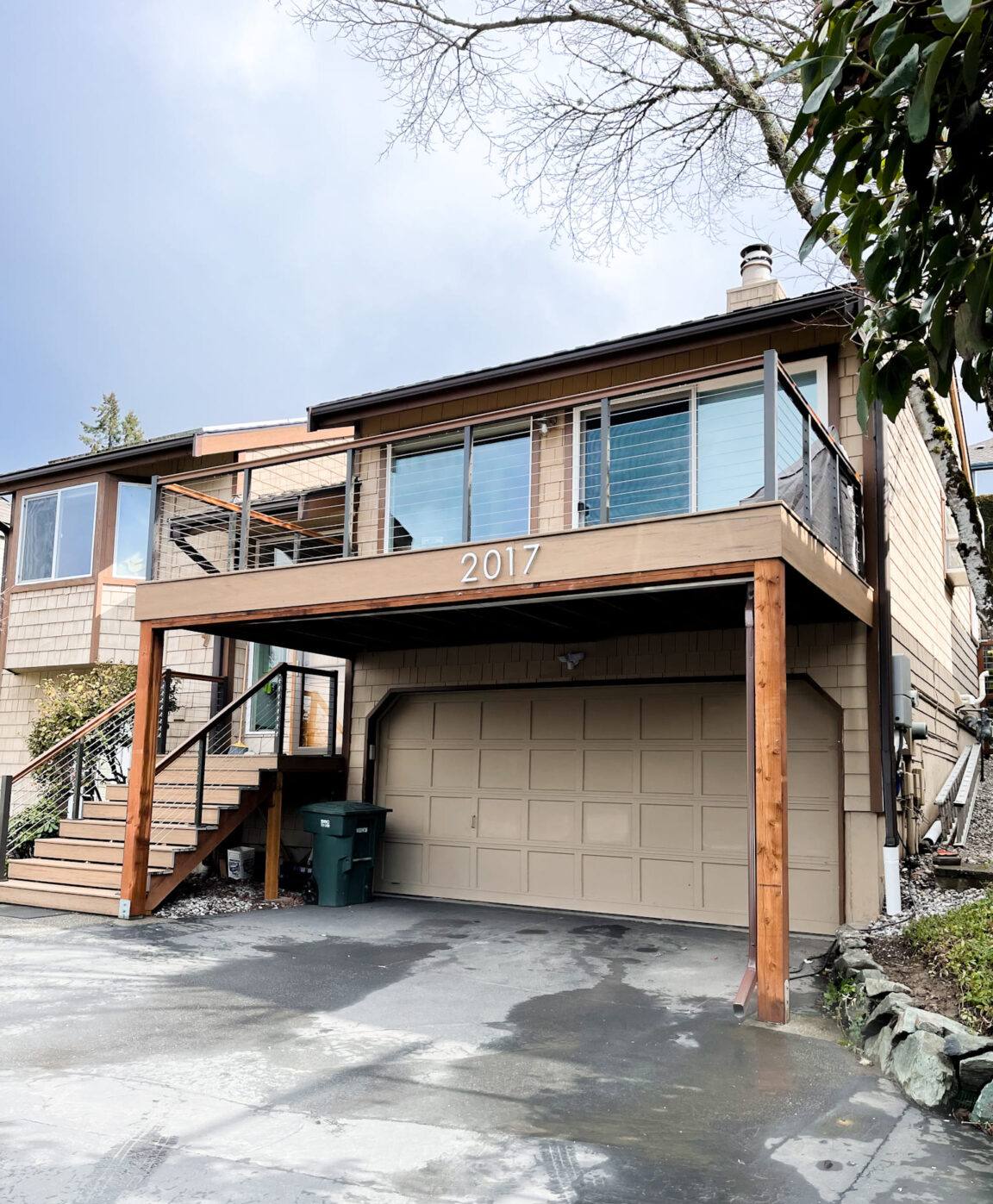
What a Deck Built for This Site Actually Needs
Before we talk about boards and railings, it helps to name the actual conditions the structure has to survive year after year:
- Salt-laden air off the water that accelerates corrosion on any exposed metal
- Frequent, sustained rain rather than short heavy downpours — moisture has more time to work into joints and end grain
- Shade and moisture together, which is exactly what moss and algae need to take hold
- Wind exposure on elevated lots, which stresses railings and ledger connections more than a sheltered yard would
- Seasonal freeze-thaw cycles that are milder than inland Washington but still enough to open up poorly sealed joints over time
A correct deck build treats every one of these as a design input, not an afterthought to fix later with a coat of sealant.
Framing and Structure: Getting the Bones Right
The framing is the part of the deck nobody sees once it's finished, and it's also the part that determines whether the deck lasts. On a Cap Sante lot, we look closely at a few things most crews rush past:
Ledger attachment and flashing
Where the deck ties into the house is the single most common failure point on decks in this climate. Water that gets behind an improperly flashed ledger board doesn't just rot the ledger — it can work into the house's wall assembly. We flash this connection properly every time, with materials suited to constant moisture exposure, not just a bead of caulk.
Post bases and joist hangers
Standard electro-galvanized hardware corrodes faster near saltwater. On an exposed site like this, we spec hot-dip galvanized or stainless connectors and fasteners so you're not looking at rust streaks and weakened joints within a few seasons.
Footings sized for the slope
Many Cap Sante lots aren't flat. Footings need to be sized and placed for the actual soil and grade on your property, not just poured to a minimum spec. We evaluate this on site rather than assuming a standard footing plan will work.
Comparing Fastener and Hardware Grades
| Hardware Type | Performance Near Salt Air | Typical Lifespan Here | Cost vs. Standard |
|---|---|---|---|
| Standard electro-galvanized | Corrodes noticeably within a few years | Shortest — visible rust streaks common | Lowest upfront cost |
| Hot-dip galvanized | Solid performance, thicker zinc coating resists salt exposure | Long-term, with proper detailing | Moderate increase |
| Stainless steel (305/316) | Best resistance to salt air and moisture | Longest, minimal corrosion risk | Highest upfront cost |
We'll walk you through which grade makes sense for your specific deck — a fully exposed elevated deck facing the water justifies a different spec than a sheltered ground-level deck tucked under an eave.
Decking Material Choices for Salt Air and Moss
There's no single "best" decking material — there's a best fit for your site, your maintenance appetite, and your budget. Here's how the common options actually perform on a shaded, salt-exposed Cap Sante lot:
| Material | Moss/Algae Resistance | Maintenance | Notes for This Site |
|---|---|---|---|
| Pressure-treated wood | Low — needs regular cleaning and sealing | Annual cleaning, periodic re-sealing | Lowest material cost, but shaded areas will need attention every year |
| Cedar | Moderate, naturally rot-resistant but still needs care | Regular cleaning, occasional oiling | Good appearance, but salt air and shade shorten intervals between maintenance |
| Composite decking | Good — engineered to resist moisture and organic growth | Occasional washing, no sealing needed | Strong fit for shaded, damp areas; check the specific product's mold/mildew warranty |
| PVC/capped composite | Best — fully sealed surface sheds moisture | Lowest — soap and water cleaning | Highest material cost, but the least ongoing work in a tough microclimate |
We don't push one product line on every job. What we install depends on how much sun your specific deck footprint actually gets, how much upkeep you want to do, and your budget. A shaded, north-facing deck tucked under trees is a very different decision than an open deck catching afternoon sun off the water.
Fasteners, Flashing, and the Details That Prevent Rot
Most deck failures we get called out to repair on the peninsula trace back to a handful of overlooked details, not a bad material choice. We treat these as non-negotiable on every build:
- Ledger flashing installed to shed water away from the house, not just caulked and hoped for
- Joist tape or a comparable moisture barrier on top of framing members to keep decking fasteners from sitting in trapped water
- Proper board spacing so wet, shaded areas can actually air-dry between rains instead of holding moisture against the wood
- Post-to-footing connections that keep end grain off standing water
- Fastener heads set correctly so screw holes don't become tiny reservoirs that hold water against composite or wood decking
These aren't upgrades — they're the baseline for a deck that's supposed to survive this specific climate rather than one built to a generic national spec.
Our Process From Estimate to Final Walkthrough
Every deck build follows the same sequence, whether it's a small ground-level platform or a full elevated deck off the back of the house:
- Site visit and design conversation. We look at your actual sun exposure, slope, and how the deck ties into the house before recommending materials or hardware.
- Written estimate. You get a clear scope — materials, hardware grade, and structural approach — so there's no guessing what you're paying for.
- Permitting. We handle the permit application and inspections required for your project so you don't have to chase paperwork.
- Demolition or site prep, if an old deck needs to come out first.
- Framing and structural work, including footings, ledger flashing, and hardware installation.
- Decking, railing, and stair installation, finished to the material's manufacturer specs.
- Final walkthrough, where we go over care and maintenance specific to the material you chose and the exposure your deck sits in.
Permits and Code Considerations in Skagit County
Most deck projects in Anacortes require a building permit, particularly for elevated structures with railings and stairs, which is the majority of what we build on Cap Sante given the terrain. Permitted work means your deck is inspected against current structural and safety code — footing depth, railing height, guard spacing, and stair geometry all get checked. We manage this as part of the job rather than leaving it for the homeowner to sort out, and we build to pass inspection the first time, not to the bare minimum that might squeak by.
Maintenance: What Keeps a Cap Sante Deck Looking New
Whatever material you choose, a little seasonal attention goes a long way in this climate. A simple annual rhythm keeps most problems from ever starting:
- Clear leaves and debris from between boards before fall rains set in — trapped organic matter is what feeds moss and mildew
- Rinse or wash the deck surface at least once a year, more often in shaded areas
- Check railing connections and stair treads annually for any looseness
- Re-seal wood decking on the schedule the product actually needs in a wet climate — often more frequently than the label suggests for drier regions
- Keep gutters and downspouts near the deck clear so runoff isn't dumping extra water onto the structure
Decks that get this basic attention rarely need major repair work. Decks that don't are where we see rot, failed fasteners, and slick, moss-covered surfaces show up years ahead of schedule.
Why Hiring a Crew That Already Works Cap Sante Matters
A deck built to a generic spec sheet can look fine the day it's finished and still be the wrong build for this location. Crews who don't regularly work sites this close to the water sometimes miss how much the combination of salt air, shade, and driving rain compounds over time — they'll spec standard hardware, skip extra flashing detail, or recommend a decking material that's a poor match for a shaded, damp footprint. We build decks across Anacortes and Skagit County and see the same patterns repeat on this stretch of the coast: it shapes the hardware grade we default to, the flashing details we won't skip, and the honest conversations we have with homeowners about which decking material actually fits their yard instead of just their budget.
If you're planning a new deck or replacing one that's showing its age, we'd be glad to take a look and put together a straightforward, no-pressure estimate — just fill out the form below.