 Anacortes Siding
 Why Metal Roofing Makes Sense in Burlington
Burlington sits in the flood plain and farmland stretch of Skagit County, close enough to Padilla Bay and the Salish Sea that salt-laden air reaches homes here even without a waterfront view. Add in the region's long wet season, heavy moss growth on north-facing slopes, and the driving rain that comes sideways off winter storms, and you have a climate that is genuinely hard on a roof. Asphalt shingles wear out here faster than the manufacturer's rated life suggests, mostly because of moisture cycling, moss intrusion at the granule layer, and UV breakdown between rain events. Metal roofing, installed correctly, handles all three of those stressors better than any other common roofing material available to homeowners in this area.
That last phrase — installed correctly — matters more with metal than with almost any other exterior material. A metal roof that's flashed wrong, fastened wrong, or missing proper underlayment will leak, corrode at the seams, or fail early, and it will do it in ways that are harder to spot from the ground than a curling shingle. We treat every metal roof in Burlington as a system: panel, fastener, flashing, ventilation, and underlayment all have to work together for the roof to actually deliver the 40-to-60-year lifespan that draws people to metal in the first place.
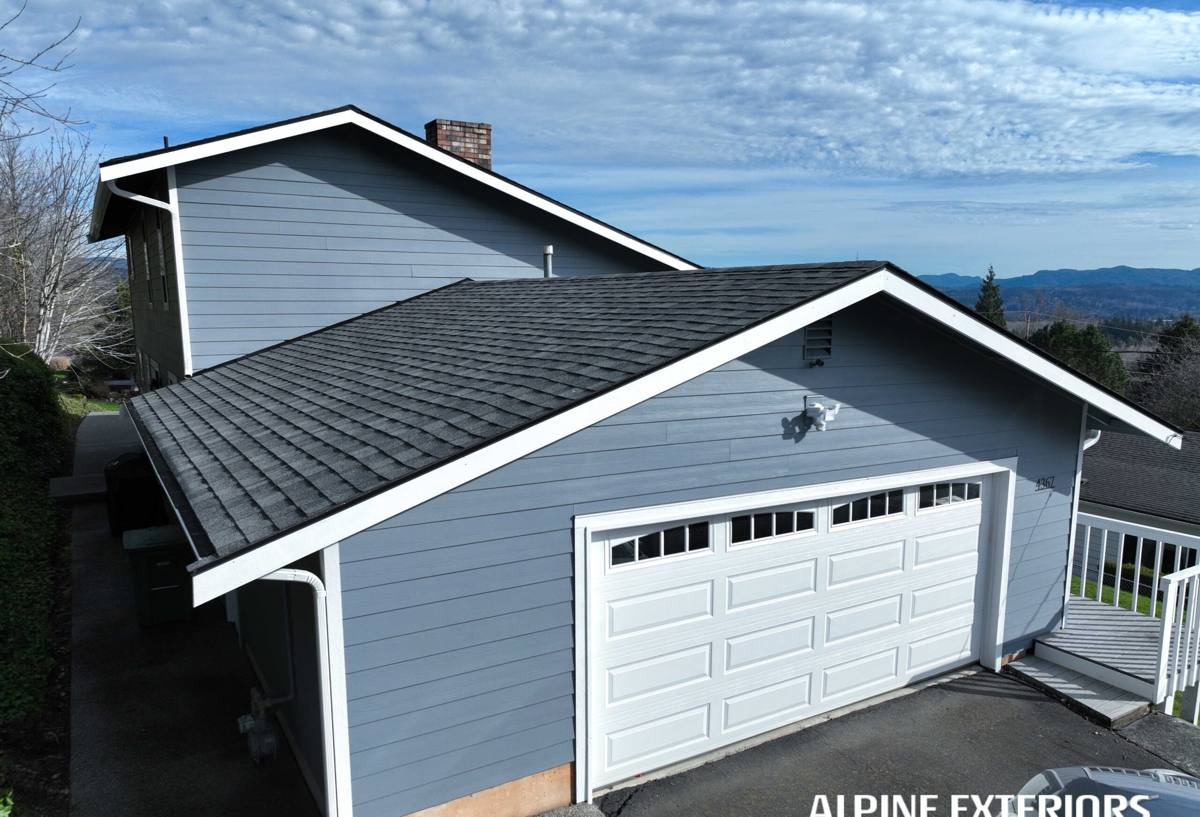
What Burlington's Climate Actually Does to a Roof
Salt Air and Corrosion
Homes closer to the water deal with airborne salt that settles on every exterior surface, including the roof. Bare or poorly coated steel fasteners and cut edges are where corrosion starts first. We spec fasteners and flashing metals that are rated for coastal exposure and we seal every cut panel edge, because an unsealed edge is the fastest way for a metal roof to develop rust streaks within a few years instead of a few decades.
Driving Rain and Wind-Driven Water
Skagit County storms don't always drop rain straight down — wind pushes it sideways and up under laps, ridges, and penetrations. This is where a lot of "metal roofs leak" stories actually start: not a failure of the metal itself, but underlayment or flashing details that assumed rain only falls straight. We detail valleys, ridge caps, and any roof-wall transitions assuming wind-driven rain is normal weather here, because in Burlington, it is.
Moss and Organic Growth
Shaded, north-facing, and low-slope sections of roofs in this part of the county grow moss aggressively, often within a couple of years on a rough-surfaced material. Moss holds moisture against the roof surface and, on shingles, works its way under tabs. Metal roofing's smooth, hard surface gives moss and algae far less to grip, so growth is slower and easier to remove without damaging the roofing material underneath.
Metal Roofing Panel Options for This Area
Not every metal roofing product performs the same way in a wet, salt-influenced climate, and we're upfront with homeowners about the trade-offs of each system rather than pushing whatever has the best margin.
| Panel Type | Best For | Trade-Offs |
|---|---|---|
| Standing seam (concealed fastener) | Long-term, low-maintenance performance; homes near the water or with steep, visible rooflines | Higher upfront cost; needs a crew experienced with seaming and expansion detailing |
| Exposed-fastener panel | Budget-conscious projects, outbuildings, shops, simpler rooflines | Fasteners eventually need re-torquing or replacement; more penetration points for water and salt exposure |
| Stone-coated steel | Homeowners who want the profile of shingle or tile with metal's core durability | Heavier system; coating can chip if walked on carelessly during other trade work |
For most Burlington homes, especially anything within a few miles of open water or exposed to full weather on one side, we lean toward standing seam because it has the fewest penetration points and the best long-term seal against wind-driven rain. Exposed-fastener panels aren't a bad product, but they carry a real maintenance obligation — the washers under those fasteners degrade over time, and in a salt-air environment that clock runs faster than it would inland.
What a Correct Metal Roof Installation Involves
A metal roof is only as good as what's underneath it. Here's what we consider non-negotiable on every job:
- Full tear-off inspection of the decking for rot, especially around old plumbing vents and any prior leak points — common on older Burlington homes with decades of Northwest weather behind them
- High-temperature, self-adhered underlayment at eaves, valleys, and around penetrations, not just felt paper, to guard against ice and wind-driven water intrusion
- Synthetic underlayment across the full field for a slip-resistant, moisture-resistant base layer
- Proper panel fastening pattern matched to the manufacturer's wind-load spec for this region, not a generic pattern
- Closed or vented ridge details that keep wind-driven rain out while still allowing the attic to breathe
- Corrosion-appropriate flashing at every wall intersection, chimney, and skylight — mismatched metals here cause galvanic corrosion over time
- Sealed cut edges on every panel trimmed on site
Skipping any one of these doesn't usually show up as a problem on day one. It shows up two, five, or ten years later as a leak, a rust streak, or premature panel failure — exactly when it's hardest to trace back to the install.
Our Process for a Burlington Metal Roof Project
1. On-Site Assessment
We walk the roof, check the attic for existing moisture or ventilation problems, and look at how the house is oriented relative to prevailing wind and rain. A roof on the exposed side of a Burlington property gets detailed differently than one tucked behind a windbreak of trees.
2. Panel and System Selection
We walk through the table above with the homeowner in plain terms — what each option costs, what it demands in upkeep, and how it will actually hold up given the specific exposure of that roof.
3. Tear-Off and Deck Prep
Old roofing comes off, decking gets inspected and repaired where needed, and we don't cover up rot or soft spots with new material — that's the single most common shortcut that ruins an otherwise good metal roof.
4. Underlayment and Flashing
This is the step most homeowners never see once the panels go on, and it's the step that determines whether the roof performs for 10 years or 50.
5. Panel Installation
Panels go on with fastening and seaming appropriate to the system chosen, with attention to thermal expansion — metal roofs move with temperature swings, and a poorly accommodated system will oil-can, buckle, or work fasteners loose over time.
6. Final Walk-Through
We review the finished roof with the homeowner, including what routine maintenance looks like — mainly gutter and debris checks, since Skagit County's tree cover means organic debris is a bigger factor than sun damage for most homes here.
Cost Factors Homeowners Should Understand
Metal roofing costs more upfront than asphalt shingles, and the range varies a lot based on the factors below. We don't publish blanket per-square-foot numbers because they're rarely honest without seeing the actual roof — but these are the variables that move the price up or down on a real quote.
| Factor | Why It Matters |
|---|---|
| Panel system chosen | Standing seam runs higher than exposed-fastener panel due to labor and material |
| Roof pitch and complexity | Steep or cut-up rooflines with multiple valleys and dormers take more labor and material waste |
| Deck condition | Rot repair or full re-decking adds cost but is not optional if the substrate is compromised |
| Tear-off scope | Removing multiple existing layers costs more than a single-layer tear-off |
| Accessibility | Steep sites, tight lot lines, or limited equipment access affect labor time |
| Ventilation upgrades | Older homes often need attic ventilation corrected as part of a proper metal roof install |
Signs Your Current Roof Is Telling You Something
Homeowners in Burlington often call us after noticing one or two of these — worth checking before a small issue becomes a deck-level repair:
- Heavy moss buildup that returns within a year of cleaning
- Granule loss showing up in gutters or downspouts
- Rust staining or streaking on an existing metal roof or metal flashing
- Soft spots or sagging when walked on a flat or low-slope section
- Visible daylight or water stains in the attic near vents, chimneys, or valleys
- Curling, cracked, or missing shingles after a windy winter
- Higher-than-expected heating bills, which can point to failing attic ventilation or insulation exposed to moisture
Why Local Experience Matters for This Job
Metal roofing is unforgiving of guesswork, and Skagit County's mix of coastal exposure, farmland wind, and heavy moss growth is a specific enough combination that generic installation practices don't hold up. A crew that already works in Burlington and the surrounding Anacortes area knows which fastener and flashing specs actually last here, understands local permitting for reroofing projects, and has already seen how different panel systems age on real homes in this exact climate — not a showroom or a manufacturer's marketing sheet. That local track record shows up in the details: how valleys are cut, how ridge vents are detailed against wind-driven rain, and how fasteners are torqued so they don't back out after a few freeze-thaw cycles.
It also matters for warranty follow-through. Roofing manufacturers back their materials, but workmanship warranties are only as good as the contractor standing behind them years later. Hiring a crew rooted in this community, rather than a storm-chasing outfit passing through, means someone is actually reachable if a detail needs attention down the road.
Maintenance Reality for Metal Roofs in This Climate
Metal roofing is genuinely low-maintenance compared to asphalt, but "low" doesn't mean "none," especially in a wet, tree-heavy part of Skagit County. Gutters and valleys should be checked for needle and leaf buildup at least once a year, since trapped organic debris holds moisture against panels even on a material that otherwise sheds water well. Fastener systems on exposed-fastener panels should be inspected periodically, since washers are the first component to degrade. Standing seam systems need far less attention but still benefit from an occasional visual check after major storms, particularly around flashing details at chimneys and walls where wind-driven rain concentrates.
If you're weighing a metal roof for a home in Burlington, we're glad to walk the roof with you, talk through honest trade-offs between panel systems, and put together a straightforward estimate — no pressure, no hard sell, just a clear look at what your roof actually needs.