 Anacortes Siding
 Deck Repair Built for Burlington's Weather, Not a Showroom
Burlington sits in the Skagit Valley just inland from the salt air rolling off Fidalgo Bay and the San Juan Islands, but that doesn't spare local decks from the same punishment coastal Anacortes properties take. Add the valley's own driving rain off the Cascade foothills and a moss season that can run from October clear through April, and a deck here ages differently than one in a drier part of the state. We repair decks in Burlington the way the climate actually demands, not the way a generic checklist says to.
Most of the repair calls we get in this area fall into a short list: soft or spongy boards near the house, rust streaks bleeding from fasteners, rot hiding under a deck box or planter that never dries out, and railings that have gone loose or wobbly. None of that is unusual for a wet marine climate — but ignoring it is how a $400 repair turns into a $4,000 rebuild.
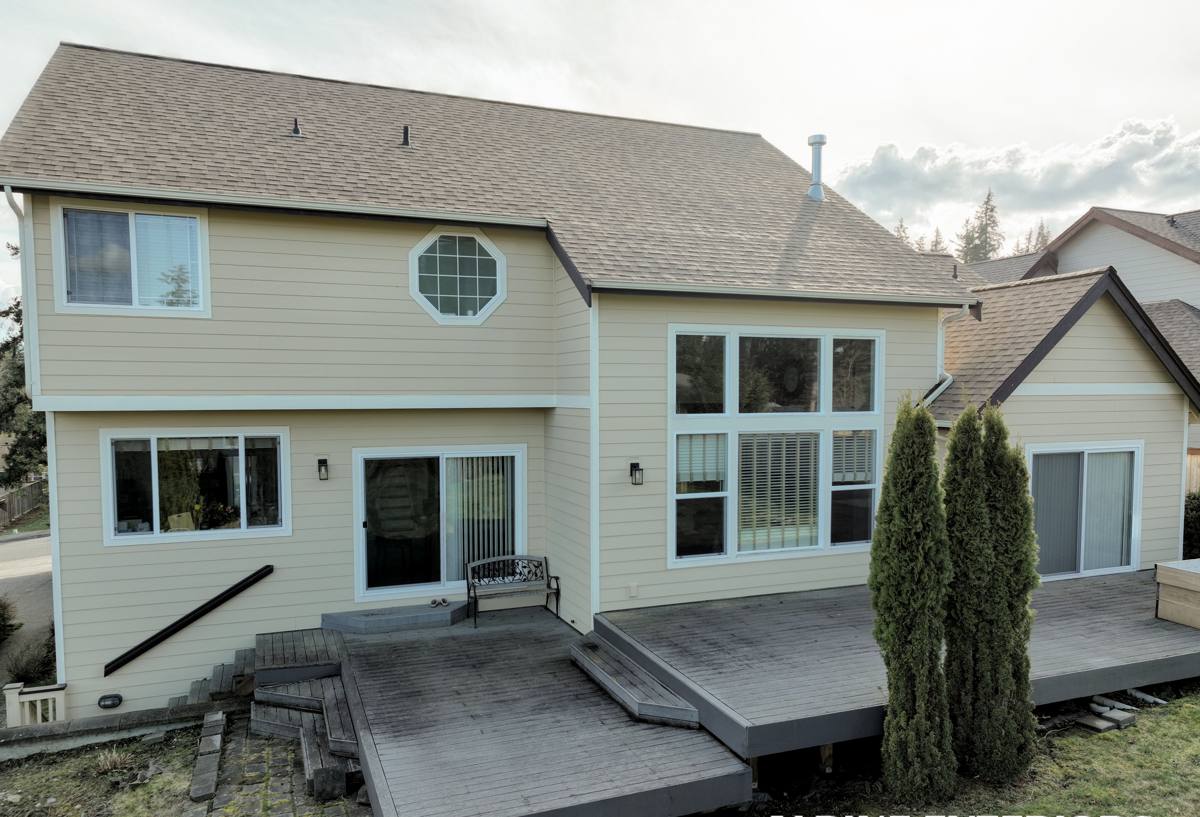
Why Skagit County Decks Fail Faster Than People Expect
Moisture That Never Fully Leaves
Burlington gets a real mix of steady regional rain and the kind of low, lingering dampness that settles into shaded decks and never quite dries between storms. Wood that stays wet for days at a time — especially where boards sit tight against a house wall, a hot tub, or heavy planters — is exactly where rot gets its start. It doesn't announce itself; it shows up as a slightly soft spot underfoot months after the damage began.
Moss and Organic Buildup
Moss and algae aren't just cosmetic here. A moss mat holds water against the deck surface long after the rain stops, which keeps the wood (or the wear layer on composite boards) wet far longer than it should be. On stairs and low-traffic corners, that same moss turns into a slip hazard for anyone stepping outside on a wet morning.
Salt-Influenced Air and Fastener Corrosion
Burlington isn't beachfront, but it's close enough to the Sound that salt-tinged air still reaches inland properties, especially with prevailing westerly winds. Combined with near-constant humidity, that air accelerates corrosion on screws, joist hangers, and structural brackets — particularly older, non-coated fasteners. Rust stains bleeding out around a screw head are a warning sign, not just an eyesore.
Freeze-Thaw Cycling
Skagit County doesn't get brutal winters, but it does get enough freeze-thaw swings to matter. Water that's worked its way into a crack or a fastener hole expands when it freezes, widening the damage a little more each cycle. Over several winters, small cracks become split boards and loosened connections.
What a Correct Deck Repair Actually Involves
A lot of "deck repair" in this region amounts to swapping a board that looks bad and calling it done. That fixes the symptom, not the cause, and the same spot often fails again within a couple of seasons. We start every repair by figuring out why that section failed in the first place.
Structural Inspection First
- Ledger board attachment to the house — the single most common source of catastrophic deck failure when done wrong or when flashing has failed
- Joists and beams for soft spots, checking, or rot, especially near ground contact and under the ledger
- Post bases and footings for movement, rot at grade, or standing water pooling against the post
- Railing posts and connections for looseness — a code and safety issue, not just cosmetic
- Fastener condition throughout, since one corroded hanger can undermine an otherwise sound deck
Then the Visible Repair
Once we know what's structurally sound and what isn't, we address the boards, stairs, or railings that brought you to us — matching material where it makes sense, and flagging anywhere a "just replace this board" fix would leave a hidden problem in place.
Common Burlington Deck Repairs We Handle
| Problem | What's Usually Going On | Typical Fix |
|---|---|---|
| Soft or spongy decking near the house | Trapped moisture at the ledger, poor flashing, or failed board coating | Replace affected boards, correct flashing/drainage at the ledger |
| Wobbly or loose railings | Corroded fasteners, split posts, or original under-built connections | Reinforce or rebuild post connections to current structural standards |
| Rust streaking around screws | Non-coated fasteners reacting to persistent moisture and salt-influenced air | Replace with coated or stainless fasteners rated for exterior/coastal use |
| Persistent moss on boards or stairs | Shade, poor airflow, and boards that don't dry between rain events | Clean, treat, and improve drainage/airflow where possible |
| Sagging or bouncy deck surface | Undersized or rotted joists, failing beam, or settled footing | Sister or replace joists, shim or repair footing as needed |
| Cracked or splitting boards | Freeze-thaw cycling working into existing checks over multiple winters | Board replacement, sometimes with a longer-term material change |
Repair vs. Replace: How We Help You Decide
Not every deck with problems needs to be torn out. The honest answer usually depends on what's happening below the surface, not just what's visible on top.
Repair Usually Makes Sense When
- The framing — joists, beams, ledger — is structurally sound
- Damage is isolated to specific boards, a section of railing, or surface-level rot
- The deck is reasonably current with structural code, just weathered or damaged
Replacement Becomes the Better Investment When
- Rot has reached the ledger board or multiple structural members
- Footings have shifted or were undersized to begin with
- You're repeatedly repairing the same areas every couple of years
- The railing system doesn't meet current safety standards regardless of condition
We'll tell you plainly which category your deck falls into, including when a repair is the honest recommendation even if a full rebuild would be a bigger job for us.
Materials: What We Use and Why
For structural repairs — ledgers, joists, posts, hardware — we use pressure-treated lumber and corrosion-resistant, coated or stainless fasteners rated for exterior exposure. That's not optional in this climate; standard fasteners simply don't hold up to years of Skagit County moisture without staining and weakening.
For decking surface repairs, the right material depends on your existing deck and your goals. Wood repairs matched to existing cedar or treated lumber keep the look consistent and the cost down. If you're tired of repeating the same repair on a wood deck, composite decking is worth discussing — it resists rot entirely and handles moss and moisture better than wood, though it comes with its own trade-offs: higher upfront material cost, and it can still get slippery with moss buildup if it's shaded and rarely dries, so cleaning is still part of the maintenance picture. We'll walk through what fits your deck and your budget honestly, rather than defaulting to whatever's easiest for us to install.
Our Deck Repair Process in Burlington
- On-site inspection. We look above and below the deck surface — framing, ledger, footings, and fasteners — not just the boards you're worried about.
- Honest scope and estimate. You get a clear explanation of what's actually wrong, what repair options exist, and a straightforward price — no upselling to a full rebuild you don't need.
- Structural correction first. Any framing, ledger, or footing issues get addressed before cosmetic work, so the repair actually lasts.
- Surface and railing repair. Boards, stairs, and railings are repaired or replaced with materials suited to our climate.
- Cleanup and walkthrough. We leave the site clean and walk you through what was done and what to watch for going forward.
Simple Maintenance That Extends the Life of a Repair
A repaired deck still needs some seasonal attention in this climate to avoid a repeat visit. A few habits go a long way in Burlington's wet, moss-friendly conditions:
- Sweep leaves and debris off the deck regularly, especially in fall — trapped organic matter holds moisture against the boards
- Keep planters and deck boxes elevated slightly or moved periodically so moisture doesn't pool underneath
- Treat moss on stairs and shaded areas before it builds into a slip hazard
- Check railings and stair connections once a year for looseness before it becomes a safety issue
- Reseal or restain wood decking on the schedule appropriate for the product — skipping this is one of the fastest ways to invite rot back in
Why a Crew That Already Works Burlington Matters
Deck repair done by someone unfamiliar with Skagit County's specific mix of rain, humidity, and moss tends to treat every repair the same way it would in a drier climate — which is how you end up back here in two years. We work on decks throughout the Anacortes and Burlington area regularly, so we know which failure points show up again and again in this weather and we build repairs to actually hold against it, not just pass a quick visual check.
We also understand that a deck repair isn't just about the wood — it's about keeping the space safe and usable for your family without an unnecessary sales pitch toward a full replacement. If your deck needs a fix in Burlington, we're glad to take a look and give you a straight answer.
If you've noticed a soft board, a loose railing, or moss that keeps coming back, reach out for a free, no-pressure estimate using the form below — we'll take a look and tell you honestly what your deck needs.